
Crime
Navi Mumbai News: 54-Year-Old Citizen Files RTI ‘Exposing’ CIDCO Officials Extorting Bribe Of ₹3.5 Lakhs; Police Takes Action

Navi Mumbai: A 54-year-old vigilant citizen from Noor Co-op. Ho. Society in Sector 9, Vashi, first brought this information to the fore through the Right to Information. After this vigilant citizen complained about this to the Anti-Corruption Department of Navi Mumbai Police, the police caught this bribery red-handed. A case has been registered against the public servants who demanded bribes on Wednesday.
A vigilant 54-year-old citizen exposed CIDCO’s bribery issue through RTI, leading to a police operation that caught public servants demanding bribes, resulting in legal action against them.
The complainant is the secretary of Noor Society in Sector 9, Vashi. The executive committee of Noor Society was dissolved due to the resignation of some members. After that, the administration of this housing society was run under the administrative control of the Co-Registrar of Cooperative Societies of CIDCO.
Later, after the election of the executive board of the society, while he was working as the secretary again, the opposition applied to the Deputy Registrar’s Office and demanded the abolition of the relevant committee. Apart from this, an allegation of holding the annual general meeting late was also registered.
On August 7, an order was given to stop the processing of this application (close of order). To give the result in favor of the complainant, the public servants of the Co-Registrar’s Office of CIDCO demanded a bribe of Rs. 5 lakh. After a compromise, the amount was fixed at Rs. 3 lakh 50 thousand. After verifying the authenticity of this demand, a trap was laid in the Co-Registrar’s Office of CIDCO on September 10.
Rahul Kamble, who was working in this office at that time, was caught red-handed while accepting a bribe through constable Mahesh Kamothkar. A case has been registered under sections 7, 7A, 12 of the Prevention of Corruption Act for demanding and accepting bribes.
The accused include Rahul Rangrao Kamble (aged 50), Dhanaji Dattatray Kalukhe (aged 52), private Kishore Shankarrao More, and constable Mahesh Gangaram Kamothkar, said Dharmaraj Sonke, Deputy Superintendent of the Anti-Bribery Department. All four suspects will be produced in court on Thursday afternoon. The police will investigate which other senior officials of CIDCO are involved in this amount of Rs 3.5 lakh.


New Delhi, Oct 7: The Delhi High Court on Wednesday permitted a senior director of Vivo Mobile India to travel to Bangkok for four days for official meetings and directed suspension of the Look Out Circular (LOC) issued against him during the period.
A single-judge Bench of Justice Sachin Datta allowed Harinder Dahiya, the company’s Senior Director of Finance and Accounts, to travel to Thailand, from October 12 to 15 for official meetings concerning statutory audit matters, audit and control transformation, litigation, and business and finance strategy at Vivo India.
The High Court also permitted release of his passport and directed that the LOC against him will remain suspended during the four-day period.
Dahiya had challenged the March 19, 2026 order of the Patiala House Courts, which had rejected his plea seeking setting aside of the LOC, permission to travel abroad and release of his passport.
The Enforcement Directorate (ED) opposed the application, contending that Dahiya, as Director and Chief Financial Officer of Vivo India, had played a crucial role in the alleged siphoning of proceeds of crime stated to be around Rs 20,241 crore.
The federal anti-money laundering agency also said that the official meetings could be attended virtually and relied on another order of the High Court, by which the travel application of co-accused Guangwen Kuang alias Andrew Kuang was dismissed.
However, the Delhi High Court said the earlier order concerning Kuang did not assist the ED as it was based on his foreign nationality and the absence of an extradition treaty with China.
Dahiya, an Indian national travelling to Thailand, stood on a different footing, it said.
As part of the conditions, Dahiya has been directed to deposit original title documents of his immovable assets with the High Court Registry as security until his return and furnish his travel itinerary, flight details, address of stay and contact number in Thailand to the investigating officer and trial court.
He has also been directed to intimate the investigating officer and trial court within 24 hours of his return, re-deposit his passport within the same period and appear before the trial court on the next date fixed.
The High Court also directed that Dahiya will not contact any witness, tamper with evidence or do anything prejudicial to the proceedings.
The LOC will automatically revive after October 15.
The High Court clarified that its observations were confined to the present application and would not amount to an expression on the merits of the main case.
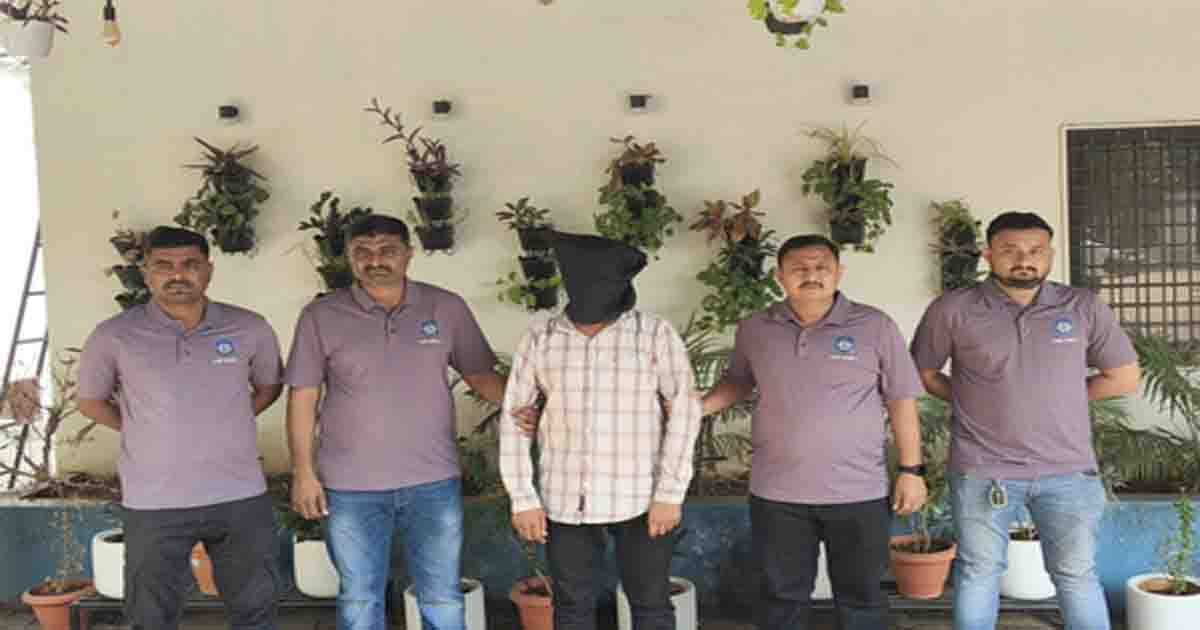
Ahmedabad, Oct 7: A 39-year-old man was arrested by the Local Crime Branch (LCB) of Ahmedabad Police after allegedly honey-trapping an older man through Facebook and extorting Rs 24 lakh from him in instalments by threatening to implicate him in false cases, police said on Wednesday.
The accused, identified as Alpesh Solanki, a resident of Thikvadi village in Botad district, was arrested with Rs 1 lakh in cash allegedly collected from the complainant during the latest extortion attempt.
According to police, the incident came to light on the night of October 5, when Anandnagar Police Station received a control-room message stating that a gang had allegedly blackmailed an older man and his son and taken Rs 1 lakh from them in a black bag.
Officials said a man wearing black trousers and a white checked shirt was reported to have fled from Pakwan Char Rasta with the money.
Following the information, senior officials directed the concerned officers to take immediate action.
Deputy Commissioner of Police (Zone-7) Shivam Verma ordered a special action plan and strict naka-bandi in the area to identify and apprehend those involved.
Teams from the LCB Zone-7, led by Police Sub-Inspector H.D. Vaghela, conducted intensive patrolling and vehicle checks along the SG Highway.
Based on specific information received, the police located a man matching the description in the control-room message hiding under the Karnavati Bridge with a black bag.
He was apprehended along with Rs 1 lakh in cash.
Police said questioning of Solanki revealed that he and his associates had allegedly contacted the complainant through Facebook and honey-trapped him.
The accused allegedly threatened to register false cases against him and, as part of a planned conspiracy, collected Rs 24 lakh from him in instalments.
Police further said the gang had allegedly demanded another Rs 7 lakh from the complainant during the latest episode.
Officials said the complainant became suspicious and contacted the police, following which Solanki was arrested with Rs 1 lakh.
Two other accused, Kishan alias Kanu Parmar, a resident of Morarinagar-1 on Targhada Road in Botad, and Lalo, a resident of Panadara village in Kadi taluka of Mehsana district, are yet to be arrested.
Police said efforts to trace them are underway.
The police seized two bundles of Rs 500 notes totalling Rs 1 lakh, a black bag and a mobile phone valued at Rs 5,000.
The total value of the seized property was put at Rs 1.05 lakh.
Police advised people to exercise caution before accepting friend requests from unknown persons on social media and while communicating with strangers online.
The police also appealed to anyone facing blackmail or an extortion demand of this nature to approach the nearest police station.
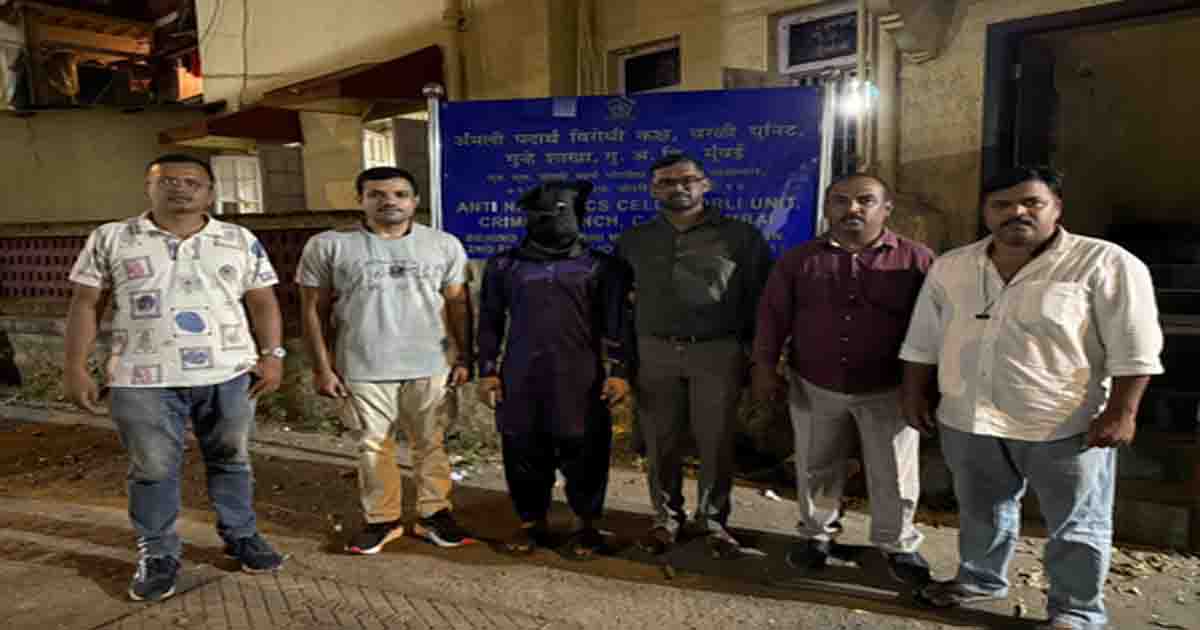
Mumbai, Oct 7: The Anti-Narcotics Cell (ANC), Worli Unit of the Mumbai Police, has seized Nitrazepam and Alprazolam tablets worth approximately Rs 2.53 crore in a case related to the illegal sale of narcotic and psychotropic substances.
According to a press note, the case has been registered by the Anti-Narcotics Cell, Worli Unit, under Section 22(C) of the Narcotic Drugs and Psychotropic Substances (NDPS) Act. The offence took place between 10:40 p.m. on October 6 and 12:40 a.m. on October 7.
Acting on information received during an investigation into persons allegedly involved in the purchase, sale and supply of illegal drugs in Mumbai, the police learned that a person was selling tablets used for intoxication in the Dr Zakir Hussain Nagar area of Govandi.
Following verification of the information, a police team searched the residence of the accused and seized 4,500 Nitrazepam tablets of the NITCOR-10 brand. The tablets weighed approximately 2 kg and 475 grams and were valued at Rs 1.98 crore.
The police also recovered 5,300 Alprazolam tablets of the PROCALM-1 brand, weighing approximately 689 grams and valued at Rs 55.92 lakh.
In total, 9,800 Nitrazepam and Alprazolam tablets, collectively valued at approximately Rs 2.53 crore, were seized during the operation.
The operation was carried out under the guidance of Mumbai Police Commissioner Deven Bharti, Joint Commissioner of Police (Crime) Anil Kumbhare and Additional Commissioner of Police (Crime) Krishnakant Upadhyay, with the supervision of senior officers of the Anti-Narcotics Cell and Worli Unit.
Earlier, on October 2, the Anti-Narcotics Cell raided The Smoke Shop at Bhoomi Tower in Sector 4, following concerns raised by Kharghar residents over a shop operating barely 50 metres from ITM College. Police seized hookah flavours and related material worth around Rs 92,000.
The raid was conducted after the ANC received information regarding the sale of hookah and tobacco products near an educational institution. A team led by Senior Police Inspector Sandeep Nigade carried out the operation.
Earlier, on August 19, the Mumbai ANC had arrested a man from Bihar at Bandra Terminus for allegedly carrying 10.10 kg of charas, with a market value of Rs 10.01 crore.

Seemapuri building collapse: 1 killed, 7 rescued

’80 pc to NDA, 20 pc to PDA’: CM Yogi Adityanath’s swipe at SP ahead of 2027 UP polls

Meta unveils new AI tools to combat child sexual exploitation online

PM Modi thanks world leaders for warm wishes on completing 25 years as head of government

Delhi HC permits Vivo India executive to travel abroad, suspends LOC for four days

Gift to President Putin part of PM Modi bid to globally display India’s heritage

PM Modi’s warm camaraderie with Putin, Xi on full display at BRICS Summit

Complaint against Netflix & Mukesh Chhabra for inappropriate language on ‘India’s Got Latent 2’

INDIA bloc begins protest march against ECI

Maha Congress stages agitation against Gyanesh Kumar
-

 Crime4 years ago
Class 10 student jumps to death in Jaipur
-

 Maharashtra2 years ago
Mumbai Local Train Update: Central Railway’s New Timetable Comes Into Effect; Check Full List Of Revised Timings & Stations
-

 Maharashtra2 years ago
Mumbai To Go Toll-Free Tonight! Maharashtra Govt Announces Complete Toll Waiver For Light Motor Vehicles At All 5 Entry Points Of City
-

 Maharashtra2 years ago
False photo of Imtiaz Jaleel’s rally, exposing the fooling conspiracy
-

 National News2 years ago
Ministry of Railways rolls out Special Drive 4.0 with focus on digitisation, cleanliness, inclusiveness and grievance redressal
-

 Maharashtra2 years ago
Maharashtra Elections 2024: Mumbai Metro & BEST Services Extended Till Midnight On Voting Day
-

 National News2 years ago
J&K: 4 Jawans Killed, 28 Injured After Bus Carrying BSF Personnel For Poll Duty Falls Into Gorge In Budgam; Terrifying Visuals Surface
-

 Crime2 years ago
Baba Siddique Murder: Mumbai Police Unable To Get Lawrence Bishnoi Custody Due To Home Ministry Order, Says Report