
National News
Delhi HC directs govt to decide in 6 months on SOP for body cameras for police, RAF

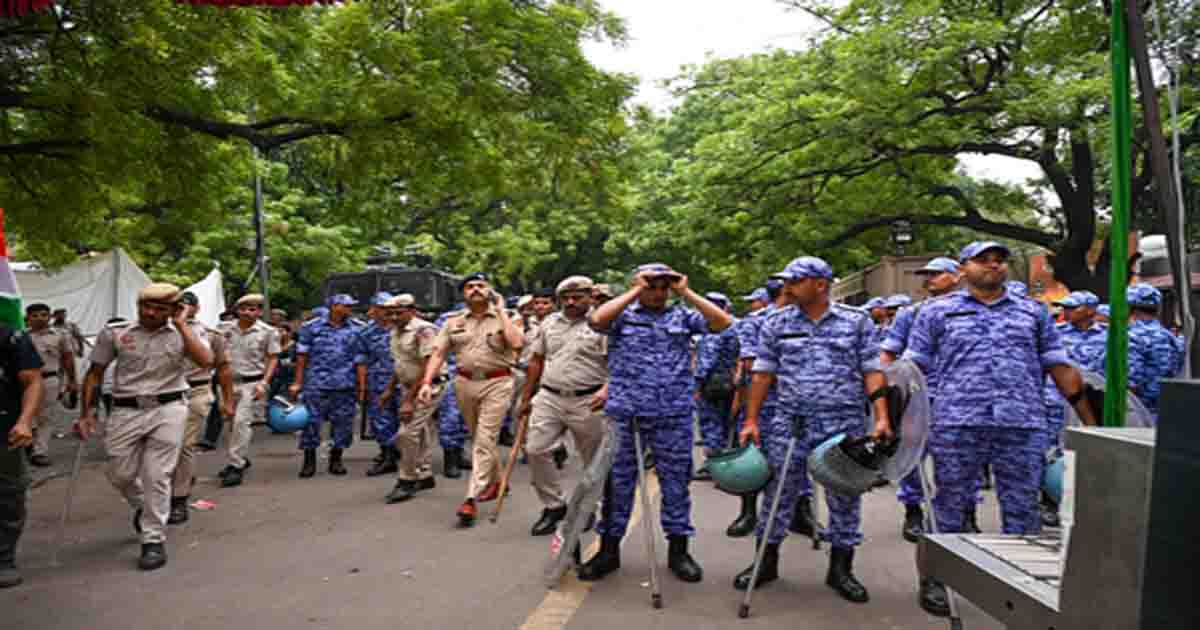
New Delhi, Oct 7: The Delhi High Court on Wednesday directed the government to treat a public interest litigation (PIL) seeking mandatory use of body-worn cameras by Delhi Police and Rapid Action Force (RAF) personnel deployed for crowd control and protest management duties as a representation.
A bench of Acting Chief Justice Nitin Wasudeo Sambre and Justice Arun Bhardwaj directed the government to take a decision within six months on the framing of a standard operating procedure (SOP) concerning the use of body-worn cameras by police and RAF personnel during protests and crowd-control operations.
The High Court passed the order while disposing of a PIL filed by advocate Chahat Raghav in the aftermath of the July 2026 demonstrations at Jantar Mantar involving the Cockroach Janata Party (CJP) and climate activist Sonam Wangchuk.
Senior advocate Akhil Sibal, appearing for the petitioner, submitted that the Delhi Police’s existing framework relies on third-person videographers positioned along the periphery and does not provide an adequate mechanism for contemporaneous recording of actions by personnel deployed for crowd control.
He argued that the availability of technology for body-worn cameras could go a long way in ensuring transparency and fixing accountability during crowd-control operations.
“If technology is available, it can go a long way in fixing accountability whenever required. It is different from facial recognition where there are concerns of surveillance,” the senior counsel argued.
Additional Solicitor General Chetan Sharma, appearing for the Centre, submitted that the petition could be treated as a representation and that a decision would be communicated within six months.
Referring to a Supreme Court judgment and the Delhi High Court rules, ASG Sharma said that a representation was required to be made to the authorities concerned before invoking the PIL jurisdiction.
The Centre also submitted that guidelines were already in place for organising protests and that videography was covered under the existing framework. It said the petitioner could make a representation seeking framing of an SOP for the use of body-worn cameras, which could be considered in accordance with law.
With the government agreeing to consider the issue as a representation and communicate its decision within six months, the High Court disposed of the PIL.
The plea was filed against the backdrop of clashes during the July protests at Jantar Mantar, which resulted in injuries to student protesters as well as more than 50 police and paramilitary personnel.
According to the petition, the events exposed a “systemic vacuum” as there was no rule, regulation, standing order or SOP mandating police or RAF personnel to wear body-worn cameras while deployed on crowd-control duties, or governing the storage, integrity, retention and evidentiary use of such footage. The petitioner said the July 2026 protests had seen allegations of disproportionate use of force by police, while there were also allegations of attacks on police personnel and vandalism by some protesters.
It submitted that a contemporaneous and tamper-proof officer’s-eye recording could help fix accountability for alleged excesses by the police and also provide authenticated evidence to identify and prosecute persons in the crowd who resorted to violence.
The plea further claimed that Delhi Police had itself recognised the need for body-worn cameras during protests as far back as January 2020, but had not translated that recognition into a binding and effective regime. It referred to Delhi Police Standing Order No. L&O/10/2022 concerning regulation of rallies and processions, submitting that the existing framework provides for third-person videography but does not mandate body-worn cameras for personnel engaged in crowd control.
The petition also claimed that Delhi Police had floated a tender for procurement of 1,500 body-worn cameras at a total value of around Rs 7.4 crore, while the CRPF had initiated procurement of 480 such cameras for the RAF. The petitioner sought directions for framing and enforcement of a binding SOP mandating compulsory, always-on body-worn cameras for police and RAF personnel deployed on crowd-control and protest-management duties, along with a data-storage, integrity and evidentiary regime governing the footage.

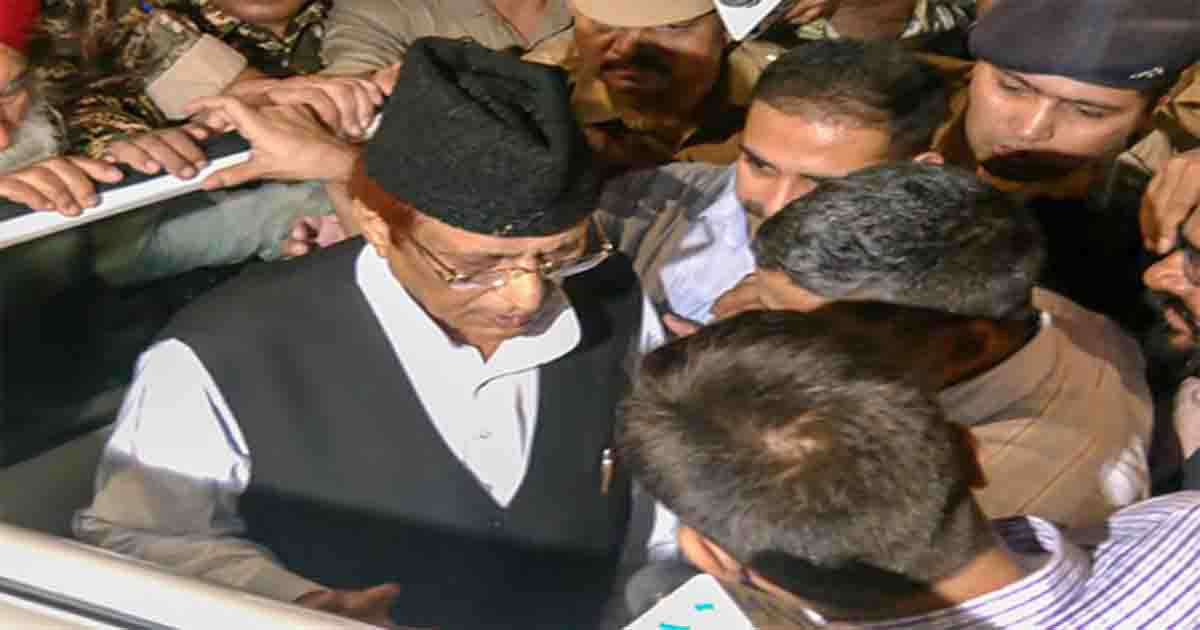
Samajwadi Party (SP) leader Mohammad Azam Khan was on Sunday sent to 14 days of judicial custody a day after being arrested by the Enforcement Directorate (ED) in connection with a Jauhar University-linked money laundering case.
The order was passed by the Ghaziabad MP-MLA Court, which directed that Khan will remain in judicial custody until November 13.
Speaking to reporters, the SP leaders’ lawyer, Danish Ali, said: “Today, Azam Khan has been remanded to judicial custody. We argued that since this is a 2019 case, the authorities could have taken action through a B-Warrant when he was already in custody. There has also been a violation of Section 19.”
“The ED has sought his custody to further interrogate him,” he added.
The Samajwadi Party leader’s arrest by the ED on Saturday came close to the provisional attachment of land and buildings belonging to Mohammad Ali Jauhar University in Uttar Pradesh’s Rampur district, valued at Rs 426.46 crore, in connection with the money laundering probe involving the Maulana Mohammad Ali Jauhar Trust, Azam Khan, and others.
The fresh trouble for Azam Khan came in the backdrop of a short-lived relief offered to him and his son Abdullah Khan by the Allahabad High Court, which suspended their sentence in the dual PAN card case and also granted them bail on Thursday.
In the money laundering case, the ED attached assets of the University that have a current estimated market value of around Rs 1,170 crore.
The university campus, located at Jauhar Nagar in Rampur’s Singhankhera village, is owned by the Maulana Mohammad Ali Jauhar Trust, which was founded and is controlled by Azam Khan, who also serves as the institution’s honorary Chancellor, said the ED.
The investigation stems from 26 FIRs registered at Azeem Nagar police station in Rampur, alleging that agricultural land belonging to farmers was forcibly acquired for the university.
The ED said enquiries by the district administration also found that nearly 34 acres of enemy property at Singhankhera village had allegedly been occupied for the university despite the cancellation of the land lease. The land has since been recovered by the Custodian of Enemy Property through the district administration.
National News
Congress wishes to run democracy according to the law of Gandhi family, says BJP chief Nitin Nabin

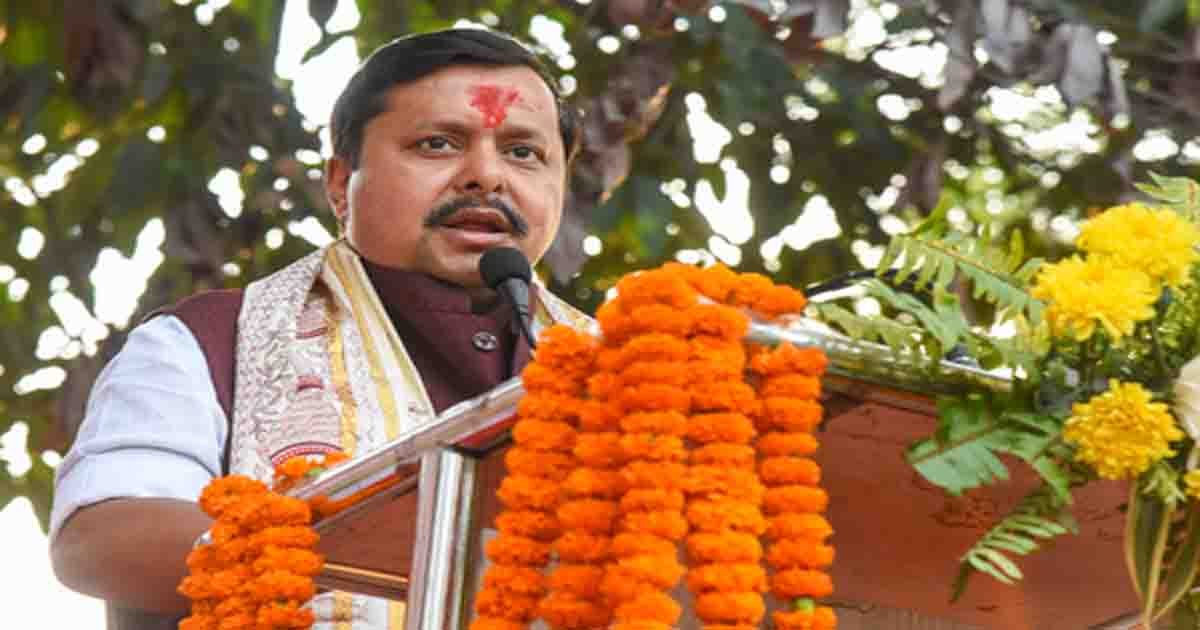
Bharatiya Janata Party (BJP) President Nitin Nabin on Sunday accused the Congress of wanting to run democracy “according to the law of the Gandhi family”, as he called it out for undertaking a protest rally in the national capital, instead of apologising to the Sikhs for the 1984 riots.
Nabin’s remarks came at the BJP’s ”Loktantra Bachao, Arajakta Hatao’ rally in Haryana’s Rohtak. He was referring to the INDIA bloc’s ‘Dilli Chalo’ rally, currently underway at the national capital’s Ramlila Maidan.
Addressing the gathering, the BJP chief claimed that an atmosphere of chaos and instability is being “deliberately spread” throughout the nation and accused the Leader of the Opposition in the Lok Sabha, Rahul Gandhi, of acting at the behest of foreign powers and “serving as a tool for their agendas”.
“He (Gandhi) seeks to challenge our nation’s democracy based on the directives of these foreign entities…Their associates, members of the Communist Party and certain Congress leaders, talk about ‘regime change’. But this government is formed by the mandate of the people; no one can even lay a finger on it,” Nabin asserted.
He said that the Congress ought to have sought “atonement” for the “massacre” of the Sikhs and should have offered an apology.
“Yet, today, they have taken to the streets to protest. I ask, on behalf of the people in this democracy, Rahul Gandhi, when our Sikh brothers were being slaughtered, when a full-scale massacre was unfolding, your father (Rajiv Gandhi) remarked that ‘when a big tree falls, the earth shakes.’ Because of that (statement), the lives of so many of our Sikh brothers were lost. You should have felt remorse for this; you should have apologised, but instead you are carrying out protests,” he remarked.
According to the BJP chief, the Congress is “frustrated” and “blaming” Constitutional institutions since the party did not receive the people’s mandate to govern.
“If Congress leaders had the courage, they would first end Rahul Gandhi’s dynastic rule within the party and establish democracy in the Congress; instead the party leaders believe that even the country’s law should be made according to Rahul Gandhi and his family,” he alleged.
Referring to the Allahabad High Court’s 1975 decision to set aside then-Prime Minister Indira Gandhi’s election for misusing government machinery and barring her from contesting elections for six years, Nabin said: “This is the Congress’ legacy of stealing votes and disrespecting the people’s mandate.”
He also addressed the Opposition’s claims that 13 crore votes have been deleted, saying: “Any worker from our party, the NDA, or even one of our local unit Presidents can provide a detailed account for every single one of those 13 crore deleted votes.”
Accusing the Opposition of fighting to “protect” infiltrators, Nabin said: “I declare that as long as the workers of the BJP and the NDA are here, they will ensure these infiltrators are driven out of the country. Under no circumstances will these infiltrators be granted any rights.”
“It has become clear that you wish to run the democracy according to the ‘law’ of the Gandhi family. But a democracy must be governed by the nation’s Constitution, which is worshipped by Prime Minister Narendra Modi. PM Modi has always upheld the democracy of this nation,” the BJP chief stated.
Crime
PGIMER Director visits six-year-old girl injured in Panchkula school incident, entire treatment to be provided free
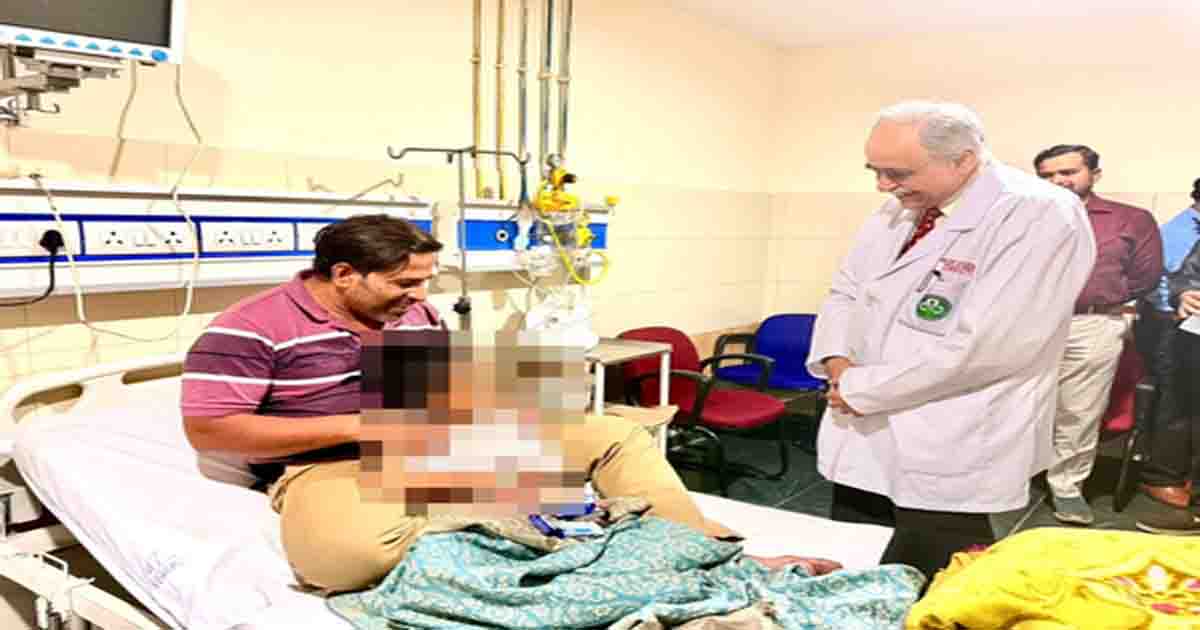
Postgraduate Institute of Medical Education and Research (PGIMER), Chandigarh, Director Professor Vivek Lal visited the six-year-old girl undergoing treatment there, following an alleged assault at a school in Panchkula on October 28.
During his visit, Professor Lal interacted with the treating doctors and enquired about the child’s health, medical condition and progress. He expressed deep concern over the unfortunate incident and assured the family that the institute would extend every possible assistance to ensure the child’s recovery.
Taking a special humanitarian initiative, the PGIMER Director ordered that the girl’s entire medical treatment be provided free of cost, with all expenses to be borne by the institute. In addition to covering all medical expenses, PGIMER has also provided her with a private room to ensure comfort, privacy, and appropriate care during her hospital stay.
Professor Lal said that the responsibility of PGIMER goes beyond providing medical treatment and includes standing alongside patients and their families during difficult times.
He emphasised that the institute is committed to ensuring the best possible medical care and all necessary support for the young patient and her family.
The six-year-old girl was brought to PGIMER with critical injuries after an alleged assault by an eight-year-old boy inside her classroom at a school in Panchkula on October 28. She was subsequently referred to the premier medical institute in Chandigarh for specialised treatment.
At present, the child is being treated by a multidisciplinary team of specialists, who are closely monitoring her condition and providing all necessary medical attention.
Following the Director’s visit, the institute has assured the family of continued medical and institutional support throughout the child’s treatment. According to officials, the Director will personally monitor the treatment and other care being given to the child.

Zaheer Iqbal opens up about challenges of playing an obsessive lover in ‘Tu Hai Meri Kiran’

SP leader Azam Khan sent to 14 days of judicial custody in money laundering case

Trump flags Iran targets as talks continue

Congress wishes to run democracy according to the law of Gandhi family, says BJP chief Nitin Nabin

PGIMER Director visits six-year-old girl injured in Panchkula school incident, entire treatment to be provided free

Rahul, Cong ecosystem want to force regime change: BJP after Neha Bora praises B’desh Gen-Z protest

Attack on democratic rights: INDIA Bloc leaders on detentions of anti-ECI protestors

BJP pays tribute to ex-President Abdul Kalam, recalls his enduring influence on generations of India’s youth

INDIA bloc begins protest march against ECI

Online betting: ED conducts searches at 20 premises in Mumbai, Pune, Hyderabad
-

 Crime4 years ago
Class 10 student jumps to death in Jaipur
-

 Maharashtra2 years ago
Mumbai Local Train Update: Central Railway’s New Timetable Comes Into Effect; Check Full List Of Revised Timings & Stations
-

 Maharashtra2 years ago
Mumbai To Go Toll-Free Tonight! Maharashtra Govt Announces Complete Toll Waiver For Light Motor Vehicles At All 5 Entry Points Of City
-

 Maharashtra2 years ago
False photo of Imtiaz Jaleel’s rally, exposing the fooling conspiracy
-

 National News2 years ago
Ministry of Railways rolls out Special Drive 4.0 with focus on digitisation, cleanliness, inclusiveness and grievance redressal
-

 Maharashtra2 years ago
Maharashtra Elections 2024: Mumbai Metro & BEST Services Extended Till Midnight On Voting Day
-

 National News2 years ago
J&K: 4 Jawans Killed, 28 Injured After Bus Carrying BSF Personnel For Poll Duty Falls Into Gorge In Budgam; Terrifying Visuals Surface
-

 Crime2 years ago
Baba Siddique Murder: Mumbai Police Unable To Get Lawrence Bishnoi Custody Due To Home Ministry Order, Says Report