
Business
Mumbai: Property registration in city up 7% to over 8,500 units in January, reports Knight Frank


New Delhi: Mumbai is witnessing an up in registration of properties. A 7 per cent year-on-year rise during this month (January 2022 vs January 2023) was reported by Property consultant Knight Frank India which comes to 8,694 units on better demand.
Knight Frank India said that Mumbai city (area under BMC jurisdiction) saw property sales registration of 8,694 units in January 2023, contributing over Rs 658 crore to the state revenues. The registration figure is till 12 noon and will increase slightly by end of the day.
Residential & non-residential split
Of the total properties registered, 84 per cent were residential while 16 per cent were non-residential properties.
The data pertains to transactions in both primary (fresh sales) and secondary (re-sale) markets of all types of properties — residential, commercial and others.
However, the registration of properties fell 7 per cent in January when compared to December, which saw 9,367 units registration.
Shishir Baijal, Chairman and Managing Director, Knight Frank India, said, “Despite strong headwinds consumer inclination toward home purchase has driven residential property sales in Mumbai.” The demand has persisted despite rising house loan rates, absence of state government concessions, and increases in property price over the past year, he said.
“Maharashtra government continues to be a major beneficiary of demand. While the repo rate is likely to increase soon, we anticipate the positive demand sentiment to largely stay unchanged as Indian economic growth prospects remain strong,” Baijal said.
The registration of properties in Mumbai city rose 9 per cent year-on-year during 2022 calendar year to 1,22,035 units — highest in the last one decade — on better demand.
As many as 1,11,913 units were registered during the 2021 calendar year.
Registration of properties stood at 64,242 units in 2013; 63,636 units in 2014; 67,400 units in 2015; 63,255 units in 2016; 68,659 units in 2017; 80,746 units in 2018; 67,863 units in 2019; and 65,633 units in 2020.

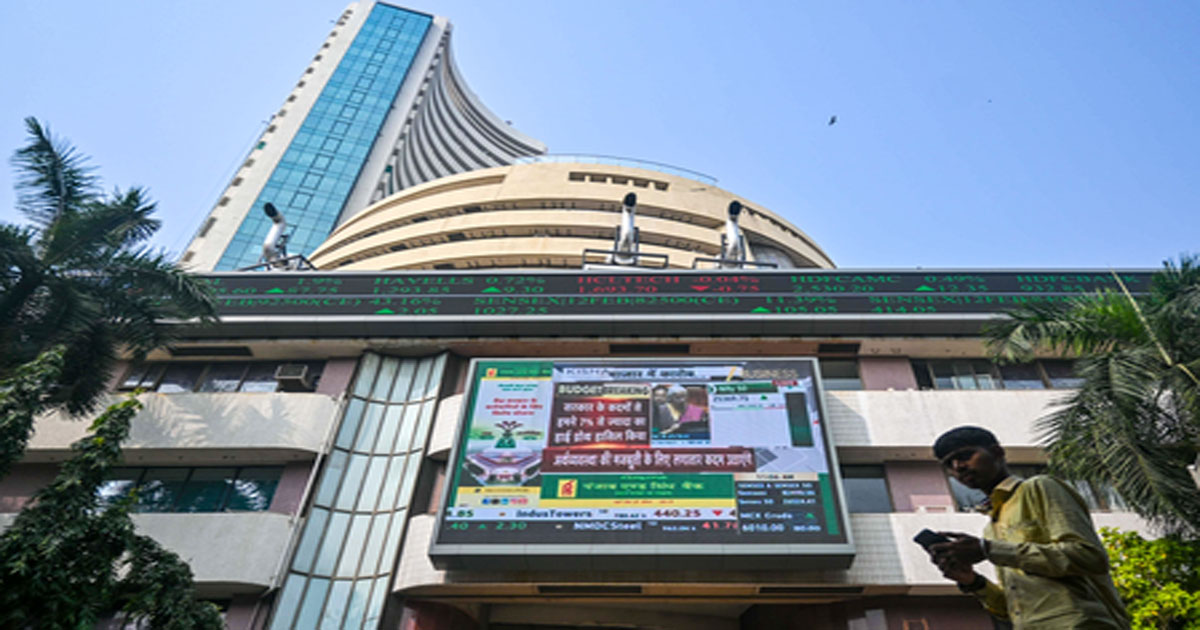
Mumbai, May 23: Indian equity benchmarks posted notable gains during the week as sentiments improved over easing crude oil prices and reports of indirect US–Iran talks.
Nifty gained 0.32 per cent during the week and added 0.27 per cent on the last trading day to reach 23,719. At close, Sensex was up 231 points or 0.31 per cent at 75,415. It advanced 0.24 per cent during the week.
“Despite the rebound, investors largely remained cautious, with limited conviction at higher levels continuing to cap upside momentum,” an analyst said.
The IT sector stood out as a clear outperformer, benefiting from attractive valuations following the recent correction.
Realty, cement, and private banks also held up while FMCG and consumer durables underperformed as concerns of WPI pass-through weighed on margins.
Midcap indices outperformed benchmark indices, as Nifty Midcap100 added 1.36 per cent, while Nifty Smallcap100 gained 0.41 per cent during the week.
The rupee found much-needed support as crude prices exhibited a modest pullback over persistent efforts to ease Middle East tensions.
However, fears of tightening monetary policy amidst expectations of higher input inflation provided an upward push for domestic bond yields, analysts said.
The US 30-year Treasury yield climbed to its highest level since 2007 during the week, reflecting growing concerns around sticky inflation, elevated energy prices and rising macroeconomic uncertainty.
It reinforced concerns that higher-for-longer interest rates could continue to pressure global liquidity conditions and risk assets.
Nifty 50 is expected to see the 23,800–24,000 region as a strong resistance zone and the 23,400–23,300 region remains a crucial support area, market participants said.
In Bank Nifty, immediate resistance is placed around the 54,200 level and the 53,600–53,500 region continues to act as an immediate support zone.
Foreign institutional investors (FIIs) largely remained net sellers, with cumulative outflows at around Rs 7,570 crore, a market participant said.
Investors remain keen on cues from India’s April IIP print, which will offer clues on whether recent manufacturing softness is a passing or persistent concern.
The RBI’s June policy decision and the US core PCE data are also key triggers for the market. A higher PCE print would push back expectations of US Fed rate cuts, limiting the prospect of meaningful FII inflows into emerging markets.
Business
Fuel Prices Rise Again: Petrol Nears ₹109/Litre, Diesel Crosses ₹95 In Mumbai After 3rd Hike In 10 Days Amid Global Oil Tensions

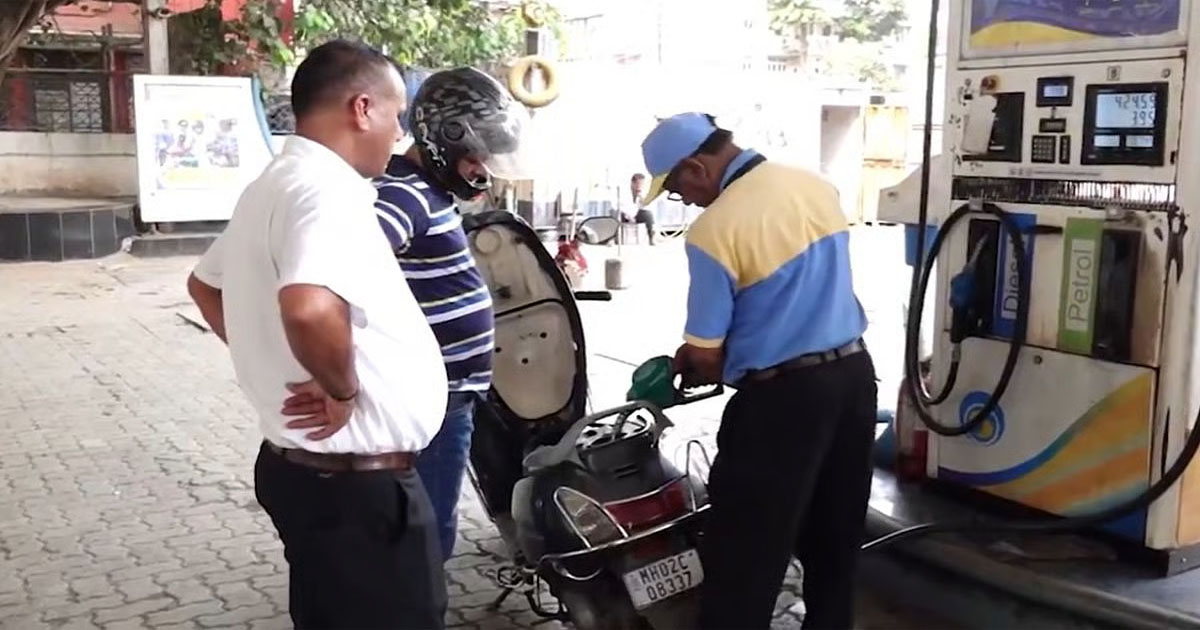
Mumbai: Mumbaikars were hit with another fuel price shock on Saturday as petrol and diesel rates were increased yet again, marking the third hike this month amid rising global crude oil prices and ongoing tensions in West Asia. With the latest revision, petrol in Mumbai is now inching closer to the Rs 109-per-litre mark, while diesel has crossed Rs 95 per litre.
State-run oil companies raised petrol prices by 87 paise per litre and diesel by 91 paise per litre across major cities. In Mumbai, petrol prices climbed from Rs 107.62 to Rs 108.49 per litre, while diesel rose from Rs 94.11 to Rs 95.02 per litre, according to an ANI report quoting sources.
The latest increase comes just days after fuel prices were hiked by around Rs 3 per litre on May 16, followed by another nearly 90-paise revision on May 19. Overall, petrol and diesel prices have surged by almost Rs 5 per litre within a week, putting additional pressure on commuters, transporters and households already battling inflation.
The repeated hikes are expected to majorly impact Mumbai’s daily economy, especially local transport operators, cab drivers, delivery services and small businesses dependent on fuel-intensive logistics. The rising transportation costs have also triggered fresh price increases in vegetables, milk, groceries and other essential commodities across the city.
The increase also comes amid growing concerns over global crude oil supply disruptions due to the ongoing geopolitical tensions in West Asia and fears surrounding the Strait of Hormuz, one of the world’s most critical oil transit routes. India imports nearly 85 per cent of its crude oil requirements, making domestic fuel prices highly sensitive to international market fluctuations.
A day before the latest revision, the Ministry of Petroleum and Natural Gas had attempted to calm panic among consumers by assuring that the country has adequate fuel stock and that supply chains remain stable despite rising demand.
“India has adequate availability of petrol and diesel. Supplies across the country continue to remain stable. Citizens are advised to avoid panic buying and purchase fuel only as per actual requirement,” the ministry said in an official statement. Officials also stated that oil marketing companies are continuously monitoring fuel distribution to prevent shortages at retail outlets.
Apart from Mumbai, fuel prices also rose sharply in other metro cities. In Delhi, petrol reached Rs 99.51 per litre while diesel climbed to Rs 92.49. Kolkata recorded petrol prices at Rs 110.64 and diesel at Rs 97.02, while Chennai saw petrol touching Rs 105.31 per litre.
The latest fuel hike is likely to further intensify inflationary concerns in Mumbai, where rising milk, bread and transportation costs have already increased pressure on household budgets in recent weeks.
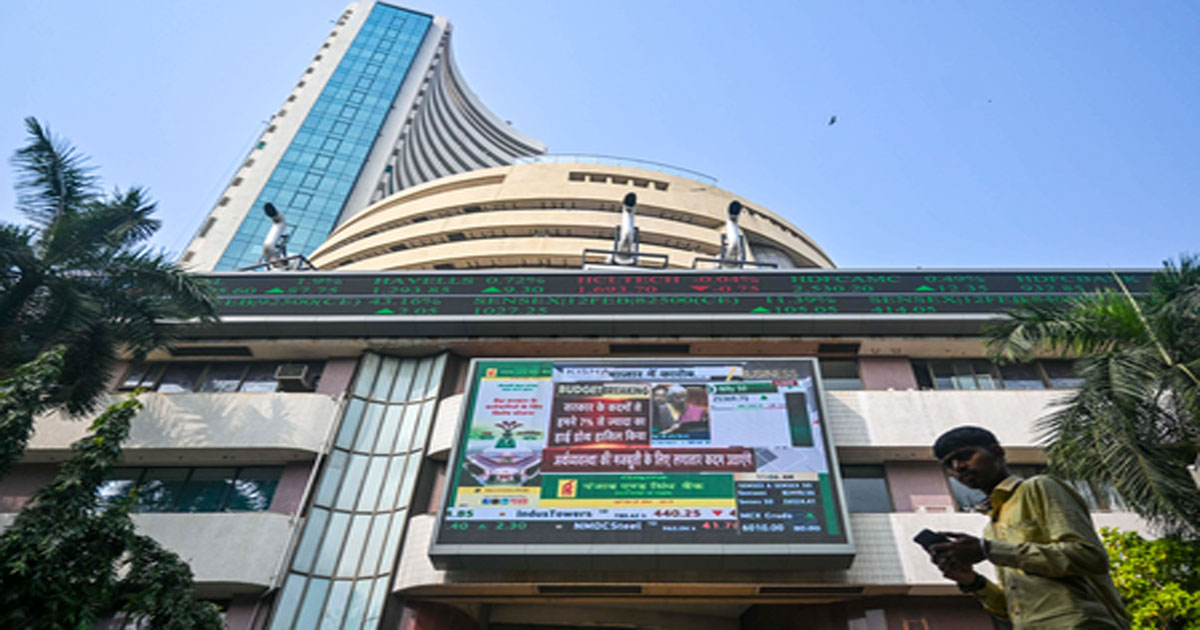
Mumbai, May 22: The Indian equity markets posted mild gains early on Friday tracking positive global cues, over optimism regarding US-Iran peace negotiations.
As of 9.23 am, Sensex added 307 points, or 0.41 per cent, to reach 75,491 and Nifty gained 89 points, or 0.38 per cent to reach 23,744.
Main broad-cap indices showed divergence with the benchmark indices, as the Nifty Midcap 100 added just 0.06 per cent, and the Nifty Smallcap 100 lost 0.02 per cent.
Sectoral indices on NSE traded mixed with gains led by Nifty PSU bank and Nifty private bank up 0.53 per cent and 0.75 per cent, respectively. Nifty media and realty were the top losers down 0.83 per cent and 0.75 per cent, respectively.
Immediate support for Nifty is placed around the 23,500–23,550 zone, while resistance is seen near the 23,850–23,900 range, market participants said. Immediate support for Bank Nifty is placed around the 53,300–53,500 zone, while resistance is seen near the 54,400–54,500 range.
Analysts noted that market activity is majorly marked by buying on dips and selling on rallies, probably led by institutional activity.
Brent crude declining to below $105 and rupee appreciating to 96.20 from 96.96 level are positive developments, they added.
Broader market activity shows an optimistic trend due to positive quarterly earnings from small and midcaps.
Asia-Pacific markets traded higher Friday over investor optimism regarding diplomatic efforts in reaching a peace deal in the Middle East.
Tehran said it remains committed to keeping enriched uranium stockpiles within the country, according to reports, which could pose challenges in concluding a deal with Washington, as US President Donald Trump continues to claim dismantling Iran’s nuclear programme as his central military objective.
In Asian markets, China’s Shanghai index gained 0.33 per cent, and Shenzhen added 1.2 per cent, Japan’s Nikkei advanced 2.29 per cent, and Hong Kong’s Hang Seng Index inched up 0.9 per cent. South Korea’s Kospi added 0.17 per cent.
The US markets ended in green overnight as Nasdaq gained 0.09 per cent. The S&P 500 advanced 0.17 per cent, and the Dow Jones added 0.55 per cent.
On May 21, foreign institutional investors (FIIs) net sold equities worth Rs 1,891 crore, while domestic institutional investors (DIIs) net bought equities worth Rs 2,492 crore.

Chinese-made weapons seized in Mumbai; three arms suppliers arrested

Bandra Garib Nagar demolition drive: Case registered against account holder for spreading rumours on X account, accused of spreading religious hatred

Mumbai: Three gangsters arrested for selling weapons, major operation by Crime Branch, who is investigating the criminal activities of the three

Attention Mumbaikar! Central Railways Announces 5-Hours Mega Block On Sunday May 24 – Check Details Here

Mumbai: Vasai Cops Arrested for Helping Murder Accused Escape; ₹45,000 Bribe Paid Via Google Pay

Maharashtra Shock: 22-Year-Old Arrested For Exploiting & Blackmailing Multiple Women In Kolhapur; Love Jihad Angle Suspected

Google to invest up to $40 billion in Anthropic amid global AI race

27 Years After Gangster Sadiq Kalia’s Encounter By Daya Nayak, His Nephew Arrested For Alleged Revenge Killing In Mumbai

Chembur Police Arrest Four For Trying To Sell Elephant Tusks Worth ₹3.5 Crore; Forest Department Confirms Seizure

Mumbai: Strict action directed against prominent Marathi placards in shops and institutions, warning of action in Shiv Sena style: Deputy Mayor Sanjay Ghadi
-

 Crime4 years ago
Class 10 student jumps to death in Jaipur
-

 Maharashtra2 years ago
Mumbai Local Train Update: Central Railway’s New Timetable Comes Into Effect; Check Full List Of Revised Timings & Stations
-

 Maharashtra2 years ago
Mumbai To Go Toll-Free Tonight! Maharashtra Govt Announces Complete Toll Waiver For Light Motor Vehicles At All 5 Entry Points Of City
-

 Maharashtra2 years ago
False photo of Imtiaz Jaleel’s rally, exposing the fooling conspiracy
-

 National News2 years ago
Ministry of Railways rolls out Special Drive 4.0 with focus on digitisation, cleanliness, inclusiveness and grievance redressal
-

 Maharashtra2 years ago
Maharashtra Elections 2024: Mumbai Metro & BEST Services Extended Till Midnight On Voting Day
-

 National News2 years ago
J&K: 4 Jawans Killed, 28 Injured After Bus Carrying BSF Personnel For Poll Duty Falls Into Gorge In Budgam; Terrifying Visuals Surface
-

 Crime2 years ago
Baba Siddique Murder: Mumbai Police Unable To Get Lawrence Bishnoi Custody Due To Home Ministry Order, Says Report