
Maharashtra
Mumbai: MMRDA eyes ₹3,000 crore revenue from 2 BKC plots

Eyeing ₹2,928.25 crore revenue in the next few months, the Mumbai Metropolitan Region Development Authority (MMRDA) is looking to monetise a part of its land bank at the business district of Bandra Kurla Complex (BKC). The proceeds from leasing out of two plots will be utilised to finance several ongoing and planned infrastructure and transportation projects in the Mumbai Metropolitan Region (MMR).
This week, the MMRDA has called in for bids to lease out C13 and C19 plots in the G-Block of BKC. These plots will be on lease for a period of 80 years. The leasing activity is part of the MMRDA’s plans, as approved in its budget for the current fiscal, to raise ₹4,217 crore revenue from the sale of lands.
Though the plot is marked for commercial purposes, the documents accessed by The FPJ showed that up to 30% of the area can be used for residential spaces. With a reserve price of ₹3,44,500 per sq m of the built-up area, the MMRDA looks at generating a minimum of ₹2,928.25 crore in revenue. Of the two plots, C13 has an area of 7,017.90 sq m with a permissible built up area of 45,000 sq m, which translates into a reserve price of ₹1,550.25 crore. The second plot is 6,096.67 sq m, with a permissible built up area of 40,000 sq. m. The reserve price of C19 is ₹1,378 crore.
The last monetisation of plots was done in last October, when after a wait of four years, the MMRDA had managed to lease out two of its prime land parcels in the BKC for ₹2,067 crore.


Maharashtra
Mumbai: Eviction proceedings against furniture vendors on Do Tanki Maulana Shaukat Ali Marg in ‘E’ ward

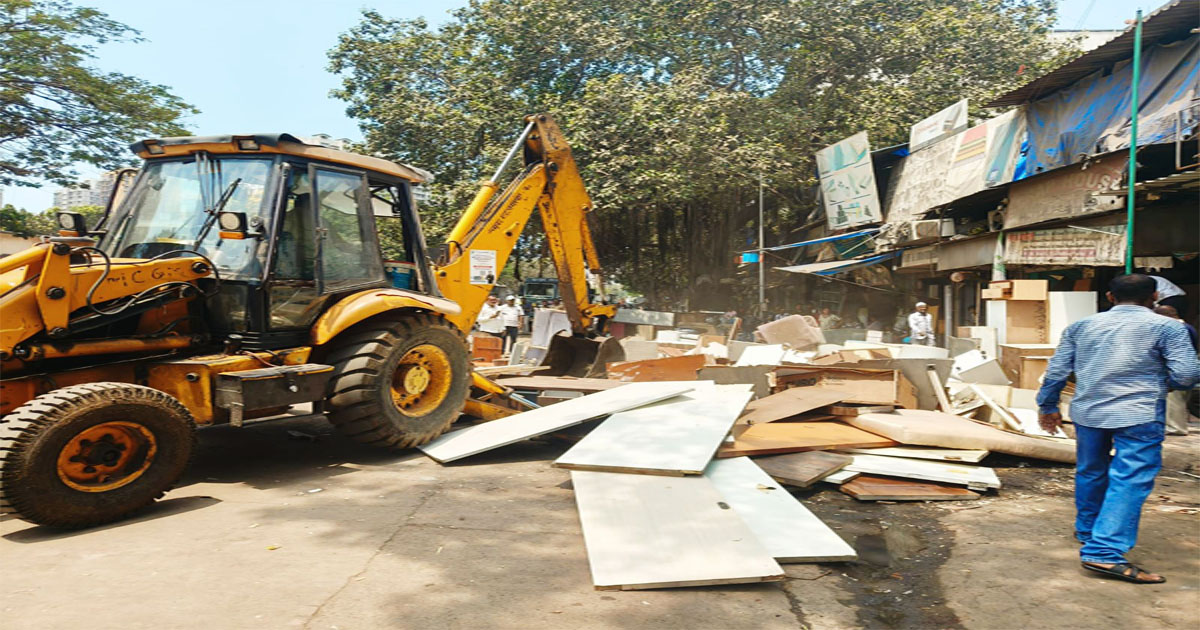
The ‘E’ Ward Department of the Mumbai Municipal Corporation recently took action against old furniture vendors and other encroachments on Maulana Shaukat Ali Marg under the ‘E’ Department. This action was taken under the guidance of Deputy Commissioner (Zone 1) Chanda Jadhav and led by Assistant Commissioner Anand Kankal. The encroachments on Maulana Shaukat Ali Marg in the ‘E’ Department, especially in the area from Muralideora Eye Hospital to JJ Hospital Signal, were causing a lot of trouble to the pedestrians. The pedestrians were forced to walk on the road instead of the footpath, which was putting their lives at risk. Keeping this situation in mind, the Conservation and Encroachment Elimination teams of the ‘E’ Division of the Municipal Corporation jointly launched a campaign along with the Mumbai Police. During this eviction operation, a crackdown and strict action was taken against the furniture vendors. The old furniture lying on the footpaths was destroyed on the spot with the help of JCB. Along with this, the waste of broken furniture was also removed immediately. All encroachments on the footpath were removed. In addition, action was also taken against unauthorized hawkers in the area. Due to which the road was completely opened for traffic.
1 JCB, 4 laborers, 3 officers and 2 engineers participated in this campaign. In addition, 9 personnel from Nagpara Police Station were deployed for security. Meanwhile, the ‘E’ Division of the Mumbai Municipal Corporation is once again making it clear on this occasion that regular action will continue against unauthorized constructions and unauthorized hawkers.
Maharashtra
Don’t target the bodyguard… Important comment of the Bombay High Court in the Sameer Wankhede case
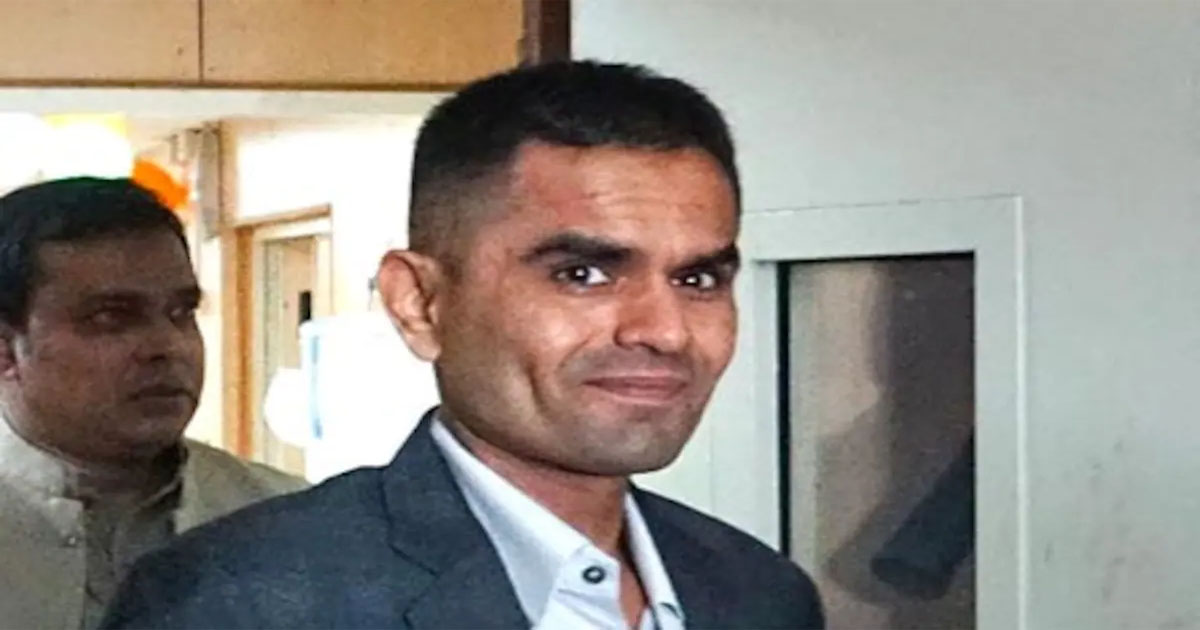
Mumbai: The Bombay High Court has made several important comments while hearing the NCB Zonal Director Sameer Wankhede bribery case and has asked the agency questions, the first of which was whether you can inquire into the statement of the accused? The NCB had earlier submitted a report in the closed session regarding the inquiry of Sameer Wankhede, saying that the inquiry into Wankhede is not the result of Nawab Malik or any political pressure, but this inquiry is being conducted on an unknown complaint and letter. Along with this, the complainant Kiran Sajnani had also demanded an inquiry into the methods of Sameer Wankhede, while Sameer Wankhede had arrested Kiran Sajnani in the drugs case and also arrested his accomplice Sameer Khan. Sameer Khan is the son-in-law of Nawab Malik. Sameer Khan died in a car accident. The court has commented on Sameer Wankhede that an officer and security guard who is doing good work in the society should be targeted. This comment was made by the court on the complaint filed by the accused against Sameer Wankhede. Along with this, the accused whose complaint is being investigated is accused of drug trafficking. It is alleged that he and his partner had planned to sell drugs like Vadapao in Mumbai. Sameer Wankhede had arrested Aryan Khan in the Cordelia Cruz case while taking action against drugs. He is also accused of demanding a bribe of Rs 25 crore from him. The CBI has registered a case in this case. In the same case, a private petitioner has demanded that both giving and receiving bribes fall under the category of crimes. If Wankhede has received bribes, then Shah Rukh Khan should also be made an accused in this case because giving bribes is also a crime. In this case, the High Court has given relief to Wankhede by making an important comment.
Crime
Minor Scratch On Two-Wheeler Snowballs Into Violent Youth Brawl At Telephone Exchange Chowk In Nagpur
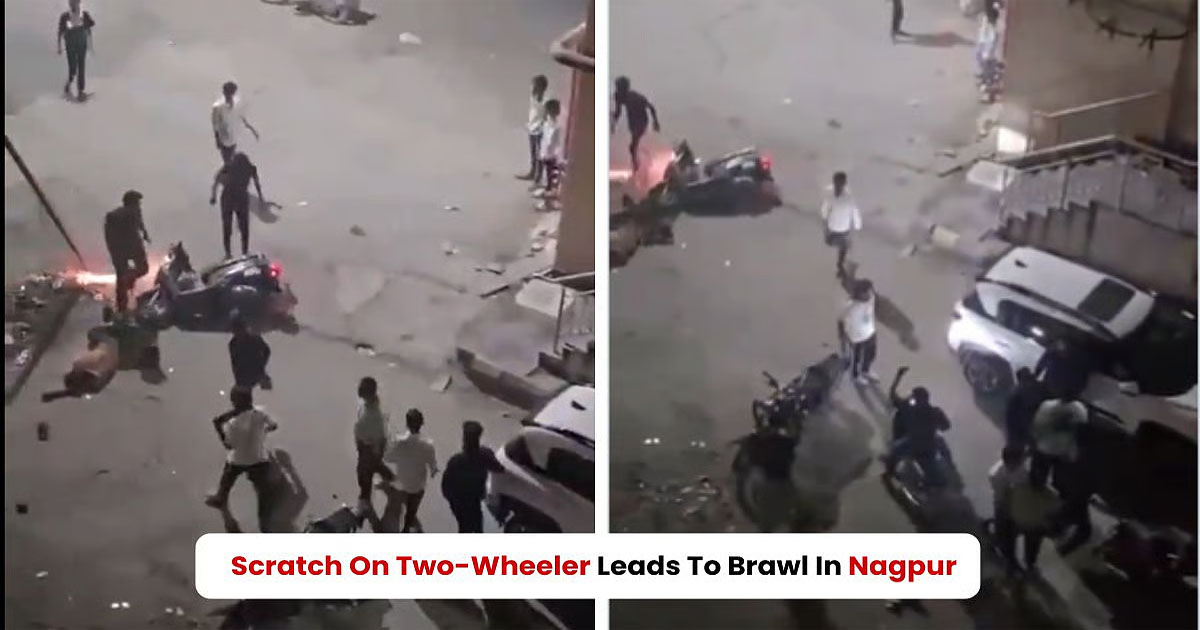
Nagpur: A shocking late-night clash at Telephone Exchange Chowk in Nagpur has come to light after a video of the incident surfaced online, showing two groups of youths brutally attacking each other following a minor dispute over a scratch on a two-wheeler.
The incident took place around 11 pm on Monday when two groups of young men, who were allegedly under the influence of alcohol, were on their way to a Savji hotel for dinner. The situation reportedly spiralled out of control after one group allegedly scratched the bike of the other, triggering a heated argument.
What initially began as a verbal spat soon turned into a violent street brawl. The visuals circulating online show members of both groups exchanging blows in the middle of the road, with the fight quickly intensifying. In the video, youths can be seen raining kicks and punches on each other, while also using sticks and whatever objects they could find nearby to attack their rivals.
The ferocity of the clash is evident in the footage, which shows complete chaos unfolding. At one point, several individuals are seen falling to the ground during the assault, while others continue the attack in full public view. The video further shows that after the violence subsided, one group began leaving the spot while members of the other group, who had collapsed on the road, were seen trying to help each other get back on their feet.
The incident has raised serious concerns over how quickly minor disagreements can snowball into dangerous and potentially fatal confrontations. That a dispute allegedly triggered by a scratch on a scooter could escalate into such a brutal attack has once again drawn attention to rising street violence and reckless behaviour, particularly when alcohol is involved.
The disturbing visuals have since gone viral on social media, sparking outrage and concern among viewers. The incident serves as yet another reminder of how unchecked anger and intoxication can turn a trivial matter into a life-threatening episode within minutes.

Employee arrested from UP for stealing from Mumbai spice shop, cash recovered

Mumbai: Eviction proceedings against furniture vendors on Do Tanki Maulana Shaukat Ali Marg in ‘E’ ward

Don’t target the bodyguard… Important comment of the Bombay High Court in the Sameer Wankhede case

Minor Scratch On Two-Wheeler Snowballs Into Violent Youth Brawl At Telephone Exchange Chowk In Nagpur

Mumbai: Impostor Ashok Kharat now under police station connection, rape case registered against municipal officer

Mumbai: 28-Year-Old Ghatkopar Woman Killed By Speeding Tanker While Crossing Road, Driver Arrested

Dhurandhar 2 Box Office Collection Day 9: Ranveer Singh Starrer Earns ₹41.55 Crore On Its Second Friday; Enters ₹700 Crore Club

Bharti Airtel Receives ₹1,74,000 Penalty Notice From DoT For Subscriber Verification Lapses

Thane Horror: Man Slashed With Chopper In Naupada For Refusing ‘Vargani’, Caught On Camera

PM Modi & US President Donald Trump Hold Crucial Talks As West Asia Crisis Deepens; Musk Joins Call
-

 Crime4 years ago
Class 10 student jumps to death in Jaipur
-

 Maharashtra2 years ago
Mumbai Local Train Update: Central Railway’s New Timetable Comes Into Effect; Check Full List Of Revised Timings & Stations
-

 Maharashtra2 years ago
Mumbai To Go Toll-Free Tonight! Maharashtra Govt Announces Complete Toll Waiver For Light Motor Vehicles At All 5 Entry Points Of City
-

 Maharashtra2 years ago
False photo of Imtiaz Jaleel’s rally, exposing the fooling conspiracy
-

 National News2 years ago
Ministry of Railways rolls out Special Drive 4.0 with focus on digitisation, cleanliness, inclusiveness and grievance redressal
-

 Maharashtra1 year ago
Maharashtra Elections 2024: Mumbai Metro & BEST Services Extended Till Midnight On Voting Day
-

 National News2 years ago
J&K: 4 Jawans Killed, 28 Injured After Bus Carrying BSF Personnel For Poll Duty Falls Into Gorge In Budgam; Terrifying Visuals Surface
-

 Crime2 years ago
Baba Siddique Murder: Mumbai Police Unable To Get Lawrence Bishnoi Custody Due To Home Ministry Order, Says Report