
Maharashtra
BMC Elections 2026: Will ‘Marathi Manoos’ Decide The Winner Of Mumbai Civic Polls?

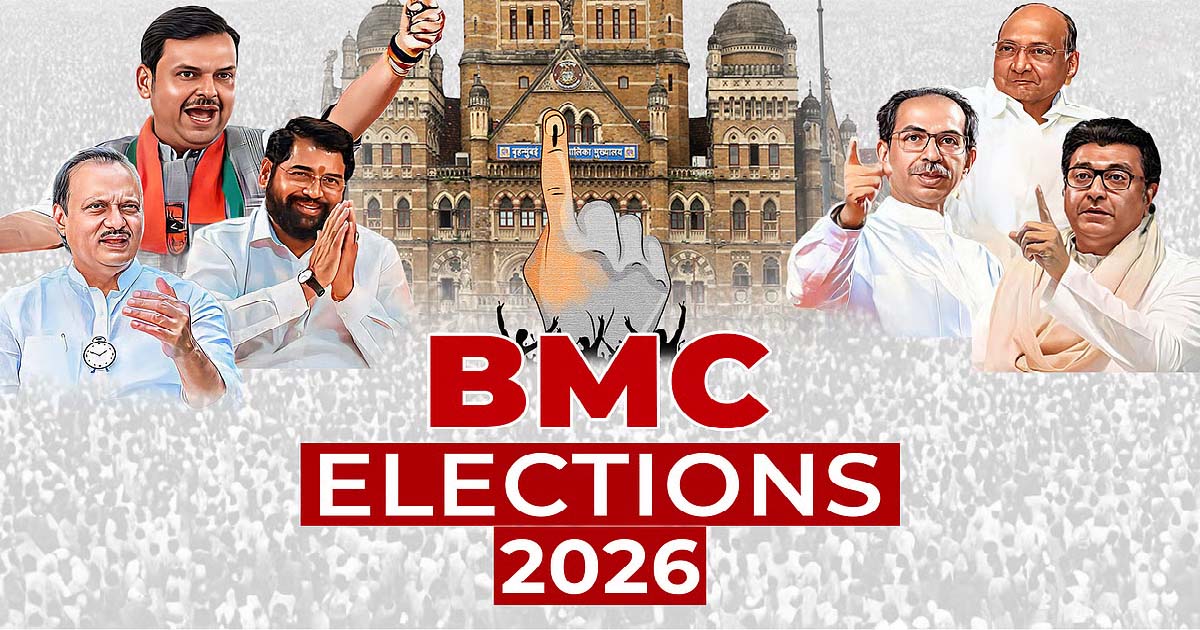
Mumbai: The upcoming Brihanmumbai Municipal Corporation (BMC) elections, scheduled for January 15, 2026, are set to be a definitive battle for Mumbai’s soul. At the heart of this contest is the ‘Marathi Manoos’ factor, a demographic that comprises approximately over 30 per cent of the city’s electorate but holds disproportionate influence over the narrative of ‘Marathi Asmita’ (pride).
With the split in the Shiv Sena and the emergence of competing claims for the Marathi vote, several key wards and areas have become the primary battlegrounds.
Traditionally, the epicentre of Marathi politics, these areas are the birthplace of the Shiv Sena.
The Dynamics: These wards have seen a shift from mill-worker-dominated chawls to luxury high-rises. However, the core identity remains fiercely Marathi.
Key Conflict: This is a prestige battle for the Uddhav Thackeray-led Sena (UBT) to retain its home turf against the Eknath Shinde-led Sena, which claims the true legacy of Bal Thackeray. The MNS (Maharashtra Navnirman Sena) under Raj Thackeray also remains a potent third force here, often acting as a ‘spoiler’ or a kingmaker.
While the western suburbs are often associated with Gujarati and North Indian populations, specific areas like Vile Parle (East) and Dahisar have dense Marathi clusters.
Vile Parle (Ward K-East): Known as a cultural hub, the Marathi middle class here is vocal and politically active. The BJP is aggressively courting this segment by promising a ‘Marathi Mayor,’ a strategic move to peel away traditional Sena loyalists.
Dahisar (Ward R-North): As one of the last frontiers of the city, Dahisar has a major ‘Bhumiputra’ population. Issues of local redevelopment and infrastructure are being framed through the lens of preserving Marathi areas.
The eastern suburbs house a massive Marathi-speaking population, particularly in the lower-middle-class and labour segments.
Bhandup & Mulund (Ward S): Bhandup has historically seen high-voltage clashes between the Sena and MNS. The ‘Marathi vs Outsider’ narrative often surfaces here regarding job opportunities and housing.
Chembur (Ward M-West): This area sees a mix of Dalit-Marathi and upper-caste Marathi voters. The Maha Vikas Aghadi (MVA) is counting on a consolidated Marathi-Dalit-Muslim front, while the Mahayuti is focusing on splitting the Marathi vote through the Shinde faction’s ‘Sons of the Soil’ rhetoric.
In a historic departure from its usual plank of ‘Vikas’ (Development), the BJP has recently declared that if the Mahayuti alliance wins, the Mayor of Mumbai will be a Marathi Manoos. This is a direct attempt to neutralise the ‘Anti-Marathi’ tag often used against the party by the Sena UBT faction.
The Thackeray Cousins: Reports of a tactical understanding between Uddhav and Raj Thackeray could consolidate the Marathi vote.
Delimitation Impact: With nearly 20-25 per cent of ward boundaries modified in the recent rectification, traditional vote banks have been disrupted, making grassroots mobilisation critical.
Housing & Displacement: The ‘Marathi Manoos’ being pushed out of Mumbai to the Mumbai Metropolitan Region (MMR) due to high costs is a primary emotional trigger that the opposition will use against the ruling dispensation.
As January 15 approaches, these wards will not just decide who controls the country’s richest civic body, but also who truly represents the Marathi identity in the city.


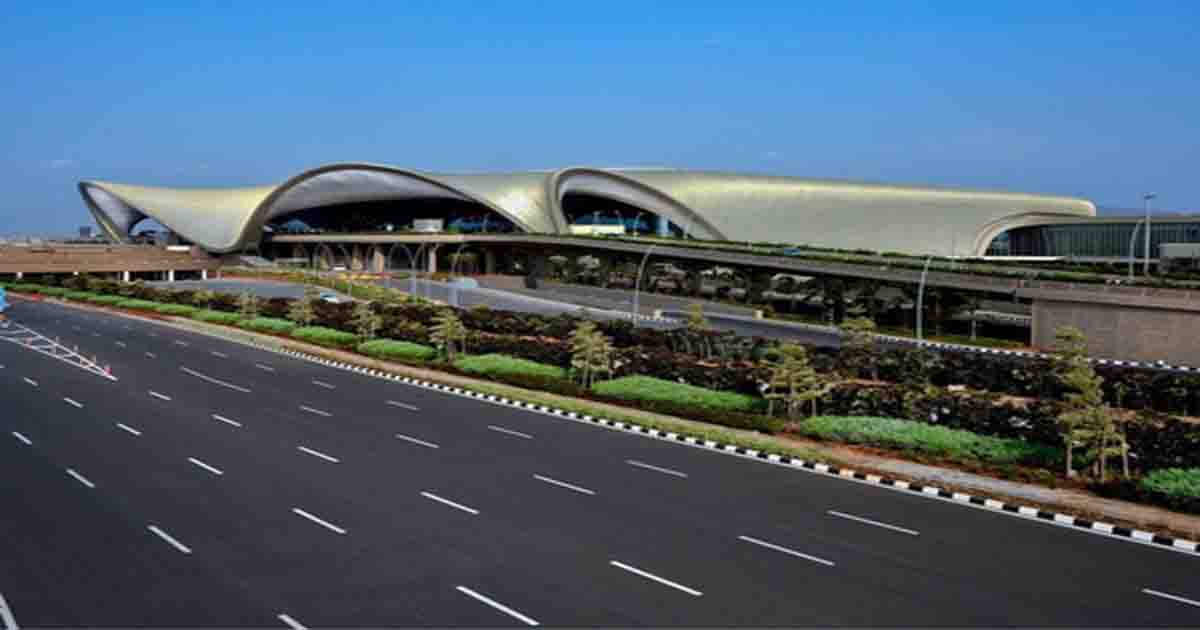
Ahmedabad, Oct 5: Navi Mumbai International Airport (NMIA) is strengthening its public transport and ground mobility infrastructure ahead of the Winter Schedule 2026-27, with a wider network of buses, taxis, autorickshaws, car rentals, and airport shuttles aimed at improving connectivity across Mumbai, Navi Mumbai, Pune and the wider Mumbai Metropolitan Region, it was announced on Monday.
The airport, operated by Adani Airport Holdings Limited (AAHL), is preparing for the Winter Schedule that will run from October 25, 2026, to March 27, 2027.
As part of the expansion, the Maharashtra State Road Transport Corporation (MSRTC) will launch e-Shivai electric bus services from NMIA on October 7.
The first phase of MSRTC services will connect the airport with Dadar, Borivali and Pune. Fares from NMIA have been set at Rs 450 for Pune, Rs 210 for Borivali, and Rs 170 for Dadar East. Children below 12 years and women travelling with a National Common Mobility Card will be eligible for a 50 per cent fare concession.
The Dadar-NMIA service will operate through Sion and Atal Setu, while the Borivali-NMIA route will connect CSMIA Terminal 1, Bandra, and Atal Setu. The Pune route will have two daily services, with one operating in the morning and another in the afternoon. MSRTC also plans to introduce services connecting NMIA with Thane and Nashik by mid-November.
Private bus operator Chalo Bus is already providing 21 daily services connecting NMIA with Marol in Andheri East, Bandra, Dadar, and the World Trade Centre in Colaba. The operator is also adding capacity during peak periods to cater to passenger and airport employee movement.
Within Navi Mumbai, Navi Mumbai Municipal Transport (NMMT) is operating seven dedicated airport routes, A1 to A7, linking Terminal 1 with Kharkopar, Targhar, Belapur, Nerul, Panvel, Khandeshwar and the Airport Project Office. Services between Belapur and Nerul are available every 15-20 minutes during peak hours, while further connectivity to Vashi and Panvel is planned.
The airport is also expanding taxi and last-mile connectivity. Uber Go and Uber Premier will provide app-based cab services, while Uber Auto will cater to passengers seeking on-demand autorickshaw services for shorter journeys. Prepaid taxi and autorickshaw facilities, along with car rental services, are also being introduced at the airport.
Bharat Taxi is scheduled to begin operations at NMIA from October 10 with a dedicated fleet of up to 40 vehicles, adding another option for passengers travelling to and from the airport.
A complimentary inter-airport shuttle service is also being introduced between NMIA and Chhatrapati Shivaji Maharaj International Airport (CSMIA). Operated by Cityflo, Aarya and Chalo, the shuttle will run every hour and provide passengers with a direct transfer option between Mumbai’s two airports.
Overall ground transport capacity at NMIA is being scaled up to 4,594 vehicles and services, including 3,787 app-based taxis, 184 car rentals, 171 autorickshaws and 547 buses. The airport is also deploying mobility signage, improved wayfinding systems and on-ground passenger assistance, with designated areas for buses, shuttles, arrivals, departures and private vehicles.
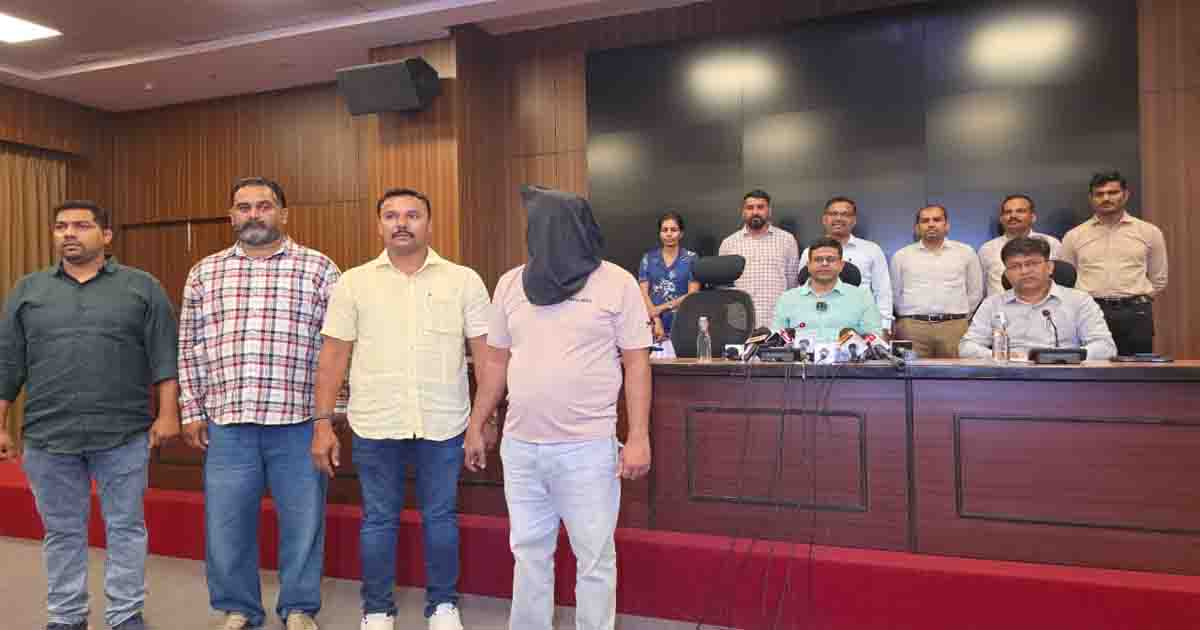
In a case involving the defrauding of a 72-year-old senior citizen in Mumbai on August 13, an unidentified caller—posing as Dinesh Kumar, a Senior Manager at Bank of India—gained the victim’s trust by promising to facilitate the issuance of a Senior Citizen Card. The caller sent an APK file named “Senior Citizen Card http://Verification.apk” to the complainant’s WhatsApp and coerced them into entering personal and bank debit card details, resulting in the misappropriation of ₹5,62,000. Initially, the Byculla Police Station registered a case (No. 497/26) under Sections 318(4) and 319(2) of the BNS and Sections 66(C) and (D) of the Information Technology Act, 2000. While the Property Cell of the Mumbai Crime Branch was conducting a parallel investigation, senior officials ordered the transfer of the case to the Crime Branch; it was subsequently re-registered as Case No. 927/2026 for further investigation.
A thorough technical analysis of the aforementioned APK file was conducted, leading to the identification and arrest of the accused—a 36-year-old male software developer and resident of Madhya Pradesh—who was responsible for developing the fraudulent APK file. During a raid on the accused’s office in Madhya Pradesh, authorities recovered a pen drive, a CPU, three hard disks, a Wi-Fi router, and three mobile phones. Preliminary technical analysis revealed that the accused was utilizing servers from various service provider companies. Investigation confirmed that the accused had created and sold a total of 2,805 malicious APK files to other cybercriminal gangs. These files were used to defraud 9,673 people across India. Complaints regarding these incidents have been registered on the cyber helpline number 1930—specifically 1,074 nationwide, 143 in Maharashtra, and 36 in Mumbai—revealing a total fraud amount of ₹15.75 crore. Cases have been cracked involving 88 incidents across India, 8 in Maharashtra, and 5 in Mumbai.
This successful operation was executed by a team comprising Police Commissioner Devin, Joint Police Commissioner Anil Kumbhare, Additional Commissioner Krishna Kant Upadhyay, DCP (Crime) Raj Tilak Roshan, and the Crime Branch. DCP Raj Tilak Roshan stated that this action was taken in response to fraud targeting the elderly under the guise of issuing senior citizen cards; the police also regularly conduct awareness campaigns among the elderly regarding this issue.
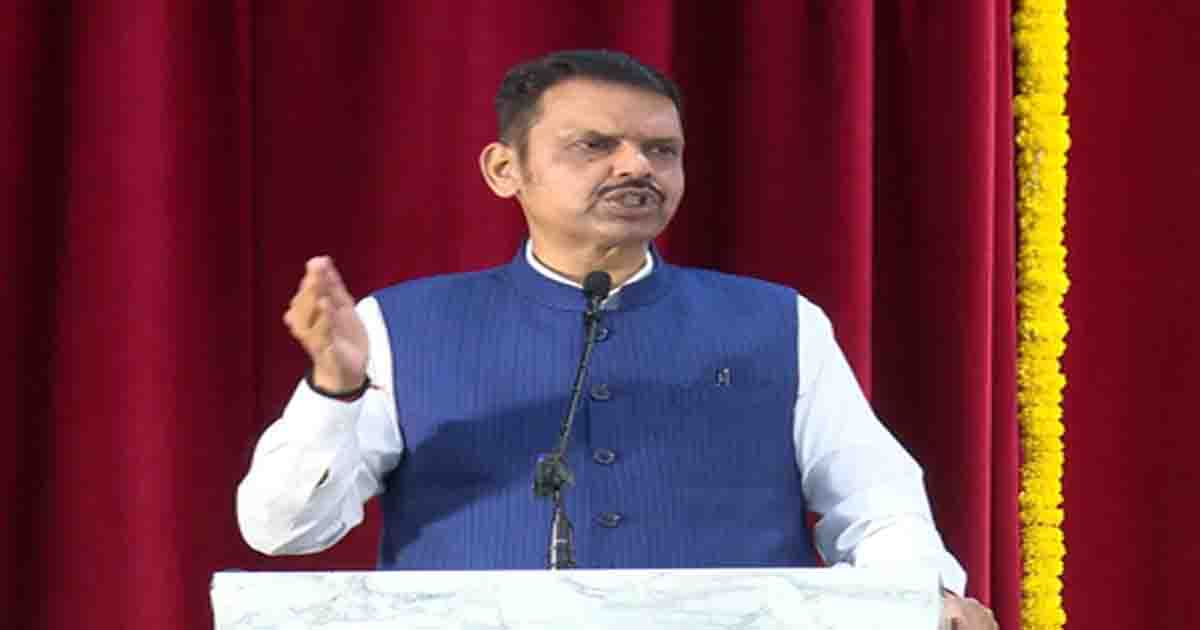
Mumbai, Oct 5: Responding to escalating protests by competitive examination aspirants, Maharashtra Chief Minister Devendra Fadnavis on Monday formally recommended that Governor Jishnu Dev Varma constitute a high-level inquiry panel to initiate proceedings against current and former members and chairpersons of the Maharashtra Public Service Commission (MPSC) under Article 317 of the Constitution.
The Chief Minister proposed that a committee headed by a retired High Court judge investigate the allegations and submit a comprehensive report within three months to determine subsequent action.
CM Fadnavis highlighted that removing MPSC officials, who hold constitutional posts, requires a strict procedure.
Under Article 317, removal can only take place following a formal inquiry and subsequent action involving the President of India and the Supreme Court.
Following assurances given during discussions between the Chief Minister and a delegation of student representatives, MPSC Secretary Mahendra Harpalkar has been officially relieved of his duties.
Agitation intensified across Pune after a paper leak was confirmed in the Drug Inspector examination conducted by the MPSC for the Food and Drug Administration (FDA).
Investigations revealed that three candidates had directly benefited from the leak. All three candidates and several alleged accomplices have since been arrested.
Aspirants led by MLA Rohit Pawar have been protesting at multiple locations in Pune, demanding the immediate resignation of MPSC Chairman Vivek Bhimanwar, who assumed office in early 2026.
The demonstrations also reflect ongoing student concerns regarding the examination pattern, particularly the issue of multiple-choice questions versus descriptive formats, as well as broader questions of administrative accountability.
Students have been demanding the resignation of the MPSC chairperson, with opposition parties extending full support to the protest movement.
The movement now appears to have achieved a breakthrough with Chief Minister Devendra Fadnavis’ formal recommendation to Governor Jishnu Dev Varma.
Meanwhile, amid the ongoing controversies surrounding MPSC examinations, Shiv Sena MLA Sanjay Gaikwad publicly criticised his own government on Sunday.
Making serious allegations against the MPSC Board, he demanded that the board itself be dissolved.
He also said that he would hand over his evidence and a formal letter directly to the Chief Minister.
The state government’s latest measures aim to restore candidates’ trust by establishing a time-bound, independent judicial inquiry into the commission’s administrative functioning.

Navi Mumbai Airport expands multimodal transport network ahead of winter flight schedule

Bihar: SI recruitment protest turns tense as candidates clash with police

Man arrested in Mumbai for defrauding senior citizens and others using fake APK files.

MPSC paper leak row: Maha CM seeks Guv’s nod for judicial probe

Mumbai: NCW chief Vijaya Rahatkar holds POSH workshop, reviews security with top cop

Gift to President Putin part of PM Modi bid to globally display India’s heritage

PM Modi’s warm camaraderie with Putin, Xi on full display at BRICS Summit

Corporators of all parties in trouble! Corporators of all major parties including Shiv Sena (UBT), BJP and Congress are facing legal challenges.

Complaint against Netflix & Mukesh Chhabra for inappropriate language on ‘India’s Got Latent 2’

Maha Congress stages agitation against Gyanesh Kumar
-

 Crime4 years ago
Class 10 student jumps to death in Jaipur
-

 Maharashtra2 years ago
Mumbai Local Train Update: Central Railway’s New Timetable Comes Into Effect; Check Full List Of Revised Timings & Stations
-

 Maharashtra2 years ago
Mumbai To Go Toll-Free Tonight! Maharashtra Govt Announces Complete Toll Waiver For Light Motor Vehicles At All 5 Entry Points Of City
-

 Maharashtra2 years ago
False photo of Imtiaz Jaleel’s rally, exposing the fooling conspiracy
-

 National News2 years ago
Ministry of Railways rolls out Special Drive 4.0 with focus on digitisation, cleanliness, inclusiveness and grievance redressal
-

 Maharashtra2 years ago
Maharashtra Elections 2024: Mumbai Metro & BEST Services Extended Till Midnight On Voting Day
-

 National News2 years ago
J&K: 4 Jawans Killed, 28 Injured After Bus Carrying BSF Personnel For Poll Duty Falls Into Gorge In Budgam; Terrifying Visuals Surface
-

 Crime2 years ago
Baba Siddique Murder: Mumbai Police Unable To Get Lawrence Bishnoi Custody Due To Home Ministry Order, Says Report