
National News
Mumbai BMC Elections 2026: As The City Votes Amid Political Noise, Civic Governance, Sustainability And Survival Remain Ignored

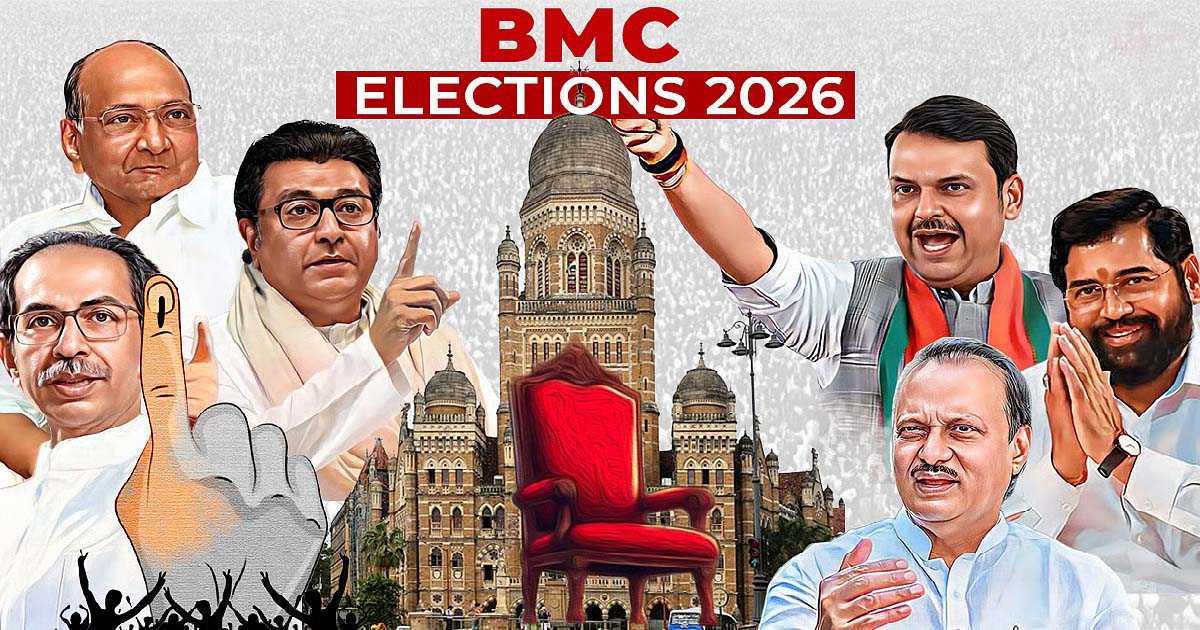
The election to the Brihanmumbai Municipal Corporation (BMC) is just a few days away. The contest among candidates of various political parties has intensified. Amid all this political churn, the common Mumbaikar remains silent—as does this metropolis that provides livelihoods to millions of families every day. Spread over 480 square kilometres, this city deserves to be discussed beyond the lens of politics.
Mumbai contributes 45 to 50 per cent of the state’s total revenue. Additionally, Mumbai’s share in the Gross Domestic Product (GDP) is 6.16%. As India aspires to become a USD 5 trillion economy and Maharashtra seeks to make a substantial contribution to it, Mumbai’s role becomes vital. For that, the city’s governance must be equally strong. Roads, sewage systems, street lighting, healthcare, education, and maintaining the city’s aesthetics must therefore be top priorities for the municipal corporation.
The last municipal election was held in 2017. After that, the years 2020, 2021, and 2022 were spent battling COVID-19. During these three years, the corporation’s focus changed completely. Activity in its buildings came to a halt. In March 2022, the elected body of the BMC was dissolved; four years have now passed since then. For seven years—three years of COVID and four thereafter—the corporation functioned without elected councillors. During this period, many officials retired, creating a significant vacuum.
Now, new councillors will come in, and much of the administrative machinery is also relatively new. How they will function will be interesting to watch. Increasing the corporation’s revenue is imperative. Large infrastructure projects have put pressure on the civic treasury. It is said that in the last four years, the corporation has issued work orders worth around ₹2.5 lakh crore. Whether the civic coffers can withstand such strain should have been seriously considered.
The next five years will be extremely challenging for the corporation. Every month, ₹700–800 crore is required just to pay salaries. The corporation cannot be run on emotional politics alone; it requires a practical approach and capable leadership. Around ₹10,000 crore is due to the corporation from various state government departments and authorities.
Even if the corporation currently appears flush with funds, ignoring civic amenities and administration will lead to very serious problems. In recent years, an important business district like the Bandra–Kurla Complex (BKC) has developed. It houses the US Consulate, a bullet train station, a diamond hub, the Mumbai Cricket Association’s indoor stadium, and offices of the central government and leading corporate groups. Yet, there is not a single well-equipped municipal building in this area that could serve as a major center for suburban civic services—no one ever planned for it.
The seating capacity of the assembly hall at the BMC headquarters is 70, yet 270 councillors sit there. During meetings, a large number of officials have to stand. The fact that no one thought of constructing an alternative municipal building after Independence is a stark reality.
The real focus should be on the quality of life and living standards of Mumbai’s citizens. In truth, Mumbai’s infrastructure projects should have begun much earlier. In many major cities around the world, such projects started decades ago—the London Tube, for instance, is about 100 years old.
Recent episodes of air pollution underline how essential it is to address Mumbai’s environmental needs. Mangroves along the coastline play a crucial role, yet permissions to cut them are repeatedly sought for infrastructure projects.
While presenting Mumbai’s climate action plan in 2021, then Municipal Commissioner I.S. Chahal stated that 70–80 per cent of Wards A, B, C, and D in South Mumbai would be submerged by 2050 due to rising sea levels. If areas such as Mantralaya, Vidhan Bhavan, Nariman Point, Colaba, Cuffe Parade, and Fort are likely to go underwater, then why are thousands of crores being invested in infrastructure in these zones? No one seems to be discussing this.
The corporation’s primary responsibility is to provide civic amenities. Mumbai contributes enormously to both the state and national exchequer—about 30 percent of national income and nearly half of the state’s revenue come from this city. Therefore, large infrastructure projects should ideally be undertaken by the government, while municipal funds should be used for basic civic services. But this is not what is happening.
The Coastal Road was built at a cost of around ₹15,000 crore. Its annual maintenance cost is said to be between ₹800 and ₹1,000 crore. Responsibilities such as resurfacing, signal systems, tunnel maintenance, manpower, and control rooms lie with the corporation. There is no alternative revenue model for this 18 km stretch, which is primarily used by car owners. Traffic inflow has increased after the connectivity of the coastal road was provided to the Sea Link. But, toll is collected on the Sea Link but not on the Coastal Road. A part of that revenue income ideally should go towards the BMC, which is not happening.
Even a platform ticket at a railway station costs ₹10, but the Coastal Road is free. The corporation’s responsibility is not limited to catering to the elite of the western suburbs; it must also address the needs of residents in the eastern suburbs and informal settlements.
Adding to the burden, the responsibility for the Versova–Dahisar stretch of the Coastal Road has fallen on the corporation. The Bandra–Versova section will be handled by the Maharashtra State Road Development Corporation, and there is an expectation that the BMC should take responsibility further north up to Mira–Bhayandar. While such an expensive facility is being created in one specific part of the city, its cost will be borne by all Mumbaikars.
Mumbai’s water needs are also being ignored. Not a single dam has been built after the Middle Vaitarna. On the contrary, Mumbai witnesses massive construction activity for skyscrapers, large infrastructure projects—all of which require enormous amounts of water.
Currently, Mumbai faces a shortfall of 400–500 million litres of water per day. Water tariffs have not been increased in the last 2–3 years. People pay ₹20 for a one-litre bottle of packaged water, yet the corporation supplies 1,000 litres of water for just ₹5. This water is brought from 125 km away and treated in municipal purification plants. Still, tariffs are not increased for the sake of popularity.
Mumbai’s sewage system is not 100 per cent complete. In some areas, untreated sewage flows directly into the sea or drains, leading to serious problems that are largely ignored.
The municipal healthcare system is under tremendous pressure and needs serious attention. Certain hospitals attract heavy patient loads due to better treatment facilities, but they lack sufficient beds. No serious effort has been made to establish a good super-speciality hospital. Land allotted by the state government for a cancer hospital in Marol was given to Seven Hills Hospital, which landed in trouble. The issue is still unresolved. Even today, there is no good hospital in the eastern suburbs.
The announcement of “Zero Prescription”—ensuring citizens would not need to buy medicines from outside—was made three years ago, but it has not been fully implemented.
To win elections, populist announcements are made. Most of the working class is engaged in the service sector. Even a one-bedroom apartment costs around ₹1 crore. Working citizens want quality roads, railways, and civic amenities, and a better standard of urban life. Instead of focusing on this, announcements are made about concessions in property taxes. Earlier, homes up to 500 sq ft were given concessions; now there is talk of extending this to homes up to 700 sq ft. There is little thought about the real needs of a world-class city versus what is actually being offered.
Mumbai generates around 8,000 metric tonnes of waste every day. Political leaders say that no charges will be levied for waste management. But this waste is not generated only by the city’s 15 million residents; large numbers of people who visit this metropolis for various reasons also contribute. This fact needs to be considered.
Municipal administration was once a strong backbone of the BMC. Many administrators have left their mark on the BMC—S S Tinaikar, Sharad Kale, and Subodh Kumar are among the recent lot. Through the concept of fungible Floor Space Index (FSI), Subodh Kumar created a new source of revenue for the corporation.
The administration, which should be accountable to citizens, has become more accountable to political leadership. Issues raised by political leaders receive more attention than civic problems raised by citizens.
The corporation has 1.4 lakh sanctioned posts, of which around 50,000 are said to be vacant. This affects the delivery of civic services. About half of the workforce operates outside offices, and around 35,000 employees are engaged in solid waste collection and management.
Despite being as large as a state, the BMC still does not have full e-filing or comprehensive e-governance. While about 350 services have been made available online, it cannot be said that citizens are fully satisfied with municipal administration.
Employee-related issues are also not resolved swiftly. Pension payments for retired employees rarely begin within a few months; many have to wait for a year or more.
The practice of giving annual subsidies to the BEST undertaking from the municipal treasury has made its administration complacent. Nobody asks when the BEST will become self-reliant and when the burden on the corporation will reduce. No clear roadmap is sought from BEST. Subsidies are meant to improve service quality for citizens, not just for employees—this is often overlooked.
Mumbai is criticised for flooding, pothole-ridden roads, and deaths caused by people falling into manholes. Parking availability, usage, and roadside parking are serious issues. In many global cities, citizens can check online whether parking is available in a particular area at a specific time and plan accordingly. Mumbai lacks such a system.
There is no clear policy on encroachments and unauthorised constructions. No matter how strict the rules, the problem keeps growing. Around 6.5 million people in this metropolis live in slums. Providing them with facilities is a responsibility—but it is equally important to consider how the corporation raises funds to do so.


National News
Operation Clean triggers documentation row over 250-year-old shrine in Jaisalmer border district

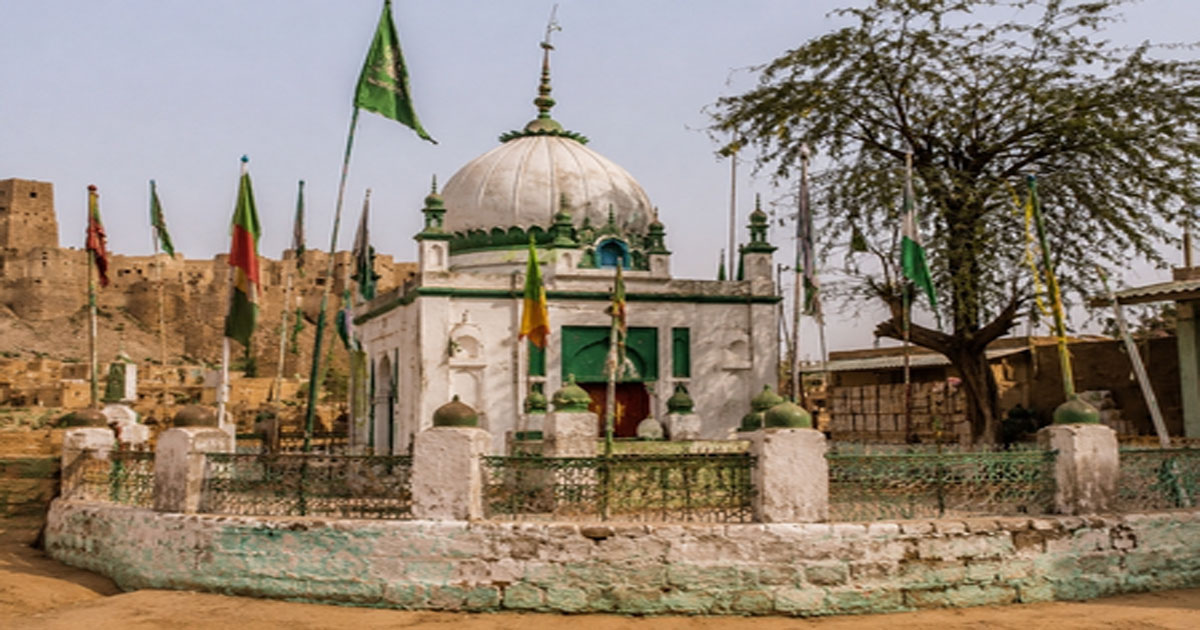
Jaisalmer, June 20: How does a community produce paperwork for a shrine that has existed for nearly 250 years? That question lies at the heart of a growing controversy in Rajasthan’s border district of Jaisalmer, where an administrative notice seeking land ownership documents for the historic Mehmood Shah Peer Jilani shrine has sparked protests and a wider debate over faith, heritage and governance.
The notice, issued under the administration’s ongoing “Operation Clean” drive against alleged illegal constructions within a 50-km radius of the India-Pakistan border, directs the shrine management to submit land-related documents by June 22, failing which action could begin after June 23 under the Rajasthan Colonisation Act.
For officials, the move is part of a routine verification exercise in a sensitive border zone.
For local residents, however, it raises a larger question: should centuries-old religious sites be judged solely by modern documentation standards?
Villagers argue that expecting documentary proof for structures established hundreds of years ago ignores the historical realities of western Rajasthan, where many shrines, temples and community spaces predate formal land-record systems.
Congress District President Amardin Fakir said the issue extends beyond a single shrine.
“Earlier, restrictions were limited to a 10-kilometre belt along the border. Later, they were extended to 15 kilometres and now effectively impact areas up to nearly 50 kilometres. A large portion of Jaisalmer’s population falls within this zone,” he said.
Fakir added that residents fear future action could extend beyond religious sites.
“Many religious places here are centuries old. At the time they were established, maintaining formal records was not a priority. It is unfair to interfere with matters of faith merely because documents are unavailable today,” he said.
Former Ramgarh Sarpanch Govind Bhargava recalled that when the Army was constructing infrastructure in the border region around 1980, villagers informed officials about the shrine’s significance.
“After inspecting the site, the construction was shifted elsewhere. Even then, the shrine’s importance was respected,” he claimed.
According to Jumma Khan, President of the Shrine Committee, the site holds deep significance for both Hindu and Muslim devotees and hosts two major annual fairs.
“Thousands of people visit every year. The shrine has been maintained through public faith and community support for generations. Obtaining ownership documents for a 250-year-old shrine is not easy,” he said.
Officials maintain that notices are being issued in accordance with legal provisions and that affected parties have been given an opportunity to present their case.
Yet, as the deadline approaches, the dispute has evolved into a broader debate over how heritage, faith and administrative regulations can coexist in India’s borderlands.
Meanwhile, former Chief Minister Ashok Gehlot said: “Given the region’s history of coexistence and mutual respect, both the Central and state governments should exercise caution and ensure that administrative decisions do not give rise to avoidable controversy or undermine the social fabric that has long distinguished these border districts.”
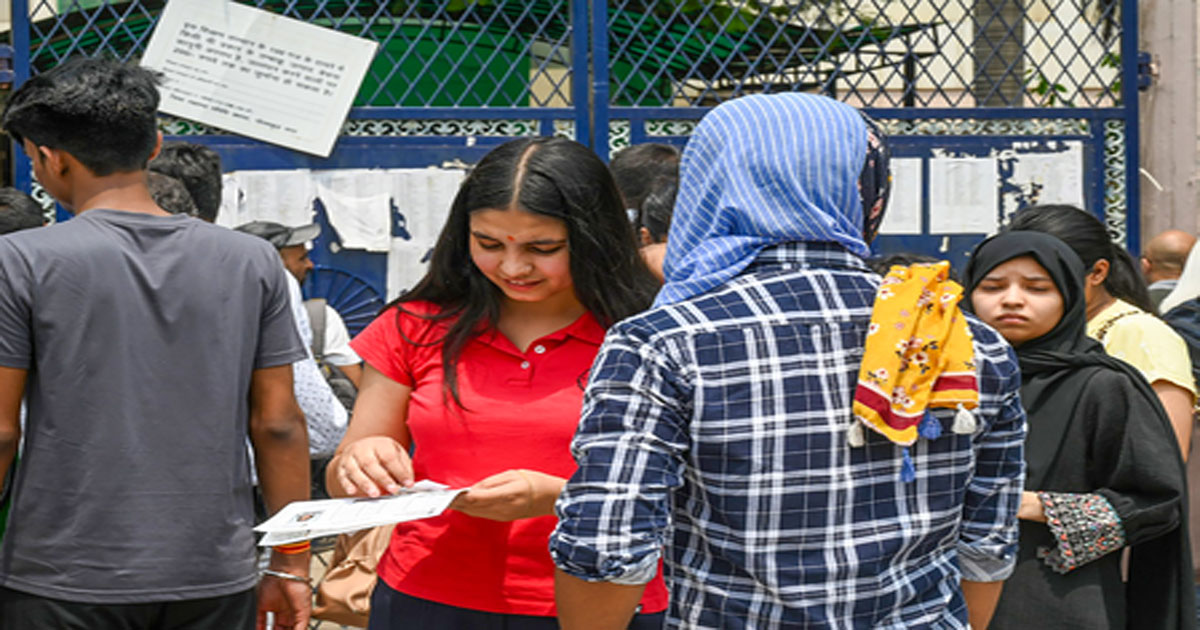
Noida, June 20: Ahead of the National Eligibility-cum-Entrance Test (NEET) re-test on June 21 (Sunday), the Gautam Buddha Nagar administration has stepped up last-minute preparations to ensure a fair, secure and hassle-free examination for thousands of students. Adequate arrangements have been put in place with heightened surveillance via CCTVs and increased police vigil around the NEET examination centres.
A group of administrative as well as police teams are inspecting the exam centres and finalising security measures to ensure that candidates do not face any inconvenience.
Joint Police Commissioner Rajiv Narayan Mishra, speaking to newsmen, said that the NEET exams will be conducted at 23 centres across the district. They include five centres in the Noida Zone, 11 in the Central Noida Zone, and seven in the Greater Noida Zone.
Sharing information about extensive arrangements, he said that adequate police personnel will be deployed at all centres, along with senior officers, to continuously monitor the exam process.
He mentioned that screening of candidates for entering the exam venue is mandatory and every candidate will have to undergo a thorough checking and frisking.
Additionally, Police Response Vehicle (PRV) teams will be stationed near the exam centres to enable immediate action in case of any emergency.
Officers of ACP, ADCP, and DCP ranks will be present at the exam centres within their respective zones. All officers have been instructed to conduct continuous patrols and keep a close watch on security arrangements throughout the duration of the exam.
“The Gautam Buddha Nagar Commissionerate states that all necessary arrangements have been made to ensure the examination is conducted in a completely peaceful, transparent, and orderly manner,” it said in a statement.
Section 163 of the Bharatiya Nyaya Sanhita (BNS) has also been invoked around the exam centres, which prohibits the assembly of crowd within 200-meter radius of the exam centres.
The Commissionerate Police has also set up special help desks at major Metro stations and bus stands. Through these help desks, students and their parents will be provided with assistance regarding examination centres, traffic-related information, and other necessary support.
New Delhi, June 20: Reacting to the gang-rape and brutalisation of a woman in Bihar’s Begusarai district, the Congress on Saturday termed the incident deeply shameful and unfortunate, saying it had crossed all limits of barbarity.
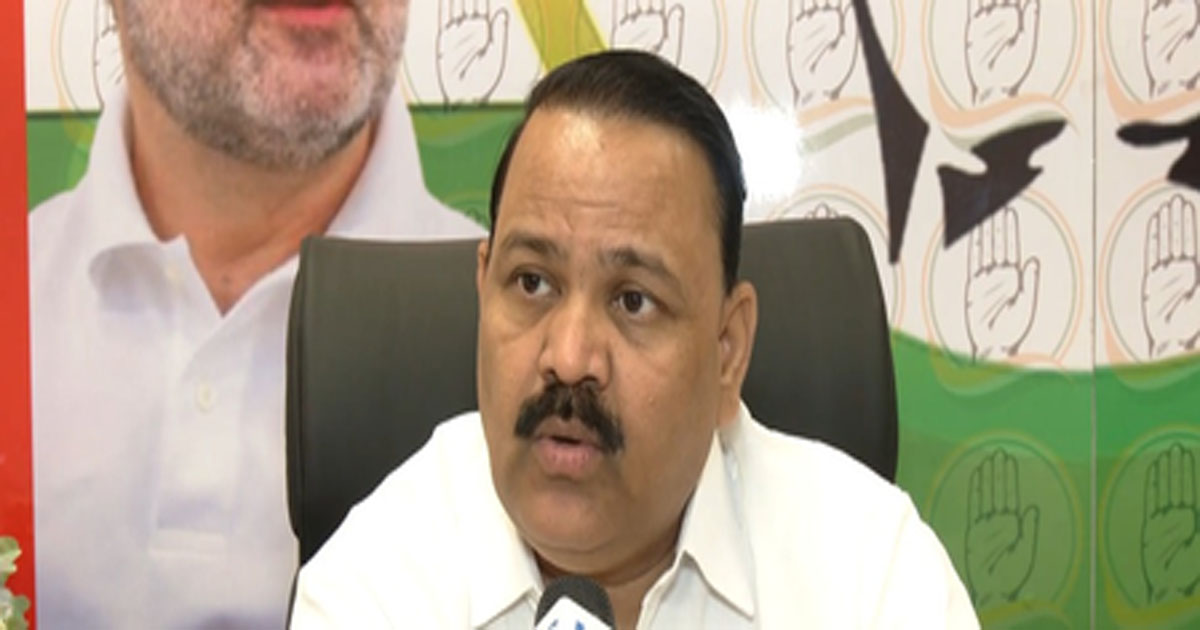
Speaking to MEDIA, Congress MP Manoj Kumar said, “The incident that has occurred there is deeply shameful and unfortunate. The governance and administration in Bihar have failed completely. They are merely making hollow claims and making promises, while the morale of criminals remains high.”
Questioning the state government’s handling of law and order, he asked, “Who is responsible for all of this? Who is responsible for such an inhuman act?”
Referring to reports surrounding the incident, Kumar said, “It is being said that the woman had gone to the police station seeking protection before the crime took place. She was helpless. The accused subjected her to extreme cruelty. Her hands were restrained, and she was brutally assaulted.”
He further alleged that such incidents have become increasingly common in the state.
“Such things are happening frequently in Bihar. Incidents of crime against women are reported almost every day. However, the kind of brutality seen in this case has crossed all limits of barbarity,” he said.
The Congress leader also questioned the silence of those who claim to champion women’s rights.
“Bihar has traditionally been a state that respects women. Why are those who once spoke about women’s dignity silent today?” he asked.
Recalling debates around the Women’s Reservation Bill, Kumar said, “A few months ago, several special discussions were held in Parliament regarding the Women’s Reservation Bill. Women MPs and leaders came out in support of the legislation and accused us of being against women’s rights. Today, the question is: Who is in power in Bihar, and what action are they taking to ensure women’s safety?”
Meanwhile, the investigation into the heinous gang-rape and brutalisation of a woman in Bihar’s Begusarai district, that is reminiscent of the 2012 Nirbhaya gang-rape case in the national Capital, intensified on Friday. Senior officials of Bihar Police launched a detailed enquiry into the shocking case and took disciplinary action against the Chakia SHO Rajiv Ranjan on Friday, for negligence.
The case, which pertains to an incident reported in the Chakia police station area on the night of June 11, gained widespread attention after allegations surfaced that a bullet, piece of wood and a stone were later recovered from the victim’s private parts during medical treatment.
Begusarai Range DIG, Shailesh Kumar Sinha, visited the victim at Sadar Hospital and met her family members to gather information about the horrific crime.
He also reviewed the progress of the investigation with police officials and sought details regarding the action taken so far in the case.
The DIG subsequently held discussions with the medical team, including the Civil Surgeon, and obtained a detailed briefing on the victim’s examination and treatment.
In a significant administrative action, Chakia SHO Rajiv Ranjan has been suspended.
According to the DIG, preliminary findings indicated negligence in handling the case, prompting departmental action against SHO Rajiv Ranjan.
Police have registered an FIR in connection with the case and constituted a Special Investigation Team (SIT) to identify and arrest the accused.
Senior officers, including the DIG and district police officials, have inspected the alleged crime scene as part of the ongoing investigation.
Officials stated that a fresh medical examination has been conducted by a medical Board, and investigators are awaiting the final report, which is expected to play a crucial role in determining the next course of action.
The police have assured that all accused people involved in the crime will be arrested and brought to justice.
Investigators are examining evidence, recording statements, and verifying all aspects of the case.
Authorities have emphasised that further legal and departmental action will be taken based on the findings of the medical report and the SIT’s investigation.
The case has generated widespread public concern and drawn attention to the handling of crimes against women in Bihar, with senior officials closely monitoring the developments in the case.
According to an official, the incident occurred within the jurisdiction of the Chakiya police station on the night of June 11.
The 30-year-old woman had stepped out of her home to use the toilet when she was allegedly intercepted by five men, who forcibly dragged her to a secluded location, tied her hands and legs with her clothes and gang-raped her.
In a show of cruelty and depravity, the rapists inserted a cartridge, wood, and a stone into the hapless woman’s her private parts.
The woman’s family has also accused the local police of failing to respond appropriately and sending them back home when they first attempted to lodge a complaint in the case.

Operation Clean triggers documentation row over 250-year-old shrine in Jaisalmer border district

Mumbai BEST strike continues… Additional buses to be provided for NEET exam centers, passengers inconvenienced due to strike

NEET exams: Noida administration heightens surveillance via CCTV, police on alert

Parbhani : Maharashtra ATS cracks down on Youth Islamic Federation, Popular Front of India Raids conducted at 15 locations

PhonePe’s wallet inactivity notifications: What users need to know

G7 Summit: PM Modi, Prez Trump discussed West Asia, India-US trade deal & bilateral cooperation across sectors: MEA

Trump, Netanyahu hold phone talks after Iranian missile fire: Israeli state media

Indian equity markets trade higher as Iran-Israel tensions ease

Rubio says Hamas disarmament key to Gaza rebuild

Israel captures strategic Beaufort Castle in southern Lebanon
-

 Crime4 years ago
Class 10 student jumps to death in Jaipur
-

 Maharashtra2 years ago
Mumbai Local Train Update: Central Railway’s New Timetable Comes Into Effect; Check Full List Of Revised Timings & Stations
-

 Maharashtra2 years ago
Mumbai To Go Toll-Free Tonight! Maharashtra Govt Announces Complete Toll Waiver For Light Motor Vehicles At All 5 Entry Points Of City
-

 Maharashtra2 years ago
False photo of Imtiaz Jaleel’s rally, exposing the fooling conspiracy
-

 National News2 years ago
Ministry of Railways rolls out Special Drive 4.0 with focus on digitisation, cleanliness, inclusiveness and grievance redressal
-

 Maharashtra2 years ago
Maharashtra Elections 2024: Mumbai Metro & BEST Services Extended Till Midnight On Voting Day
-

 National News2 years ago
J&K: 4 Jawans Killed, 28 Injured After Bus Carrying BSF Personnel For Poll Duty Falls Into Gorge In Budgam; Terrifying Visuals Surface
-

 Crime2 years ago
Baba Siddique Murder: Mumbai Police Unable To Get Lawrence Bishnoi Custody Due To Home Ministry Order, Says Report