
Maharashtra
Potholes on Mumbai roads should be filled according to scientific methods and set standards : Additional Municipal Commissioner

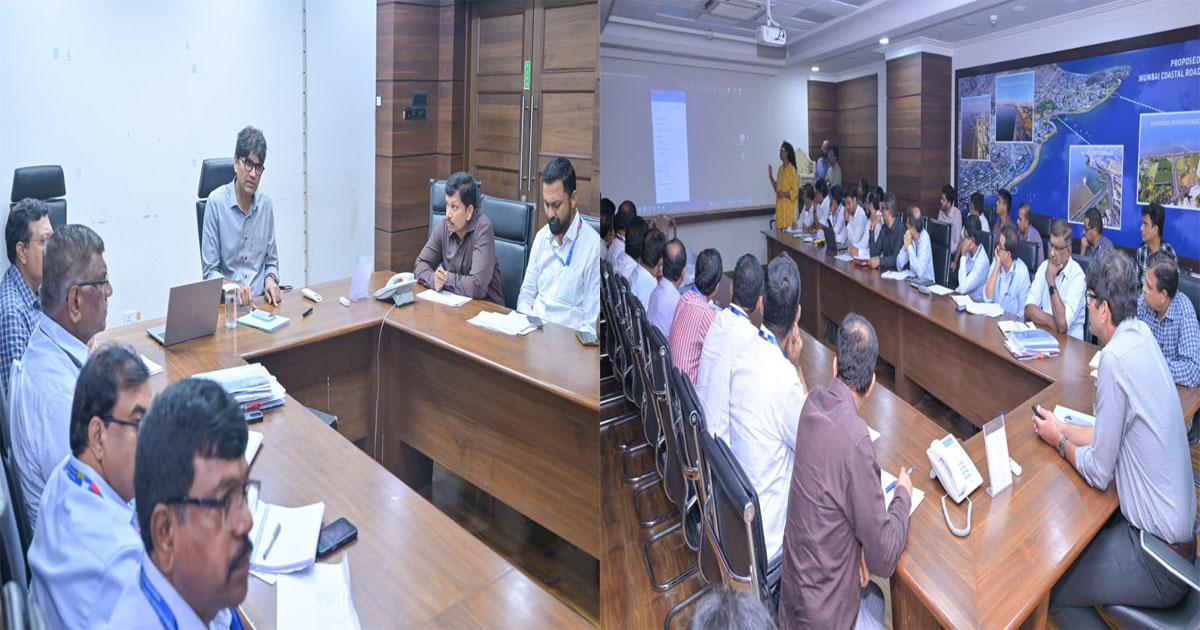
Cement concreting of about 1700 km of roads in Mumbai Metropolitan Region has been completed, and concreting of the remaining roads is in progress. Due to this comprehensive initiative, the number of potholes on the roads and the problems arising from them have significantly reduced during this monsoon season. This has also resulted in huge savings in the cost of filling the potholes. To effectively deal with the problem of potholes arising during the monsoon season on the roads within the municipal limits, the engineers of the road department should work with more vigilance and responsibility. Every complaint received regarding potholes should be disposed of within 24 hours. The bad patches should be brought to the fore immediately. Additional Municipal Commissioner (Projects) Abhijit Bangar directed that the engineers concerned should ensure that the potholes on the roads are filled with high quality by the contractors appointed as per the zone, following the prescribed technical standards and scientific methodology. Bangar also clarified that the secondary engineers appointed on a bat-by-bat basis should regularly visit the roads in their area on two wheels, know the current condition of the roads and ensure immediate action for necessary repairs. A meeting of the Assistant Engineers of the Roads and Transport Department was held at the Municipal Headquarters in which a detailed review of the progress of pre-monsoon works, preparations and necessary measures was taken. At that time, Additional Municipal Commissioner (Projects) Abhijeet Bangar gave various instructions. Deputy Commissioner (Infrastructure) Girish Nikam, Chief Engineer (Roads) Mr. Engineers including Mantiya Swamy were present.
Additional Municipal Commissioner (Projects) Abhijeet Bangar said that the Municipal Corporation has started a road concreting program to solve the problem of potholes on the roads / make the roads pothole-free. Under this, concreting of about 1700 km of cement roads has been completed. The concreting of the remaining roads will be done after the monsoon. Therefore, in future, more and more roads will be cemented and the problem of potholes will definitely reduce. Apart from this, there will be cost savings as well.
If the trench dug for utility channels is not refilled as per the technical standards, then during the monsoon, water enters the road structure. Due to which the strength of the road decreases and the process of road collapse starts. Keeping this in mind, various steps are being taken by the Mumbai Municipal Corporation to avoid inconvenience to the citizens. It is guaranteed that a pothole filled once using mastic will not open again. Accordingly, the Municipal Corporation has appointed zone-wise contractors for the maintenance of the roads. Engineers should periodically review their manpower, machinery and material stock. In particular, the availability of mastic cookers, pothole filling schedule, mastic cooker rounds should be coordinated. It should be strictly ensured that potholes on the roads are filled as per the laid down technical standards and scientific methods. Bangar directed that the potholes should be filled when they are small in size (6 inches). Bangar said that along with the road engineers, 227 secondary engineers have been appointed in the municipal corporation for a total of 227 bats (one for each electoral ward). These secondary engineers should inspect the roads in their assigned section daily and if any potholes are found, they should be filled immediately using a rectangle. They should go around on a two-wheeler and inspect the roads in their work area. The complaints of potholes should be coordinated through the central system and the department office and resolved in a timely manner. Instead of waiting for complaints, potholes should be recorded and filled on their own. The Municipal Corporation is responsible for both the Eastern Expressway (18.6 km – Mulund to Shiv) and the Western Expressway (27.6 km – Dahisar Checkpoint to Mahim) in Mumbai. Along with this, the responsibility of the Eastern Freeway (17 km) also falls on the Municipal Corporation. The Road Department should take full care that there are no potholes on these three highways. Other government authorities in Mumbai should also take proper care of the roads under their jurisdiction, and the Municipal Corporation administration should follow suit so that the potholes are filled immediately, Bangar also said. If potholes occur on the roads within the Defect Liability Period (DLP), no premium should be paid. Moreover, the project roads and roads should be filled free of cost by the contractor concerned within the Defect Liability Period (DLP) as per the terms and conditions of the tender within a limited time frame. The Municipal Corporation should not pay any compensation/premium for filling these potholes. Because the condition of maintenance/upkeep is included in the contract itself. On the contrary, if the number of potholes on the roads has increased during the period of liability for defects, then punitive action should be taken, Bangar said, explaining the project roads, defects and emphasised on improving the road.

Maharashtra
Four more arrested in Tiger Shroff firing case; two women accused of supplying weapons, accused remanded to police custody till October 26.


The Mumbai Crime Branch has arrested four additional suspects—two women and two men—in connection with the firing incident involving Tiger Shroff. The arrested individuals include two women, Beeta and Radha, as well as two men, Kunal and Vijender. All four were presented before the Killa Court today, amid tight security arrangements. The police requested police custody (remand) for the suspects to facilitate further interrogation; the court granted this request and ordered that they be held in police custody until October 26. The two women are accused of supplying weapons to the shooters and assisting the other suspects. The police sought this remand to conduct further investigations, including determining whether the suspects have any links to the Bishnoi gang. So far, a total of 10 suspects have been arrested in this case. Previously, the police had arrested the shooters—Phool Singh, Rehan, and Ritik (alias Roshan)—who carried out the firing; they were apprehended by the Kota Police while traveling by train from Mumbai toward Delhi, acting on information provided by the Mumbai Police. Additionally, the Delhi Special Cell arrested six other suspects from Haryana and Delhi, including women and individuals involved in supplying weapons. The police are continuing their investigation into the matter.
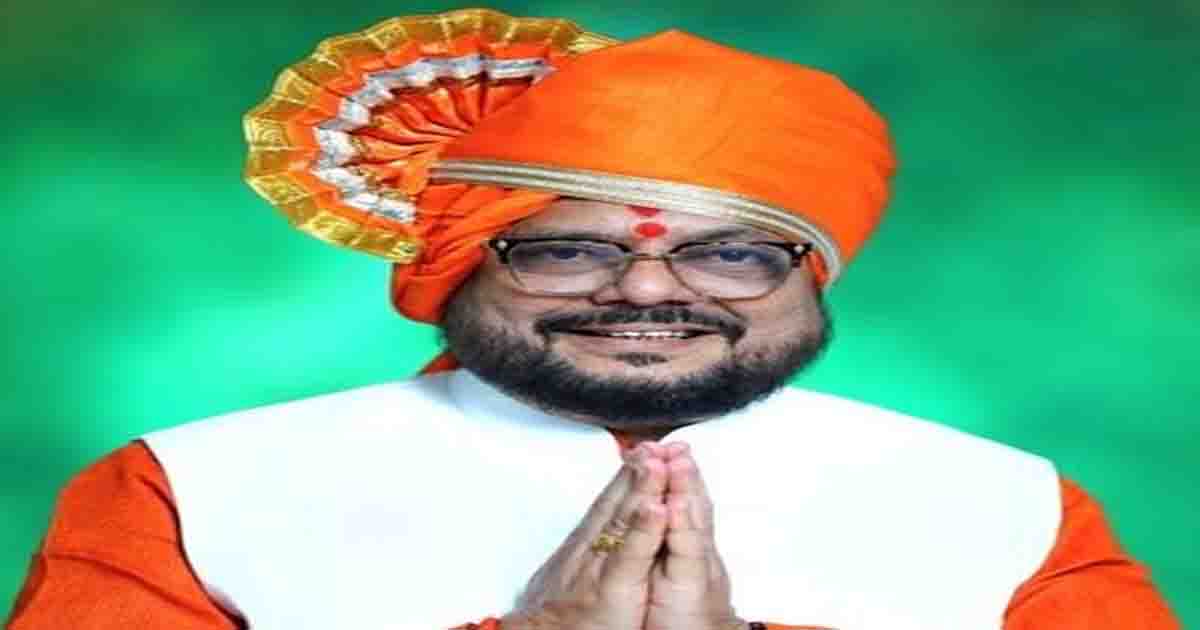
Maharashtra Water Supply and Sanitation Minister Gulabrao Patil on Monday directed the administration to prepare and submit realistic, village-wise action plans for potential water scarcity across all stages in the Nagpur, Amravati, and Konkan divisions by October 25.
Minister Patil also instructed officials to prioritise the completion and operationalisation of drinking water supply projects under the Jal Jeevan Mission that have reached between 75 per cent and 99 per cent progress.
The minister’s directives come after the state government has already announced drought in 304 talukas following scanty rainfall and launched 12 mitigation measures.
Addressing a high-level review meeting, Minister Patil evaluated the water supply status, groundwater levels, and mitigation measures for potential water scarcity in Nagpur, Amravati, and Konkan regions. While noting that there is currently no severe water scarcity in these regions, the Minister emphasised the need for administrative preparedness ahead of upcoming months.
“The administration must remain proactive. Action plans should be framed based on ground-level inspections and extensive consultations with public representatives, sarpanches, gram panchayats, and local officials,” he said.
Minister Patil instructed that pending works such as pipeline laying, pump installation, electrical connections, and transformer setups for projects in their final stages must be completed on a priority basis.
Schemes exceeding 75 per cent completion must have their package details verified and certified promptly to ensure smooth funding releases. He said that a dedicated plan for strengthening local water sources must be created for potential tanker-dependent villages.
Authorities should utilise 2 per cent of the District Planning Committee (DPC) funds primarily for source augmentation. Groundwater recharge works, including well recharging, farm ponds, cement bandharas, cement plugs, continuous contour trenches (CCT), and repairs of older bunds—must be carried out by tapping into District Planning, Mining, and Corporate Social Responsibility (CSR) funds, he stated.
Minister Patil reiterated that deploying water tankers should only serve as an ultimate last resort. Prior to that, officials must enforce cleaning and disinfection of available public wells. He asked the administration to focus on the rejuvenation of local water sources and efficient water budget planning and disciplined water conservation practices.
He strictly instructed officers to immediately visit villages and take necessary action whenever complaints regarding water scarcity surface or media reports highlight local distress.
To ensure long-term operational success, Minister Patil said that fixed timelines must be established to hand over completed and successfully tested water supply schemes to Zilla Parishads or Gram Panchayats. In cases of delay by local bodies in accepting projects, formal proceedings will follow state policy guidelines.
Zilla Parishads and Gram Panchayats are expected to handle operation, maintenance, and electricity billing effectively. Local officials were advised to coordinate directly with District Collectors and Zilla Parishad Chief Executive Officers (CEOs) to resolve any persistent transformer or power connection hurdles, he said.
Maharashtra
Public will never accept this: NDA on Uddhav Thackeray ‘saffron identity’, ‘regime change’ remarks
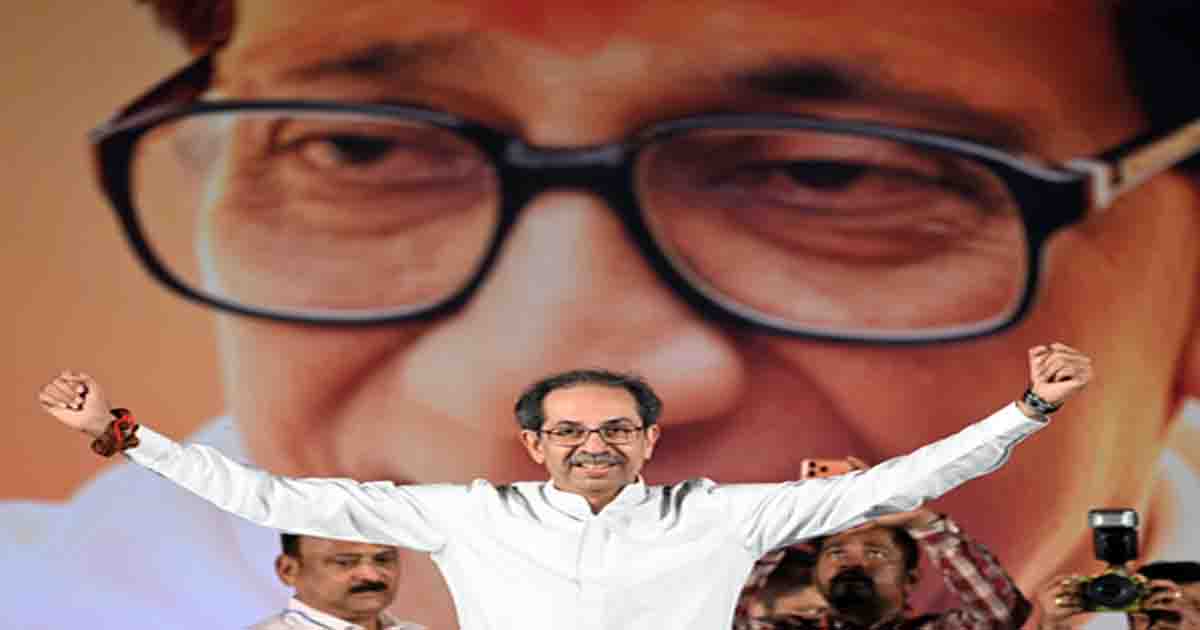
The National Democratic Alliance (NDA) leaders on Wednesday strongly hit back at Shiv Sena (UBT) chief Uddhav Thackeray following his recent assertions regarding a “saffron identity” and “regime change” and said that the public will reject this rhetoric.
While addressing a massive gathering during the annual Dussehra rally at the historic Chhatrapati Shivaji Maharaj Park in Mumbai, Thackeray openly asserted that they were present to change the regime, arguing that any government failing to serve public interest must be replaced.
Reiterating his party’s claim to the saffron identity, Thackeray said, “Bhagwa (saffron) is our identity; no one can steal our identity.”
Thackeray remarked that a saffron atmosphere is currently present everywhere, and emphasised that this sacred saffron flag must be hoisted not only at the Maharashtra Legislative Assembly but also on the throne of Delhi.
Reacting sharply to these statements, Maharashtra Bharatiya Janata Party (BJP) MLA, Ram Kadam, speaking to media, stated, “The fear of ‘Operation Tiger 3’ was clearly visible in Thackeray’s speech.”
He claimed that the deep regret of ‘abandoning’ Hindutva was thoroughly evident. “Because of this very regret, Thackeray repeatedly pronounced the word Bhagwa and continuously took the name of Chhatrapati Shivaji Maharaj throughout his address,” Ram Kadam alleged.
Kadam further questioned what he termed as the “double standards” of Thackeray, claiming that the “nation has witnessed how individuals accused of riots like Umar Khalid, who chant praises for Afzal Guru, are embraced and supported by Thackeray, and how he walks hand in hand with Rahul Gandhi, who repeatedly attacks Sanatan Dharma and links saffron with terrorism.”
Joining the criticism, Shiv Sena spokesperson Shaina NC told media, “Uddhav says that he doesn’t want ‘scarf-wearing’ Hindutva. But in 2019, when he formed an alliance with the Congress, he embraced ‘cap-wearing’ Hindutva.”
“Balasaheb Thackeray always urged people to say with pride that they are Hindus, whereas Uddhav Thackeray now advises people to say with pride that they are for regime change. The only difference is that one represents real Hindutva while the other stands for fake secularism,” she claimed.
Meanwhile, Shiv Sena Rajya Sabha member, Milind Deora, acknowledged that every citizen and every Opposition party possesses the democratic and constitutional right to protest; however, he strongly objected to the language used by Thackeray to compare situations with countries like France, Albania, Bangladesh, and Nepal.
“Every citizen and every Opposition party has the right to contest elections against the government and to make statements against the government. This is their constitutional, democratic right. However, the language used to compare things with France, Albania, Bangladesh and Nepal is clearly an attempt to spread anarchy and violence,” Deora alleged.
“The people of India will never accept this. If they want to bring about the so-called change, do it through elections, by earning people’s vote; not like this,” he told media.

Netanyahu speaks with PM Modi, invites him for Israel’s Independence Day along with heroic Indian pilot

Aasif Khan’s wife reveals actor suffered major heart attack, calls out Qazi Touqeer for mocking him

Four more arrested in Tiger Shroff firing case; two women accused of supplying weapons, accused remanded to police custody till October 26.

Swiggy’s Q2 net loss widens sequentially to Rs 922 crore

12 injured in attack on Dalit family in Patna, two critical

Rahul, Cong ecosystem want to force regime change: BJP after Neha Bora praises B’desh Gen-Z protest

Attack on democratic rights: INDIA Bloc leaders on detentions of anti-ECI protestors

BJP pays tribute to ex-President Abdul Kalam, recalls his enduring influence on generations of India’s youth

INDIA bloc begins protest march against ECI

Maha Congress stages agitation against Gyanesh Kumar
-

 Crime4 years ago
Class 10 student jumps to death in Jaipur
-

 Maharashtra2 years ago
Mumbai Local Train Update: Central Railway’s New Timetable Comes Into Effect; Check Full List Of Revised Timings & Stations
-

 Maharashtra2 years ago
Mumbai To Go Toll-Free Tonight! Maharashtra Govt Announces Complete Toll Waiver For Light Motor Vehicles At All 5 Entry Points Of City
-

 Maharashtra2 years ago
False photo of Imtiaz Jaleel’s rally, exposing the fooling conspiracy
-

 National News2 years ago
Ministry of Railways rolls out Special Drive 4.0 with focus on digitisation, cleanliness, inclusiveness and grievance redressal
-

 Maharashtra2 years ago
Maharashtra Elections 2024: Mumbai Metro & BEST Services Extended Till Midnight On Voting Day
-

 National News2 years ago
J&K: 4 Jawans Killed, 28 Injured After Bus Carrying BSF Personnel For Poll Duty Falls Into Gorge In Budgam; Terrifying Visuals Surface
-

 Crime2 years ago
Baba Siddique Murder: Mumbai Police Unable To Get Lawrence Bishnoi Custody Due To Home Ministry Order, Says Report