
Business
Lilavati Trust’s FIR: SC tells HDFC Bank CEO to pursue his plea before Bombay HC

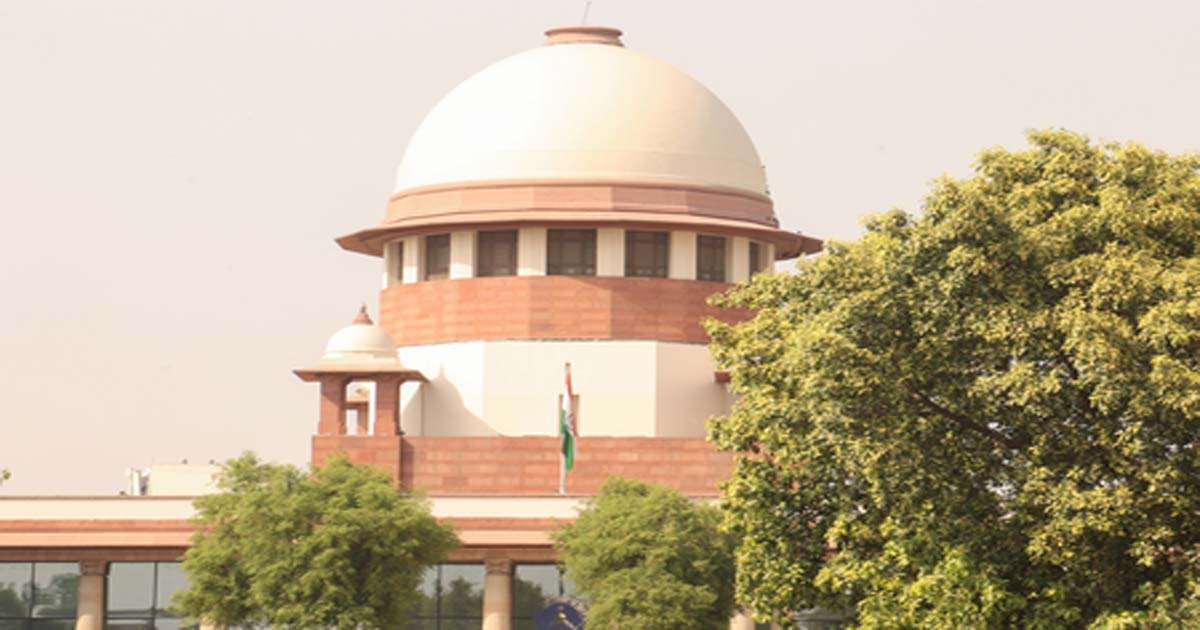
suprim court
New Delhi, July 4: The Supreme Court on Friday declined to entertain a plea of HDFC Bank CEO and Managing Director Sashidhar Jagdishan to quash an FIR lodged against him, following a complaint by the Lilavati Kirtilal Mehta Medical Trust, which runs Mumbai’s Lilavati Hospital, that he has accepted a bribe of Rs 2.05 crore.
A Bench of Justices P.S. Narasimha and R. Mahadevan opined that it would be improper on the part of the apex court to intervene in the matter when Jagdishan’s plea to quash the criminal complaint is tentatively listed before the Bombay High Court for hearing on July 14.
Following the recusal by judges of the Bombay High Court at least on three different occasions, Jagdishan approached the Supreme Court over the delay in listing of his petition and prayed for an immediate interim relief.
Senior advocate Mukul Rohatgi, appearing on behalf of Jagdishan, argued that the reputation of HDFC Bank is affected because of an internal dispute between the trustees of the Lilavati Trust, requiring an interim protection order. However, the Justice Narasimha-led Bench declined to pass any interim order and asked Rohtagi to raise all contentions before the Bombay High Court.
“We sympathise that the Bench after the Bench (of the Bombay HC) have recused. It is unfortunate! But, now it is listed,” remarked the apex court, hoping that the matter would be taken up by the Bombay High Court for hearing on July 14.
On Thursday, the top court agreed to urgently list Jagdishan’s plea for hearing on July 4 (Friday) after it was contended that a “frivolous” FIR was filed as “part of an arm-twisting tactic” to prevent the HDFC Bank from recovering money from the Lilavati Trust.
Jagdishan’s plea had come up for hearing in the Bombay High Court on June 30; however, noting that there was no urgency in the matter, it listed the matter on July 14, prompting him to move the Supreme Court for relief.
The FIR, registered last month at the Bandra police station in Mumbai under Sections 406 (criminal breach of trust), 409 (criminal breach of trust by a public servant), and 420 (cheating), levels serious allegations against Jagdishan.
The Lilavati Trust has claimed in its complaint that Jagdishan accepted a bribe of Rs 2.05 crore as a quid pro quo for providing financial advice to help the Chetan Mehta Group retain illegal and undue control over the governance of the Trust. It has accused Jagdishan of misusing his position as the head of a leading private sector bank to interfere in the internal affairs of a charitable organisation.
On the other hand, Jagdishan has strongly denied the allegations, calling the case a malicious attempt to defame him and HDFC Bank. He stated that HDFC, along with a consortium of banks, had granted loans to Splendour Gems Limited in 1995.
When the firm defaulted, recovery proceedings were launched in 2002 against its guarantors, including Kishor Mehta, Prashant Mehta’s father. An arrest warrant was issued in 2020, and though Kishor Mehta passed away in 2024, the proceedings continued against his sons.


New Delhi, June 19: The Department of Social Justice & Empowerment has removed the requirement for a domicile certificate for students applying under Pre‑Matric and Post‑Matric scholarship schemes for Scheduled Caste and Other Backward Classes, an official statement said on Friday.
This step is expected to reduce the compliance burden on students and simplify the application process for scholarships, enabling easier access to benefits.
Thousands of eligible applicants across the country who study in institutions other than their domicile states will be benefitted, the statement from Ministry of Social Justice & Empowerment said.
Under the Pre-Matric and Post-Matric Scholarship Schemes for SCs and OBCs, nearly 1.2 crore students receive scholarship benefits annually. The removal of domicile certificate requirements will make the application process more student-friendly by reducing documentation requirements and lowering compliance costs.
Further strengthening digital governance, the Department has launched SETU (Scholarship for Educational Transformation and Upliftment) on the UMANG platform as a comprehensive solution for scholarship-related services.
The platform provides a single interface to the eligible applicants, Institutional Nodal Officers, District Nodal Officers and State officials for application registration, tracking, and validation of other services, improving transparency and efficiency.
“These initiatives are aligned with the government’s broader objective of promoting inclusion, reducing procedural barriers, and ensuring effective delivery of welfare schemes,” the statement noted.
The Department remains committed to leveraging technology-driven reforms to enhance outreach and provide timely support to students, it added.
A total of Rs 7,981.47 crore has been disbursed to over 75 lakh scheduled caste (SC) beneficiaries in FY26, an official statement said in April.
The funds were disbursed as part of schemes run by the Department of Social Justice and Empowerment focused on the educational empowerment of marginalised students belonging to Scheduled Castes.
Across key scholarship programs, expenditure rose year‑on‑year, with a 21 per cent increase under the Pre Matric Scholarship Scheme for SCs and Others, an 11.23 per cent increase under the Post Matric Scholarship Scheme for SCs, a rise of 13.5 per cent under Central Sector Scholarship of Top Class Education for SC students.
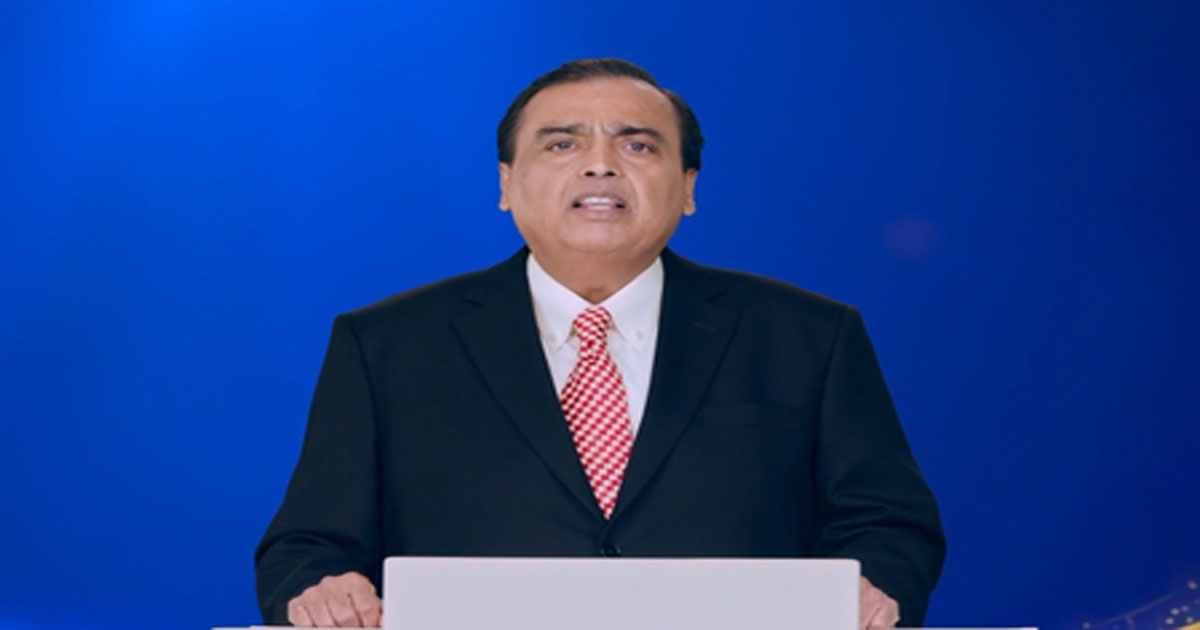
Mumbai, June 19: Reliance Industries Ltd (RIL) Chairman Mukesh Ambani on Friday outlined five major value creation pathways for the Group to create a diversified growth architecture spanning energy, materials, digital infrastructure, artificial intelligence, consumer businesses, and global exports.
Addressing Reliance shareholders, Ambani said: “First, the O2C business, the mainstay of Reliance so far, will increase earnings as soon as the geopolitical situation improves. Simultaneously, and more importantly, we are reinventing this business to create a new revenue stream less vulnerable to external volatility. We will convert all the crude oil we process into new materials ─ carbon fibre, speciality materials, green chemicals, and much more. This new vision will drive margin expansion and lay the foundation for our oil-to-chemicals-and-new materials business.”
He further stated that the second pathway comprises the new energy business, which has entered the phase of accelerated commissioning and early revenues. The integrated solar manufacturing and advanced battery platform will achieve one of the world’s lowest costs of RTC green power. It will also enable the world’s most competitive green hydrogen and green chemicals ecosystem.
Besides, the underground coal gasification business has immense growth potential, and the CBG business is ready to be scaled up as the world’s largest bioenergy business, he added.
Ambani identified the third path of growth as Reliance Intelligence, with AI becoming a multi-trillion-dollar business globally. “Reliance Intelligence will lead this business in India. The infrastructure for it is being built at breakneck speed, and it will fully operationalise over the next couple of years,” he remarked.
The Reliance Chairman listed the FMCG business as a new multi-billion-dollar growth engine with plans to grow it into India’s largest FMCG company, and among the biggest in the world.
“It is already among the top few players in various categories and is expanding globally. It recently entered Europe and Africa and will enter many more global markets going forward. Our FMCG growth path is neatly aligned to that of Reliance Retail. Both are anchored in our plan to create India’s most advanced manufacturing platform and a distribution and exports platform with tens of thousands of small, medium and large partners,” he maintained.
Ambani highlighted exports as the fifth path of the group’s growth. “Reliance has long been India’s largest merchandise exporter, with a proven globally competitive world-class platform for energy and materials exports. Leveraging this experience, Reliance aims to become an anchor institution for developing a globally competitive, multi-sector export hub, with a target to enable $125-150 billion in exports by 2032. In this way, we will enlarge global markets for Made in India brands,” he observed.
Hiring the best talent for this new venture has already begun. This scalable platform will strengthen India’s export ecosystem and external economic resilience. This ambition is not only about creating a larger Reliance. It is about creating a stronger India, Ambani added.

New Delhi, June 19: Coal gasification projects worth more than Rs 65,000 crore are currently under execution in India, signalling that the government’s push to convert coal into chemicals, fuels and industrial feedstock is moving from policy planning to on-ground implementation, according to a senior official.
Speaking at recently organised event, Coal Secretary Vikram Dev Dutt said the sector has witnessed an encouraging response from industry.
According to him, eight projects are already under implementation under the Rs 8,500-crore incentive scheme approved in January 2024.
The projects have received incentive support of Rs 6,233 crore and span sectors including coal-to-synthetic natural gas (SNG), ethanol, hydrogen, acetic acid, ammonium nitrate, DRI-based steel and sustainable aviation fuel.
The government is also finalising the request for proposal (RFP) under a larger Rs 37,500-crore incentive programme after placing the draft document in the public domain for stakeholder consultations.
Addressing the event, Union Coal Minister G. Kishan Reddy said Maharashtra has emerged as a key centre for coal gasification, with five projects already under development in the state.
He noted that Maharashtra benefits from coal availability through Western Coalfields Ltd, along with strong industrial infrastructure and policy support, positioning it as a potential hub for coal gasification projects.
Meanwhile, Maharashtra Chief Minister Devendra Fadnavis said the state is committed to creating an investment-friendly ecosystem for the sector and highlighted Mumbai’s historical association with coal gasification technology.
The government expects the coal gasification initiative to catalyse investments of around Rs 2.5-3 lakh crore across nearly 25 projects and aims to gasify 100 million tonnes of coal by 2030.
The programme forms part of India’s broader strategy to reduce import dependence in fertilisers, chemicals and fuels while strengthening domestic industrial capacity and energy security.

Mumbai: Municipal Commissioner praises engineers of Project Department for work on shifting high voltage power towers in Bhandup

Govt removes domicile certificate requirement for SC, OBC scholarships to ease access

Mukesh Ambani unveils 5-way roadmap to propel RIL’s growth ahead

Delhi HC adjourns Salman Khan’s plea against release of ‘Kala Hiran’ till July 1

Potholes on Mumbai roads should be filled according to scientific methods and set standards : Additional Municipal Commissioner

G7 Summit: PM Modi, Prez Trump discussed West Asia, India-US trade deal & bilateral cooperation across sectors: MEA

Trump, Netanyahu hold phone talks after Iranian missile fire: Israeli state media

Indian equity markets trade higher as Iran-Israel tensions ease

Rubio says Hamas disarmament key to Gaza rebuild

Israel captures strategic Beaufort Castle in southern Lebanon
-

 Crime4 years ago
Class 10 student jumps to death in Jaipur
-

 Maharashtra2 years ago
Mumbai Local Train Update: Central Railway’s New Timetable Comes Into Effect; Check Full List Of Revised Timings & Stations
-

 Maharashtra2 years ago
Mumbai To Go Toll-Free Tonight! Maharashtra Govt Announces Complete Toll Waiver For Light Motor Vehicles At All 5 Entry Points Of City
-

 Maharashtra2 years ago
False photo of Imtiaz Jaleel’s rally, exposing the fooling conspiracy
-

 National News2 years ago
Ministry of Railways rolls out Special Drive 4.0 with focus on digitisation, cleanliness, inclusiveness and grievance redressal
-

 Maharashtra2 years ago
Maharashtra Elections 2024: Mumbai Metro & BEST Services Extended Till Midnight On Voting Day
-

 National News2 years ago
J&K: 4 Jawans Killed, 28 Injured After Bus Carrying BSF Personnel For Poll Duty Falls Into Gorge In Budgam; Terrifying Visuals Surface
-

 Crime2 years ago
Baba Siddique Murder: Mumbai Police Unable To Get Lawrence Bishnoi Custody Due To Home Ministry Order, Says Report