
National News
‘Intellectual bankruptcy’: Shiv Sena (UBT) in Saamana slams BJP over Parbhani Mayor’s election


Mumbai, Feb 14: Shiv Sena-Uddhav Balasaheb Thackeray (SS-UBT) on Saturday took a swipe at the BJP for criticising Syed Iqbal’s election as Mayor of Parbhani Municipal Corporation terming it “intellectual bankruptcy”.
The Thackeray camp strongly defended Syed Iqbal’s election, saying that it was a reward for loyalty.
In the scathing editorial of party mouthpiece Saamana in Maharashtra, it said that while many issues are raging, the BJP and its “subservient circle” are creating an uproar for what they called installation of a ‘Khan’ in Parbhani. But this is a case of BJP “hiding its own flaws while criticising others”.
The editorial took strong objection to “selective opposition”, saying that BJP has historically appointed Muslim leaders to high-ranking positions, including the Presidency, governorships, and Supreme Court judgeships.
Within Parbhani district itself, the BJP has 12 Muslim councilors, and the post of Vice-President in the Jintur Municipal Council was given to a Muslim woman, Mehmunnisa Pathan, yet they oppose a Marathi-speaking patriot like Syed Iqbal in Parbhani. The BJP must explain why Muslim leaders were invited to the stage during the RSS Centenary celebrations if they now oppose such representation.
“BJP should explain why a ‘Khan’ was seated on the stage during the RSS Centenary celebrations. The country saw Adnan Sami, son of Arshad Khan, who bombed Pathankot in 1965, sitting on the shoulders of RSS leadership. While the RSS Chief Mohan Bhagwat states that Hindus and Muslims are not separate and those who accept Indian culture are our own, BJP’s ‘younger lot’ continues to incite religious conflict,” claimed the Thackeray camp.
The editorial further defended the appointment by citing the historical contributions of Muslims to India’s freedom struggle. It referenced the Jallianwala Bagh massacre, stating that 76 Muslims were among those killed, and emphasised that “none were shot in the back,” symbolising their unwavering commitment to the nation. While Muslim revolutionaries made countless sacrifices, those currently in power (BJP) didn’t suffer a single scratch during the freedom movement, yet they act as self-appointed ‘contractors’ of Hindutva and patriotism, it said.
“While Hindus (1 per cent to 6 per cent) are safe in the US, UK, Australia, and Arab nations, the BJP claims that 85 per cent of Hindus in India are in danger under their own rule. The real danger to Hindus is from the BJP itself, as Hindutva has become a political business for them,” alleged the Thackeray camp.
“Parbhani MP Sanjay Jadhav countered the BJP’s ‘Aurangzeb’ jibe by noting that the BJP has previously formed alliances with the AIMIM in other municipal councils, such as Akot and Achalpur. According to him, whenever there was a need to take a stand for Hindutva, Bal Thackeray’s Shiv Sainiks took to the streets,” said the editorial.
The Thackeray camp argued that if people of other regions or religions work to keep the “Marathi flag” flying in Maharashtra, they should be welcomed. “However, the BJP’s strategy is to induct “Aurangzeb, Afzal Khan, and Jaychand” into their own party for benefit while pointing fingers at others,” it remarked.
The Thackeray camp’s defence of Syed Iqbal’s election in the editorial is a significant shift in Parbhani’s “Khan vs. Ban” political narrative-a long-standing strategy of polarising voters, now replaced by a reward for loyalty and “geographic politics” where nearly half of the house corporators are from the Muslim community.

National News
NHRC seeks report from Delhi Police over women journalists’ sexual harassment allegations

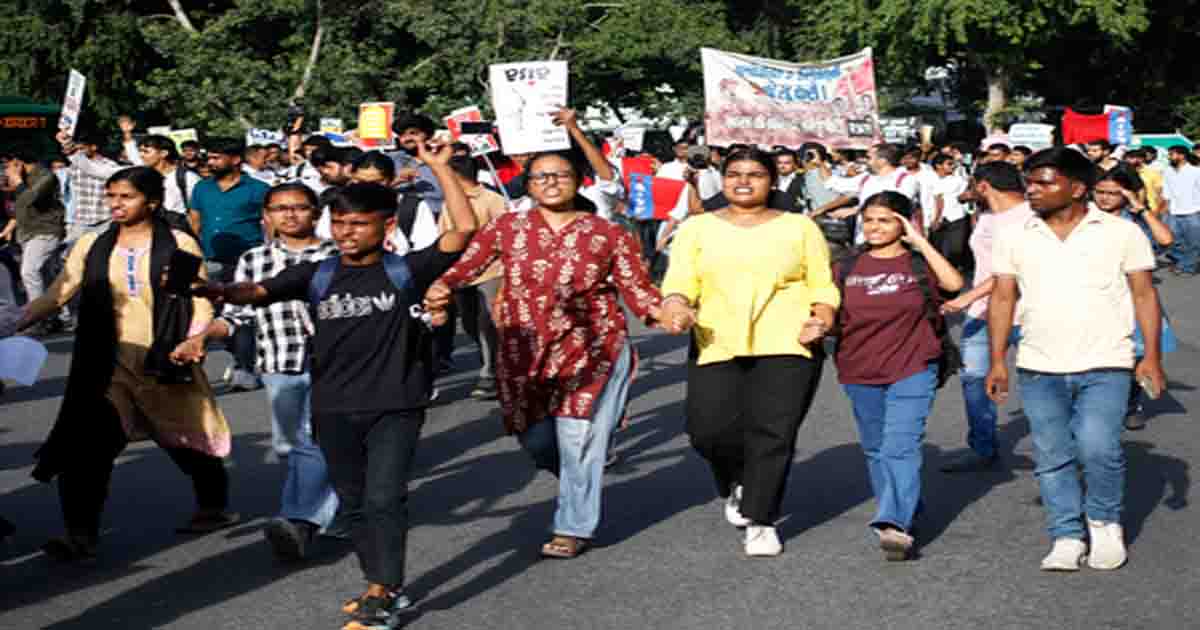
New Delhi, Oct 8: The National Human Rights Commission (NHRC) has taken suo motu cognisance of a media report regarding the alleged sexual harassment of three women journalists by Delhi Police personnel during a protest at Jantar Mantar on October 3.
Observing that the contents of the media report, if true, raise serious issues of violation of human rights, the NHRC has issued a notice to the Delhi Police Commissioner, seeking a detailed report on the matter within two weeks.
According to the media report, three women journalists alleged that they were subjected to sexual misconduct by police personnel while being detained during the protests at Jantar Mantar.
The NHRC said the press report, carried on October 5, stated that the New Delhi District Police had received complaints regarding the alleged incidents and transferred them to the Crime Branch of the Delhi Police for an enquiry.
The Delhi Police said that the complaints were being transferred to the Crime Branch for a “fair and impartial enquiry”.
In a post on X, the Delhi Police said that on October 3, during the protest in the New Delhi area, allegations of sexual harassment were made by three female journalists against police officers.
“New Delhi District has received their complaints, and the same have been transferred to Crime Branch for fair and impartial enquiry,” it said.
The protests were being held at Jantar Mantar despite prohibitory orders, with protesters demanding the resignation of Chief Election Commissioner Gyanesh Kumar over alleged irregularities in the Special Intensive Revision (SIR) of electoral rolls.
Meanwhile, amid the allegations, Vivek Bhagat, Assistant Commissioner of Police, voluntarily requested that he not be allowed to continue with his temporary current duty charge assignment until a full enquiry into the alleged harassment of the women journalists was conducted and satisfactorily concluded.
Following his request, the Delhi government modified an October 5 order assigning additional charge to senior police officers. The revised order excluded Bhagat and covered the remaining 11 officers.
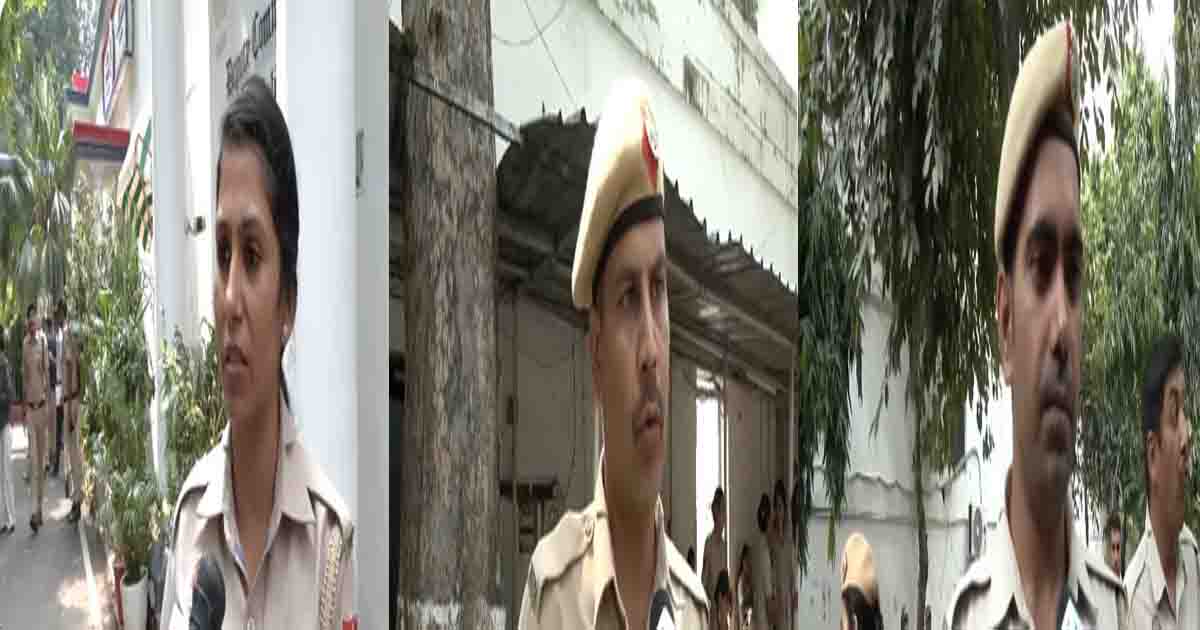
New Delhi, Oct 8: A couple of Delhi Police personnel who allegedly came under attack from the Congress workers and supporters during the INDIA bloc stir in the national capital a day before, narrated the ordeal that they underwent while trying to contain the surging crowd.
A couple of Delhi Police Constables, including women personnel spoke to media, recounting the physical attack inflicted on them while the Congress-led INDIA bloc protested against the Election Commission’s Special Intensive Revision (SIR).
They claimed that they were kicked and punched by the mob while doing their duty.
Deependra Sandhu, a Delhi Police Constable, said that he was assaulted while trying to control the unruly protesters on Wednesday.
“They (protesters) deliberately targeted us because we were informing everyone that Section 163 was in force in the area and that they could not protest here. Suddenly, they went behind us and pulled us from behind. They then pushed us to the ground and started kicking and punching us. We somehow managed to protect ourselves and get away,” he recalled.
The Constable also told media that he saw the attacker running from the protest site after assaulting him from the behind.
“The man who pulled me down from behind and kicked me was wearing white clothes,” he said.
Head Constable Bhupendra Ahlawat had a similar tale to share. He, too, was attacked allegedly by Congress workers while he was in police uniform.
He called it a planned attack as the attacker was allegedly given a “cover and escape route” by the protesting party workers.
“I am the one who was kicked. They intentionally and deliberately pulled me from behind by my waist and made me fall. When I turned around to see who it was and whether I recognised him or not, as soon as I made eye contact with him, the Congress workers hid him. They took him to the green area in the middle of the roundabout and deliberately made him leave after asking him and hiding him,” he said.
Seema, a woman Constable said that she was assaulted during the INDIA bloc protest on Tuesday.
“It is our duty to follow the instructions given by our officers. At that time, we do not pay attention to whether we are getting injured. I realised only later that I had been injured. This happened at Akashvani Bhavan, when we were detaining the legislators.”
“They were the MLAs who were sitting with Priyanka Gandhi,” she added.
According to reports, the Delhi Police have lodged multiple FIRs over alleged misbehaviour, manhandling and assault of its personnel by the Opposition workers, while they adhered to security protocols and strived to maintain order amid difficult circumstances.
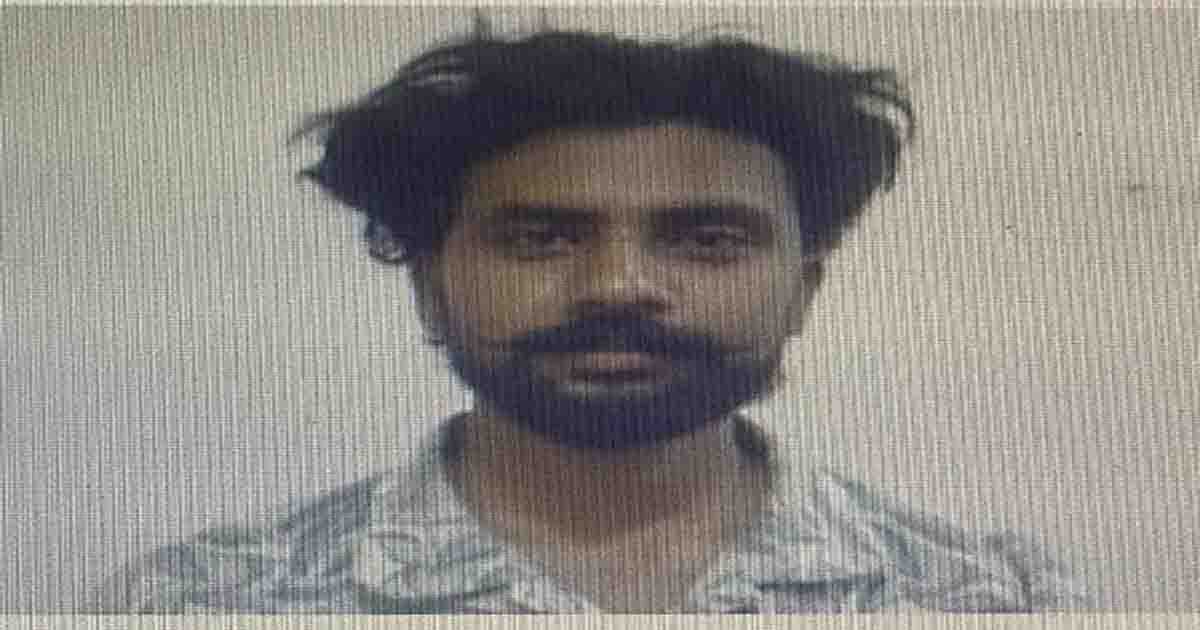
Ahmedabad, Oct 8: The Ahmedabad City Crime Branch has arrested a man allegedly involved in the killing of Punjabi social media influencer and make-up artist Mad Sandhu in Amritsar on October 3, identifying him as the shooter who also arranged the motorcycle used in the attack, police said on Thursday.
The accused has been identified as Parminder Prasad alias Parminder Kaka. According to Ahmedabad Crime Branch DCP, Ajit Rajian, Parminder carried out the firing that killed Sandhu and arranged the motorcycle used by the assailants.
“His role is that of the shooter. He did the firing and also arranged the bike,” Rajian told media. The arrest followed an input from Amritsar Police and coordination between the Punjab and Gujarat police teams.
The accused was traced to Ahmedabad, where the Crime Branch took him into custody as part of the investigation into the murder.
“A case has been registered as FIR No. 186/2026 under Section 103 of the Bharatiya Nyaya Sanhita at Cantonment Police Station in Amritsar. Further legal proceedings are underway,” he confirmed.
Sandhu, whose real name was Madhusudan Sandhu, was shot on October 3 by two motorcycle-borne assailants near a car wash centre on Loharka Road in Amritsar.
Police had said the attackers opened fire before fleeing from the spot. Sandhu was taken to a private hospital, where he succumbed to his injuries.
The killing had initially led police to examine several possible angles. Investigators collected CCTV footage from the area and examined Sandhu’s movements and digital records to identify the attackers.
Amritsar Police had reportedly detained two persons while probing a possible contract-killing angle.
Sandhu, 29, had a substantial following on social media and was known for his work as a make-up artist and for speaking about make-up artistry and gender-related issues on podcasts and digital platforms.
He had more than two lakh followers on Instagram and had also appeared in the Punjabi film ‘Oye Bhole Oye’.
The case also drew attention after social-media posts allegedly linked to foreign-based gangsters claimed responsibility for the killing.
However, Punjab Police had earlier said the authenticity of such posts had not been established. Investigators have also been examining possible links to the network of gangster Goldy Dhillon.
The latest arrest is expected to help investigators establish the sequence of events leading to the killing, identify other persons involved and determine the circumstances surrounding the alleged contract killing.

2021 Antilia bomb-scare: Bombay HC expresses surprise over Vaze’s high-end cars, long stay in hotel

NHRC seeks report from Delhi Police over women journalists’ sexual harassment allegations

‘Punched, kicked and assaulted’: Delhi Police Constables recount ordeal during Cong protest

Key shooter in Punjab influencer Mad Sandhu murder held by Gujarat Police

Delhi Police busts illegal stocking of illicit foreign cigarettes, one held

Gift to President Putin part of PM Modi bid to globally display India’s heritage

PM Modi’s warm camaraderie with Putin, Xi on full display at BRICS Summit

Complaint against Netflix & Mukesh Chhabra for inappropriate language on ‘India’s Got Latent 2’

INDIA bloc begins protest march against ECI

Maha Congress stages agitation against Gyanesh Kumar
-

 Crime4 years ago
Class 10 student jumps to death in Jaipur
-

 Maharashtra2 years ago
Mumbai Local Train Update: Central Railway’s New Timetable Comes Into Effect; Check Full List Of Revised Timings & Stations
-

 Maharashtra2 years ago
Mumbai To Go Toll-Free Tonight! Maharashtra Govt Announces Complete Toll Waiver For Light Motor Vehicles At All 5 Entry Points Of City
-

 Maharashtra2 years ago
False photo of Imtiaz Jaleel’s rally, exposing the fooling conspiracy
-

 National News2 years ago
Ministry of Railways rolls out Special Drive 4.0 with focus on digitisation, cleanliness, inclusiveness and grievance redressal
-

 Maharashtra2 years ago
Maharashtra Elections 2024: Mumbai Metro & BEST Services Extended Till Midnight On Voting Day
-

 National News2 years ago
J&K: 4 Jawans Killed, 28 Injured After Bus Carrying BSF Personnel For Poll Duty Falls Into Gorge In Budgam; Terrifying Visuals Surface
-

 Crime2 years ago
Baba Siddique Murder: Mumbai Police Unable To Get Lawrence Bishnoi Custody Due To Home Ministry Order, Says Report