
Business
Invest Karnataka 2022 paved way for Rs 9.82 lakh cr investment: CM Bommai

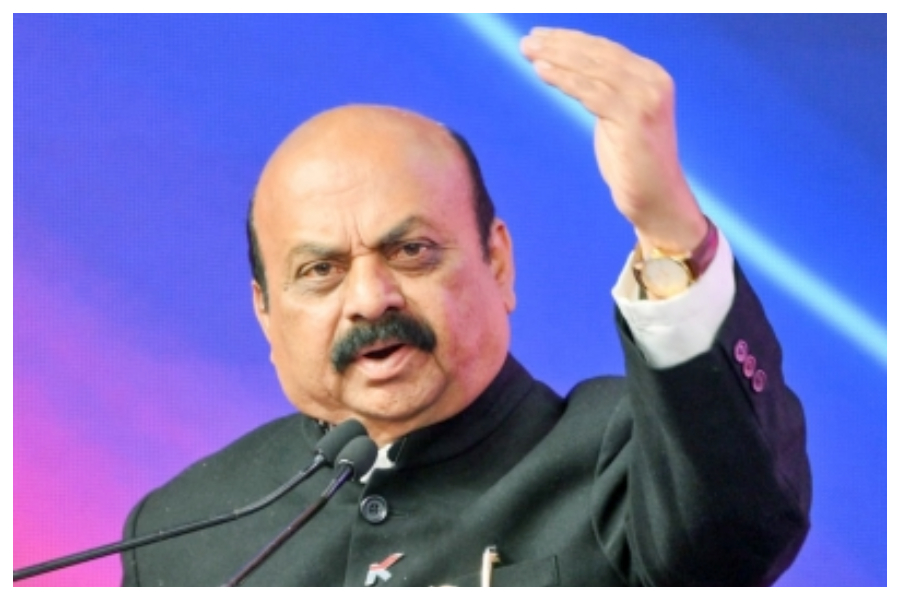
Karnataka Chief Minister Basavaraj Bommai announced at the concluding ceremony of the 3-day Global Investors Meet (GIM) in Bengaluru that “investments totaling about Rs 9.82 lakh have been committed in diverse sectors in the state.” Bommai thanked the participants in the event and investors.
Addressing the gathering, the CM said, “This GIM is different from other such Investor Meets as this has been organised during challenging times and has succeeded in showing us the way forward. What Karnataka thinks today, India thinks tomorrow. We will work with the investors shoulder to shoulder to make all these investments fructify on the ground.”
Thanking all the investors and delegates who participated in the GIM 2022, Karnataka Large and Medium Industries Minister, Murugesh Nirani, said “Invest Karnataka has laid a strong foundation for the development of Karnataka in the next five years. I am happy that we have met the core objective of this GIM, which is to bring in investments in diverse sectors and create jobs, and take industries beyond Bengaluru.”
The valedictory session was also attended by Bhagwanth Khuba, Union Minister of State for New and Renewable Energy, Chemicals & Fertilizers.
Inaugurated by Prime Minister Narendra Modi virtually on Wednesday, the event culminated on Friday with the valedictory session in which Chief Minister Basavaraj Bommai re-assured investors from all across the world of sustained support by his government.
Among top industrialists, Chairman of Jindal Group, Sajjan Jindal; Vice Chairman of Toyota Kirloskar Motor Pvt Ltd, Vikram S. Kirloskar; Chairman, Wipro, Rishad Premji; Vice Chairman, Bharti Enterprises, Rajan Bharti Mittal; CEO, Adani Ports and SEZ, Karan Adani and MD, Sterlite Power, Pratik Agarwal shared their experience in Karnataka and expressed continued interest in the state.
The Global Investors Meet witnessed 30+ immersive sessions spread across three days. These sessions were a mix of innovative formats such as panel discussions, fireside chats, and TED-style talks.
In addition to the speaker sessions, a number of networking events, cultural performances, business exhibitions (with 300+ exhibitors), and country sessions ran parallelly across the 3 days. The country sessions were hosted by partner countries — France, Germany, Netherlands, South Korea, Japan and Australia.


Business
Panic Buying In Palghar Amid Fuel Shortage Rumours: Long Queue Seen At Petrol Pump Along Mumbai-Ahmedabad Highway

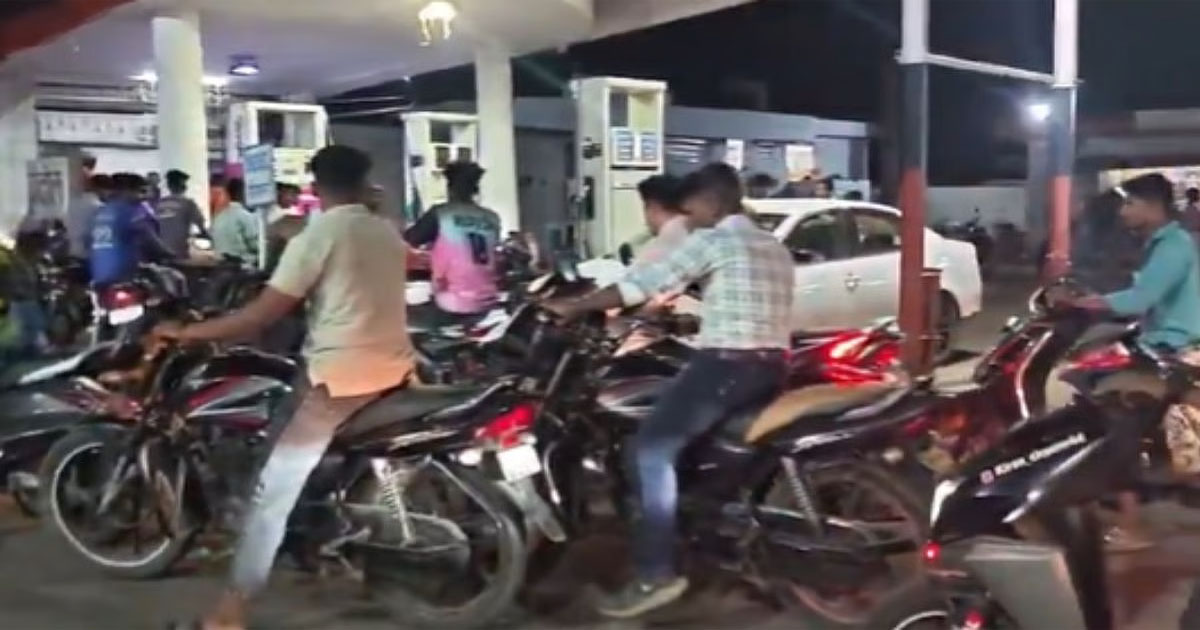
Palghar: Long queues of vehicles, especially two-wheelers, were seen at petrol pumps along the Mumbai-Ahmedabad National Highway amid rumours of a fuel shortage. The motorists claimed that they were waiting for more than an hour to refill their vehicles.
the scenes were captured at the Asian Petrol Pump in Charoti, where long queues of vehicles stretched outside the fuel station as residents feared limited fuel availability. Not just this, the report also claimed that several petrol pumps across Palghar district reportedly witnessed similar crowds, with panic buying increasing after rumours of fuel supply disruptions.
Meanwhile, the alleged rumours triggered people amid Prime Minister Narendra Modi’s recent appeal to citizens to reduce fuel consumption and adopt sustainable practices to help the country manage global economic disruptions.
Earlier on May 15, a similar scene was witnessed along the Maharashtra-Gujarat border, where long queues of vehicles were seen at several petrol pumps, as people rushed to fill petrol and diesel before the revised fuel rates came into effect. Visuals showed all kinds of vehicles, including trucks, cars, motorcycles and other commercial vehicles, lined up outside fuel stations, leading to heavy rush and congestion near the pumps.
Meanwhile, a similar incident was reported in Akola, where a scuffle broke out among farmers at a petrol pump over alleged fuel unavailability. Visuals showed several men fighting while standing in a crowded queue at the fuel station.
On May 10, PM Modi appealed to people to increasingly use public transport systems, including metro services, and adopt environmentally responsible practices to reduce pressure on fuel consumption and foreign exchange outflows.
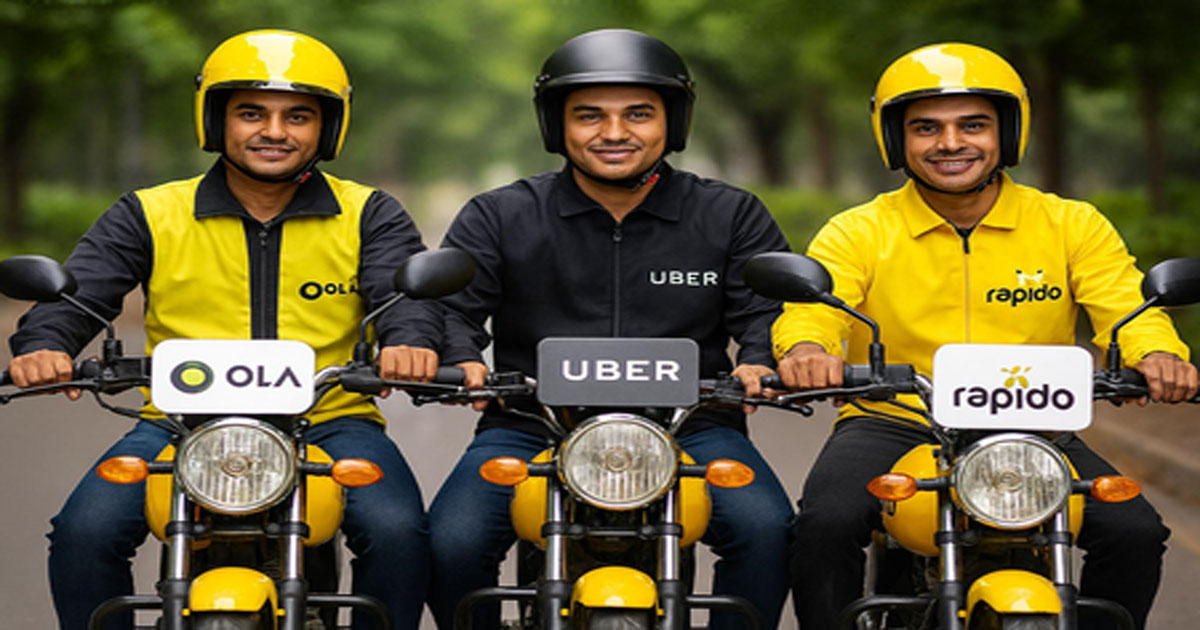
New Delhi, May 16: Maharashtra Transport Minister Pratap Sarnaik has directed the Cyber Crime department to lodge FIRs against Ola, Uber and Rapido over alleged illegal bike taxi operations in the state.
The minister further clarified that app-based mobility platforms Ola, Uber and Rapido continue to operate in the state as we sought legal action against their alleged unauthorised bike taxi services.
The clarification came after reports circulated on social media claiming that the services of Ola, Uber and Rapido had been completely shut down in Maharashtra.
In a post on X, the Directorate General of Information and Public Relations (DGIPR), Maharashtra, said such reports were misleading and stated that the government’s action is limited only to illegal bike taxi operations.
“The claim circulating on social media that all services of Ola, Uber, and Rapido have been completely shut down in Maharashtra is misleading,” it said.
“The transport department has taken a strict stance against unauthorised bike taxi services operating illegally in the state,” DGIPR added.
According to the state government, Sarnaik has written to the Cyber Crime department requesting immediate action against unauthorised bike taxi app services operating through the three platforms.
The minister also asked the department to file FIRs against the companies over the alleged operations.
“Transport Minister Sarnaik has written to the cyber-crime department demanding the immediate shutdown of unauthorised bike taxi app services like Ola, Uber and Rapido and the filing of FIRs against the respective company owners,” it stated.
“At the same time, the Transport Commissioner has also sent a letter to the Cyber Crime department in this regard,” it added.
However, there is no official comment on the development from the companies yet.
Bike taxi services have repeatedly faced regulatory challenges in Maharashtra over concerns related to legality, licensing norms and compliance with transport regulations.
App-based mobility operators offering two-wheeler taxi services have also encountered policy-related hurdles in the state in the past, as authorities continue to examine the framework governing such operations.
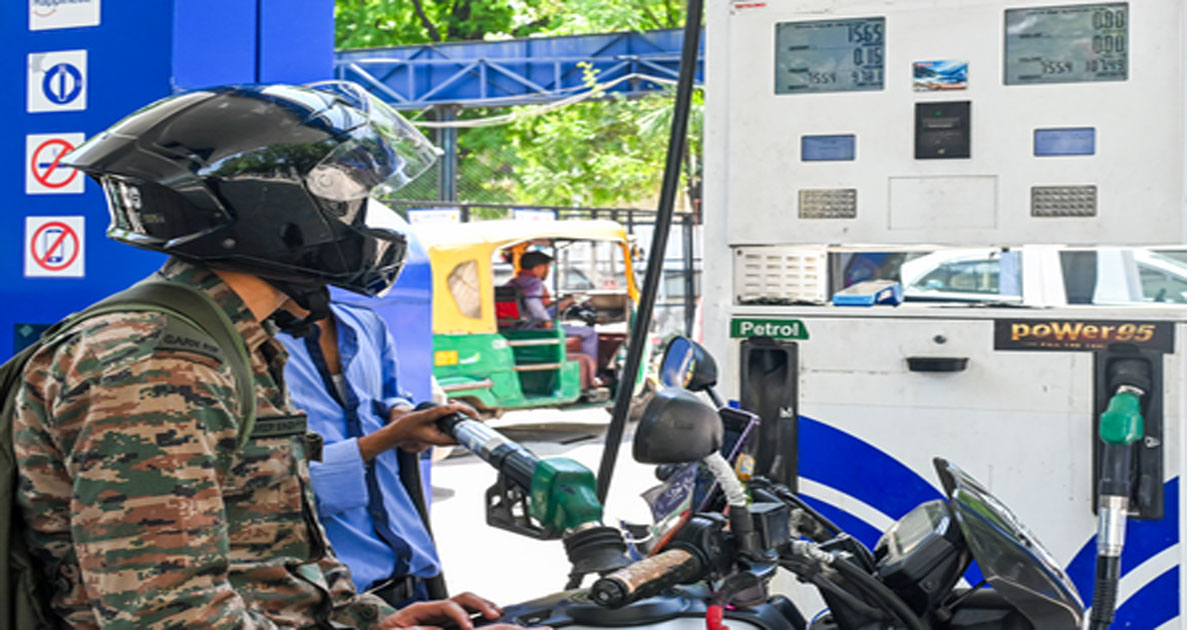
New Delhi, May 16: The recent retail fuel price increase of Rs 3 per litre will trim mounting losses at oil marketing companies and provide up to Rs 52,700 crore worth of relief in their under‑recoveries, a report said on Saturday.
The report from SBI Research said that the relief is equal to roughly 15 per cent of the expected total loss of OMCs in FY27.
Under‑recoveries on petrol and diesel have surged because retail prices were kept unchanged amid rising Brent crude, with the government estimating OMC losses at about Rs 1,000 crore per day and roughly Rs 3.6 lakh crore a year.
The report said the fuel price hike is unlikely to reduce annual oil consumption, as historical patterns showed consumption dips immediately after price hikes but recovers over the year.
“Further, immediate impact on CPI inflation is likely around 15-20 bps in May-June 2026. So, we revise our FY27 forecast to 4.7 per cent. There is no direct impact of this hike on the fiscal situation,” the report noted.
Notably, the government has earlier reduced the excise duty by Rs 10 on diesel and petrol during the year to help
The OMCs for which the revenue loss for the centre is estimated as Rs 1.1 lakh crore.
A similar rationalisation of excise to zero to aid OMCs would cost the centre about Rs 1.9 lakh crore and states about Rs 80,000 crore.
The report flagged that a further depreciation of the rupee could negate the intended benefits, saying that an additional depreciation of Rs 2 from the FY27 average of Rs 94 to the dollar would fully offset the gains from the domestic fuel price revision.
“The rupee has already approached a critical depreciation threshold, beyond which further currency weakness could substantially erode the intended benefits of domestic fuel price revisions,” it explained.

Unmanned electric boats deployed at Gateway of India and Budhwar Park to remove floating waste in the sea

Palghar Truck Crash: 13 Killed, 25 Injured As Wedding Vehicle Rams Container On Mumbai-Ahmedabad Highway

The Municipal Corporation and the Railway Administration should work together to make Mumbai flood-free, directs Standing Committee Chairman Prabhakar Shinde

Dangerous Love Triangle In Mira-Bhayandar: Youth Kidnapped, Brutally Beaten, & Burned With Cigarettes Over Affair With Same Girl

West Bengal ashram bombing: Two accused arrested from Borivali

Maharashtra Shock: 22-Year-Old Arrested For Exploiting & Blackmailing Multiple Women In Kolhapur; Love Jihad Angle Suspected

Google to invest up to $40 billion in Anthropic amid global AI race

27 Years After Gangster Sadiq Kalia’s Encounter By Daya Nayak, His Nephew Arrested For Alleged Revenge Killing In Mumbai

Chembur Police Arrest Four For Trying To Sell Elephant Tusks Worth ₹3.5 Crore; Forest Department Confirms Seizure

India, New Zealand set to sign FTA for improved market access on April 27
-

 Crime4 years ago
Class 10 student jumps to death in Jaipur
-

 Maharashtra2 years ago
Mumbai Local Train Update: Central Railway’s New Timetable Comes Into Effect; Check Full List Of Revised Timings & Stations
-

 Maharashtra2 years ago
Mumbai To Go Toll-Free Tonight! Maharashtra Govt Announces Complete Toll Waiver For Light Motor Vehicles At All 5 Entry Points Of City
-

 Maharashtra2 years ago
False photo of Imtiaz Jaleel’s rally, exposing the fooling conspiracy
-

 National News2 years ago
Ministry of Railways rolls out Special Drive 4.0 with focus on digitisation, cleanliness, inclusiveness and grievance redressal
-

 Maharashtra2 years ago
Maharashtra Elections 2024: Mumbai Metro & BEST Services Extended Till Midnight On Voting Day
-

 National News2 years ago
J&K: 4 Jawans Killed, 28 Injured After Bus Carrying BSF Personnel For Poll Duty Falls Into Gorge In Budgam; Terrifying Visuals Surface
-

 Crime2 years ago
Baba Siddique Murder: Mumbai Police Unable To Get Lawrence Bishnoi Custody Due To Home Ministry Order, Says Report