
International News
Imran Khan wants ISI chief Faiz Hameed to continue amid differences with Pak Army

Pakistan Prime Minister Imran Khan informed the federal cabinet that he had told Pakistan Chief of the Army Staff (COAS) Gen. Qamar Javed Bajwa that he wanted Lt. Gen. Faiz Hameed to continue as Inter-Services Intelligence (ISI) director general for some time due to the critical situation in neighbouring Afghanistan, Dawn reported.
Reports about lack of consensus between the civil and military leadership over the matter had been making rounds on social media for the last few days, but after it appeared on regular media on Tuesday, Information Minister Fawad Chaudhry was compelled to clarify the government’s point of view.
Pakistan Tehreek-i-Insaf (PTI) chief whip in the National Assembly Amir Dogar said Prime Minister Khan and Gen Bajwa held a detailed meeting late Monday night on the matter.
The meeting was also confirmed by Information Minister Fawad Chaudhry during his presser after the cabinet meeting, stating that the issue of appointment of new ISI DG Lt. Gen. Nadeem Ahmed Anjum had been resolved and that the PM enjoyed the authority to appoint the chief of the country’s premier spy agency in accordance with law and Constitution.
Also sharing details of the meeting, Pak PM’s aide on political affairs Amir Dogar said the premier wanted Lt. Gen. Hameed to stay as DG ISI in view of the situation in Afghanistan, adding that Prime Minister Khan and Gen. Bajwa enjoyed relation of respect and dignity, the report said.
Khan was of the opinion that the government wanted to take all institutions on board, Dogar said. “The body language of the prime minister was quite positive and he seemed confident,” he added.
The PTI’s chief whip said the prime minister had told the cabinet that he was an elected prime minister and chief executive of the country.
“The prime minister has the authority to appoint the DG ISI and he held a detailed meeting with Chief of the Army Staff Gen. Qamar Javed Bajwa in this regard,” Chaudhry told the press conference.
“The federal government will follow a legal and constitutional procedure on the appointment of the Inter-Services Intelligence director general,” he said.
The minister categorically stated there would be no step taken from the PM Office or the military setup that damaged the repute of one another, the report said.
Referring to rumours circulating about the matter, the minister said: “I see on social media, there are many who have wishes; I want to tell them that the Prime Minister’s Office will never undermine the respect of the Pakistan Army and army chief. And the COAS and the army will never take any step that will undermine the respect of Pakistan’s prime minister or civil setup.”
He stressed that both the prime minister and the military leadership were in close coordination, and the DG ISI would be appointed after fulfilling all legal requirements. “Both (PM Khan and Gen Bajwa) are in agreement over this and the prime minister has the authority over it,” he added


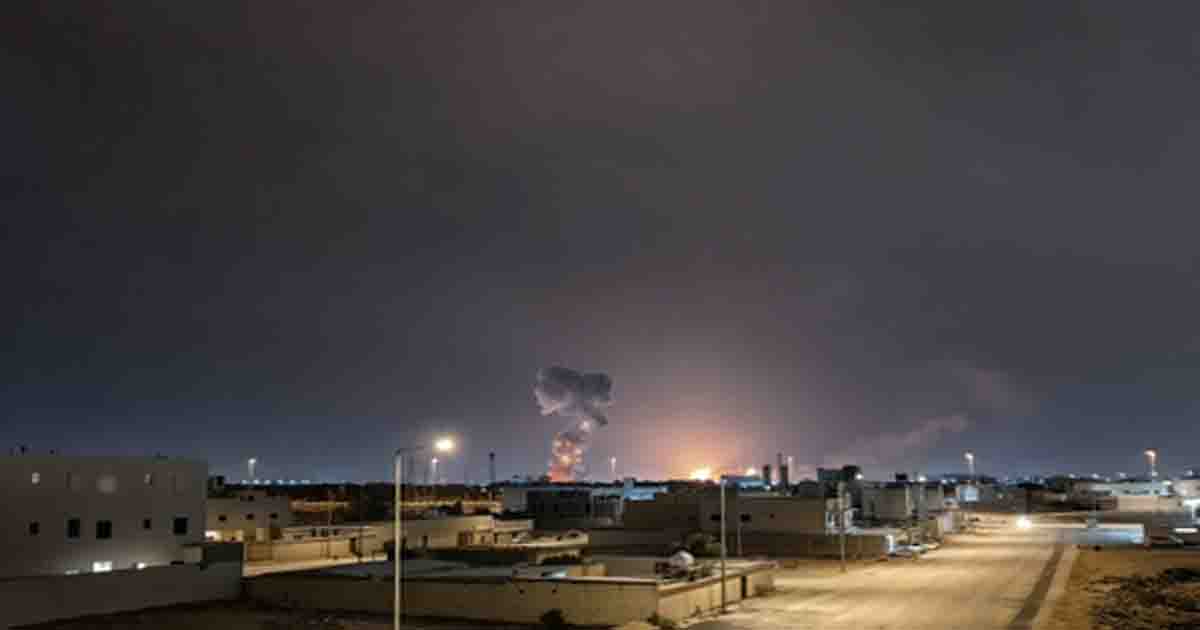
Riyadh, Oct 6: As many as three people were injured, and property was damaged after attacks targeted two airports in Saudi Arabia on Monday evening, according to the country’s civil aviation authority.
In a statement shared on X, Saudi Arabia’s General Authority of Civil Aviation (GACA) said King Abdullah bin Abdulaziz International Airport in Jazan and Najran International Airport were targeted on Monday evening. It said that emergency response teams and relevant authorities responded immediately under established emergency plans.
The three injured people were taken to hospital for medical treatment. GACA said it was working with the relevant authorities to assess the damage, verify the safety of the airport facilities and take measures to ensure the safety of passengers and maintain the safety and security of Saudi Arabia’s civil aviation system.
On Monday, the Houthis claimed responsibility for the attacks targeting sites in southern Saudi Arabia, including military facilities and airports, Gulf News reported.
Meanwhile, Saudi Arabia’s Ministry of Foreign Affairs condemned the Houthis ‘ targeting of civilians and civilian and economic facilities in the country and Saudi vessels in the southern Red Sea and the Bab al-Mandab Strait.
“The Ministry of Foreign Affairs expresses the Kingdom of Saudi Arabia’s strongest condemnation and denunciation of the terrorist Houthi militia’s continued targeting of civilians and civilian and economic facilities in the Kingdom; its blatant and repeated attacks against the holiest sites on earth-Makkah and Madinah— the capital Riyadh, and the cities of Abha, Khamis Mushait, Jazan, Najran, Taif, and Yanbu; and its targeting of Saudi vessels in the southern Red Sea and the Bab al-Mandab Strait,” the ministry posted on X.
“The Kingdom affirms that, since the terrorist Houthi militia’s coup against Yemen’s legitimate government in 2014, the Kingdom has made sustained and tireless efforts to support a comprehensive and lasting political solution in Yemen. However, consistent with its rejection of peace, the terrorist Houthi militia has instead chosen continued military escalation, dragging Yemen and the brotherly Yemeni people into further humanitarian and economic suffering to serve and advance external agendas,” it added.
Saudi Arabia reaffirmed its right to defend its territory, resources, sovereignty, and the safety of its citizens and residents, and to take all necessary measures to protect its security in accordance with international law. It also renewed its political and military support for the Presidential Leadership Council, the Yemeni government, and the brotherly Yemeni people to end the coup and restore the state and its institutions from the control of the Houthi militia.
Saudi Arabia’s Ministry of Foreign Affairs reiterated its call on the international community, particularly the permanent members of the Security Council, to fulfil its responsibilities, implement the relevant Security Council resolutions, and provide full support to Yemen’s legitimate government in confronting the Houthi militia and ending the threat it poses to Yemen, the region, and the world.
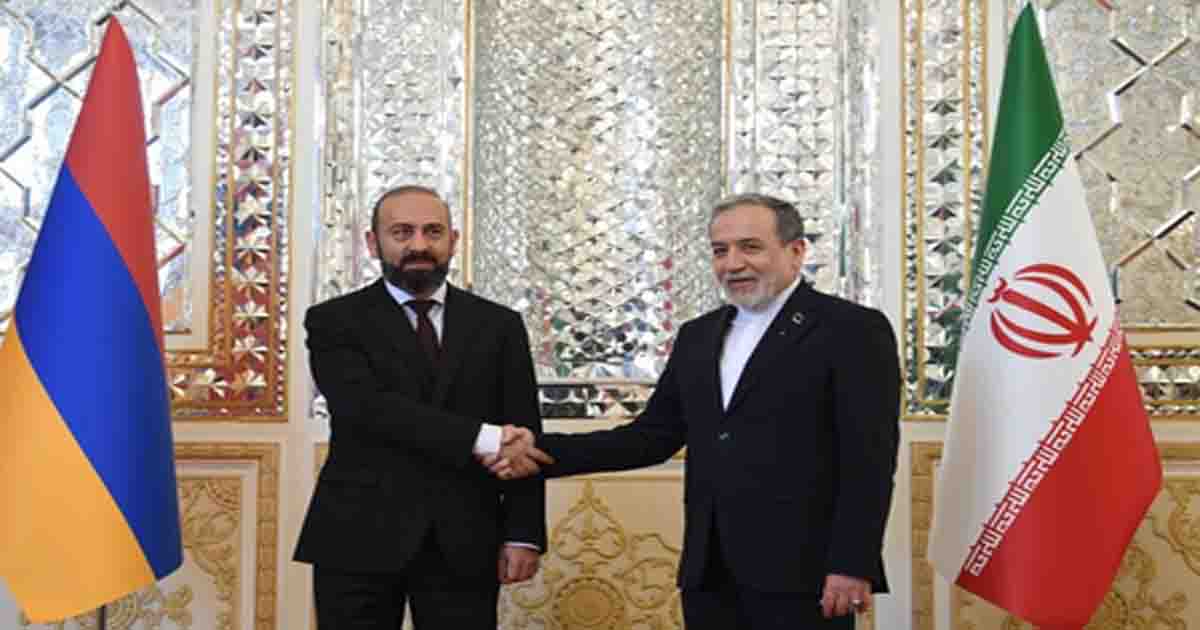
Tehran, Oct 6: Iran President Masoud Pezeshkian and Foreign Minister Seyed Abbas Araghchi met with visiting Armenian Foreign Minister Ararat Mirzoyan in Tehran seperately, each stressing Iran’s resolve to defend its national interests and security.
“Negotiation is meaningless with an enemy that resorts to acts of assassination, sanctions, pressure, and threats on a daily basis, and breaks its promises,” Pezeshkian said in his meeting with Mirzoyan on Monday, according to a statement published on the website of his office.
“So far, they (the United States) have attacked us three times following talks, which demonstrates that they are not seeking dialogue, but rather aiming to overthrow the Islamic Republic of Iran’s establishment,” Pezeshkian said.
Pezeshkian noted that Washington offers no answer to the killing of 168 innocent children at a school in Iran’s southern city of Minab on February 28, Xinhua news agency reported.
“None of their actions and behaviors towards Iran complies with international law,” he added.
Araghchi said Iran will “decisively” defend its national interests and security, but has never hesitated to use diplomacy to prevent escalation of tensions, according to a statement released by the Iranian Foreign Ministry.
He said the “precarious” consequences of the US-Israeli military “aggression” against Iran are the main cause of the insecurity imposed on commercial shipping in the Strait of Hormuz.
Mirzoyan, for his part, emphasised the “strategic nature” of relations between Armenia and Iran, and Yerevan’s continued commitment to expanding cooperation with Tehran, the statement said.
In his meeting with Iranian Parliament Speaker Mohammad Baqer Qalibaf, Mirzoyan stressed that his country will not allow its territory to be used for any action against Iran, according to Iran’s official news agency IRNA.
On February 28, Israel and the United States launched joint attacks on Tehran and other Iranian cities. Iran responded with waves of missile and drone attacks targeting Israel and US bases and assets in the region, and tightened its grip on the Strait of Hormuz.
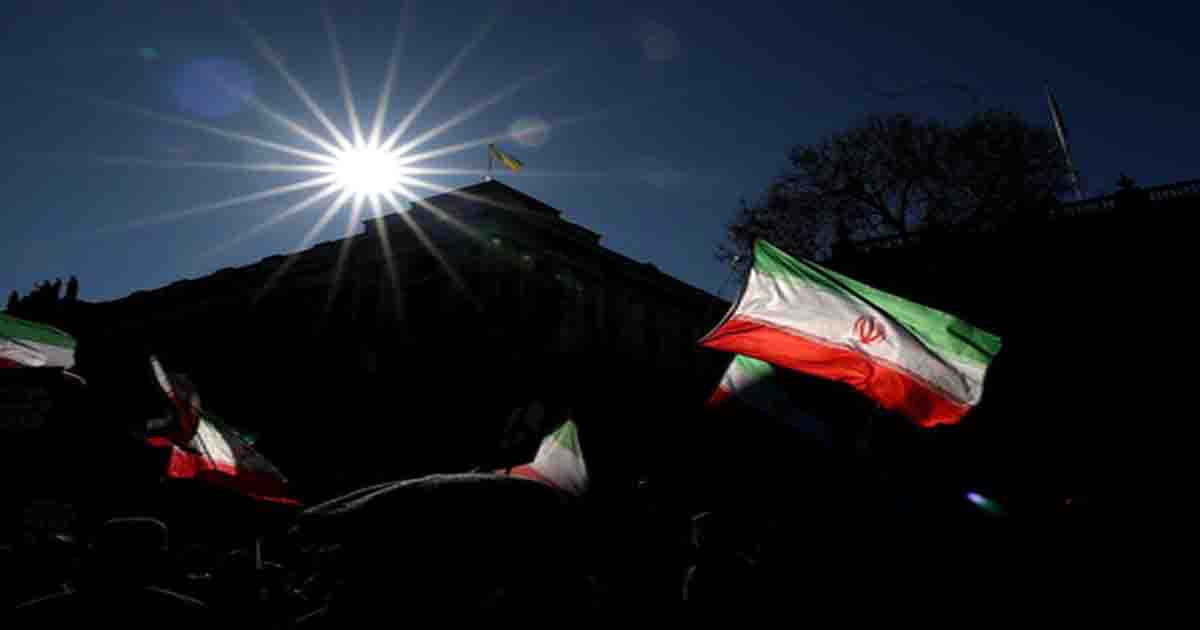
Tehran, Oct 5: A senior Iranian diplomat has said that Iran is currently reviewing US views on Tehran’s recent proposal to cease hostilities and reopen the Strait of Hormuz, according to the semi-official Fars news agency.
Iran’s Deputy Foreign Minister for Legal and International Affairs Kazem Gharibabadi made the remarks in Tehran on Sunday (local time), saying that the United States has submitted its views on Iran’s proposal through mediators.
He stressed that Iran’s proposal is the “seven-day plan” that was presented to the other side by Iranian Foreign Minister Seyed Abbas Araghchi in New York late last month.
Gharibabadi said, “The US views are currently being reviewed inside the country through the appropriate channels,” adding that whenever Iran’s final views are ready, the necessary action will be taken through “appropriate channels.”
He added that Iran is simultaneously making the necessary preparations for any other scenario as well, reports Xinhua news agency.
Iran conveyed a proposed seven-day plan to the United States on September 22 to cease hostilities and reopen the Strait of Hormuz, through mediators on the sidelines of the 81st session of the United Nations General Assembly in New York.
On February 28, Israel and the United States launched joint attacks on Tehran and other Iranian cities. Iran responded with waves of missile and drone attacks targeting Israel and US bases and assets in the region, and tightened its grip on the Strait of Hormuz.
A ceasefire was achieved between the warring parties on April 8. On June 18, Iran and the United States signed a memorandum of understanding (MoU) on ending the war in the region on all fronts.
Under the MoU, the two countries were scheduled to hold negotiations within 60 days, ending on August 17, to reach a final agreement. However, the two sides failed to make sufficient progress toward a deal as tensions continued to escalate.

Seven killed as SUV rams into parked trailer in Gujarat Bhavnagar

Saudi Arabia says three people injured in attacks on two airports

Delhi Police seize 265 kg of illegal firecrackers in South Delhi, one arrested

Amitabh Bachchan reacts as KBC contestant recalls waiting for 5 hours outside Jalsa with his mother

Delhi court grants regular bail to influencer Swatantra Bhardwaj in assault case

Gift to President Putin part of PM Modi bid to globally display India’s heritage

PM Modi’s warm camaraderie with Putin, Xi on full display at BRICS Summit

Corporators of all parties in trouble! Corporators of all major parties including Shiv Sena (UBT), BJP and Congress are facing legal challenges.

Complaint against Netflix & Mukesh Chhabra for inappropriate language on ‘India’s Got Latent 2’

Maha Congress stages agitation against Gyanesh Kumar
-

 Crime4 years ago
Class 10 student jumps to death in Jaipur
-

 Maharashtra2 years ago
Mumbai Local Train Update: Central Railway’s New Timetable Comes Into Effect; Check Full List Of Revised Timings & Stations
-

 Maharashtra2 years ago
Mumbai To Go Toll-Free Tonight! Maharashtra Govt Announces Complete Toll Waiver For Light Motor Vehicles At All 5 Entry Points Of City
-

 Maharashtra2 years ago
False photo of Imtiaz Jaleel’s rally, exposing the fooling conspiracy
-

 National News2 years ago
Ministry of Railways rolls out Special Drive 4.0 with focus on digitisation, cleanliness, inclusiveness and grievance redressal
-

 Maharashtra2 years ago
Maharashtra Elections 2024: Mumbai Metro & BEST Services Extended Till Midnight On Voting Day
-

 National News2 years ago
J&K: 4 Jawans Killed, 28 Injured After Bus Carrying BSF Personnel For Poll Duty Falls Into Gorge In Budgam; Terrifying Visuals Surface
-

 Crime2 years ago
Baba Siddique Murder: Mumbai Police Unable To Get Lawrence Bishnoi Custody Due To Home Ministry Order, Says Report