
International News
Imran asks Pak President to draw up clear operational lines for ISPR

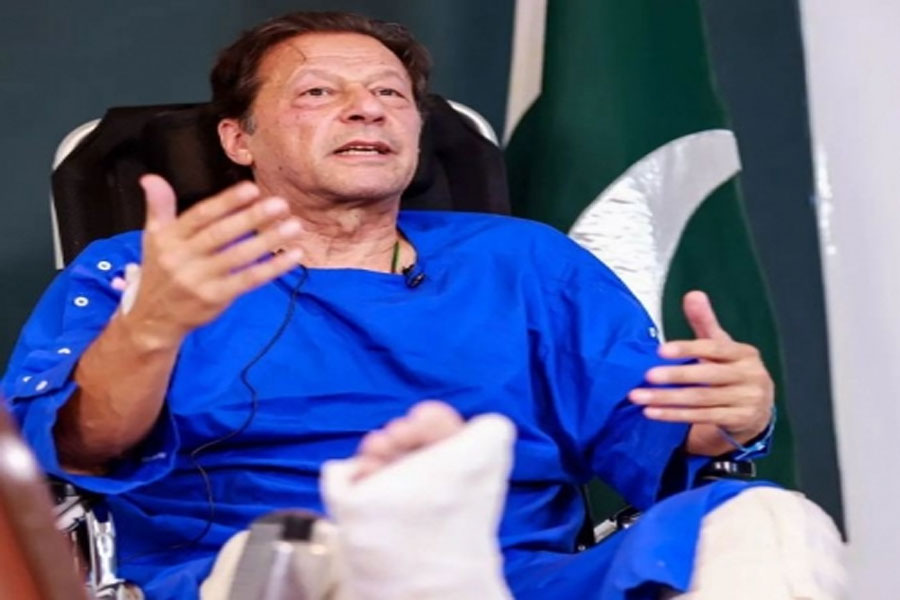
Former Pakistan Prime Minister Imran Khan has called on President Arif Alvi to define “clear operational lines” of the Inter-Services Public Relations (ISPR) while also asking him to act against the “abuse of power and violations of our laws and of the Constitution”, it emerged on Monday, according to a media report.
In a letter dated November 6, the PTI chief appealed to the President to take note of “serious wrongdoings” which are undermining the country’s national security. He also asked Alvi to identify the “guilty” and hold them accountable, Dawn reported.
He claimed that the Official Secrets Act was breached when a “confidential conversation between myself as Prime Minister, the Chief of Army Staff and the Director General of the Inter-Services Intelligence (ISI), on a supposedly secure line, was ‘leaked’ to the media”, the report said.
“This raises a very serious question as to who or what organisation was involved in doing a clearly illegal wiretap of the PM’s secure phone line? This is a breach of national security at the highest level,” he said.
A series of separate audio recordings surfaced in September, allegedly featuring the leadership of the PTI and PML-N holding informal conversations never meant to be heard by the public.
Khan also posed two further questions: How the head of Pakistan’s premier intelligence agency could hold a public press conference and how two military bureaucrats could hold a “highly political press conference”, Dawn reported.
“The parameters of a military information organisation such as the ISPR also need to be clearly defined and limited to information relating to defence and military issues. As supreme commander of the armed forces, I call on you to initiate the drawing up of these clear operational lines for the ISPR.”


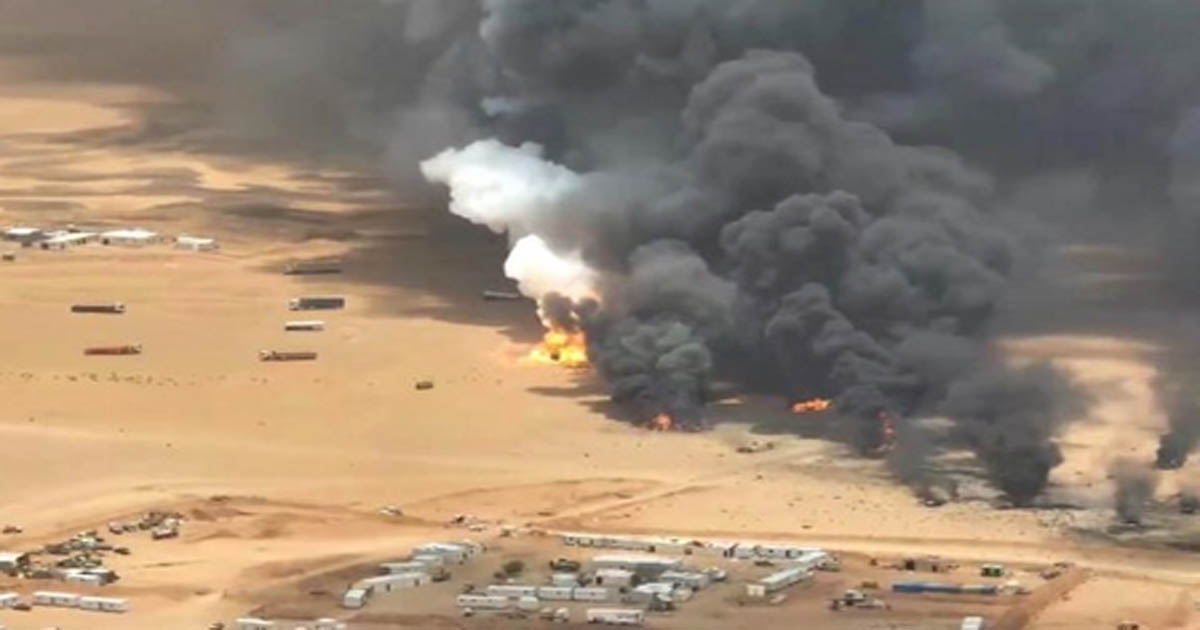
United Nations, Sep 15: UN humanitarians warned that hostilities in Yemen are forcing people to flee their homes, causing civilian casualties, and putting already stretched humanitarian operations under growing pressure.
Renewed fighting in Yemen has displaced at least 125,000 civilians since the start of September, said the UN Office for the Coordination of Humanitarian Affairs (OCHA) on Monday (local time).
The UN Human Rights Office has verified 40 civilian casualties — eight dead and 32 injured in the first two weeks of this month. Women and children account for half of those killed and more than half of those injured, reports Xinhua news agency.
OCHA said the United Nations and its humanitarian partners continue to respond, despite extremely difficult operating conditions, providing aid to thousands of households as of Saturday. However, supplies are critically low, and funding is falling short of needs.
“Humanitarian access and movements remain severely constrained due to insecurity,” the office said. “Humanitarian movements into and within several locations on Yemen’s west coast remain suspended, while key roads are restricted or impassable. OCHA once again calls on all parties to protect civilians, respect international humanitarian law, and facilitate safe and unimpeded humanitarian access.”
Earlier this month, Yemen’s government forces said that more than 500 soldiers were killed and about 1,500 wounded in month-long battles with the Houthis along the western coast, as the group mounted a sweeping advance toward the strategic Bab al-Mandab Strait.
In a statement carried by Al-Joumhouriya TV, the government’s National Resistance Forces said the casualties were recorded between August 9 and September 10, while claiming that more than 1,000 Houthi members were killed and thousands wounded. The figures could not be independently verified.
The statement said the fighting began with Houthi missile, drone and explosive-boat attacks before expanding from Hays in the southern part of the Red Sea province of Hodeidah to several fronts in neighbouring southwestern Taiz province.
The casualties came amid a sweeping Houthi offensive launched on September 3 that rapidly redrew front lines along Yemen’s Red Sea coast, with the group capturing several government-held areas in Hodeidah province and neighbouring Taiz province.
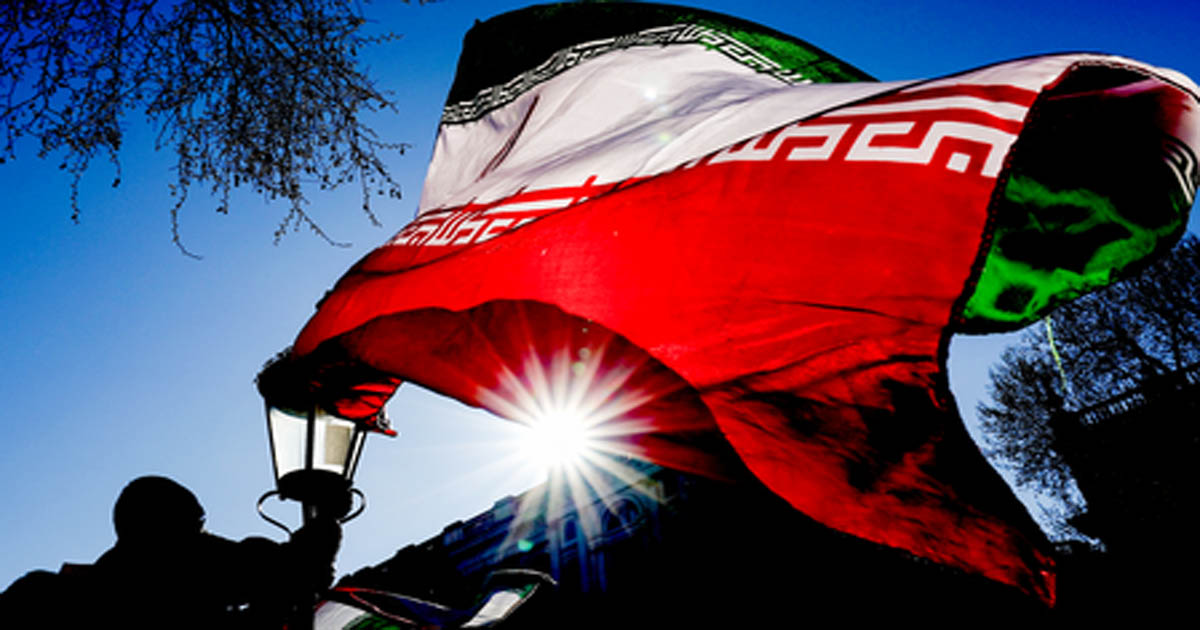
Tehran, Sep 15: A top Iranian security official said early on Tuesday that Iran will not negotiate with the United States unless its conditions are met.
Secretary of Iran’s Supreme National Security Council Mohsen Rezaei made the remarks in a post on social media platform X in response to US President Donald Trump’s remarks on Monday, in which Trump claimed that Tehran wanted to make a deal “quickly and badly” and that Washington could resume negotiations with it.
“The failing Nation of Iran wants to make a deal, quickly and badly. I will determine whether or not the USA will choose to engage — The concept of which we are open to,” Trump wrote on Truth Social.
“Don’t get distracted by the US president’s mixed signals — from ‘no negotiations’ to ‘we’re ready to talk.’ The stakes around oil and the straits have changed. Damage control won’t stop what’s coming,” Rezaei said.
“No talks until Iran’s conditions are met. Period!” he stressed.
On June 18, the United States and Iran signed a memorandum of understanding (MoU) on ending the war in the region on all fronts, including Lebanon, reports Xinhua news agency.
Under the MoU, they were scheduled to hold negotiations within a period of 60 days, which ended on August 17, to reach a final agreement, but the talks’ fate remains unclear following a series of recent escalations between the two countries.
Meanwhile, two fishing boats were targeted in a drone attack off Iran’s southern coast on Monday night, leaving a number of fishermen missing, the semi-official Mehr news agency reported.
The attack was carried out off the coast of the southern port city of Kargan and near Larak Island, Mehr cited Ahmad Nafisi, Hormozgan province’s deputy governor for political and security affairs, as saying.
Search and rescue operations have been launched to find the fishermen, Nafisi added, noting that further details of the incident will be announced after investigation, reports Xinhua news agency, quoting Mehr.
Earlier, the Navy of Iran’s Islamic Revolutionary Guard Corps (IRGC) said that a super oil tanker seeking to cross the Strait of Hormuz via the “forbidden” route south of the waterway exploded and caught fire after hitting naval mines.
In a statement on the IRGC’s official news outlet, Sepah News, the navy said efforts to contain the fire on the tanker, identified as “EL GAIA,” were futile, and the entire vessel was engulfed in flames.
It added that warnings had been issued about the risks of using the “illegal” route in the strategic waterway, stressing that the strait remains closed and under the control of Iran’s naval forces.
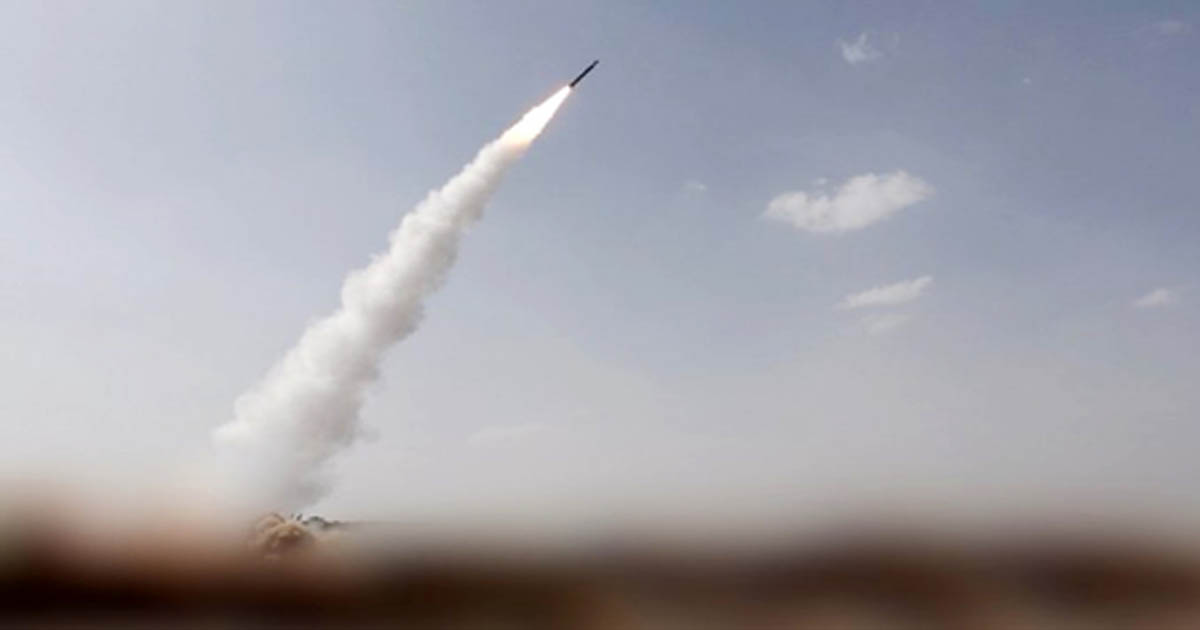
Sanaa, Sep 14: Yemen Houthi group said Monday that it had launched dozens of ballistic missiles and drones at a major military air base in southwestern Saudi Arabia, marking a significant escalation in the widening cross-border confrontation.
In a statement carried by Houthi-run al-Masirah TV, military spokesperson Yahya Saree said the group fired dozens of ballistic missiles and drones at King Khalid Air Base in Khamis Mushait, a southwestern Saudi city near the Yemeni border.
Saree said the operation targeted fighter-jet hangars, radar systems, runways, ammunition depots and other military facilities at the base, claiming that the strikes were “precise and direct” and caused significant damage, Xinhua News Agency reported.
There was no immediate comment from Saudi authorities on Monday’s Houthi claims or information on possible casualties and damage.
Saree said the operation was carried out in retaliation for what the group described as an intensifying Saudi air campaign across Yemen, claiming that Saudi F-15 and Typhoon fighter jets had conducted more than 300 airstrikes on several Yemeni provinces in recent days.
He warned that the Houthis would continue launching attacks deep inside Saudi territory as long as airstrikes on Yemen continue, saying any further escalation would be met with broader military operations.
The claim came amid a sweeping Houthi offensive launched on Sept. 3 that has rapidly redrawn front lines along Yemen’s Red Sea coast, with the group capturing several government-held areas in the Red Sea Hodeidah province and neighboring southwestern Taiz province.
The Houthis captured the strategic port city of Mocha on Thursday before pushing south into the Bab al-Mandab Strait area and seizing Mayun Island at the heart of the strait, tightening their grip on the vital shipping chokepoint connecting the Red Sea with the Gulf of Aden.
Following the advance on Friday, the Houthis said international navigation through the strait remained “free, safe and smooth,” while stressing that Saudi vessels remained excluded under a maritime ban the group imposed on July 20.
Yemen’s conflict erupted in late 2014 when the Houthis seized Sanaa and much of northern Yemen, prompting a Saudi-led coalition to intervene in March 2015 in support of the internationally recognised government.

Opposition twisted Amit Shah’s Hindi remarks, claims Maha CM

Delhi court grants three-week interim bail to influencer Swatantra Bhardwaj

Jayant Chaudhary-Akhilesh Yadav war of words intensifies; UP ministers back RLD chief

Post Ganpati darshan, Salman Khan shares a cryptic note on ‘happiness and contentment’

Delhi Police busts pan-India matrimonial cyber fraud call centre in Agra; mastermind arrested

Four more Indian nationals rescued in Nepal, 120 cross safely from China: MEA

Nepal floods: First batch of 106 stranded Maharashtra tourists reaches India; 84 more expected today (Ld)

Gift to President Putin part of PM Modi bid to globally display India’s heritage

India, Brazil sign ICT MoU to deepen digital, telecom cooperation

Maharashtra: 17-year-old boy dies by suicide on Raksha Bandhan after emotional social media posts
-

 Crime4 years ago
Class 10 student jumps to death in Jaipur
-

 Maharashtra2 years ago
Mumbai Local Train Update: Central Railway’s New Timetable Comes Into Effect; Check Full List Of Revised Timings & Stations
-

 Maharashtra2 years ago
Mumbai To Go Toll-Free Tonight! Maharashtra Govt Announces Complete Toll Waiver For Light Motor Vehicles At All 5 Entry Points Of City
-

 Maharashtra2 years ago
False photo of Imtiaz Jaleel’s rally, exposing the fooling conspiracy
-

 National News2 years ago
Ministry of Railways rolls out Special Drive 4.0 with focus on digitisation, cleanliness, inclusiveness and grievance redressal
-

 Maharashtra2 years ago
Maharashtra Elections 2024: Mumbai Metro & BEST Services Extended Till Midnight On Voting Day
-

 National News2 years ago
J&K: 4 Jawans Killed, 28 Injured After Bus Carrying BSF Personnel For Poll Duty Falls Into Gorge In Budgam; Terrifying Visuals Surface
-

 Crime2 years ago
Baba Siddique Murder: Mumbai Police Unable To Get Lawrence Bishnoi Custody Due To Home Ministry Order, Says Report