
Maharashtra
BJP claims Fadnavis’ statement misconstrued

A day after Maharashtra Leader of Opposition Devendra Fadnavis said he still feels he’s the Chief Minister, the Bharatiya Janata Party claimed that his remarks were ‘misinterpreted’, here on Wednesday.
Talking to media-persons, BJP State President Chandrakant Patil attempted to straighten the record by claiming that “as usual, Fadnavis’ statement was misconstrued”.
“What Fadnavis actually meant was that wherever he goes as the Leader of Opposition, the people have the same expectations from him as when he was the CM,” Patil said.
He said that Fadnavis is constantly on the move, visiting people in flood hit areas, or rain-ravaged districts, the farmers and others who crowd around him and seek his help.
To a pointed query whether it was possible that Fadnavis could return as the CM, Patil shot back: “How can I say, I am not an astrologer!”
Reminiscent of his 2019 pre-polls proclamation of ‘Mee Punha Yaeen’ (I will return) Fadnavis stated at an open function in Navi Mumbai that he still feels he’s the state CM owing to the immense love and affection showered by the people of the state.
“The people of the state have never made me feel that I am not the CM. I still feel that I am the CM. I have not been sitting at home. I have been working very hard and touring all over the state for the past two years. But the people’s love and respect has not waned,” Fadnavis asserted.
Going into splits, the ruling Maha Vikas Aghadi (MVA) leaders slammed him for continuing to ‘day-dream’ and not willing to accept the stark reality that the BJP was voted out of office two years ago; and Fadnavis’ claims even attracted sly sniggers from sections of his own party.
The Shiv Sena-Nationalist Congress Party-Congress leaders even advised the BJP to ensure prompt medical attention and get Fadnavis treated for shock, hallucinations, trauma and mental problems before its too late.

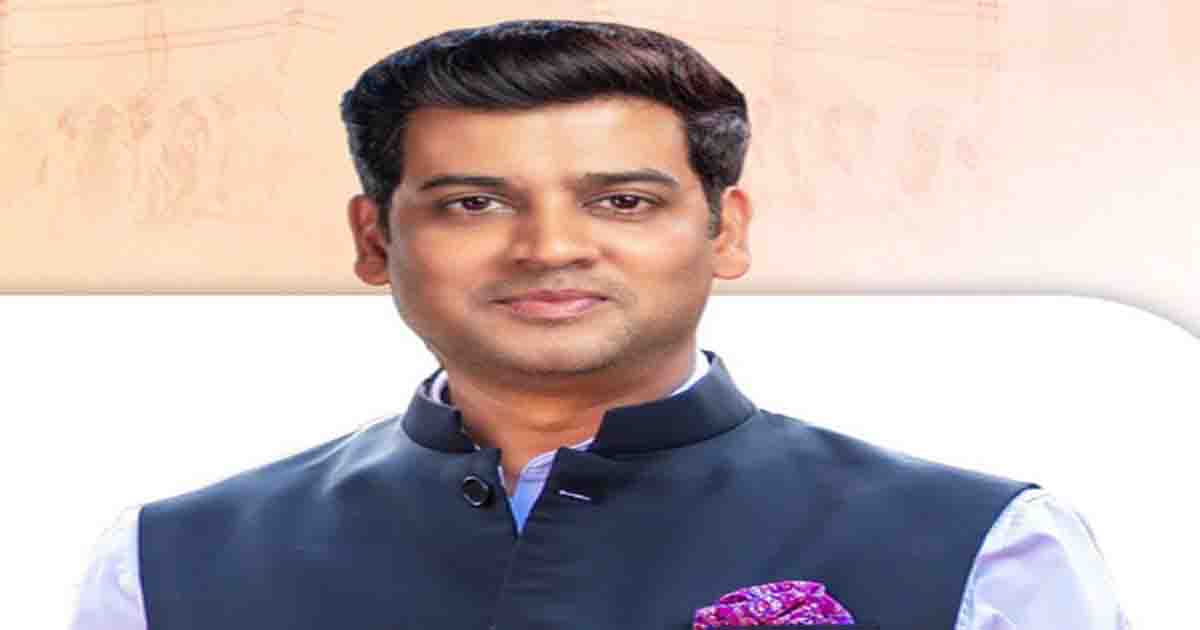
Amid the rating controversy over the Rs 500-crore audio clip recently brought to light by Maratha reservation activist Manoj Jarange Patil, Shiv Sena MP and Deputy Chief Minister Eknath Shinde’s son Shrikant Shinde broke his silence on Saturday, saying that he is also looking for the amount claimed in the purported audio clip.
He said that the person to whom these Rs 500 crores were supposed to be sent hasn’t reached him. “The question that has crossed Manoj Jarange Patil’s mind has also crossed mine, and I am now out searching for it,” he said.
In a sarcastic tone, he added, “We were discussing how Rs 500 crore in cash would look together and how many vehicles would be required to transport it.”
Shrikant Shinde’s reaction is important as the audio clip mentioned a transaction of Rs 500 crore, with allegations that this money was delivered to Jarange Patil through the former.
Shrikant Shinde clarified that the issue now falls under the purview of Chief Minister Devendra Fadnavis and everything will come to light at the appropriate time. Just as Jarange Patil is investigating the issue, he mentioned that he is also looking into the matter himself.
“If you find out, you tell me; if I find out, I will tell you,” he remarked.
Amidst all these developments, Jarange Patil has warned that he possesses more “nuclear bombs.”
CM Fadnavis has already ordered a forensic probe, while BJP and Shiv Sena have demanded an impartial probe.
Earlier, Senior Congress leader and former Chief Minister Prithviraj Chavan claimed that there is a deep-seated conspiracy to finish off the leadership of both Manoj Jarange-Patil and Deputy Chief Minister Eknath Shinde. He also demanded a technical and forensic analysis of the audio clip.
Further, the Shiv Sena (UBT) leader Chandrakant Khaire has levelled serious accusations against the BJP and the Eknath Shinde-led Shiv Sena faction.
He asked, “Who made Manoj Jarange Patil big, and why are they now trying to sideline him?” Khaire asserted that Jarange Patil fought to secure justice and rights for the Maratha community, which is why the community stood firmly behind him.”
However, he claimed that leaders have become worried about their own political future due to Jarange Patil’s growing influence.
Khaire demanded that the controversial audio clip be sent for forensic testing and the truth be brought before the public. He made a strong case for an impartial inquiry. Khaire also raised questions regarding the alleged Rs 500-crore transaction.
He demanded an inquiry into Shrikant Shinde if his name is being linked to this financial transaction. He further claimed that this entire episode has the blessings of the BJP, the Shinde-led Shiv Sena, and Union Home Minister Amit Shah.

MIRA-BHAYANDAR, Oct 24 — In a major crackdown on interstate narcotics trafficking, the Crime Detection Branch Unit 4 of the Mira-Bhayandar, Vasai-Virar (MBVV) Police successfully dismantled a chemical factory in Telangana that was manufacturing raw materials for Mephedrone (MD) drugs. The recent raid marks a significant milestone in an ongoing investigation, bringing the total number of arrests in this sprawling drug syndicate to 25.
The operation traces its roots back to June 24, 2026, when police arrested two individuals—Avinash alias Sonu Loknath Iyer (22) and Ravikant Omprakash Ram (23)—near Priya Washing Center in Nallasopara East. Authorities seized 112 grams of MD worth Rs. 3,36,000 from their possession, registering an FIR at the Tulinj Police Station under the Narcotic Drugs and Psychotropic Substances (NDPS) Act.
Following the initial arrests, senior officials transferred the investigation to Crime Branch Unit 4 for a more in-depth probe. This intensive investigation previously led to the arrest of 19 accused and the unearthing of two illicit MD manufacturing factories. These factories were operating on agricultural lands in Gram Sandhan, Kutch, Gujarat, and Kosada Kala in Prayagraj, Uttar Pradesh. Prior to the latest raid, police had already seized 69.871 kilograms of MD, cash, 260 liters of chemicals, and lab equipment.
The continued investigation resulted in the arrest of five more individuals from various locations. These newly arrested suspects include:
- Murtuja Mohammadbhai Patrawala alias Monto alias Hasnain Bhopali (36) from Nandurbar.
- Shubham Vinod More (23) from Buldhana.
- Salim alias Salimbhai Ismail alias Ismail Dola (61) from Mumbai.
- Sabir Mohammad Devlekar alias King Memon alias Sabirali (42) from Mumbai.
- Mohammad Tehrim Abdul Rais Siddiqui (37) from Kanpur, Uttar Pradesh.
Interrogations revealed that a 25th accused, Ramesh Babu Sake, a resident of Medchal-Malkajgiri, Hyderabad, was illegally manufacturing and supplying an NDPS-controlled chemical powder, “2-BROMO-4-METHYLPROPIOPHENONE,” which is essential for producing MD drugs. He was operating out of IDA Pashamylaram in Sangareddy district, Telangana.
Acting on this intelligence, a team from Crime Branch Unit 4 raided the location on October 21, 2026, with the assistance of the Patancheru Police from the Cyberabad Police Commissionerate. The team successfully apprehended Ramesh Babu Sake and destroyed his factory. Police seized 44.699 kilograms of the chemical powder worth Rs. 27,06,740, along with other chemicals and laboratory equipment.
To date, the MBVV police have arrested 25 individuals involved in various roles—including chemical suppliers, drug manufacturers, smugglers, peddlers, and financial facilitators—from Nallasopara, Mumbai, Kalyan, Neral, Jalgaon, Gujarat, Uttar Pradesh, and Telangana.
The extensive operation was executed by Crime Branch Unit 4 under the guidance of Commissioner of Police Niket Kaushik, Additional Commissioner Sanjay Shintre, DCP (Crime) Sandeep Doiphode, and Senior PI Nitin Patil. The raiding team was led by Police Inspector Pramod Badakh, along with API Pravin Bhosale, API Dattatray Sarak, PSI Umesh Bhagwat, and other personnel, supported by the Cyber Cell.
Maharashtra
Shiv Sena leader defends Shinde over ‘Rs 500 Cr payout’ audio clip; Congress demands probe

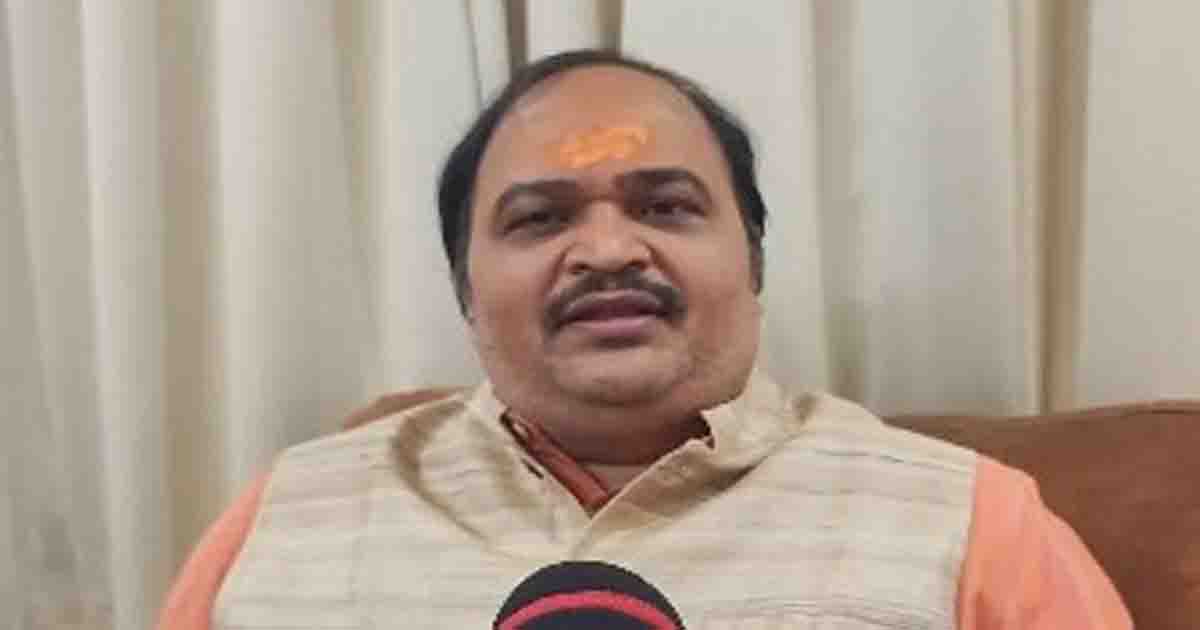
Political reactions have intensified over an alleged audio clip concerning a purported Rs 500-crore transaction involving Maratha quota activist Manoj Jarange-Patil and Maharashtra Deputy Chief Minister Eknath Shinde, with Shiv Sena leader Anand Dubey defending Shinde and Congress leader Husain Dalwai calling for an investigation.
The controversy erupted in political circles in Maharashtra after Manoj Jarange Patil released an explosive audio clip, alleging a deep-rooted political conspiracy to defame the Maratha agitation and crush his movement.
A startling segment in the audio explicitly claimed: “Jarange Patil ko already 500 crore roopaye pahunch chuke hain, jo Shrikant Shinde ke madhyam se pahunch chuke hain (Rs 500 crore has already reached Manoj Jarange through Shrikant Shinde)”, adding that the “primary personal target remains Devendra Fadnavis and the BJP.”
Shinde has denied the allegations and called for a formal investigation to establish whether the audio clips are authentic or potentially AI-generated fabrications.
Referring to the controversy, Shiv Sena leader Anand Dubey alleged Shinde’s reputation was being targeted through allegations based on an audio clip purportedly dating back two years.
“Our leader Eknath Shinde is a ‘karmaveer’ leader and comes from the Maratha community. Whoever is tarnishing his image will be forgiven neither by the Maratha community of Maharashtra nor by the non-Maratha community. Eknath Shinde is a leader who works tirelessly day and night, and allegations are being levelled against him based on an alleged audio recording that is two-years-old,” Dubey told media.
He added, “We will thank the Chief Minister for ordering a forensic investigation into the audio clip. A delegation of our leaders has met him and is asking who these people were who were talking two or two-and-a-half years ago, and why this is being released today. The matter will be investigated.”
Emphasising the alliance between Shiv Sena and the BJP, Dubey said the parties were part of the NDA.
Congress leader Husain Dalwai, meanwhile, questioned the alleged amount involved and called for an investigation into the matter. He also raised concerns about the demand for Maratha reservation and its potential implications for the existing Other Backward Classes (OBC) quota.
“The question Jarange is raising is itself the wrong question. The demand is that the Maratha community should get reservation, is that wrong? Poor people in the Maratha community should receive education, get jobs and receive assistance for their farming. That is understandable. But if they are included in the reservation system, what happens to those who genuinely belong to the OBC category?” Dalwai said.
Questioning the scale of the alleged transaction, he added, “The second thing is this Rs 500-crore matter. First, count how many zeros there are in one crore. This matter should be investigated.”
Dalwai also took a swipe at Shinde over his political association, saying, “I would tell Eknath Shinde that the party he has joined, you will gradually understand what it is.”

Bihar: JD (U) expels Anant Singh, wife Neelam Devi from party for six years

Iranian Speaker Qalibaf unable to attend BRICS Parliamentary Forum in New Delhi

‘Searching for Rs 500 crores too’: Shrikant Shinde reacts to audio clip row

Naseeruddin Shah backs SRFTI students’ protest: BJP trying to frighten future filmmakers

Delhi Aastha Kunj Park: CCTV, 105 new lights in place after last month’s gang rape

Rahul, Cong ecosystem want to force regime change: BJP after Neha Bora praises B’desh Gen-Z protest

BJP pays tribute to ex-President Abdul Kalam, recalls his enduring influence on generations of India’s youth

Attack on democratic rights: INDIA Bloc leaders on detentions of anti-ECI protestors

INDIA bloc begins protest march against ECI

Maha Congress stages agitation against Gyanesh Kumar
-

 Crime4 years ago
Class 10 student jumps to death in Jaipur
-

 Maharashtra2 years ago
Mumbai Local Train Update: Central Railway’s New Timetable Comes Into Effect; Check Full List Of Revised Timings & Stations
-

 Maharashtra2 years ago
Mumbai To Go Toll-Free Tonight! Maharashtra Govt Announces Complete Toll Waiver For Light Motor Vehicles At All 5 Entry Points Of City
-

 Maharashtra2 years ago
False photo of Imtiaz Jaleel’s rally, exposing the fooling conspiracy
-

 National News2 years ago
Ministry of Railways rolls out Special Drive 4.0 with focus on digitisation, cleanliness, inclusiveness and grievance redressal
-

 Maharashtra2 years ago
Maharashtra Elections 2024: Mumbai Metro & BEST Services Extended Till Midnight On Voting Day
-

 National News2 years ago
J&K: 4 Jawans Killed, 28 Injured After Bus Carrying BSF Personnel For Poll Duty Falls Into Gorge In Budgam; Terrifying Visuals Surface
-

 Crime2 years ago
Baba Siddique Murder: Mumbai Police Unable To Get Lawrence Bishnoi Custody Due To Home Ministry Order, Says Report