
National News
Seven years after Article 370 abrogation; peace, stability, development reshape everyday life in Kashmir: Report

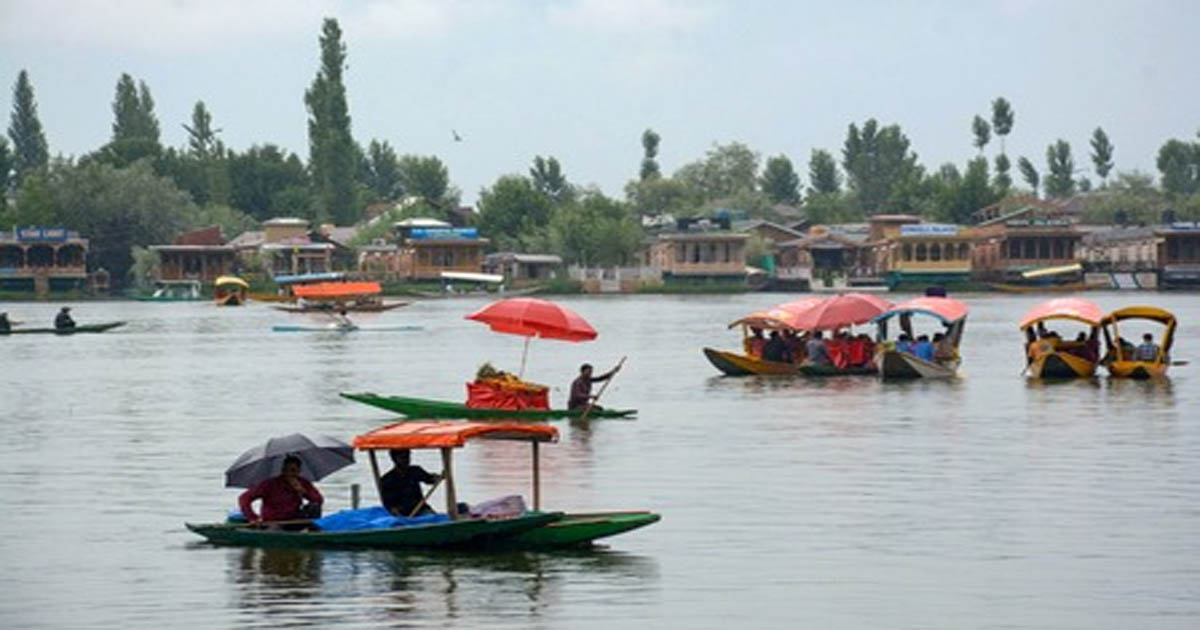
New Delhi, Aug 5: Seven years after the abrogation of Article 370 in Jammu and Kashmir, significant changes have been witnessed in the daily lives of people across the Valley, with improvements in infrastructure, governance, education, connectivity, tourism and law and order emerging as key indicators of transformation.
The report, based on an opinion article published in Global Kashmir by political analyst Israar Shahid, states that one of the most notable achievements since August 5, 2019, has been the restoration of normalcy and the ordinary rhythm of life in the region.
According to the article, there was a time when introducing oneself as a Kashmiri outside Jammu and Kashmir often evoked associations with violence, curfews, shutdowns, stone-pelting incidents and uncertainty. This perception, it noted, was shaped by decades of conflict and unrest that frequently dominated national discourse.
For those born during the 1990s and early 2000s, growing up in Kashmir often meant living amid uncertainty and disruption. Families adjusted their daily routines around security concerns, markets shut abruptly, schools remained closed for prolonged periods and public life was frequently affected by instability.
The report notes that before 2019, Kashmir’s political landscape differed significantly from that of most Indian states. Alongside elected governments and administrative institutions, other influential forces often shaped public discourse and political narratives. Many residents felt caught between competing interests, while ordinary citizens frequently bore the consequences of decisions over which they had little control.
According to the article, Kashmiris are widely known for their resilience, humility and emotional nature. However, these characteristics often made sections of society vulnerable to manipulation by various political actors. Many residents felt that both mainstream political parties and separatist groups appealed to public sentiment whenever it suited their respective agendas.
A recurring criticism among many Kashmiris, the report states, was that ordinary citizens were encouraged to participate in protests, shutdowns and demonstrations, while those issuing such calls often remained insulated from the hardships that followed. The burden of disruption was largely borne by daily wage earners, traders, students and ordinary families.
The article said that it was not influential political leaders or members of elite families who suffered the most during years of unrest. Instead, it was the common Kashmiri, including farmers, shopkeepers, labourers, teachers and students who endured the greatest hardships.
The report also highlights the long-term impact of the migration of Kashmiri Pandits during the 1990s. According to the article, the departure of experienced teachers, professors and academics left a significant gap in the educational landscape of the Valley. Frequent shutdowns and prolonged disruptions further affected schools, colleges and universities, resulting in repeated interruptions to academic schedules.
As a consequence, an entire generation of students faced challenges in competing for opportunities at the national level. The report emphasises that the issue was not a lack of talent, as Kashmir has consistently produced capable students, but rather the environment in which they were compelled to pursue their education.
Against this backdrop, developments following August 5, 2019, continue to remain a subject of political debate. However, the report states that many residents point to visible changes in everyday life that go beyond political arguments.
According to the article, the transformation is evident not only in official statistics but also in roads, schools, public services, businesses and the confidence with which people now plan their futures.
Infrastructure development has emerged as one of the most visible changes. The report notes that projects which once moved at a slow pace have seen faster execution in recent years. It cites the example of the Jehangir Chowk-Rambagh flyover in Srinagar, which took nearly a decade to become operational after being conceived. In contrast, several road and flyover projects have been completed in recent years to improve connectivity and ease traffic congestion.
Residents frequently point to projects in areas such as Sanat Nagar, Nowgam, Sangrama and Delina as examples of development that directly impacts daily life. Improved road infrastructure has reduced travel times and enhanced mobility for commuters.
The report also highlights the case of Gurez, where grid-connected electricity reached the region in November 2023. For residents of remote areas, such developments have significantly improved living conditions and quality of life.
Technology-driven governance has also become a key feature of administrative reforms. According to the report, digital services, online certification systems, grievance portals and electronic governance mechanisms have reduced dependence on intermediaries and personal connections. Citizens are increasingly able to access government services through transparent and structured procedures.
The expansion of Direct Benefit Transfer (DBT) mechanisms has further strengthened welfare delivery. Subsidies, scholarships, healthcare assistance, housing benefits and other government support programmes are now reaching beneficiaries more directly, reducing delays and leakages.
Connectivity has witnessed a major boost with the completion of the Udhampur-Srinagar-Baramulla Rail Link. The report describes the railway project as the fulfilment of a long-standing aspiration for the people of Jammu and Kashmir.
Engineering marvels such as the Chenab Bridge and Anji Khad Bridge have attracted national and international attention. For many residents, the railway network represents more than just transportation; it symbolises greater accessibility, integration and economic opportunity.
Tourism, one of Kashmir’s most important economic sectors, has also experienced a significant revival. Long celebrated for its natural beauty, the region often struggled to maintain consistent tourist inflows because of security concerns. However, the report notes that visitor numbers have risen substantially in recent years.
Popular destinations such as Pahalgam, Gulmarg and Sonamarg continue to attract tourists, while previously lesser-known areas such as Gurez are gaining recognition.
The economic benefits of tourism extend well beyond hotels and resorts. Taxi operators, tour guides, artisans, restaurant owners, shopkeepers and numerous small businesses have benefited from increased tourist activity.
The return of film production to Kashmir has further contributed to this revival. Once a preferred destination for filmmakers, the Valley witnessed a decline in film-related activity due to instability. According to the report, the return of film crews is viewed by many residents as an indication of improved ground conditions.
Basic services, including electricity and drinking water, have also shown improvement. Investments in power infrastructure and transmission systems have strengthened electricity supply in several areas. Initiatives under the Jal Jeevan Mission have expanded access to clean drinking water, reducing dependence on distant sources.
However, the report suggests that perhaps the most significant transformation is not physical infrastructure but a change in public mindset.
Today, many business owners are focusing on expansion rather than preparing for sudden shutdowns. Students are concentrating on competitive examinations without the fear of prolonged academic disruptions. Young entrepreneurs are exploring startup opportunities, athletes are pursuing sporting careers and families are making long-term plans with greater confidence.
The report also notes that elections in recent years have reflected changing social and political dynamics. Increased participation by ordinary citizens has been interpreted by many observers as a sign of greater engagement with democratic processes.
One of the most significant changes highlighted in the report relates to law and order. For several consecutive years, educational institutions have largely followed academic calendars without major interruptions. Parents who once worried about school closures are now seeing their children attend classes regularly.
For families unable to send their children outside the Valley for education, this continuity has been particularly important. The ability to pursue studies without prolonged disruption has restored a sense of normalcy that many previous generations lacked.
The reduction in large-scale street violence has also enabled young people to redirect their energies towards education, employment, entrepreneurship, sports and professional growth. According to the report, this shift represents not merely an improvement in security but the restoration of the freedom to dream and aspire.
Seven years after August 5, 2019, many residents believe that the return of ordinary life remains the most meaningful achievement. The ability to attend school regularly, travel freely, run businesses without fear of sudden disruptions and plan for the future with confidence are among the changes frequently cited by ordinary Kashmiris.
At the same time, the report acknowledges that significant challenges remain. Unemployment continues to be a concern, while political aspirations and Constitutional debates persist. It notes that development must reach every village and every section of society, and that lasting peace requires dignity, opportunity, representation and sustained economic growth.
The report argues that recognising progress does not require ignoring existing challenges, just as acknowledging challenges should not mean dismissing positive developments. A society that has experienced decades of conflict, it states, deserves an honest assessment of both its achievements and its shortcomings.
According to the article, when ordinary Kashmiris are asked what has changed since August 5, 2019, they often do not refer first to official reports or government statistics. Instead, they point to everyday experiences such as uninterrupted schooling, consistent business activity, improved infrastructure, returning tourists and a greater sense of security.
For many residents, the discussion ultimately centres on peace, stability, accountability and the opportunity to build a better future.
The report concludes that the story of Kashmir’s transformation is not primarily about political elites or powerful institutions. Rather, it is about ordinary citizens, the fruit seller, farmer, teacher, student, small business owner and parent, who have lived through decades of uncertainty.
For many such Kashmiris, the last seven years represent a transition from fear to hope, from instability to relative normalcy and from uncertainty to possibility.
As debates surrounding Article 370 continue across political and ideological lines, one sentiment frequently emerges among those who measure change through everyday life rather than political rhetoric: after decades of conflict, ordinary people increasingly feel they have an opportunity to focus on something they had long been denied, the ability to live, work, learn and dream in peace.
The report also notes that leaders of the Union government, speaking at various public forums and official events in recent years, have consistently maintained that the changes introduced after August 2019 were aimed at promoting peace, development, transparency and equal opportunities for the people of Jammu and Kashmir.


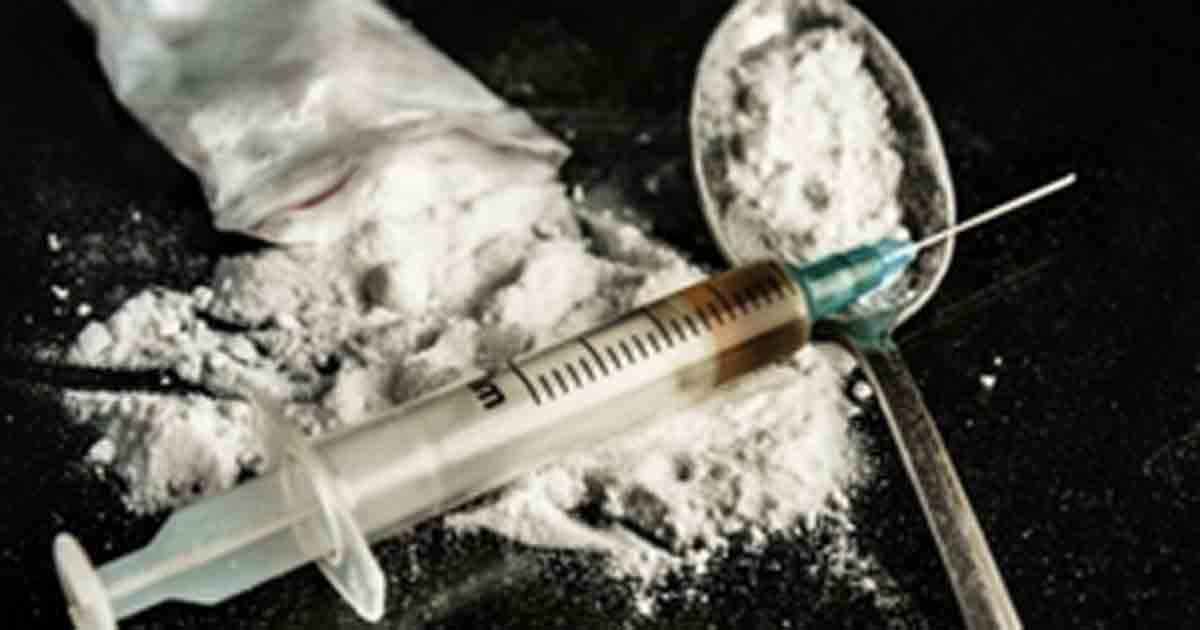
Bihar’s prohibition policy has coincided with a sharp rise in narcotics-related cases registered under the Narcotic Drugs and Psychotropic Substances (NDPS) Act, with cases increasing from 697 in 2019 to 1,905 in early 2026, according to a recent investigative report in a leading daily.
Seizures of drug pills have reportedly increased 30-fold, while heroin use is also on the rise, according to an investigative report published by The Indian Express.
The investigation has highlighted the emergence of a new drug, locally known as ‘kota’, which is reportedly smuggled into Bihar from Nepal and the Northeast. The substance is transported in everyday items such as soap boxes and clothing before reaching consumers, including those in rural areas.
At the same time, de-addiction centres are struggling to cope with demand, with some facilities reportedly serving up to 20 times their intended number of patients, the report shows.
According to the report, although police seize thousands of litres of illicit liquor every day, the narcotics trade has continued to expand across the state. The growing availability of drugs has also raised concerns about increasing substance use among juveniles, highlighting a possible shift from alcohol consumption towards more dangerous intoxicating substances.
The report points out that the spread of drugs has received less attention than the movement of illicit liquor. Beyond smuggled bottles, a parallel network of intoxicants is taking shape, involving pocket-sized packets, strips of tablets, heroin, the distinctive variant known as ‘kota’, small vials and drugs concealed in soap boxes or even folds of clothing such as petticoats.
Experts cited in the investigation have also pointed to a change in the profile of people seeking treatment for substance dependence.
The concern, they said, is not limited to the growing number of patients, as the types of substances being consumed are changing as well. Earlier, a larger proportion of users depended on cannabis and other plant-based substances; this is now shifting rapidly towards semi-synthetic and synthetic drugs, with an increasing number of patients reportedly seeking help for heroin dependence.
The investigation further underlines the significant role played by geography in shaping Bihar’s narcotics trade, with the state’s location making it vulnerable to drug trafficking routes from neighbouring countries and the Northeast.
Describing the network as a ‘Death Triangle’, the report examines how heroin, the raw-heroin variant ‘kota’ and synthetic drugs enter Bihar through the Northeast, while also tracing the routes through which ganja and poppy husk reach the state, based on information provided by police.
The ‘Death Triangle’ refers to the Golden Triangle region of Myanmar, Laos, and Thailand, which has increasingly shifted its illegal production from traditional opium and heroin toward synthetic drugs like methamphetamine and a raw heroin variant known locally as ‘kota’, according to the report.
It notes that clandestine laboratories in Myanmar manufacture methamphetamine. Boxes containing ‘kota’ are reportedly transported from Myanmar in ready-made form.
It further shows that high-grade heroin, methamphetamine and ‘kota’ enter India through porous stretches of the borders adjoining Mizoram and Manipur. From there, consignments are transported along the Champhai-Aizawl-Silchar route into Assam. A relatively new supply route, reportedly running from Changlang to Tinsukia, is also believed to help traffickers bypass existing checks.
According to the report, carriers travel to the Northeast, collect boxes containing drugs and return by train. Some consignments are routed through districts in Bihar, including East Champaran, Kishanganj, Vaishali and Bhojpur. Once inside the state, the substances are distributed through tea shops, paan and cigarette outlets, as well as roadside sellers.
The investigation reveals that ganja enters Bihar through multiple routes, including Nepal, Tripura, Odisha and Andhra Pradesh; poppy husk is sourced from Nepal, Jharkhand and locations within Bihar itself, and charas is reportedly sourced mainly from Nepal and largely transported onwards rather than retained within Bihar.
Within this expanding trade, police officers and social workers have identified ‘kota’ as a new substance appearing in Bihar’s drug market. The report quoted a narcotics officer explaining how the term may have originated and gradually become associated with the substance itself.
“The name appears to have originated from the word ‘dose’. In local parlance, addicts and peddlers refer to a drug dose as a ‘quota’, and over time, the substance itself came to be known among users as ‘kota’,” the officer was quoted as saying.
The police are particularly concerned about the spread of inexpensive drugs among economically disadvantaged communities, especially juveniles. Social workers who work with street children in Patna have repeatedly raised concerns about the growing accessibility of intoxicating substances to vulnerable young people, according to the report.
The investigation also highlighted that a national survey cited in a 2023 report of the Parliamentary Standing Committee on Social Justice and Empowerment provides one of the closest broad estimates of substance use among juveniles in Bihar. The survey estimated that around 99,000 children aged between 10 and 17 years in the state used cannabis, while approximately 40,000 used opioids and 29,000 used inhalants. It also estimated that about 8,000 children in the same age group used sedatives.
The Opposition raised concerns over the reported spread of narcotics in Bihar and questioned the lack of attention given to drug-related problems in Bihar.
Tagging Union Home Minister Amit Shah, Rashtriya Janata Dal (RJD) MP Manoj Jha took to X to react to the development, writing, “Don’t stop talking about Punjab but look at Bihar too.”
Speaking to IANS, Jha said, “An entire generation has been ruined. This is what happens when the government has no control. The situation here is completely out of control. The government here has lost control of the situation.”
“I want people to give undivided attention to this issue. This problem is wiping out an entire generation of the state. That is why I tagged HM Shah in my post and urged him to give attention to Bihar also,” he added.

Alert personnel of the Central Industrial Security Force (CISF) detected foreign currency worth approximately Rs 1.14 crore concealed in the hand baggage of two passengers bound for Bangkok at Netaji Subhas Chandra Bose International Airport, Kolkata.
The detection took place around 10:20 a.m. on October 19 during routine security screening at the International Terminal Security Hold Area. A CISF screener noticed suspicious images in the X-ray scans of the hand baggage carried by the two passengers scheduled to travel to Bangkok on Bhutan Airlines flight B3700. The bags were subsequently referred for physical examination.
During the inspection, CISF personnel recovered USD 1,19,900, equivalent to approximately Rs 1,13,64,002, concealed inside false bottoms of the two bags. The foreign currency had been wrapped in newspaper in an apparent attempt to conceal it from security personnel.
Of the total amount recovered, USD 74,900 was found in the hand baggage of one passenger, while USD 45,000 was recovered from the other passenger’s bag.
Following the prescribed formalities, both passengers, along with the seized currency, were handed over to the Air Intelligence Unit (AIU) of Customs for further investigation and necessary legal action.
On October 20, the passenger from whose baggage USD 74,900 was recovered was taken by AIU/Customs officials to the District and Sessions Court for further legal proceedings following the investigation and seizure. The second passenger was released by Customs after the issuance of a detention receipt for the USD 45,000 recovered from the passenger’s baggage.
CISF in a release reiterated its commitment to maintaining aviation security through effective screening procedures, alert surveillance and professional conduct by its personnel. According to officials, the detection stresses the importance of coordinated action between airport security personnel and Customs authorities in addressing suspected financial and currency-related violations.
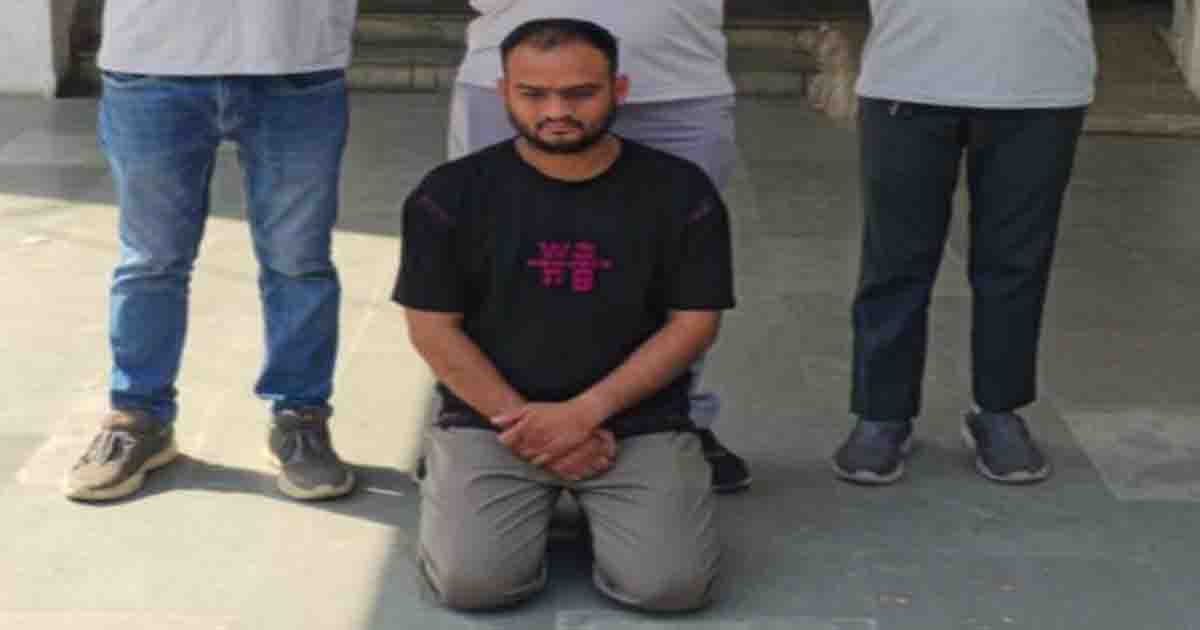
A 27-year-old businessman was arrested by Naroda police after 0.77 grams of suspected mephedrone, valued at Rs 1,540, was found in a parcel being delivered through the Porter application near Nana Chiloda Circle in Ahmedabad, police said on Wednesday.
The case came to light after police received a control-room message about a suspicious parcel that had arrived for delivery through the application.
The substance was examined preliminarily by a Forensic Science Laboratory (FSL) officer in the presence of panch witnesses and was found to be mephedrone, a synthetic drug.
Police seized the substance and initially registered an offence against three unidentified mobile phone holders under Sections 8(c), 22(a) and 29 of the Narcotic Drugs and Psychotropic Substances (NDPS) Act.
During the investigation, they traced and arrested the man suspected of ordering the consignment through the parcel.
The accused was identified as Priyang Sanghvi (27). He is a businessman who lives in Aram Park Flats in the Sabarmati area of the city. He is originally from Shirodi village in Rajasthan’s Sirohi district.
According to the police, the suspected method involved using a mobile phone number belonging to a witness to log in to the Porter application.
Drug consignments were allegedly packed separately in zipper bags and sent through the delivery service. An intermediary was allegedly used to distribute the drugs to different customers for sale.
The police said the arrest followed instructions from senior officers to curb the illegal sale and transportation of narcotic substances and detect offences related to them.
“The operation was conducted by Naroda police personnel under the supervision of Senior Police Inspector B M Katariya,” officials said.
The police seized 0.77 grams of mephedrone, valued at Rs 1,540. The investigation concerns the alleged use of a parcel delivery application to transport the substance and its subsequent distribution through an intermediary.

Bihar’s prohibition fails to curb narcotics as ‘kota’ spreads to rural areas: Report

CISF seizes foreign currency worth Rs 1.13 crore at Kolkata airport

First Russian tanker carrying 40,000 tonnes of diesel to depart in 2-3 days: Putin

Gujarat: Man held after 0.77 grams of mephedrone found in ‘porter’ delivery parcel

Bihar: 75-year-old man stabbed to death; woman and her son injured

Rahul, Cong ecosystem want to force regime change: BJP after Neha Bora praises B’desh Gen-Z protest

Attack on democratic rights: INDIA Bloc leaders on detentions of anti-ECI protestors

BJP pays tribute to ex-President Abdul Kalam, recalls his enduring influence on generations of India’s youth

INDIA bloc begins protest march against ECI

Maha Congress stages agitation against Gyanesh Kumar
-

 Crime4 years ago
Class 10 student jumps to death in Jaipur
-

 Maharashtra2 years ago
Mumbai Local Train Update: Central Railway’s New Timetable Comes Into Effect; Check Full List Of Revised Timings & Stations
-

 Maharashtra2 years ago
Mumbai To Go Toll-Free Tonight! Maharashtra Govt Announces Complete Toll Waiver For Light Motor Vehicles At All 5 Entry Points Of City
-

 Maharashtra2 years ago
False photo of Imtiaz Jaleel’s rally, exposing the fooling conspiracy
-

 National News2 years ago
Ministry of Railways rolls out Special Drive 4.0 with focus on digitisation, cleanliness, inclusiveness and grievance redressal
-

 Maharashtra2 years ago
Maharashtra Elections 2024: Mumbai Metro & BEST Services Extended Till Midnight On Voting Day
-

 National News2 years ago
J&K: 4 Jawans Killed, 28 Injured After Bus Carrying BSF Personnel For Poll Duty Falls Into Gorge In Budgam; Terrifying Visuals Surface
-

 Crime2 years ago
Baba Siddique Murder: Mumbai Police Unable To Get Lawrence Bishnoi Custody Due To Home Ministry Order, Says Report