
Business
High coking coal prices to impact gross margins of steel mills, says Ind-Ra


High coking coal prices are likely to impact gross margins of steel mills, says India Ratings and Research (Ind-Ra).
Accordingly, coking coal prices were up 5 per cent MoM and 103 per cent YoY to $222 per MT in mid-August 2021.
“Australian coking coal prices are receiving support from a strong demand from Asian countries, ex-China. The limited availability of prompt coking coal cargoes for near-term deliveries due to logistical issues, including freight and container unavailability and high freight rates, could support coking coal prices over the near term.”
“While China’s imports are from ex-Australia suppliers, these countries are not likely to be able to bridge the supply deficit, especially when the domestic consumption within these ex-Australia supplier countries is also increasing with resumption in economic activities, further restricting supply.”
“This will support international coking coal prices.”
India’s coking coal imports at 5.76 MT in July 2021 were 65 per cent MoM and 114 per cent YoY higher.
“While steel production has improved, domestic steel mills had postponed procurements due to higher coking coal prices. However, lower inventories prompted steel producers to import higher volumes in July 2021.”
A key trend, Ind-Ra observed is the preference of Indian blast furnace producers for better grades of coking coal to maximise production yield, considering that freight costs are the same irrespective of the grade, amid container shortages and higher freight costs.
India’s finished steel consumption in July 2021 stood at 7.66 MnT, 1.3 per cent MoM and 4.8 per cent YoY higher.
However, domestic consumption was weak over June-July 2021 due to a lower demand from end-use industries such as construction and infra, with the onset of the monsoon.


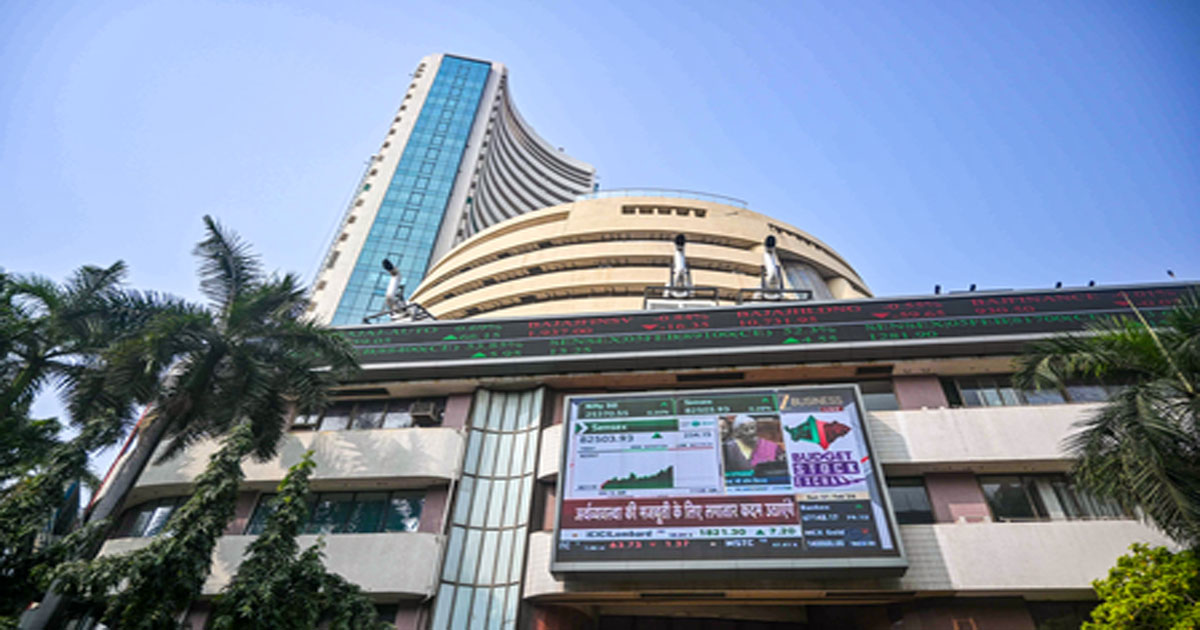
Mumbai, May 27: Domestic equity markets traded on a muted note in early deals on Wednesday amid mixed global cues and a decline in crude oil prices.
Sensex was trading at 76,050, up 40 points or 0.05 per cent in the morning session, while Nifty rose 20 points or 0.08 per cent to 23,932. Earlier, the benchmark indices opened at 75,939.86 and 23,880.35, respectively.
Among sectoral indices, Nifty Metal emerged as the top gainer, climbing 1.59 per cent, followed by Nifty Cement, which advanced 0.83 per cent. Nifty Media, Realty and Consumer Durables also traded higher, rising up to 0.67 per cent.
On the other hand, Nifty Oil & Gas was the top loser, falling 0.66 per cent. While private banks, financial services and IT indices also traded in the red, declining up to 0.33 per cent.
Among Nifty stocks, selling pressure was visible in select heavyweight counters, with Coal India dropping over 4 per cent and ONGC slipping nearly 3 per cent. HDFC Bank, Infosys and Wipro also remained under pressure.
Meanwhile, the volatility index India VIX gained 0.68 per cent to trade around 16.
According to analysts, the near-term market tone remains cautious but stable, as recent profit booking at higher levels indicates some consolidation after the sharp recovery phase.
“Despite intermittent weakness, controlled volatility and balanced market breadth suggest that broader sentiment has not deteriorated significantly,” they added.
Meanwhile, Iran on Tuesday accused the United States of violating the ceasefire by carrying out strikes near the disputed Strait of Hormuz, while Washington maintained that the attacks were defensive in nature.
In the commodity market, crude oil prices declined, with international benchmark Brent crude falling 1.73 per cent to $97.85 a barrel, while US West Texas Intermediate (WTI) crude dropped over 2 per cent to $91.87 per barrel.
In Asia, markets traded mixed. Hong Kong’s Hang Seng declined nearly 1 per cent, while Japan’s Nikkei and South Korea’s KOSPI rose up to almost 5 per cent.
Overnight in the US, Wall Street ended higher, with the S&P 500 gaining 0.61 per cent and the Nasdaq closing 1.19 per cent higher.

Mumbai, May 26: Indian equity markets traded flat in morning trade on Tuesday after fresh US strikes in southern Iran targeting boats attempting to lay mines and missile launch sites.
In early trade, Sensex was at 76,339.29, down 150 points or 0.20 per cent, while Nifty slipped 45 points or 0.19 per cent to 23,986.40. Earlier in the day, the benchmark indices opened at 76,224.14 and 24,004.10, respectively.
Among sectoral indices, IT, chemicals, media, PSU banks and metal stocks traded in positive territory.
Nifty IT rose 0.61 per cent, while Nifty Chemicals gained 0.58 per cent and Nifty Media advanced 0.54 per cent.
On the downside, consumer durables, healthcare, cement and realty indices were under pressure. Nifty Consumer Durables emerged as the top sectoral loser, falling 0.57 per cent, while Nifty Healthcare, Nifty Cement and Nifty Realty declined up to 0.3 per cent.
From the Nifty basket, InterGlobe Aviation (IndiGo) declined over 1 per cent, emerging as one of the top laggards on the benchmark indices. Other notable losers included SBI Life Insurance Company, Max Healthcare Institute, Titan Company, Bharti Airtel, Eternal Ltd and Trent, which fell up to 1 per cent.
In the broader market, small-cap and mid-cap indices outperformed. Nifty Smallcap 100 climbed 0.59 per cent, while Nifty Midcap 150 gained 0.13 per cent.
Meanwhile, the volatility tracker India VIX slipped 1.43 per cent.
Market experts said that despite ongoing negotiations aimed at ending the West Asia conflict, there are no indications of an immediate resolution.
They noted that the recent US “self-defence strikes” in southern Iran have temporarily dampened sentiment, although markets are not viewing the development as the beginning of another phase of military escalation.
According to experts, investor risk appetite remains strong, with markets rallying whenever there are signs of easing tensions and a decline in crude oil prices.
“The sharp rally in the previous session reflected optimism about the resilience of the domestic economy,” they added.
However, experts believe that a resolution of the conflict and a further decline in crude oil prices could help ease macroeconomic pressures facing the economy.
Meanwhile, crude oil prices rose, with international benchmark Brent crude gaining 1.17 per cent to $98.39 a barrel, while US West Texas Intermediate (WTI) crude climbed more than 3 per cent to $93.90 per barrel.

Mumbai: CNG consumers have received temporary relief as Compressed Natural Gas (CNG) prices in the city have not been increased despite another fuel hike announced in Delhi and the NCR on Tuesday.
While Indraprastha Gas Limited (IGL) raised CNG prices in Delhi by Rs 2 per kg, taking rates to Rs 83.09 per kg from May 26, Mahanagar Gas Limited (MGL) has kept CNG prices unchanged across Mumbai and the Mumbai Metropolitan Region (MMR).
This means CNG in Mumbai continues to remain priced at Rs 84 per kg, following the earlier hike implemented by MGL earlier this month. The latest Delhi revision marks the fourth CNG price increase in less than two weeks amid rising global energy prices and pressure on domestic fuel retailers.
Although there has been no fresh hike in Mumbai today, auto-rickshaw unions in the city have already renewed their demand for a fare revision after the previous Rs 2 per kg increase announced by MGL on May 14.
Mumbai’s auto unions have argued that rising fuel costs and inflation have increased operating expenses for drivers. Union representatives recently met transport department officials and submitted revised fare calculations based on recommendations of the B Khatua Committee.
At present, the minimum auto-rickshaw fare in Mumbai stands at Rs 26, while passengers are charged Rs 17.14 per kilometre after the base fare. According to union calculations, the per-kilometre fare should now increase to Rs 18.17.
“The expenses on fuel have increased substantially for auto-rickshaw drivers. Inflation and higher Consumer Price Index levels have also affected daily running costs,” Mumbai Rickshawmen’s Union General Secretary Thampi Kurien had said while demanding a fare hike.
The latest developments come at a time when petrol and diesel prices have witnessed repeated hikes across the country over the past two weeks, increasing concerns over transportation costs and inflationary pressure in Mumbai and other metro cities.
Despite today’s relief for Mumbai commuters, transport operators and auto unions are closely monitoring fuel pricing trends amid fears that further increases in global crude oil and gas prices could eventually impact CNG rates in the city as well.

Mumbai: Irfan Edenwala arrested on charges of fraud and preparing fake documents, including under the Arms Act

Eviction action against around 250 unauthorized structures in Powai’s Phuket Nagar and Malind Nagar areas

Mumbai Municipal Corporation has given three months to the concerned agencies to improve the quality of facilities provided in public toilets.

Not just a leader, MP Dr. Shrikant Shinde became an example of humanity, assured workers, “I will empower every worker”

Maharashtra Shocker: Boyfriend Dies While His Minor Girlfriend Survives In Suicide Attempt At A Hotel Lodge

Mumbai: Strict action directed against prominent Marathi placards in shops and institutions, warning of action in Shiv Sena style: Deputy Mayor Sanjay Ghadi

The Municipal Corporation and the Railway Administration should work together to make Mumbai flood-free, directs Standing Committee Chairman Prabhakar Shinde

Virar Citizens Protest Demolition Drive In Arnala; Police Block Lal Bawta March, Sit-in Held On Road

Global crude prices rise 0.73 pc as US-Iran talks stall

Apple to invest Rs 100 crore in India’s renewable energy infrastructure
-

 Crime4 years ago
Class 10 student jumps to death in Jaipur
-

 Maharashtra2 years ago
Mumbai Local Train Update: Central Railway’s New Timetable Comes Into Effect; Check Full List Of Revised Timings & Stations
-

 Maharashtra2 years ago
Mumbai To Go Toll-Free Tonight! Maharashtra Govt Announces Complete Toll Waiver For Light Motor Vehicles At All 5 Entry Points Of City
-

 Maharashtra2 years ago
False photo of Imtiaz Jaleel’s rally, exposing the fooling conspiracy
-

 National News2 years ago
Ministry of Railways rolls out Special Drive 4.0 with focus on digitisation, cleanliness, inclusiveness and grievance redressal
-

 Maharashtra2 years ago
Maharashtra Elections 2024: Mumbai Metro & BEST Services Extended Till Midnight On Voting Day
-

 National News2 years ago
J&K: 4 Jawans Killed, 28 Injured After Bus Carrying BSF Personnel For Poll Duty Falls Into Gorge In Budgam; Terrifying Visuals Surface
-

 Crime2 years ago
Baba Siddique Murder: Mumbai Police Unable To Get Lawrence Bishnoi Custody Due To Home Ministry Order, Says Report