
Business
Goldman Sachs says 22% upside in RIL stock


Goldman Sachs has set a 12 month price target of Rs 3,200 for Reliance Industries Limited (RIL) stock with a 22 per cent upside.
“We see RIL as a unique energy transition story. For RIL, strong cashflow generation in the best in class old energy business (low cost structure and highest complexity) can fund the capex of the New Energy business and in turn drive one of the fastest and most profitable net zero transitions by 2035 amongst large energy companies, on our analysis,” Goldman Sachs said.
RIL is adopting a manufacturing approach to net zero-emissions with a hyper integrated model spanning solar, battery and hydrogen and a focus on net zero supply chain (already spent $1.5 billion to acquire technologies across the solar, battery and hydrogen ecosystems).
“We recently revised up FY23/24 EBITDA by 11 per cent/5 per cent driven entirely by RIL’s old energy business such as Refining and Gas. We see refining tailwinds to sustain given improved supply demand from closures, jet fuel demand recovery ahead, lower Chinese exports, low inventory and supply disruption. With rising penetration and market share wins ahead in consumer businesses (telecom tech and retail), we see the medium term growth story remaining intact as well,” the report said.
Overall we expect strong earnings growth of 35 per cent CAGR in FY21-24E, with our FY23/24E earnings 26 per cent/26 per cent above consensus. For 4QFY22 we forecast 7 per cent QoQ growth led by refining and telecom division with further acceleration ahead, Goldman Sachs said.


Business
Viksit Bharat and Samunnat Nepal: 10-pillar roadmap to reshape, deepen ties between India and Nepal

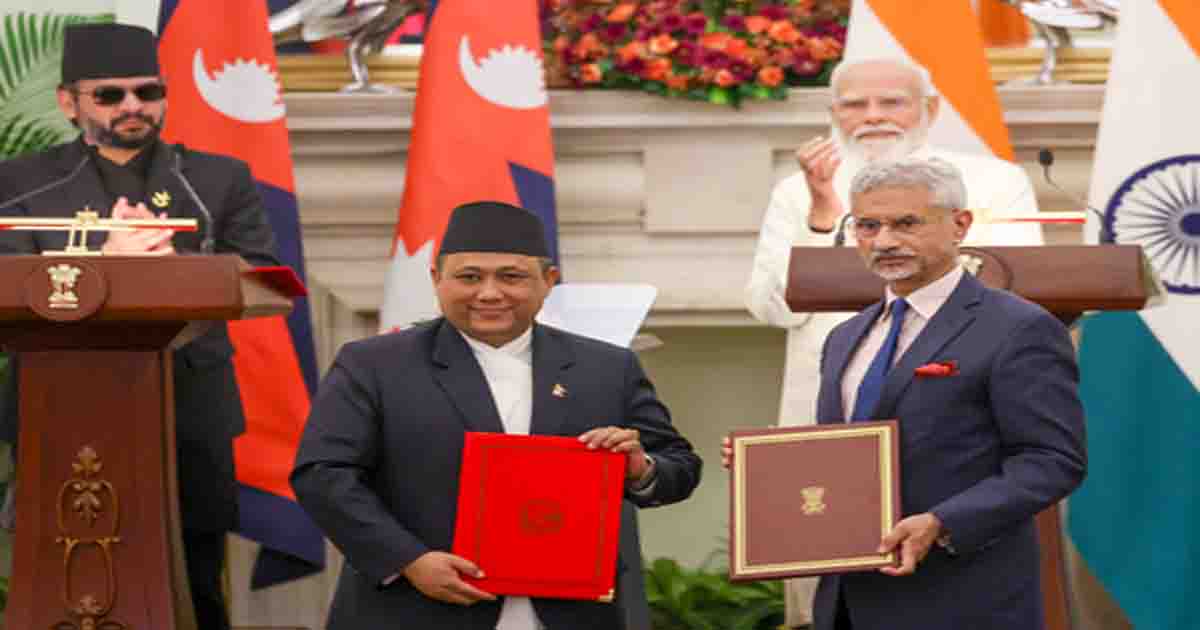
Nepal and India on Monday unveiled a 10-pillar joint vision aimed at reshaping their bilateral partnership and providing a roadmap for future cooperation.
The 10 pillars of the joint vision cover economic and development cooperation, physical and digital connectivity, energy and water resources, climate resilience, good governance, technology and innovation, education and skills development, sports, culture and tourism, health, and agriculture.
Titled ‘Viksit Bharat and Samunnat Nepal: Re-imagining the Partnership’, the joint vision was adopted during Nepali Prime Minister Balendra Shah’s two-day State Visit to India at the invitation of his Indian counterpart, Prime Minister Narendra Modi.
The first pillar of the joint vision document is ‘Comprehensive Economic and Development Partnership’. Under this pillar, the two countries agreed to review existing frameworks and agreements governing trade and investment to facilitate a more comprehensive economic partnership. They will also explore new transit connectivity arrangements and air routes to improve access between the two countries.
The document states that India’s national vision of ‘Viksit Bharat 2047’ and Nepal’s aspiration of ‘Samunnat Nepal’ have several complementarities that could be leveraged to further strengthen the extensive economic ties between the neighbouring countries.
Under this pillar, the two countries will cooperate in establishing cross-border special economic zones and industrial parks near the Nepal-India border. These zones are expected to promote export-oriented manufacturing and strengthen links with regional supply chains in manufacturing and other processing industries.
Under the second pillar, titled ‘Physical and Digital Connectivity’, the two sides will also cooperate in developing information technology parks, while India will encourage investment in Nepal’s priority sectors.
The joint vision document says that arrangements will be pursued to enhance investor confidence and improve the ease of doing business in Nepal.
Nepal and India have agreed to accelerate several cross-border connectivity projects, including railway links, integrated check posts, petroleum pipelines and digital payment systems, with a view to strengthening economic cooperation and people-to-people ties.
The third pillar is ‘Energy, Water Resources and Climate Resilience’. The two countries have agreed to strengthen cooperation in hydropower development, cross-border electricity trade, water resources management and climate resilience, with a focus on promoting investment, accelerating multipurpose projects and improving disaster preparedness.
Good Governance is the fourth pillar of the joint vision document. Under this pillar, the two countries have agreed to strengthen cooperation through the exchange of digital technology, technical expertise and best practices, while expanding training opportunities for civil servants and cooperation between government institutions.
Under the agreement, India and Nepal will exchange technical expertise and best practices in digital public infrastructure, covering digital identity, payment systems and e-governance. Such cooperation will be pursued in accordance with globally recognised principles of digital sovereignty and data protection and will support the implementation of Nepal’s Digital Nepal Framework.
The fifth pillar is ‘Technology, Space and Innovation’. Under this pillar, the two countries have agreed to deepen cooperation in technology, innovation and space research, including plans to establish a Startup Centre of Excellence in Kathmandu and a Digital Nomads and Innovation Hub in Pokhara, in western Nepal.
The sixth pillar is ‘Education and Skill Development’. Under this pillar, the two countries have agreed to strengthen cooperation in education and skill development, including exploring the establishment of a branch campus of an Indian Institute of Technology (IIT) in Nepal and expanding scholarship opportunities for Nepali students in emerging academic disciplines.
Sports is the seventh pillar of the joint vision. Nepal and India have agreed to strengthen cooperation in sports development, including establishing a national cricket coaching and training academy in Nepal with Indian support and expanding opportunities for Nepali players to train in India.
Under the agreement, India will support the establishment of a national cricket coaching and training academy in Nepal, alongside the development of cricket infrastructure at both national and provincial levels.
Players from Nepal’s provincial cricket teams will also be given opportunities to train at national cricket training academies in India.
Nepal and India have agreed to strengthen cultural and tourism cooperation by developing cross-border religious tourism circuits, organising annual youth cultural festivals and promoting collaboration between universities and tourism entrepreneurs.
These initiatives are outlined under the eighth pillar, titled ‘Culture and Tourism’. The two countries will work together to develop religious tourism circuits and new destinations by linking important cultural and pilgrimage sites in both countries.
The proposed initiatives include a Ramayana circuit connecting Janakpur in Nepal with Ayodhya in India; a Buddhist circuit linking Lumbini, Bodhgaya, Sarnath and Kushinagar; and a Shiv-Shakti circuit connecting Kathmandu’s Pashupatinath Temple with Varanasi. Sister-city agreements will also be pursued to strengthen these links.
Under the ninth pillar, ‘Health’, the two countries have agreed to strengthen cooperation in the health sector, including upgrading Nepal’s National Medical Laboratory, establishing Jan Aushadhi Kendras to provide affordable medicines and expanding healthcare infrastructure across the country.
The 10th pillar is ‘Agriculture’. Under this pillar, the two countries have agreed to strengthen cooperation in agriculture and livestock development, including establishing an agro-industrial park in Chitwan with grant assistance from India to promote value addition to Nepali agricultural products.
The proposed agro-industrial park will aim to increase the value of agricultural products by supporting processing and other value-addition activities. The document states that India will provide grant assistance for its establishment.
The two countries have also agreed to expedite the implementation of the 2026–2030 Work Plan between India’s Indian Council of Agricultural Research (ICAR) and Nepal’s Nepal Agricultural Research Council (NARC).
As part of efforts to strengthen Nepal’s agricultural and livestock sectors, India will organise specialised training programmes for Nepali government officials, farmers and other agriculture-related professionals.
The two countries have also agreed to activate a High-Level Monitoring Group to accelerate the implementation of bilateral projects and initiatives. The mechanism will meet at least once every six months.
The monitoring group will be led by Nepal’s Foreign Secretary and India’s Ambassador to Nepal. It will oversee the implementation of projects and initiatives envisaged under the joint vision document and facilitate the necessary clearances and approvals to expedite their execution.
The two Prime Ministers also agreed that the monitoring group will submit its reports to the India-Nepal Joint Commission, which is co-chaired by the foreign ministers of both countries.
Business
New GDP series narrows demand-supply estimate gap, improves policy assessment: RBI Deputy Governor

The revised gross domestic product (GDP) series has significantly reduced the discrepancy between estimates generated from the demand and supply sides of the economy, strengthening the quality of economic data available for policymaking, Reserve Bank of India (RBI) Deputy Governor Poonam Gupta said on Monday.
Speaking at the Data Users Conference on the New Series of GDP, CPI and IIP, Gupta said the revised methodology addresses a long-standing limitation in India’s GDP estimates.
“In the earlier series, GDP estimates from the demand and supply sides did not always align. The resulting gap was reported separately as a discrepancy, and it could at times be large and volatile,” she added.
She noted that the revised system uses a supply-use table framework, allowing estimates from both sides of the economy to align much more closely.
“The new series brings the two sides together through the supply-use table framework. As a result, nominal GDP estimates from both sides align much more closely,” she said.
The new GDP series incorporates a broader set of surveys and administrative datasets and introduces double deflation for manufacturing and agriculture, a methodology widely regarded as an international best practice.
According to Gupta, the revision reflects the transformation of the Indian economy over the past decade.
“The new series reflects an economy that has become larger, more diversified and more complex since the base was last revised in 2011-12,” she said.
On the expenditure side, private consumption estimates now draw on the latest Household Consumption Expenditure Survey, while investment data has been mapped more precisely to the sectors undertaking investment activity.
The RBI Deputy Governor said these changes would improve policymakers’ ability to identify growth drivers and reduce the magnitude of revisions in successive GDP releases.
“The improvements in the new series are expected to make estimates more stable across successive vintages, with smaller revisions. This, in turn, will support better-calibrated and more stable policy, particularly monetary policy,” Gupta said.
Gupta also highlighted revisions in the Consumer Price Index (CPI), which now uses consumption patterns from the 2023-24 Household Consumption Expenditure Survey and incorporates rural housing costs and prices from online markets for the first time.
She said the revised CPI framework would help improve inflation measurement, provide deeper insights into regional price pressures and narrow the gap between measured and perceived inflation.
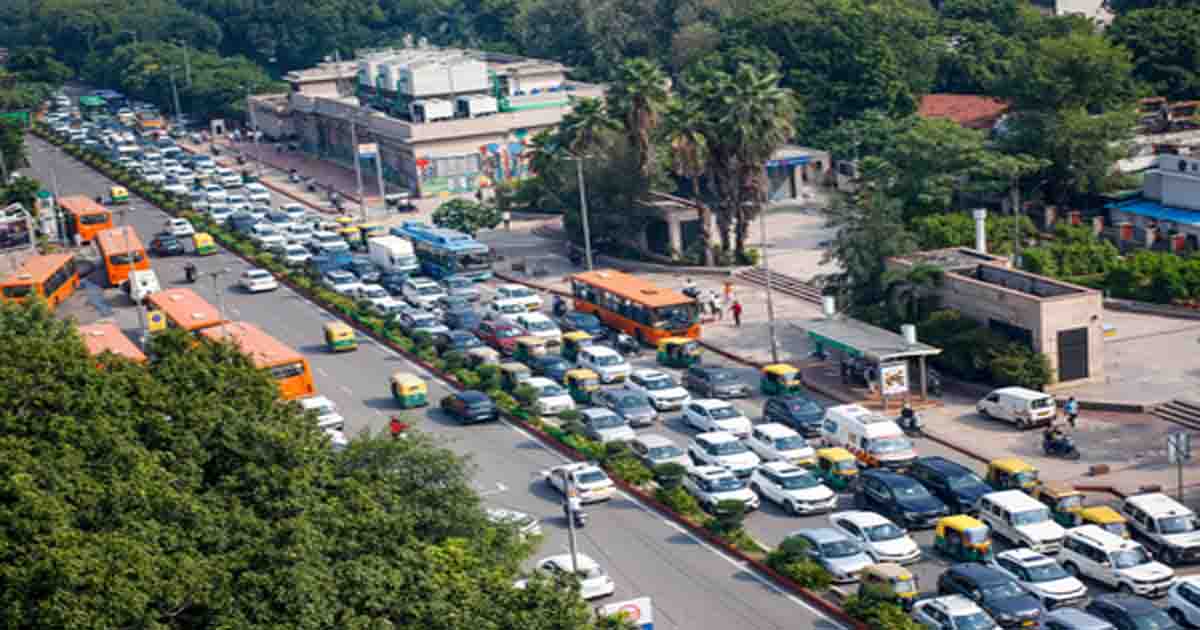
Auto retail sales in India rose to an all-time high during the 42-day festive period of 2026 because of robust demand for two-wheelers, commercial vehicles and electric vehicles, according to data released by the Federation of Automobile Dealers Associations (FADA) on Monday.
Total vehicle retail sales increased 2.21 per cent year-on-year to 55,25,490 units, surpassing last year’s record festive season performance.
Compared with the 2024 festive period, sales were up 23.95 per cent, highlighting sustained demand following the implementation of GST 2.0 reforms.
“The 42-day festive season of 2026 will be remembered as the year Indian auto retail set a record on top of a record,” FADA President Sai Giridhar said.
In addition, two-wheeler sales — which account for the largest share of the market — rose 3.67 per cent to 43.13 lakh units, while commercial vehicle sales increased 7.13 per cent to 1.56 lakh units.
Three-wheeler retail sales grew 5.32 per cent, tractor sales rose 2.24 per cent and construction equipment registrations surged 26.06 per cent.
However, passenger vehicle sales declined 7.16 per cent year-on-year to 7.49 lakh units.
Despite the decline, passenger vehicle sales remained 16.43 per cent higher than festive 2024 levels.
FADA said the festive season began on a subdued note during Navratri but demand accelerated during Dhanteras and Diwali, helping the market recover and finish in positive territory.
A key highlight of the season was the sharp rise in electric vehicle adoption. EV retail sales jumped 52.62 per cent to a record 5,09,667 units, crossing the five-lakh mark for the first time during a festive period.
Electric two-wheeler sales grew 61.1 per cent, electric passenger vehicle sales rose 72.9 per cent, while electric commercial vehicle sales more than doubled, increasing 154.6 per cent.
According to FADA, nearly one in every ten vehicles sold during the festive season was electric, reflecting growing consumer acceptance driven by lower running costs, improving vehicle range and a wider choice of models.
Looking ahead, the dealers’ body said the strong festive performance has positioned the industry to achieve another milestone with India’s annual vehicle retail sales approaching the three-crore-unit mark for the first time.

Mumbai self-styled police arrested for duping foreign nationals

Man arrested in Bengal’s Habra for alleged sexual assault of minor daughter

Maha govt forms special panel to revive cooperative sugar mills

Ukraine sank Russian corvette off Libya coast using naval drones: Zelensky

Viksit Bharat and Samunnat Nepal: 10-pillar roadmap to reshape, deepen ties between India and Nepal

Congress trying to protect 3 crore Bangladeshi infiltrators in voter list: HM Shah

Red Fort car blast probe exposes blueprint for spread of terror modules across India

Trump flags Iran targets as talks continue

‘Conspiracy, not accident’: NCP on Ajit Pawar death

BJP, Shiv Sena slam Mallikarjun Kharge for terming Diwali ‘Khushiyon ka Eid’
-

 Crime4 years ago
Class 10 student jumps to death in Jaipur
-

 Maharashtra2 years ago
Mumbai Local Train Update: Central Railway’s New Timetable Comes Into Effect; Check Full List Of Revised Timings & Stations
-

 Maharashtra2 years ago
Mumbai To Go Toll-Free Tonight! Maharashtra Govt Announces Complete Toll Waiver For Light Motor Vehicles At All 5 Entry Points Of City
-

 Maharashtra2 years ago
False photo of Imtiaz Jaleel’s rally, exposing the fooling conspiracy
-

 National News2 years ago
Ministry of Railways rolls out Special Drive 4.0 with focus on digitisation, cleanliness, inclusiveness and grievance redressal
-

 Maharashtra2 years ago
Maharashtra Elections 2024: Mumbai Metro & BEST Services Extended Till Midnight On Voting Day
-

 National News2 years ago
J&K: 4 Jawans Killed, 28 Injured After Bus Carrying BSF Personnel For Poll Duty Falls Into Gorge In Budgam; Terrifying Visuals Surface
-

 Crime2 years ago
Baba Siddique Murder: Mumbai Police Unable To Get Lawrence Bishnoi Custody Due To Home Ministry Order, Says Report