
International News
IDF warns Netanyahu strike on Iran could trigger wider regional war: Report

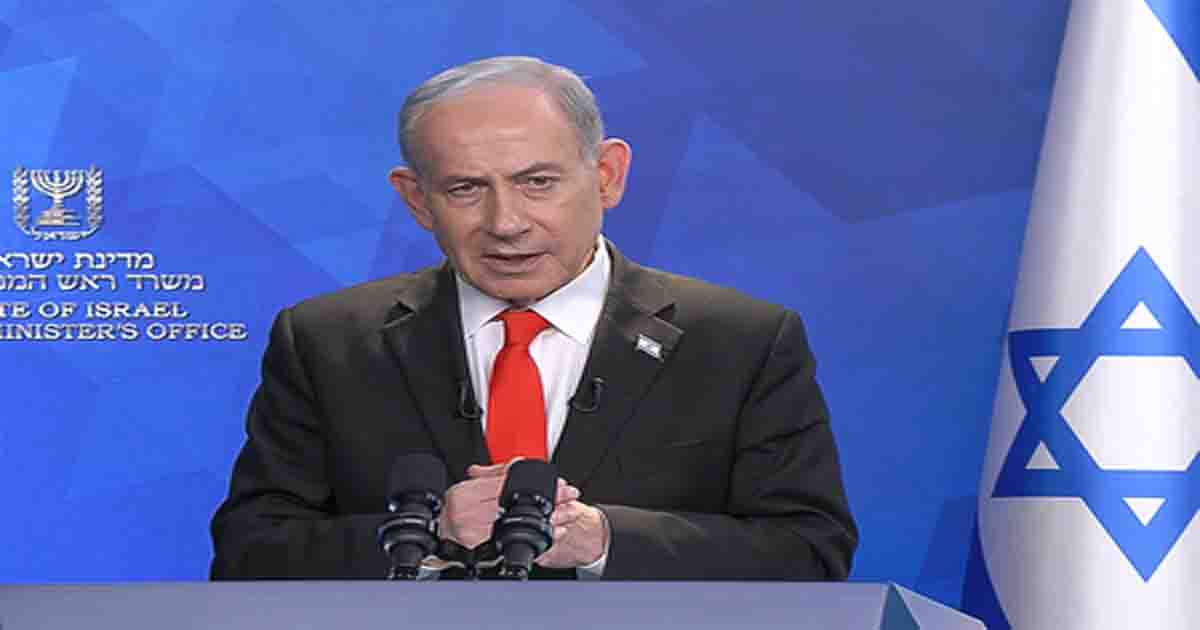
The Israel Defense Forces (IDF) warned Prime Minister Benjamin Netanyahu that a potential strike on Iran could trigger a wider regional conflict, The Times of Israel reported.
The warning came during a closed-door meeting last week between Netanyahu and senior defense officials, as Israel weighs its military options against Iran, said the report, citing Channel 12, a Hebrew-language television network.
Military intelligence warned that an Israeli strike could ignite “multiple fronts,” involving Lebanon, Syria and Gaza, contradicting expectations by Netanyahu and Israel’s intelligence agency Mossad that the operation could be limited to three to five days, it said.
It added that opposition politician Avigdor Liberman had warned recently that Netanyahu may launch a unilateral strike without US involvement or approval.
Liberman said last week that any Israeli attack right now would be unjustified and “completely motivated by politics.”
The IDF declines to comment on remarks made during closed-door meetings.
Citing public broadcaster Kan, the report also said an anonymous source claimed that Netanyahu was urging US President Donald Trump to strike Iran “as soon as possible,” adding that the president has yet to make a decision and is reportedly reluctant to do so.
Earlier this month, Netanyahu had renewed his call for a national unity government, warning that Iran was rebuilding its nuclear program and that only a broad coalition could eliminate the threat to Israel.
In a prerecorded address, Netanyahu urged his political rival Gadi Eisenkot, who has been tasked with forming Israel’s next government, to enter coalition negotiations without preconditions.
“The Iranian regime, which seeks Israel’s destruction, is once again working to revive its nuclear program,” Netanyahu said. “We must remove this existential threat once and for all.”
Netanyahu had said a national unity government could guarantee Israel’s security for years to come and expand regional peace agreements.

International News
Iran’s IRGC says two ‘violating’ supertankers exploded after hitting mines in Hormuz Strait

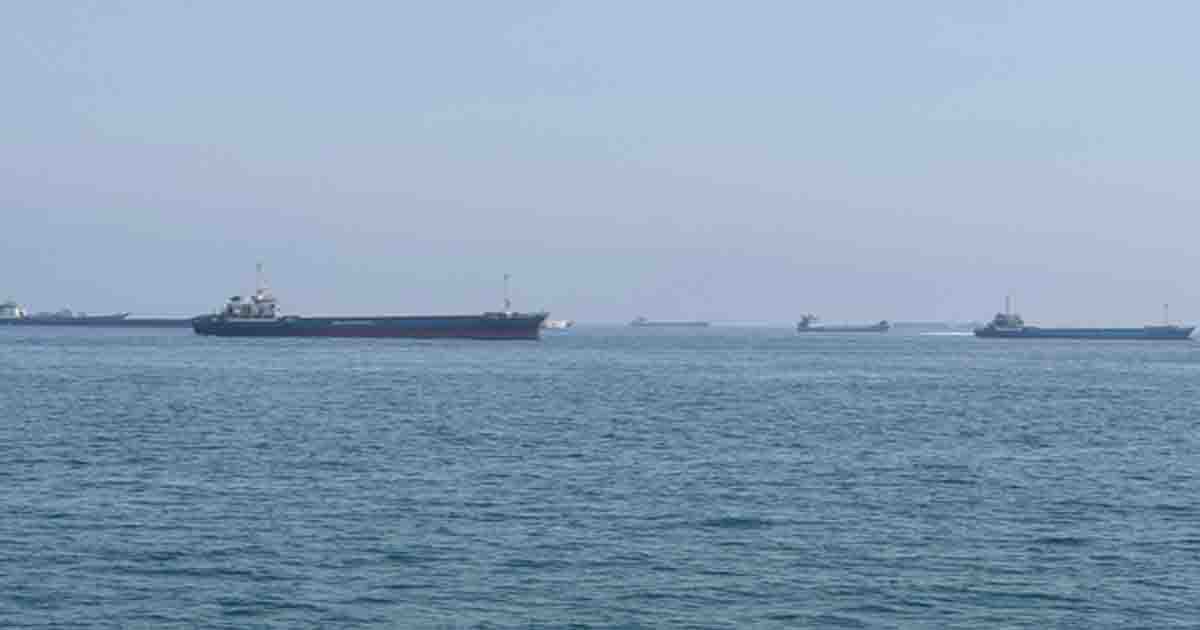
The navy of Iran’s Islamic Revolutionary Guard Corps (IRGC) said that two “violating” supertankers that were transiting the “unauthorized” routes in the Strait of Hormuz exploded after hitting naval mines within the preceding hours.
The oil tankers, which were not complying with the instructions announced by the Iranian naval forces, were brought to a halt north of Oman’s Al Ghanam Island and east of the Strait of Hormuz following the incidents, the navy said in a statement on the IRGC’s official news outlet Sepah News.
In a separate statement on Sunday, the IRGC said its aerospace division’s air defence forces managed to intercept and destroy a US MQ-1 Predator drone east of the Strait of Hormuz earlier in the day.
It added the unmanned aerial vehicle was the 20th US MQ-1 predator drone to have been shot down by its “modern and advanced” air defense systems within the past months, and the fourth US Army reconnaissance-combat drone to have been intercepted within the past 24 hours.
Additionally, the navy of Iran’s Army announced Sunday that two “violating” oil tankers caught fire in the morning after colliding with naval mines east of the Strait of Hormuz.
It said in a statement that the vessels had turned off their identification and navigation systems and entered the “forbidden” region east of the waterway in disregard of earlier warnings.
Earlier on Saturday night, IRGC’s aerospace force targeted the US radars at two air bases in Bahrain in retaliatory missile and drone strikes.
The “hybrid offensive” operation was in response to the continuation of the “aggression against and violation” of Iran’s airspace, and targeted the Al-Riffa and Awali Sakhir air bases in Bahrain, the IRGC said in a statement on its official news outlet Sepah News.
Iran tightened its grip on the strait on February 28, barring safe passage of vessels belonging to or affiliated with Israel and the United States following their joint strikes on Iranian territory.
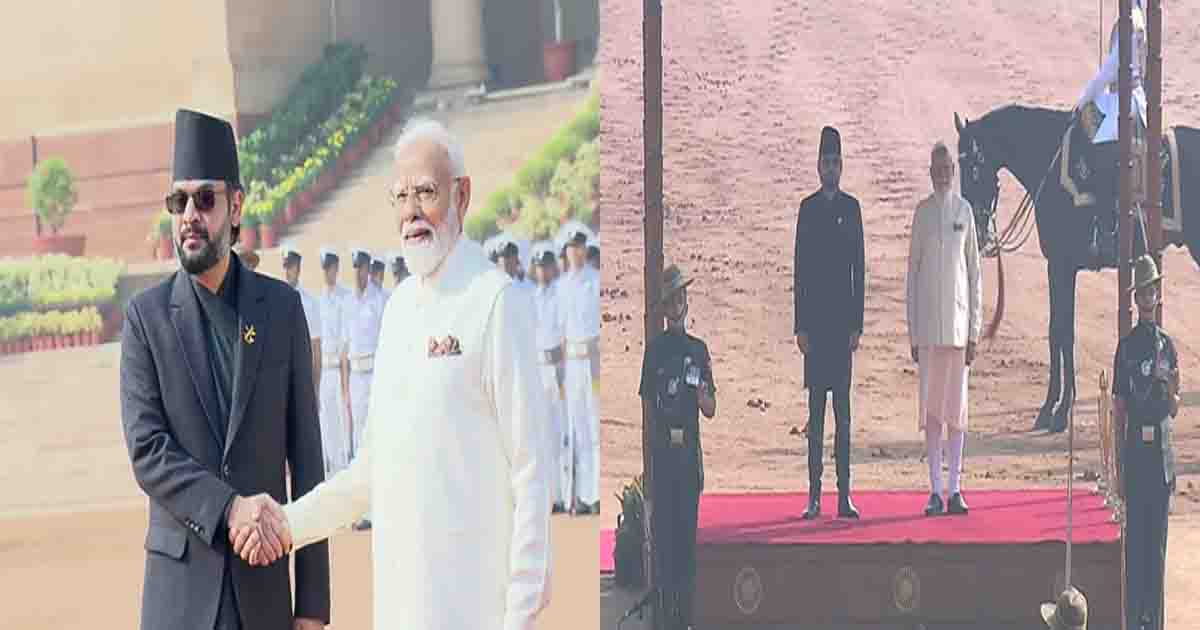
Nepalese Prime Minister Balendra Shah was accorded a ceremonial welcome at the forecourt of Rashtrapati Bhavan on Monday.
Prime Minister Narendra Modi warmly welcomed Shah upon his arrival at the Rashtrapati Bhavan.
Shah arrived in New Delhi on Sunday for a two-day State visit to India at the invitation of Prime Minister Modi. Union Minister of State for Commerce and Industry Jitin Prasada welcomed him at the airport.
He is scheduled to hold delegation-level talks with Prime Minister Narendra Modi later in the day, during which the two leaders will review the full range of India-Nepal relations and exchange views on regional and international issues of mutual interest.
Additionally, both leaders will virtually flag off the Saryu-Kamala Express from New Delhi.
Following the bilateral talks, the two leaders will jointly address a press conference. Prime Minister Modi will also host an official luncheon in honour of the Nepali Prime Minister and his delegation on the same day.
Shah will additionally call on President Droupadi Murmu.
The Nepali Prime Minister is accompanied by Finance Minister Swarnim Wagle, Foreign Minister Shishir Khanal, Chief Advisor to the Prime Minister Kumar Byanjankar and other senior government officials, forming a 35-member government delegation.
A separate 52-member delegation comprising business representatives will also participate in the visit at their own expense.
The bilateral discussions are expected to cover post-flood reconstruction assistance, energy, trade, connectivity and broader cooperation between the two neighbouring countries.
The two sides are also expected to unveil a Joint Vision Document titled “Samriddha Nepal, Samunnat Bharat” (Prosperous Nepal, Developed India), which will set long-term bilateral goals and concrete targets for cooperation.
During the visit, the two countries are also expected to inaugurate several completed projects related to connectivity and energy cooperation and lay the foundation stones for new projects.
According to Nepal’s Foreign Ministry, discussions will focus on strengthening economic cooperation in areas including trade, transportation, investment, energy, connectivity networks and infrastructure development.
The two sides will also exchange memorandums of understanding (MoUs) covering cooperation in education, health, agriculture, sports, disaster management and human resource development.
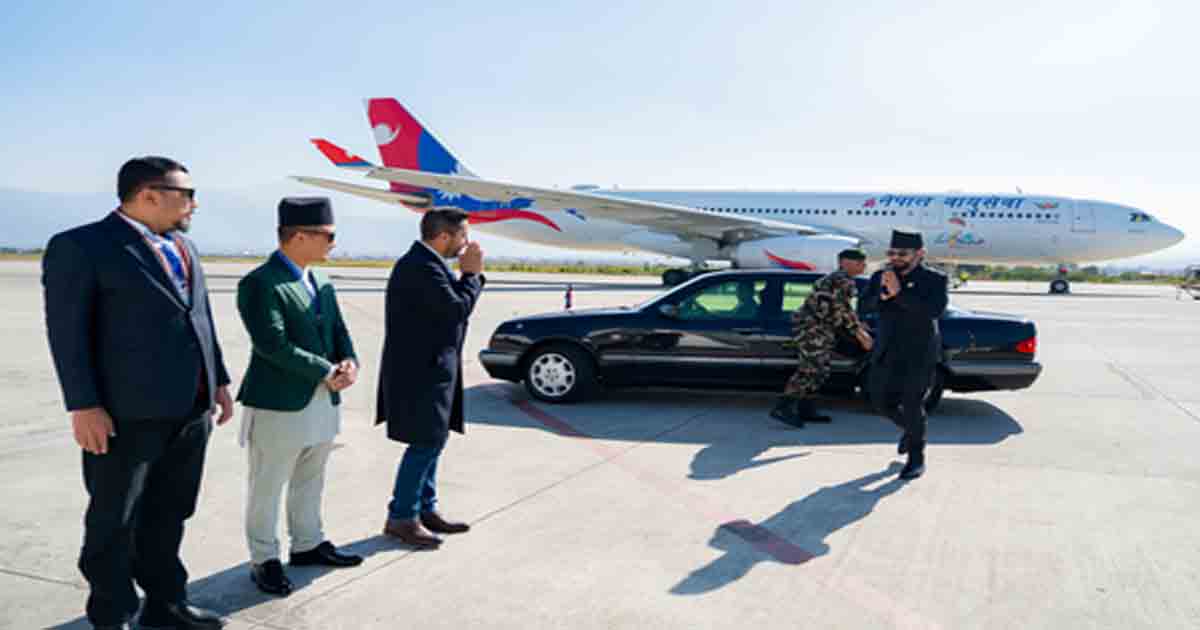
Nepali Prime Minister Balendra Shah on Sunday left for New Delhi on a two-day State Visit at the invitation of his Indian counterpart, Prime Minister Narendra Modi.
Prime Minister Shah departed aboard a Nepal Airlines flight, accompanied by Finance Minister Swarnim Wagle, Foreign Minister Shishir Khanal, Chief Advisor to the Prime Minister Kumar Byanjankar and other senior government officials, forming a 35-member government delegation.
A separate 52-member delegation of business representatives will participate in the visit at their own expense.
This is Shah’s first bilateral visit since he was sworn in as Prime Minister on March 27, following the March 5 elections this year. He has already visited New York in September to participate in the United Nations General Assembly since assuming office.
During the visit, Prime Minister Shah will pay a courtesy call on Indian President Droupadi Murmu.
“During the visit, Shah will hold delegation-level talks with Prime Minister Modi on November 23 and discuss a range of issues of mutual interest,” Nepal’s Foreign Secretary Amrit Bahadur Rai said at a press briefing on Friday.
The two prime ministers will also jointly address a press conference following their bilateral talks. On the same day, Prime Minister Modi will host an official luncheon in honour of the Nepali prime minister and his delegation.
Indian External Affairs Minister (EAM) S. Jaishankar is also scheduled to pay a courtesy call on Prime Minister Shah.
Securing additional air entry routes from India, obtaining substantial financial support for reconstruction following the devastating floods of August 26, and securing concessions from India on trade and transit are among the Nepali government’s top priorities, Nepali officials said.
On India’s part, securing access to Nepali airspace and improving the investment climate for Indian businesses in Nepal, particularly in the energy sector, are among its key concerns, according to Nepali officials.
Bilateral talks are expected to cover post-flood reconstruction assistance, energy, trade, connectivity and broader bilateral cooperation. The two sides are also expected to unveil a Joint Vision Document titled “Samriddha Nepal, Samunnat Bharat” (Prosperous Nepal, Developed India) to set long-term bilateral goals and concrete targets.
The two countries are also expected to inaugurate several completed projects related to connectivity and energy cooperation and lay the foundation stones for new projects during the visit.
Discussions between the two sides will focus on strengthening economic cooperation in trade, transportation, investment, energy, connectivity networks and infrastructure development, Nepal’s Foreign Ministry said.
The two sides will also exchange memorandums of understanding (MoUs) covering cooperation in education, health, agriculture, sports, disaster management and human resource development.
As a relatively new political force has come to power in Nepal, foreign policy experts in the country view the visit primarily as an opportunity for the new leadership to familiarise itself with its southern neighbour.
“This is an opportunity to build political confidence between the newly emerged political forces in Nepal and the Indian political establishment,” said Dinesh Bhattarai, a former foreign policy advisor.
“If the two sides can develop mutual understanding and establish an atmosphere of trust at the prime ministerial level, the visit can be considered successful. Building trust and confidence at the highest level would have an impact across all levels of bilateral relations,” he said.
Bhattarai said the two countries have several bilateral mechanisms and that trust should be reflected in their functioning as well. If there is no trust at the top level, the mechanisms operating at lower levels will also be affected, he added.
Foreign policy experts in Nepal say Prime Minister Shah’s visit will also be judged on whether he can secure an additional air entry route and Indian support for post-disaster recovery. Nepal has sought more than 2 billion US dollars in Indian assistance through grants and concessional loans.
The issue of additional air entry routes has remained under discussion since 2009. Nepal needs an additional route from its western side to make its two new international airports in Pokhara and Bhairahawa financially viable.
Nepal also faces substantial resource requirements for reconstruction following the August 26 floods, which killed more than 1,400 people and left more than 5,000 missing. The disaster also caused extensive damage to public and private property.
“Looking at recent newspaper reports and articles, it appears that there has been some positive movement and flexibility on the issue of additional air routes,” Bhattarai said.
“There are reports that India has sought greater reciprocal concessions in this regard. We still need to see what exactly has been proposed and, in return, what Nepal would receive.”
Although Nepal shares borders with both India and China, its geographical location makes trade with and through India relatively easier. India is not only Nepal’s largest trading partner but also serves as a major transit route for Nepal’s international trade with third countries.
Another foreign policy expert, Arun Subedi, said Nepal and India are indispensable and complementary neighbours.
“We are essential to each other,” said Subedi, who also served as a foreign policy advisor to former Prime Minister Sher Bahadur Deuba.
“Despite our close cultural, natural and geographical ties, several issues concerning supply chains, maritime connectivity, communication and other areas remain unresolved.”
He called for keeping contentious and sensitive issues within the framework of quiet diplomacy while bringing new areas of cooperation and potential achievements to the forefront.
Border disputes over Lipulekh, Kalapani and Limpiyadhura, which are claimed by both sides, have remained a major irritant in bilateral relations.
Subedi said commercial relations should be given higher priority.
“Even if some outcomes emerge solely through government-to-government relations, they will not be particularly effective and may not fulfil people’s aspirations or meet our needs. Therefore, greater focus should be placed on how to increase the participation of Indian corporate entities in Nepal,” he said.
Meanwhile, Shah will return to Nepal on the evening of November 23, departing New Delhi at 6:35 p.m. aboard a scheduled Nepal Airlines flight.
After the delegation returns to Nepal, Foreign Minister Shishir Khanal will brief the media on the visit at Tribhuvan International Airport.

Ram Kadam criticises LoP Rahul Gandhi over Ardhanarishvara image, targets Uddhav Thackeray over Savarkar remarks

Father-son killed as tractor carrying them plunges in deep well in MP Chhatarpur

Iran’s IRGC says two ‘violating’ supertankers exploded after hitting mines in Hormuz Strait

Salman Khan assures Arishfa Khan of fulfilling her dream of working with him, offers Qazi Touqeer a song

IDF warns Netanyahu strike on Iran could trigger wider regional war: Report

Congress trying to protect 3 crore Bangladeshi infiltrators in voter list: HM Shah

Red Fort car blast probe exposes blueprint for spread of terror modules across India

Trump flags Iran targets as talks continue

‘Conspiracy, not accident’: NCP on Ajit Pawar death

BJP, Shiv Sena slam Mallikarjun Kharge for terming Diwali ‘Khushiyon ka Eid’
-

 Crime4 years ago
Class 10 student jumps to death in Jaipur
-

 Maharashtra2 years ago
Mumbai Local Train Update: Central Railway’s New Timetable Comes Into Effect; Check Full List Of Revised Timings & Stations
-

 Maharashtra2 years ago
Mumbai To Go Toll-Free Tonight! Maharashtra Govt Announces Complete Toll Waiver For Light Motor Vehicles At All 5 Entry Points Of City
-

 Maharashtra2 years ago
False photo of Imtiaz Jaleel’s rally, exposing the fooling conspiracy
-

 National News2 years ago
Ministry of Railways rolls out Special Drive 4.0 with focus on digitisation, cleanliness, inclusiveness and grievance redressal
-

 Maharashtra2 years ago
Maharashtra Elections 2024: Mumbai Metro & BEST Services Extended Till Midnight On Voting Day
-

 National News2 years ago
J&K: 4 Jawans Killed, 28 Injured After Bus Carrying BSF Personnel For Poll Duty Falls Into Gorge In Budgam; Terrifying Visuals Surface
-

 Crime2 years ago
Baba Siddique Murder: Mumbai Police Unable To Get Lawrence Bishnoi Custody Due To Home Ministry Order, Says Report