
National News
Farooq Abdullah: Govt should understand why Pandits don’t want to go to Valley

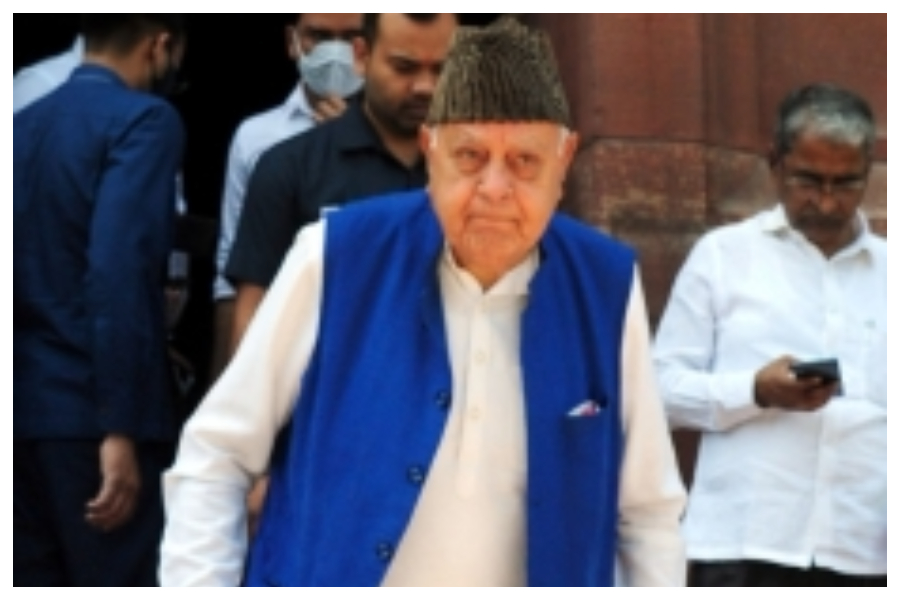
Former J&K Chief Minister and National Conference (JKNC) president Farooq Abdullah criticised Lt Governor Manoj Sinha’s announcement of not providing salary to Kashmiri Pandits who failed to join duty, and said that he should understand the reason behind the Pandits not wanting to go to the valley.
While addressing the media in the Parliament House complex on Friday, Abdullah said that the Pandits do not go to the valley because of the lack of security.
He raised questions on the government’s decision to end terrorism by the abrogation of Article 370 and said that terrorism in the valley existed even after years of revoking the territory’s special status.
Abdullah took a dig at the CAA & NRC and questioned the need of a citizenship card despite the existence of the Voter ID card, Aadhaar card and PAN card.
Replying to a question about tensions with China, he said that the Indian Army was prepared to repay that country in its own language.
Abdullah commented on the issue of the Russia-Ukraine war, and said that the Prime Minister himself said that the era of war was over, so talks should continue.
Responding to Rashtriya Janata Dal (RJD) leader Abdul Bari Siddiqui’s statement on the country being unsafe for Muslims, the former Chief Minister hummed the song ‘Jeena yahan marna yahan, iske siwa jaana kahan..’ and said that the increasing hatred would not be contained by leaving the country, but instead should be fought against together by staying.


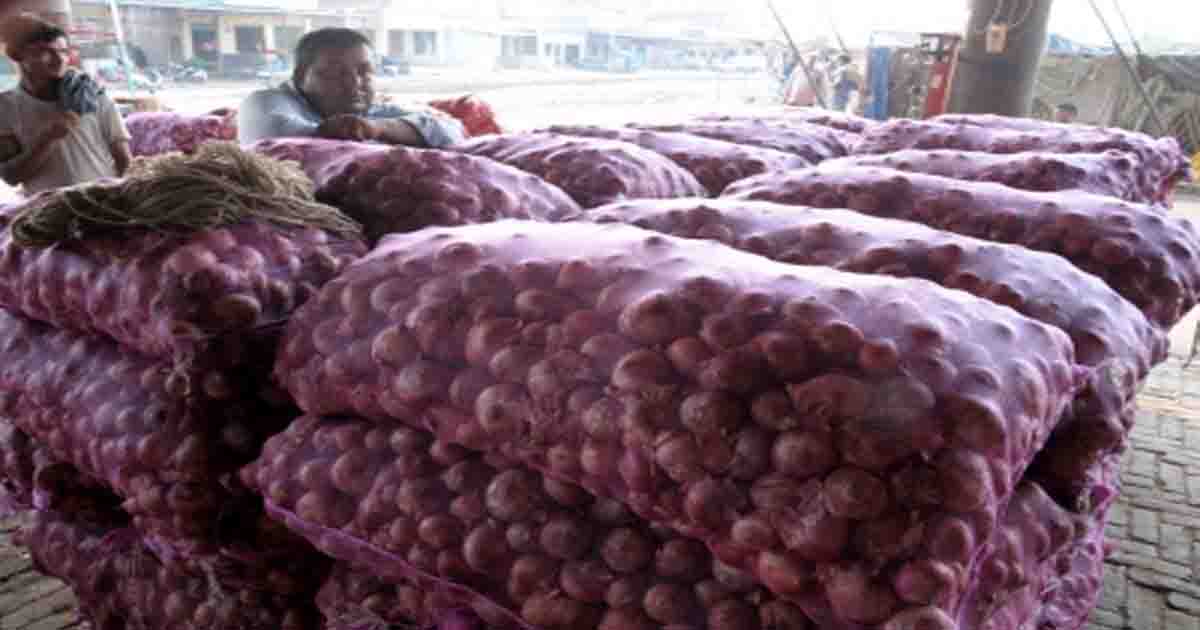
Salespersons at ration shops run by cooperative societies will receive an incentive of Rs 2 for every kilogram of onions sold under an initiative aimed at controlling retail prices and ensuring access to quality produce at reasonable rates.
The incentive was announced in a procedural order issued by Registrar of Cooperative Societies, Latha. It recognises the additional responsibilities undertaken by salespersons handling onion distribution alongside their regular ration shop duties.
According to the order, onions were procured in three phases from the National Agricultural Cooperative Marketing Federation of India (NAFED) and the National Cooperative Consumers’ Federation of India (NCCF). The procurement was undertaken to help check rising onion prices in the open market. The onions are being sold to the public through ration shops operated by cooperative societies.
The arrangement is intended to make quality onions available at fair prices while using the existing cooperative distribution network to reach consumers.
Under the order, the incentive payable to each salesperson will depend on the quantity of onions sold. The prescribed rate is Rs 2 per kilogram, linking payment directly to the volume handled through sales at the participating shops.
The Registrar’s order lists several additional tasks associated with the initiative. These include receiving onion consignments, storing the produce, sorting it, weighing quantities for customers, conducting sales and maintaining the related sales accounts. These responsibilities involve work beyond the routine distribution of ration commodities.
The incentive is intended to encourage salespersons to undertake the additional duties required to carry out onion sales through cooperative outlets. The amount due to eligible salespersons will be credited directly to their bank accounts through the Electronic Clearing Service (ECS), according to the order.
Payments will therefore be made through bank transfers based on the quantity sold. The measure combines consumer relief with an incentive for the staff responsible for implementing the sales programme.
While the procurement and distribution arrangement seeks to contain the impact of higher market prices, the additional payment acknowledges the work involved at the retail level. The order specifies a uniform incentive rate for onion sales conducted through the participating cooperative ration shops.

A female student died, and at least 16 others were injured when a lighting truss collapsed during a Dandiya event at an engineering college at Nadergul on the outskirts of Hyderabad.
The accident occurred at MVSR Engineering College in Nadergul in Telangana’s Adibatla Rangareddy district on Saturday night.
The lighting truss suddenly collapsed during the event, triggering panic.
Narayandas Sona (18), a first-year B. Tech student, sustained critical injuries. She was rushed to a nearby private hospital but died while undergoing treatment. She hailed from the Wanaparthy district.
Police rushed to the spot and launched an investigation into the incident. Preliminary investigation shows that the lighting system collapsed due to strong winds.
The injured were rushed to a nearby hospital and from there shifted to Yashoda Hospital.
According to police, 10 out of 16 injured have been discharged from the hospital.
Some students and their parents alleged negligence on the part of the college management and demanded strict action against those responsible for the accident.
The Dandiya event was organised as part of Sangamam-2026, a two-day national-level technical and cultural fest. The event brought together students from various colleges to showcase their technical skills, innovative ideas and cultural talent.
Chief Minister Revanth Reddy has expressed shock over the accident at MVSR Engineering College, which resulted in the death of a student.
The Chief Minister conveyed his condolences to the student’s family and directed that the best possible medical care be provided to the injured students.
He ordered that those responsible for the accident be identified and that strict action be taken against them.
Bharat Rashtra Samithi (BRS) Working President K.T. Rama Rao said the accident has caused profound shock and grief. He extended his deepest condolences to the family of the deceased student.
Rama Rao wished for a speedy recovery of the students injured in this accident. He requested the authorities to provide them best medical care.
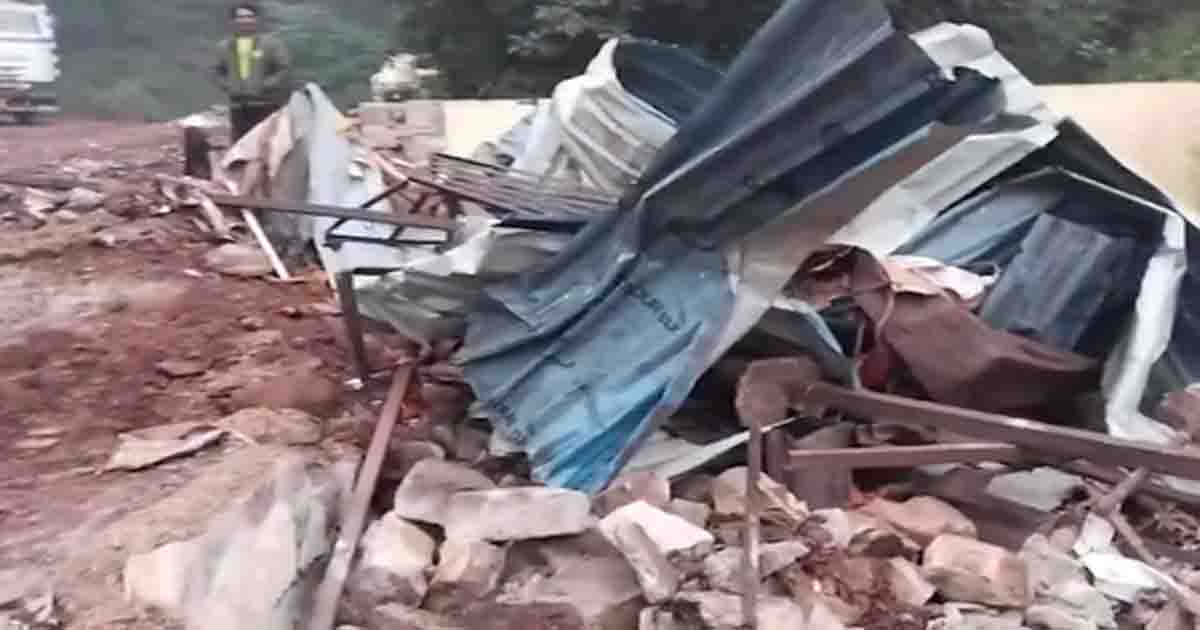
Twelve people were killed, while over 25 were injured after a truck rammed into shops near Shitla Mata Temple in Madhya Pradesh’s Gwalior early on Sunday, officials said.
The incident occurred at around 1:30 a.m. on Sunday when the truck lost control while descending a slope near the historic Shitla Mata Temple, located 18 kilometres from the district headquarters.
“Approximately 50 people were struck by the vehicle, resulting in at least 12 deaths. More than 25 others, including two police personnel and several children, have sustained injuries,” an official said.
According to eyewitnesses, the truck was loaded with sacks of paddy and lost control while descending a hill and crashed into shops near the temple.
“The truck, approaching from the direction of Chinor, went out of control while descending the slope near the main outer gate of the temple and ploughed into the shops situated around the gate. The impact caused significant damage to several shops and destroyed multiple two-wheeled vehicles,” an eyewitness told media.
Upon receiving news of the accident, police teams arrived at the scene and transported the injured to the hospital. About five individuals remain in critical condition. The bodies of the deceased have been taken to the Jaya Arogya Hospital in Gwalior.
Speaking to media, a local said, “When I looked around, there was utter chaos and distress. People were screaming and frantically searching for their loved ones. It was heartbreaking to see people trapped beneath the truck. As for negligence, this is a result of gross negligence by the Gwalior administration. It is a major lapse that led to this tragedy at the Shitla Mata Temple.”
“Our faith has been deeply shaken. People hold an unwavering belief in this temple, a place where neither a coconut is broken nor a lemon is cut, yet such a tragedy has occurred. It is heartbreaking. I demand that the government and Chief Minister Mohan Yadav, who frequently speak about Sanatan Dharma, come to Gwalior today. Compensation must be provided to the families of those who lost their lives, and the injured should receive free medical treatment,” he said.
A shopkeeper, Bablu Prajapati, said, “I had a shop here, which was being managed by my father. Two relatives were also visiting. In total, four people who were at the shop have been injured; they are all currently undergoing treatment in the hospital.”
The tragedy occurred during the auspicious festival of Navratri, when hundreds of thousands of devotees visit the historic Shitla Mata Temple. Typically, the route passing by the temple is closed to large vehicles during this period; hence, an investigation is underway to determine who allowed the truck to enter.
Officials have stated that they are probing who authorised the truck’s entry and whose negligence led to this incident.
An investigation is underway, and further details are awaited.

Ranbir Kapoor showcases singing talent, croons ‘Kabira’ at Durga Puja pandal during Navratri

TN announces Rs 2 per kg incentive for cooperative ration shop onion sales

Student killed as lighting truss collapses during Dandiya event at Hyderabad college

12 killed as truck crashes into shops near temple gate in MP Gwalior

Kolkata stampede: CM Adhikari appeals to Oppn not to play politics over tragedy

Rahul, Cong ecosystem want to force regime change: BJP after Neha Bora praises B’desh Gen-Z protest

BJP pays tribute to ex-President Abdul Kalam, recalls his enduring influence on generations of India’s youth

Attack on democratic rights: INDIA Bloc leaders on detentions of anti-ECI protestors

INDIA bloc begins protest march against ECI

Maha Congress stages agitation against Gyanesh Kumar
-

 Crime4 years ago
Class 10 student jumps to death in Jaipur
-

 Maharashtra2 years ago
Mumbai Local Train Update: Central Railway’s New Timetable Comes Into Effect; Check Full List Of Revised Timings & Stations
-

 Maharashtra2 years ago
Mumbai To Go Toll-Free Tonight! Maharashtra Govt Announces Complete Toll Waiver For Light Motor Vehicles At All 5 Entry Points Of City
-

 Maharashtra2 years ago
False photo of Imtiaz Jaleel’s rally, exposing the fooling conspiracy
-

 National News2 years ago
Ministry of Railways rolls out Special Drive 4.0 with focus on digitisation, cleanliness, inclusiveness and grievance redressal
-

 Maharashtra2 years ago
Maharashtra Elections 2024: Mumbai Metro & BEST Services Extended Till Midnight On Voting Day
-

 National News2 years ago
J&K: 4 Jawans Killed, 28 Injured After Bus Carrying BSF Personnel For Poll Duty Falls Into Gorge In Budgam; Terrifying Visuals Surface
-

 Crime2 years ago
Baba Siddique Murder: Mumbai Police Unable To Get Lawrence Bishnoi Custody Due To Home Ministry Order, Says Report