
National News
Explained: What Is ‘60% Kannada’ Signboard Protest Causing Riot On Streets Of Bengaluru?

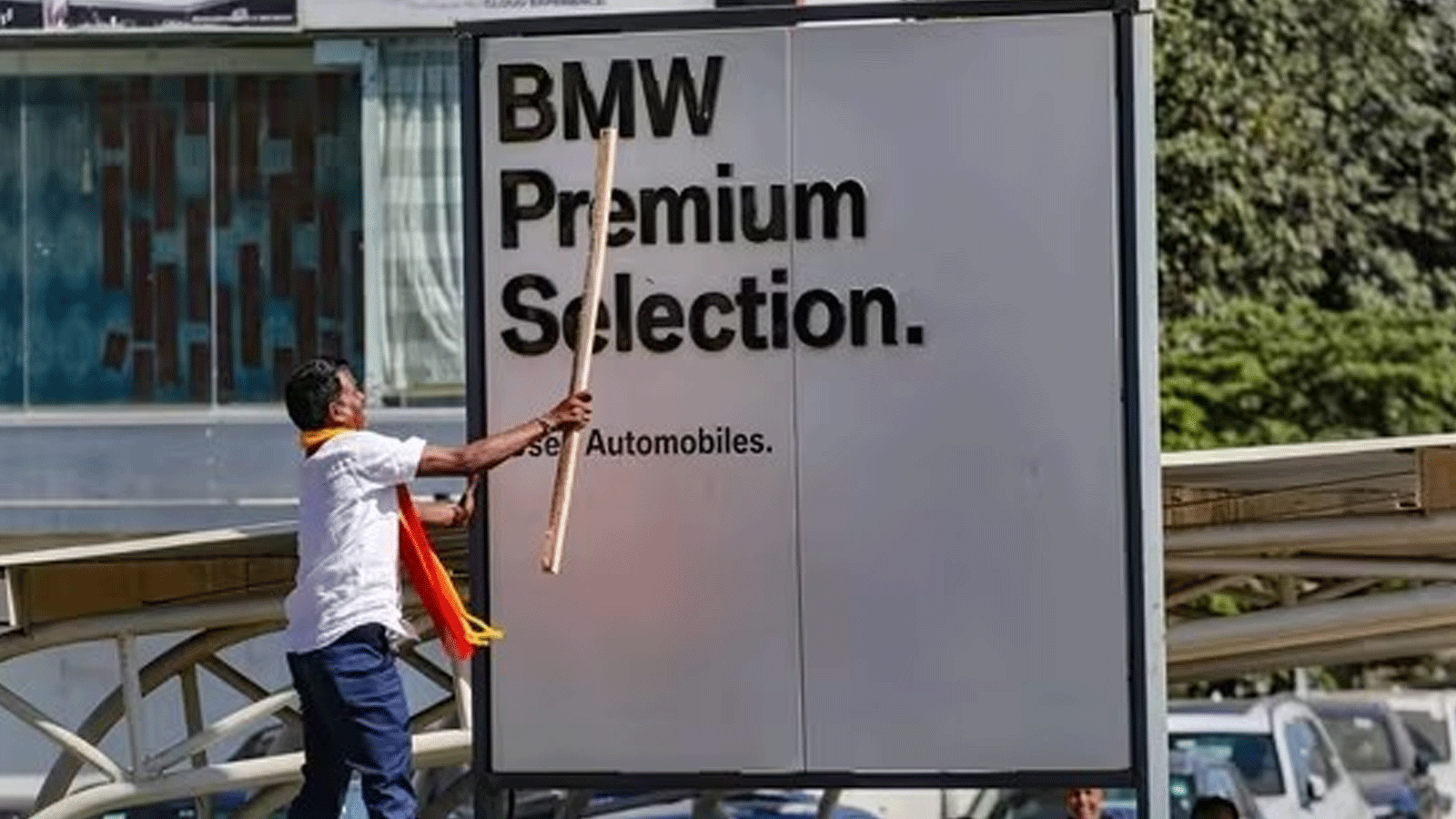
Pro-Kannada groups on Wednesday made their way into Bengaluru city from the Sadahalli toll plaza, organising a massive rally to advocate for the inclusion of sixty percent Kannada content on signboards and logos.
Footage from the scene depicted both men and women dismantling individual English letter signs from a well-known hotel chain McDonald’s at the Sadahalli toll plaza, all the while vociferously chanting slogans.
Several days following the issuance of notices by the city’s civic body mandating prominent Kannada signage for commercial establishments, members of Karnataka Rakshana Vedika took action on Tuesday by removing certain English signboards in various areas of Bengaluru. According to news agency PTI, the pro-Kannada activists additionally cautioned shops to promptly display billboards in the local language.
What is ‘60% Kannada’ rule?
In an effort to boost the prominence of the local language, the Bruhat Bengaluru Mahanagara Palike (BBMP) issued a directive to businesses throughout Bengaluru, asking them to prominently display a minimum of 60% Kannada on their signboards. Failure to comply by February 28 may lead to the revocation of trade licenses and potential legal consequences for businesses that do not adhere to the directive. This development reignited the longstanding debate over language preferences in the Karnataka capital.
Tushar Giri Nath, the Chief Commissioner of BBMP, announced that the administration is poised to identify businesses that do not conform to the new language requirement. Speaking during a meeting with Karnataka Rakshana Vedike (KRV), an organization advocating for the use of Kannada, Nath conveyed, “There are 1400 km of arterial and sub-arterial roads in the city, and all the commercial shops on these roads will be surveyed zone-wise.”
Bengaluru, as a central hub for IT-related employment attracting individuals from across the country, has grappled with the delicate matter of language preference for an extended period. The city’s diverse linguistic landscape has occasionally led to tensions, with the utilization of Kannada being a central point of discussion.
In addition to individual shops, shopping complexes, and malls falling under BBMP’s jurisdiction have been granted a grace period of 15-20 days to adhere to the new regulation. This extension aims to provide larger establishments with the necessary time to implement the required changes.
In October, Chief Minister Siddaramaiah underscored the importance of using Kannada, once again placing the language issue in the spotlight. He stated, “Everyone living in this state should learn to speak Kannada. We are all Kannadigas. People speaking different languages have settled in this Kannada land since the unification of Karnataka.”
Why are pro-Kannada groups going on rampage?
Demonstrations advocating for the inclusion of 60 percent Kannada in all signboards across Bengaluru escalated into acts of vandalism in various areas of the city on Wednesday. Numerous boards were marred during a procession led by Karnataka Rakshna Vedike (KRV) from Sadahalli toll gate towards the city.
The march was organised following the pro-Kannada group’s imposition of a deadline on December 27 for all establishments in Bengaluru to adhere to the Bruhat Bengaluru Mahanagara Palike (BBMP) directive, which requires 60 percent Kannada in signage throughout the city.
Karnataka Rakshna Vedike president T A Narayana Gowda, who’s at the helm of these protests, warned of “unforeseen incidents in Bengaluru” if protesters were arrested or stopped from continuing the movement.
“I spoke to the chief minister and deputy chief minister yesterday night. They assured us that the protests would be allowed. If they arrest us or stop the movement, then the police will be responsible for any unforeseen incidents in Bengaluru,” he said.
The demonstrators damaged the signboard of the multi-city hotel chain Bloom, which lacked Kannada content. They were observed entering the hotel premises while chanting pro-Kannada slogans. Progressing towards Chikkajala, pro-Kannada activists defaced and took down numerous signboards. Videos circulated on social media depicted protesters spray-painting certain boards, and they were also witnessed tearing down large flexes installed along the airport road.

Crime
Suspicious passenger apprehended at Delhi Jama Masjid Metro Station after trying to flee during screening

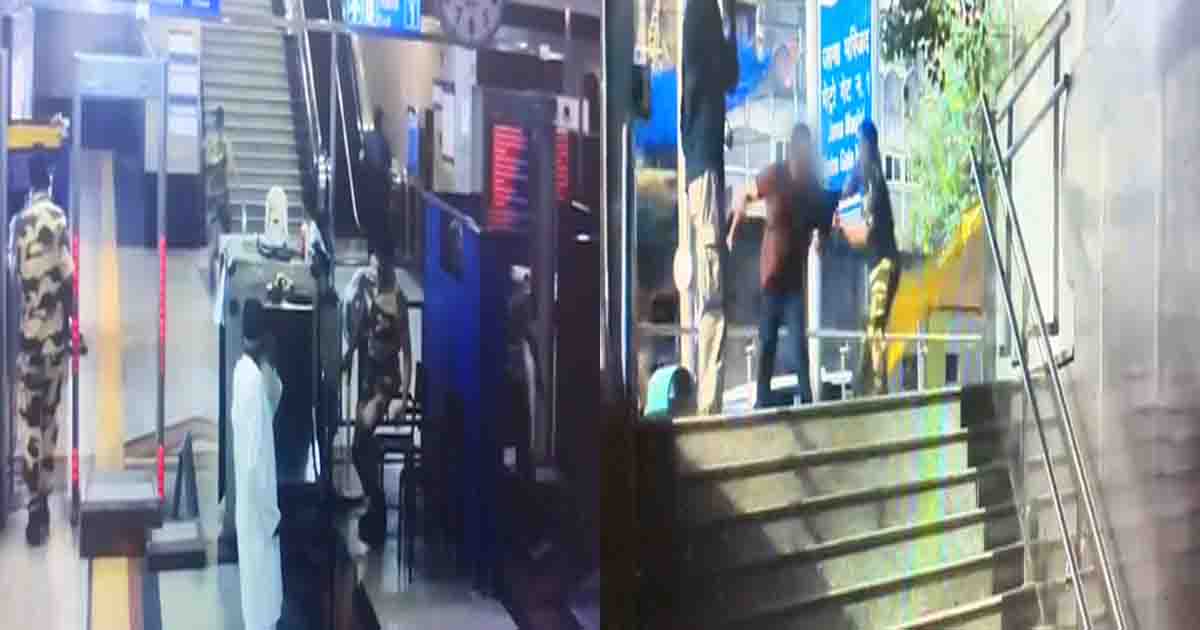
Alert personnel of the Central Industrial Security Force (CISF) apprehended a passenger at Delhi’s Jama Masjid Metro Station after he allegedly attempted to flee when a suspicious object was detected during his baggage screening.
According to the CISF, the incident came to light when the passenger’s baggage was being screened through an X-ray Baggage Inspection System (XBIS). During the examination, personnel noticed a dense and suspicious object on the scanner screen.
Sensing something unusual, the security personnel attempted to examine the matter further. However, the passenger allegedly tried to escape from the screening area, according to CISF.
Displaying promptness and alertness, CISF personnel immediately chased him and apprehended him near the station’s exit gate before he could leave the premises.
A subsequent examination of his belongings led to the recovery of an unidentified semi-solid substance concealed inside a stitched portion of his undergarment, the CISF said.
According to reports, the passenger reportedly claimed to be a non-resident Indian (NRI) residing in Kuala Lumpur, Malaysia.
Following the recovery, the CISF handed over the passenger, along with his belongings and the suspected substance, to the police for further investigation.
The nature of the semi-solid substance and the reason behind its concealment remain unclear. Police are investigating the matter to establish the identity of the substance and determine the circumstances surrounding the incident.
The CISF’s swift intervention prevented the passenger from leaving the station without further examination.
The force said its personnel remain alert during the screening of passengers and their baggage to ensure compliance with security protocols and prevent any potential threat to metro commuters. Further action in the case will depend on the findings of the investigation, said the police officials.
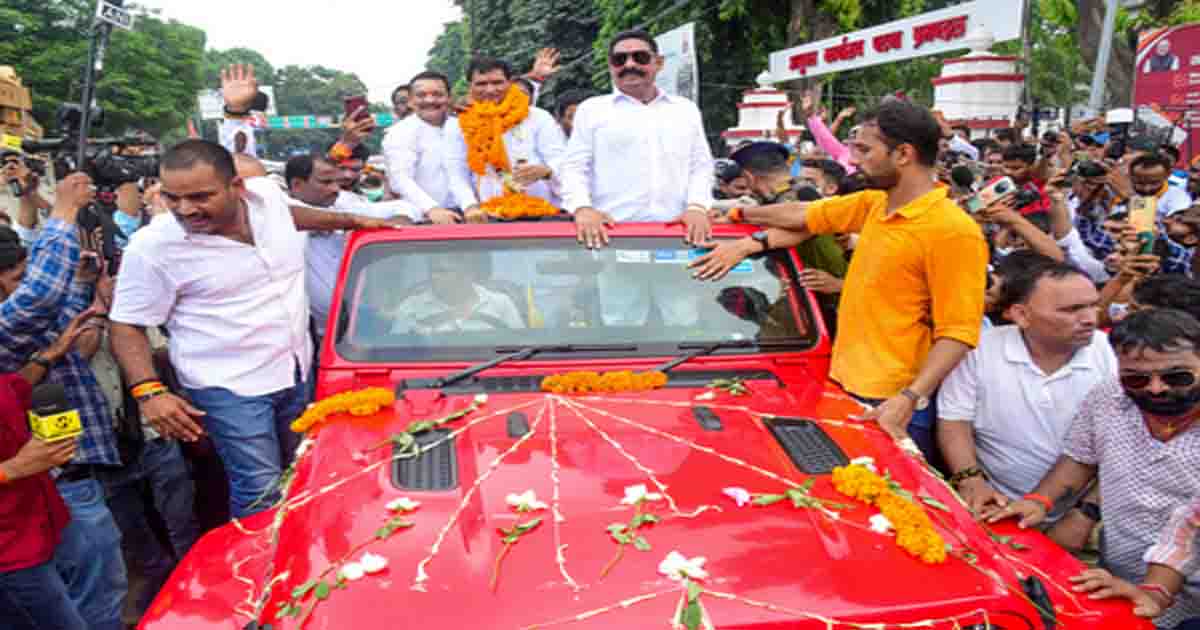
Amid campaigning for the biennial elections for eight MLC seats on October 23 in Bihar, police have registered three FIRs in connection with alleged violation of election rules during a roadshow in the Mokama Assembly constituency of Patna district.
The roadshow was held on Sunday. The cases have been registered against local MLA Anant Singh and Jan Suraaj candidate Anuj Singh, according to police sources.
Of the three cases, two were registered at Barh police station and one at Mokama police station in Patna district.
The police are investigating the alleged violations and examining the circumstances surrounding the roadshow.
According to police sources, the action followed complaints of violations of the Model Code of Conduct and other applicable regulations during the Member of Legislative Council (MLC) election-related event.
The allegations concern compliance with rules governing political roadshows and public campaigning.
However, the specific allegations against each leader and the legal sections invoked in the FIRs have not yet been independently confirmed.
The registration of the cases has triggered political discussions in the Mokama and Barh areas, where election-related activities have intensified.
During the MLC election period, candidates and political parties are required to comply with the Model Code of Conduct and applicable rules governing public meetings, roadshows, permissions and traffic management.
Authorities can initiate legal action when alleged violations are reported.
However, the filing of an FIR does not establish guilt. The allegations against Anant Singh and Anuj Singh will be subject to investigation and the due process of law.
Police said further action would be taken on the basis of the evidence collected and the findings of the investigation.
Additional details are awaited.
Anant Singh, the JD(U) MLA from Mokama in Patna district, has openly extended his support to Jan Suraaj candidate Anuj Singh and is campaigning against his own party’s official nominee, Neeraj Kumar, in the upcoming MLC election.
Anant Singh said his decision to support Anuj Singh stemmed from a personal dispute with Neeraj Kumar. He clarified that his move had nothing to do with his political relationship with the JD(U).
The election for eight Legislative Council seats is scheduled to be held on October 23, with counting of votes and announcement of results set for October 27.
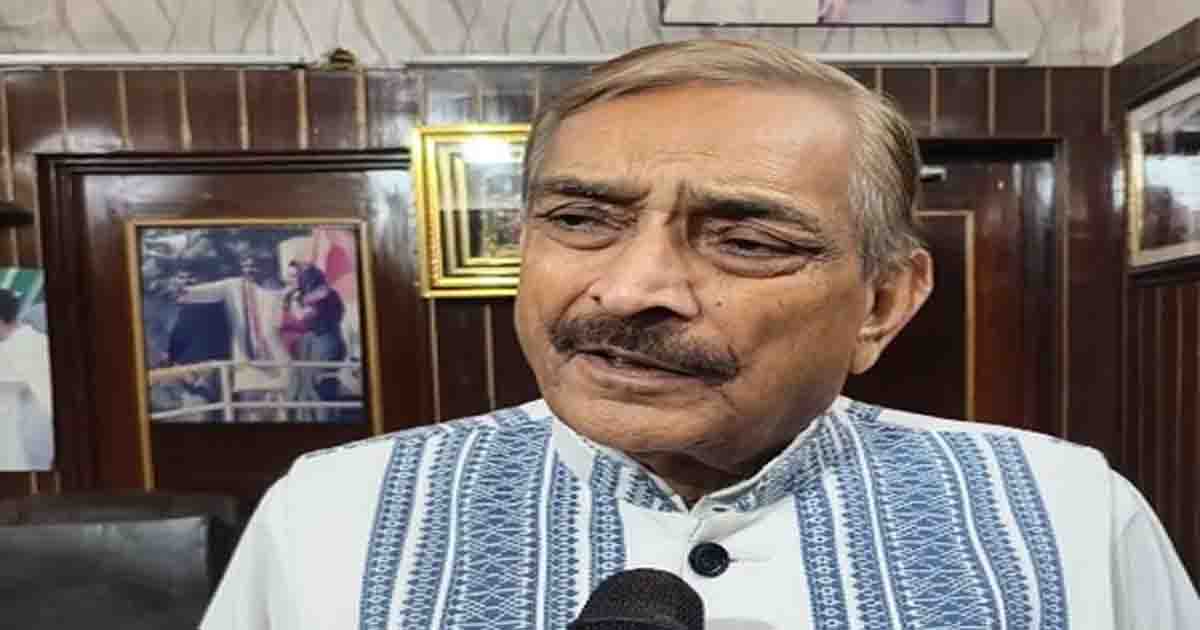
Congress MP Pramod Tiwari on Monday hit back at AIMIM chief Asaduddin Owaisi over his recent remarks, accusing him of acting as an agent of the Bharatiya Janata Party (BJP).
Tiwari claimed that election results demonstrated how Owaisi’s party had contributed to splitting minority votes, prompting him to describe the AIMIM chief and the BJP as “twin brothers”.
The exchange comes amid political preparations for the 2027 Assembly elections in Uttar Pradesh, with parties sharpening their positions and trading allegations ahead of the electoral contest.
Addressing a gathering in Uttar Pradesh’s Rampur, Owaisi had declared that he would “never make a Nehru, a Gandhi, or a Yadav” his leader. He also stressed the need to provide greater opportunities to young people from the Muslim community.
“Muslim youth have as much potential as people from other communities… However, they are not given a platform,” Owaisi had said, adding that the AIMIM would provide them with opportunities to move forward.
Responding to the AIMIM chief’s remarks, Congress MP Tiwari accused him of working to divide opposition votes in favour of the BJP.
Speaking to media, Tiwari said, “What standing does Owaisi have to even suggest someone like a Gandhi or a Nehru? His sole function, whether intentional or otherwise, is to divide the minority vote at the behest of the BJP. I can say with full confidence that this individual works for the BJP, as evidenced by election outcomes.”
Tiwari further cited electoral results in Maharashtra and Bihar to support his allegations, claiming that the AIMIM’s electoral performance had helped the BJP and its allies by splitting votes that could otherwise have benefited other candidates.
“In Maharashtra, while his party won four seats, it also caused other candidates to lose in 22 constituencies by splitting the vote, ultimately paving the way for a BJP-led government. He did something similar in Bihar … The results clearly show that he operates as an agent for the BJP. Owaisi and the BJP are twin brothers,” he added.
This comes as political parties begin gearing up for the 2027 Uttar Pradesh Assembly elections.
Tiwari also commented on the controversy surrounding the Special Intensive Revision (SIR) of electoral rolls being conducted by the Election Commission of India (ECI).
He argued that protecting citizens’ voting rights was essential and called for a change in government through the democratic process.
“The government in the country must be changed. The nation’s economic situation and foreign policy have both failed. The public wants relief from inflation and unemployment, and a change in government is essential to safeguard the right to vote. We want to change the government democratically through elections, and for that right to vote must be safeguarded,” Tiwari said.

Suspicious passenger apprehended at Delhi Jama Masjid Metro Station after trying to flee during screening

Tiger Shroff attack: Bihar family denies accused is their son

Bollywood in the Crosshairs After Firing at Tiger Shroff; Legal Action Initiated Against Bishnoi Gang, Three Shooters Arrested

E-Office System Implemented in Mumbai Municipal Corporation; 14,000 Users to Be Integrated in Phases to Make Administration More Transparent and Efficient

Bihar MLC election: Three FIRs filed against Anant Singh, Jan Suraaj candidate Anuj Singh

Rahul, Cong ecosystem want to force regime change: BJP after Neha Bora praises B’desh Gen-Z protest

BJP pays tribute to ex-President Abdul Kalam, recalls his enduring influence on generations of India’s youth

Attack on democratic rights: INDIA Bloc leaders on detentions of anti-ECI protestors

INDIA bloc begins protest march against ECI

Maha Congress stages agitation against Gyanesh Kumar
-

 Crime4 years ago
Class 10 student jumps to death in Jaipur
-

 Maharashtra2 years ago
Mumbai Local Train Update: Central Railway’s New Timetable Comes Into Effect; Check Full List Of Revised Timings & Stations
-

 Maharashtra2 years ago
Mumbai To Go Toll-Free Tonight! Maharashtra Govt Announces Complete Toll Waiver For Light Motor Vehicles At All 5 Entry Points Of City
-

 Maharashtra2 years ago
False photo of Imtiaz Jaleel’s rally, exposing the fooling conspiracy
-

 National News2 years ago
Ministry of Railways rolls out Special Drive 4.0 with focus on digitisation, cleanliness, inclusiveness and grievance redressal
-

 Maharashtra2 years ago
Maharashtra Elections 2024: Mumbai Metro & BEST Services Extended Till Midnight On Voting Day
-

 National News2 years ago
J&K: 4 Jawans Killed, 28 Injured After Bus Carrying BSF Personnel For Poll Duty Falls Into Gorge In Budgam; Terrifying Visuals Surface
-

 Crime2 years ago
Baba Siddique Murder: Mumbai Police Unable To Get Lawrence Bishnoi Custody Due To Home Ministry Order, Says Report