
Business
Entrepreneur Mohammed Junaid Shares How Hard Work And Positivity Helped Him Be On The Top

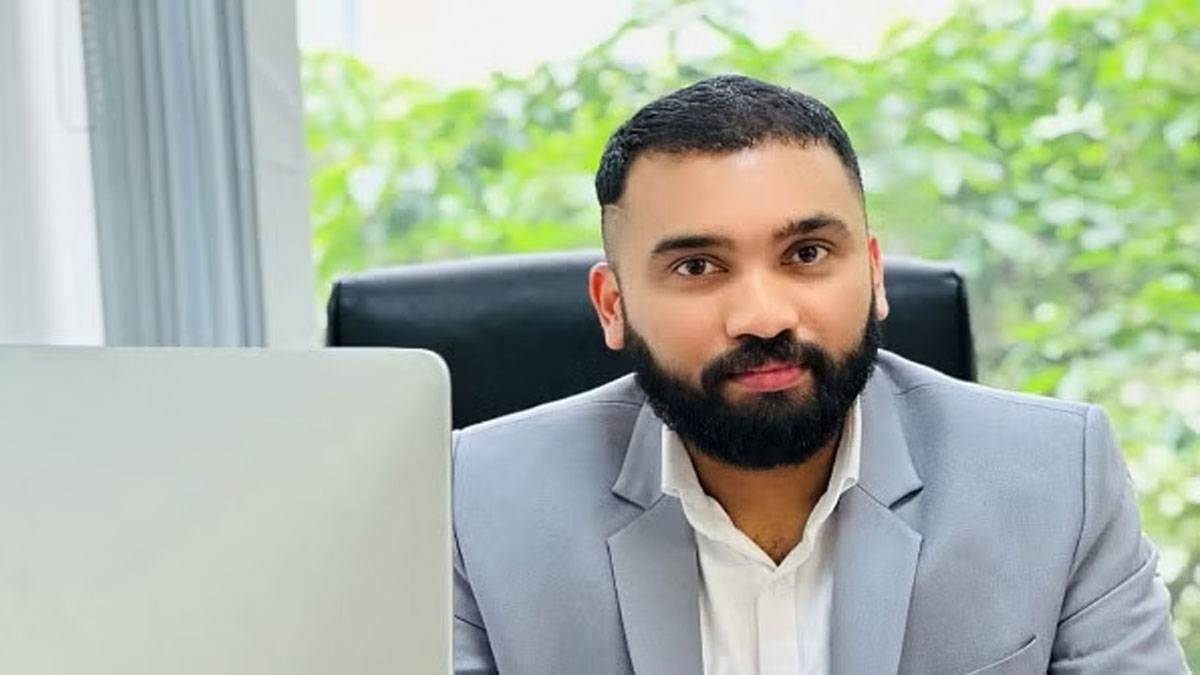
While it’s easy to get lost in the dream of success, the reality is that success does not come overnight. It requires hard work, dedication and commitment to achieve something meaningful. We know very well that success is not achieved overnight and that sustained effort is needed to make progress towards our goals. The challenge is to stay focused on those goals and keep going even when it gets tough. Only then can we hope to one day realize our dreams of success. But Mohammed Junaid is also one of them who never gave up, Mohammed Junaid was born in 1988 in the small town of Kerala, India. Along with studies, Junaid also fulfilled his dreams and after hard work he has become an entrepreneur of India.
Mohammed Junaid C is an Indian entrepreneur who has taken the business world by storm with his unique approach to entrepreneurship. He started his business journey at a young age and is now one of the most successful entrepreneurs in India. His success story serves as an inspiration for many budding entrepreneurs who are looking to make their mark in this competitive world. With his hard work, dedication and innovative ideas, he has been able to create a successful business empire that continues to grow and prosper
His message to the people is that, I believe that success is not merely achieved through profit and growth, but also by empowering and inspiring others to pursue their dreams. Paulo Coelho once said, ‘The secret of life is to fall seven times and to get up eight.’ This quote resonates deeply with me, as it encapsulates the essence of perseverance and resilience.I believe strongly that communication is the key to build strong relationships and fostering mutual understanding. In my journey as a successful entrepreneur, I have witnessed the transformative power of collaboration and open dialogue. Therefore, I encourage each and every one of you to embrace the spirit of entrepreneurship and strive for excellence in your endeavors. I encourage each individual to embrace their dreams fearlessly, regardless of the challenges they may face. Let us remember that setbacks are not roadblocks but stepping stones towards personal and professional growth. Success is not just measured by personal achievements, but also by the positive impact we create in our communities. Together, let us work towards a future where innovation, integrity, and inclusivity define the business landscape.
Junaid said that strength is not just measured in terms of physical power or courage, but also in terms of mental and emotional resilience. This means that it is not enough to simply have the courage to face difficult situations – one must also have the strength to persevere and keep going when things get tough. Strength can be found in many different forms, including mental fortitude, emotional intelligence, and the ability to persevere. Through my personal experiences I have learned that I possess great strength which has been tested through various trials and tribulations. My strength lies in my ability to stay focused on the task at hand despite any adversity I may face. I am able to remain calm in stressful situations, assess problems logically, make sound decisions even when emotions are running high, and remain determined no matter what challenges come my way.


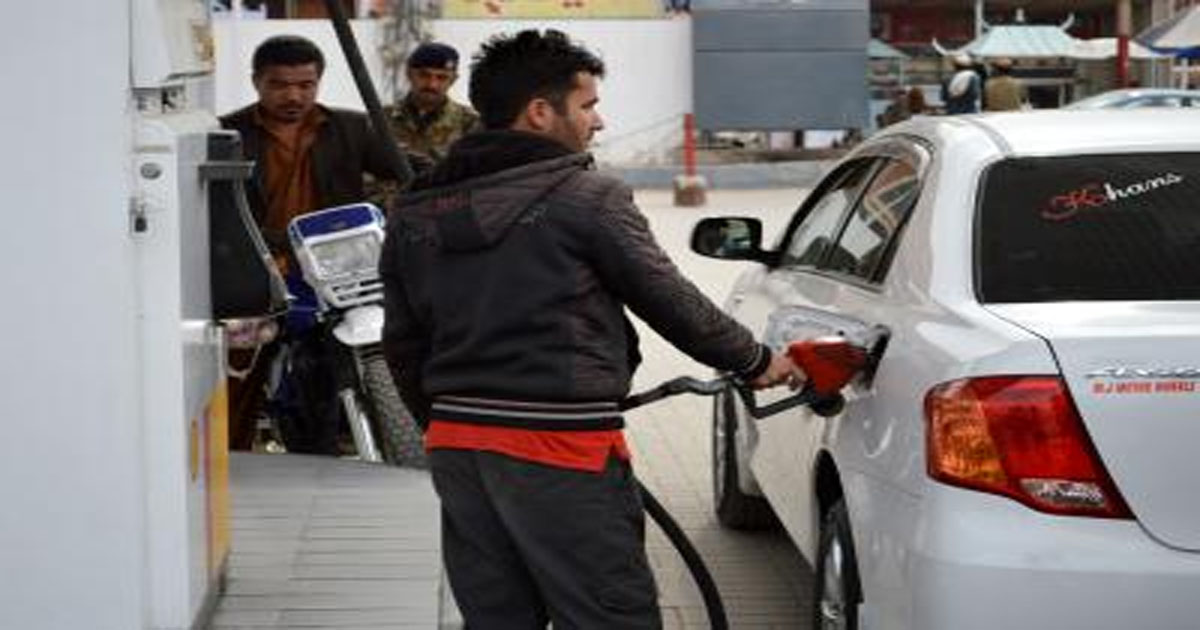
New Delhi, April 4: Pakistani consumers are bearing almost half of petrol’s retail cost in the form of government levies and industry profit margins, an internal government document has revealed, coming just a day after a massive increase in the prices of both petrol and diesel was announced, a report said.
Petroleum Minister Ali Pervaiz Malik, speaking alongside Finance Minister Muhammad Aurangzeb at a press briefing, announced a Rs 137.23-per-litre rise in petrol prices, pushing the retail rate to Rs 458.41 per litre.
Moreover, high-speed diesel climbed even more steeply, up Rs 184.49 per litre to a new benchmark of Rs 520.35.
Both hikes were attributed to disruptions in the global oil supply chain stemming from the ongoing conflict in the Middle East.
The Ministry of Energy’s pricing document lays bare a cost structure that places the ex-refinery price of petrol at Rs 247.15 per litre — less than the Rs 211.26 per litre piled on through taxes and margins.
Of that non-product portion, a petroleum levy alone accounts for Rs 160.61 per litre, followed by Rs 24.12 in customs duty and Rs 2.50 under the climate support levy.
The inland freight margin adds another Rs 7.52, while oil marketing companies (OMCs) collect Rs 7.87 in profit and pump dealers retain an Rs 8.64 commission per litre.
The picture is markedly different for diesel consumers. The ex-refinery price of high-speed diesel stands at Rs 461.23 per litre, and, unlike petrol, diesel currently attracts no petroleum levy.
In addition, combined taxes and margins on diesel total Rs 59.12 per litre — 11.36 per cent of the retail price — comprising Rs 35.74 in customs duty, Rs 4.37 for inland freight, Rs 7.87 in OMC profit, Rs 8.64 for dealers, and the Rs 2.50 climate levy.
The disclosures have drawn fresh scrutiny to the government’s fiscal strategy, with petrol’s tax-and-margin share more than four times that of diesel, even as pump prices for both fuels reach record highs.
Business
Iran-Israel Conflict Hits India’s Real Estate: Supply Disruptions & Rising Costs Delay Project Possessions

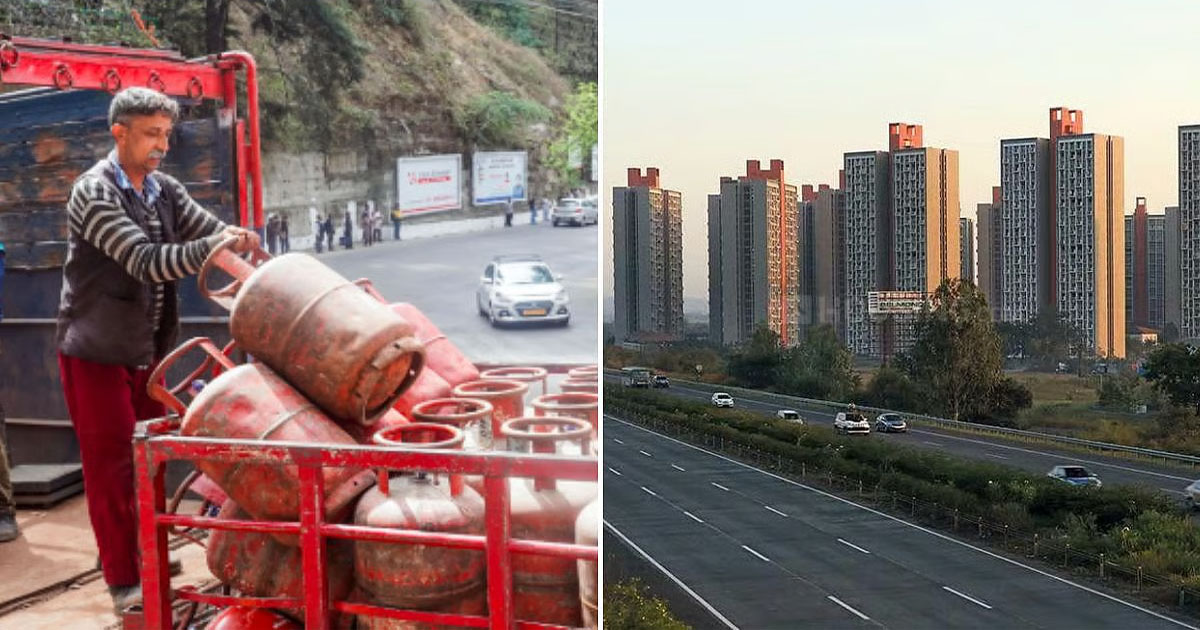
Mumbai: The ongoing geopolitical tensions in West Asia, particularly the Iran–Israel conflict, have The ongoing geopolitical tensions in West Asia, particularly the Iran-Israel conflict, have begun to weigh on India’s real estate sector. Developers are flagging delays in project completion due to supply chain disruptions and rising input costs.
Industry stakeholders said shortages of key finishing materials such as tiles and sanitaryware, driven largely by gas supply constraints, are emerging as a critical concern. These disruptions are expected to push possession timelines, especially for projects in advanced stages.
CREDAI-MCHI Chief Operating Officer Keval Valambhia noted that the war has led to significant supply-side challenges. Shortages of gas and LPG have impacted the production of energy-intensive materials like supply of tiles from Morbi, which supplies over 80% of the market need. “Distributors have increased prices due to limited availability, but the situation remains manageable currently,” Valam bhia said. He warned that if the conflict continues, project possession timelines could extend by two to three months.
The marble and tile industry has been hit particularly hard. Gajendra Bhandari, President of the Vile Parle Marble Association, said that nearly 80% of factories have shut down. According to Bhandari, major firms are now insisting on full advance payments and have stopped accepting new orders without prior confirmation.
Deep Vadodaria, CEO of Nila Spaces, explained that the conflict affects projects at multiple levels. Beyond finishing materials like façade glass, core inputs like steel and cement are witnessing price pressure due to rising crude oil prices. Vadodaria described this as an indirect “wartax” on the sector, where developers deal with both cost escalations and procurement uncertainty.
Anand Gupta, a member of the Builders Association of India, said the availability of sanitaryware is hampered by chemical supply issues.
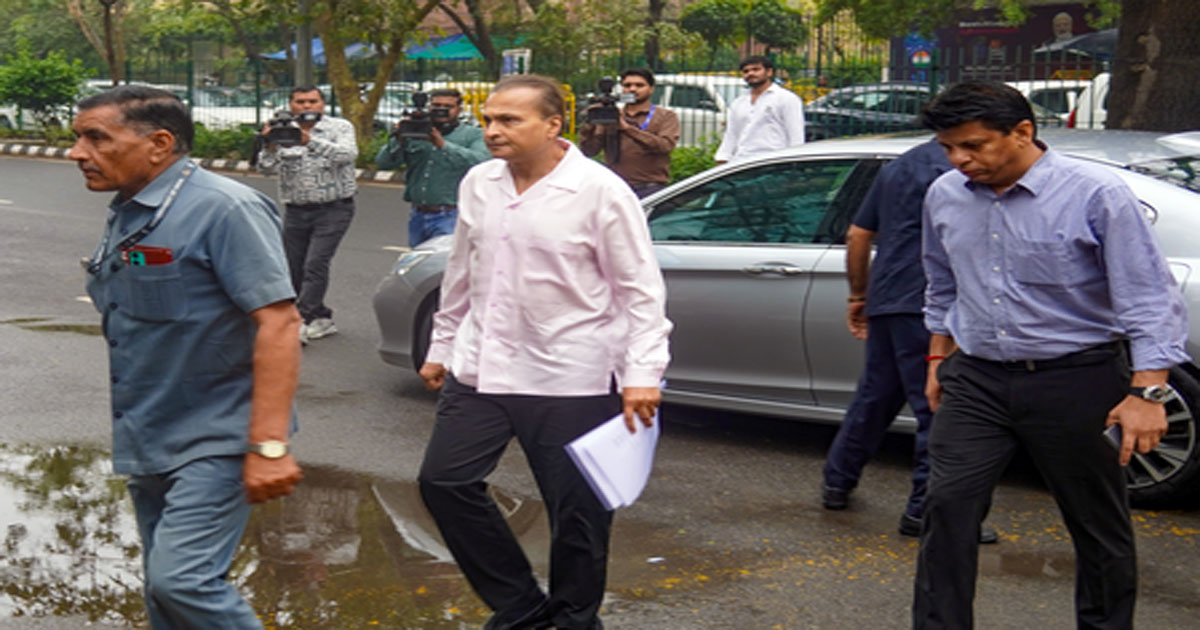
New Delhi, April 1: The Central Bureau of Investigation on Wednesday registered a case against Reliance Communications Ltd (RCom), Anil Ambani, unknown public servants, and unknown others on allegations of causing wrongful loss of Rs 3,750 crore to Life Insurance Corporation (LIC) of India.
The case has been registered on the basis of a complaint received from Life Insurance Corporation of India Ltd. for offences of conspiracy, cheating, misappropriation, and offences under the Prevention of Corruption Act, according to an official statement.
It is alleged that LIC was fraudulently induced to subscribe to Non Convertible Debentures (NCDs) worth Rs 4,500 crore on the basis of false representations made by Reliance Communications Ltd. and its management regarding the financial health of the company, and security and asset cover offered to LIC while subscribing to the NCDs.
The LIC has made this complaint on basis of a forensic audit report dated October 15, 2020 conducted by BDO India LLP, which reported that RCom and its management had resorted to misutilisation of funds raised from banks and financial institutions, routing of funds through subsidiaries, misuse of sale invoice financing, discounting of fictitious bills, systematic siphoning of funds through inter-company deposits and shell related entities, creating and write-off of fictitious debtors and receivables and gross overstatement of security. There was a mismatch between the charges and the assets.
Investigation of the case is in progress, the statement added.
The CBI had earlier registered three cases against RCom Ltd, Anil Ambani, and others on allegations of defrauding a number of banks.
Anil Ambani was also interrogated by the CBI at its head office in Delhi for two days in a row in connection with the alleged Rs 2,929.05 crore SBI fraud case.
The CBI had registered an FIR on August 21, 2025, following a complaint filed by the SBI, in which Reliance Communications Limited, Anil D. Ambani and others, including unknown public servants, are accused.
The State Bank of India (SBI) is the lead bank in the consortium of 11 banks — Bank of India, Central Bank of India, UCO Bank, Union Bank of India, e-Corporation Bank, Canara Bank, e-Syndicate Bank, Indian Overseas Bank, IDBI Bank Limited, and e-Oriental Bank of Commerce that had extended loans to the Anil Ambani group.
The complaint is based on a forensic audit report that alleges large-scale diversion and misutilisation of loan funds through interlinked and circuitous transactions among group entities during the period 2013-17, resulting in wrongful loss of Rs 2929.05 crore to the SBI out of total exposure of Rs 19, 694.33 crores involving 17 public sector banks, according to an official statement.
Subsequent to the registration of the case, separate complaints were received from the Punjab National Bank, the Bank of India, the Union Bank of India, the UCO Bank, the Central Bank of India, the IDBI Bank, and the Bank of Maharashtra. Further, another case has been registered against Reliance Communications Limited, Anil Ambani and others unknown, including unknown public servants, on February 25 on the basis of a complaint dated February 24, received from the Bank of Baroda, which includes exposure of e-Dena Bank and e-Vijaya Bank.

Mayor’s instructions to maintain water supply in Mumbai, focus on water management, alternative sources and solutions

Taxes, margins eat half of Pakistan’s petrol price, consumers cry: Report

Mumbai: Stolen goods worth over Rs 84 lakh handed over to original owners, stolen goods are distributed within four months on the initiative of the DCP

Inspection of ongoing cleaning works in Methi River and eastern suburbs, planning of work in accordance with the drain in all three parts of the river: Additional Municipal Commissioner

Mumbai LPG Crisis: Chaotic Rush Seen Outside Chembur Bharatgas Agency As 200-300 People Queue Since 5 AM For Gas Cylinders

Married Mumbai Woman Mocked In Andheri Society Over ‘Lift Kissing’ CCTV Video, Files Police Complaint

LPG Crisis In Maharashtra: Cyber Crime On Rise Amid Shortage, 2 Women Lose ₹4 Lakh In ‘Gas Update’ Online Scam In Kalyan-Dombivli

Mahayoti’s big gift to the people of Mumbai… Now there is no tax for houses up to 500 square feet, the Municipal Corporation has increased this limit to 700 square feet.

Dhurandhar 2 Box Office Collection Day 1: Ranveer Singh Starrer Takes An Exceptional Opening; Crosses ₹100 Crore Mark

T20 WC: ‘You just have to control your emotions and express yourself,’ says Piyush Chawla on handling pressure in final
-

 Crime4 years ago
Class 10 student jumps to death in Jaipur
-

 Maharashtra1 year ago
Mumbai Local Train Update: Central Railway’s New Timetable Comes Into Effect; Check Full List Of Revised Timings & Stations
-

 Maharashtra1 year ago
Mumbai To Go Toll-Free Tonight! Maharashtra Govt Announces Complete Toll Waiver For Light Motor Vehicles At All 5 Entry Points Of City
-

 Maharashtra2 years ago
False photo of Imtiaz Jaleel’s rally, exposing the fooling conspiracy
-

 National News1 year ago
Ministry of Railways rolls out Special Drive 4.0 with focus on digitisation, cleanliness, inclusiveness and grievance redressal
-

 Maharashtra1 year ago
Maharashtra Elections 2024: Mumbai Metro & BEST Services Extended Till Midnight On Voting Day
-

 National News2 years ago
J&K: 4 Jawans Killed, 28 Injured After Bus Carrying BSF Personnel For Poll Duty Falls Into Gorge In Budgam; Terrifying Visuals Surface
-

 Crime1 year ago
Baba Siddique Murder: Mumbai Police Unable To Get Lawrence Bishnoi Custody Due To Home Ministry Order, Says Report