
Business
Crack down on OPPO, Vivo, Xiaomi can push them to leave India: Chinese state media


For Chinese processing and manufacturing enterprises that originally tried to make India an overseas product-processing centre, if it is indeed increasingly difficult and unprofitable to operate in the country, then withdrawing from India is also an available option, state-run Global Times has said.
The Indian government is looking into cases of alleged tax evasion by three Chinese mobile companies — OPPO, Vivo India and Xiaomi.
“Frequent investigations by the Indian side into Chinese enterprises not only disrupt those companies’ normal business activities, but also impedes the improvement of business environment in India and chills the confidence and willingness of market entities, especially Chinese enterprises, to invest and operate in India,” read a commentary in the publication.
Since April 2020, out of 382 foreign direct investment (FDI) proposals the central government received from Chinese firms, India approved only 80 as on June 29.
“The number presents the increasingly difficult business environment facing Chinese investment and companies doing business in India,” the report said.
Some manufacturers have turned their eyes to Southeast Asian countries such as Vietnam after withdrawing from India.
“Faced with competition from Vietnam, India should no longer set obstacles for its manufacturing development, and should stop carrying out crackdown on Chinese investment,” the report added.
Despite the Covid-19 pandemic, the China-India trade is on course to cross $100 billion for the second consecutive year as it has gone up to $67.1 billion in the first half of 2022.
“Hopefully India can provide a fair and non-discriminatory business environment for Chinese investors, which will be mutually beneficial to both Chinese enterprises and India’s manufacturing ambitions,” the commentary read.
OPPO India, Xiaomi India and Vivo India were served notices by the Directorate of Revenue Intelligence (DRI) for duty evasion, Finance Minister Nirmala Sitharaman informed the Rajya Sabha this week.
A show-cause notice demanding Rs 4,403.88 crore has been served to OPPO Mobiles India Ltd based on an investigation conducted by the DRI, while five cases of Customs duty evasion have been registered against Xiaomi Technology India, Sitharaman said in a written reply.
The DRI detected customs duty evasion of around Rs 2,217 crore by Vivo Mobile India Private Ltd.
A show-cause notice has been issued to Vivo India demanding customs duty amounting to Rs 2,217 crore, under the provisions of the Customs Act.


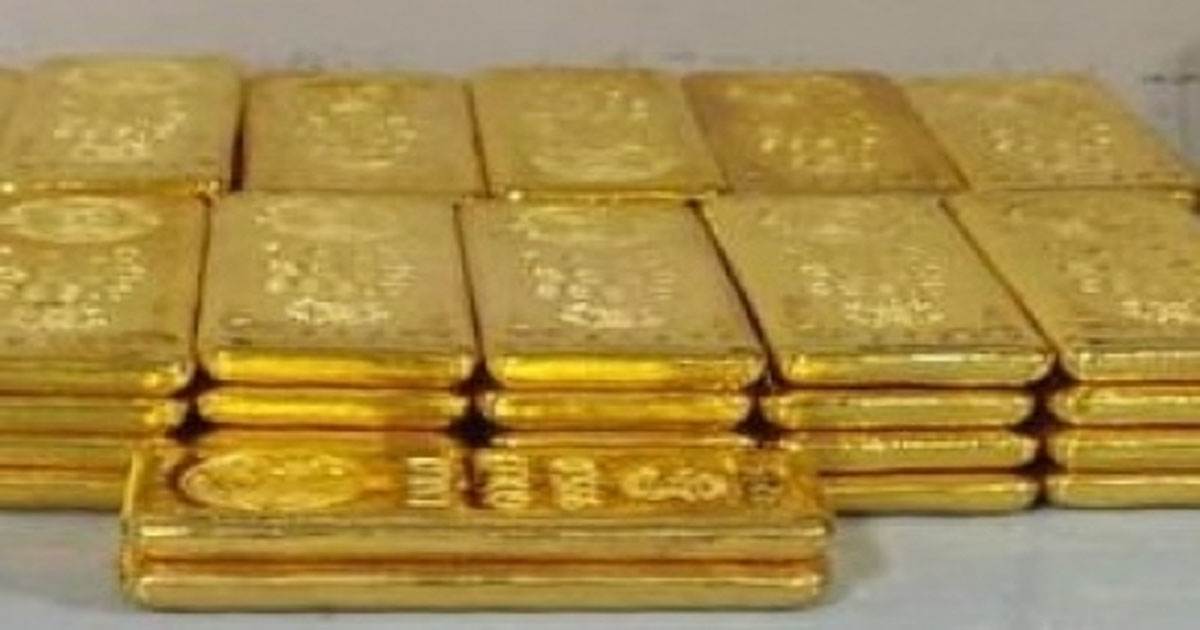
Mumbai, May 4: Gold and silver prices declined up to 1 per cent on Monday amid signs of easing geopolitical tensions between the US and Iran, following remarks by US President Donald Trump.
On the Multi Commodity Exchange (MCX), gold contracts for June 5 opened at Rs 1,51,150, down Rs 382 or 0.25 per cent from the previous close of Rs 1,51,532.
At around 11.30 a.m., gold was trading at Rs 1,50,623, lower by Rs 729 or 0.48 per cent. The yellow metal touched an intraday low of Rs 1,50,400, a decline of 0.62 per cent or Rs 952, and an intraday high of Rs 1,51,347.
On the other hand, silver contracts for July 3 opened at Rs 2,50,699, down Rs 238 or 0.09 per cent compared to the previous close of Rs 2,50,937. The white metal was trading at Rs 2,49,600, down Rs 1,337 or 0.53 per cent.
So far in the session, silver futures hit a low of Rs 2,49,600, a decrease of 1.05 per cent or Rs 2,599, and a high of Rs 2,51,231.
Meanwhile, in the international market, both precious metals remained under pressure. COMEX gold was down 0.55 per cent at $4,619 per ounce, while silver declined 0.48 per cent to $76.065 per ounce.
A commodity market expert said gold prices extended last week’s decline, hovering near one-month lows, as a stronger dollar and elevated crude oil prices weighed on sentiment.
The expert further noted that while easing US-Iran tensions reduced some safe-haven demand, supply risks in the Strait of Hormuz continued to fuel inflation concerns, prompting a cautiously hawkish stance from major central banks, which also weighed on bullion.
US President Donald Trump said the United States would initiate efforts to help vessels stranded in the Strait of Hormuz, describing the move as a humanitarian gesture aimed at assisting neutral countries not involved in the ongoing US-Iran conflict.
According to Trump, Washington would launch ‘Project Freedom’ to guide the stranded ships and their crews safely through the route.
However, he warned that Iran would face a strong response if any threat emerged.
In addition, crude oil prices declined sharply.
Brent crude fell 0.61 per cent to $107.51 per barrel, while US West Texas Intermediate (WTI) dropped 2.77 per cent to $99.11 a barrel.
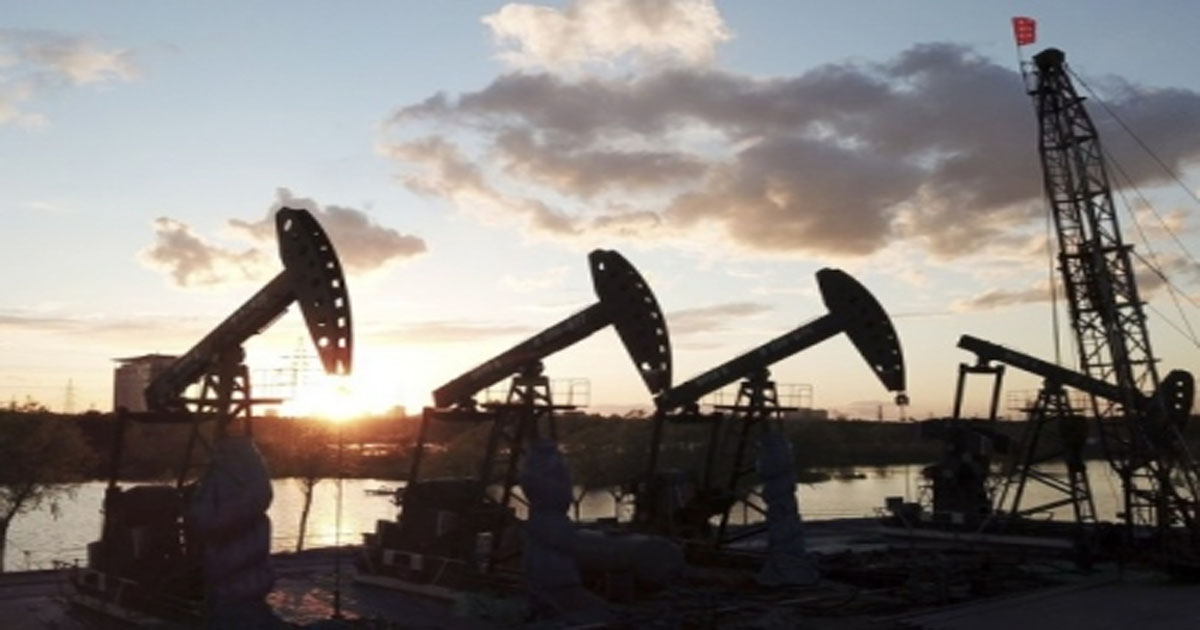
New Delhi, May 3: Amid the ongoing West Asia conflict, OPEC+ countries have agreed in principle to raise oil output targets in June.
Multiple reports say that seven OPEC+ countries have agreed to raise oil output targets by about 188,000 barrels per day next month. The output hike would rather be largely symbolic until Strait of Hormuz reopens.
This will be the third consecutive monthly increase amid the geopolitical crisis and the departure of the UAE from the group.
With the UAE leaving, OPEC+ includes 21 members, including Iran.
However, only the seven nations (and the UAE) have been involved in monthly production decisions. Iran, also an OPEC+ member, has seen its own exports dwindle amid the blockade.
Crude oil output from all OPEC+ members averaged 35.06 million bpd in March, down 7.70 million bpd from February.
Last week, the UAE announced it was leaving the OPEC and OPEC+ cartels in what is seen as a major setback to the group of oil-exporting countries led by Saudi Arabia. The UAE said the decision reflected its “long-term strategic and economic vision and evolving energy profile”.
The exit of the UAE is expected to weaken the oil cartel at a time when the Persian Gulf countries have taken a huge hit to their exports due to the closure of the Strait of Hormuz by an embattled Iran. The UAE accounts for around 15 per cent of the OPEC oil exports.
Reports also surfaced that Kuwait exported zero barrels of crude oil in April, a situation not seen since the 1991 Iraqi occupation, due to blockade of the Strait of Hormuz.
Kuwait Petroleum Corp declared force majeure, impacting around 2 million barrels per day. The blockade has led to a complete disruption in Kuwaiti exports.
Meanwhile, oil prices dropped after reports said Iran proposed fresh talks with the United States using Pakistan as a mediator.
West Texas Intermediate fell more than five per cent and dropped below $100 per barrel. It later recovered to $101.7.
Brent crude also fell more than three per cent to $106.98 before rising again to $108.4.

New Delhi, Gold prices dipped 0.81 per cent during the week as negotiations between the United States and Iran stalled, denting hopes for near‑term interest‑rate cuts.
On Friday, MCX gold June futures gained 0.01 per cent while MCX silver May futures inched up 0.49 per cent. Currently, gold futures stand at Rs 1,51,363, while silver futures stand at Rs 2,47,500 per kg.
The price of 10 grams of 24-carat gold was at Rs 1,50,263 on Thursday, down from Rs 1,51,495 seen on Monday market opening, according to data published by the India Bullion and Jewellers Association (IBJA).
In international markets, bullion dropped as much as 1.2 per cent on Friday after gaining 1.5 per cent in the previous session, weighed down by rising energy costs and firmer Treasury yields. Gold has fallen nearly 14 per cent since the US-Iran conflict began on February 28, 2026, traders said.
The Iranian administration maintained that the US blockade would have to end before the Strait of Hormuz could be reopened, according to multiple media reports. Iranian state media said that Tehran had delivered a fresh proposal for talks to Pakistani mediators, but both sides signalled they were waiting for the other to make the first move.
“While diplomatic engagements remained active, the absence of a decisive breakthrough kept the geopolitical risk premium firmly embedded in prices,” an analyst said.
US inflation data showed the headline PCE price index at 3.5 per cent in March, at its highest level in nearly three years, reinforcing the view that policy rates may stay higher for longer.
Analysts said that rising energy prices could lead to central banks maintaining interest rates higher for longer, which would pressure non-yielding assets like gold.
Crude oil traded with heightened volatility through the week but retained a firm undertone, holding near elevated levels as concerns around potential supply disruptions persisted. The market continues to price in risks to global oil flows, limiting meaningful downside and providing support on dips.
Precious metals entered a phase of corrective consolidation following their recent safe-haven rally, analysts said.
Gold and silver witnessed intermittent profit booking at higher levels through the week, while selective buying interest emerged near key support zones. Safe-haven demand has eased marginally but continues to lend support on declines amid lingering uncertainty.
COMEX gold traded near the $4,620–$4,650 zone, and a major resistance is seen at the $4,700–$4,760 levels. Overall, the trend remains constructive with a cautious near-term bias, with strength dependent on a breakout above resistance.
COMEX Silver is currently trading above $76, and the broader trend remains constructive but with a cautious near-term bias, market participants said.

For The First Time In Mumbai Local History, New Safety Focused Trains Are Undergoing Trials In Uttar Pradesh Before Hitting City Tracks; Here Is Why

The speed of removing sludge from drains should be accelerated and the work should be completed within the stipulated time, the Additional Municipal Commissioner has directed.

No appointment of head of State Women’s Commission, DGPI denies news rumours about Meera Borwankar

Mumbai: Mumbai Police decides to check birth certificates on fake documents in the city after the alleged Bangladeshi campaign of Kirit Somaiya

Byculla Zoo In Mumbai To Get 2 New Bengal Tigers From Nagpur After Recent Deaths

‘Son Falsely Implicated, We Are Well-Educated’: Father Of Accused Tausif Attar Defends Son After Skullcap, Namaz Coercion Allegations Rock TCS Nashik

Asha Bhosle’s son says last respects to be paid at residence in Lower Parel, followed by last rites at Shivaji Park

Mumbai: 15th arrest in Rohit Shetty shooting case, shooter identified, arrested, more arrests possible

Crude oil prices tank up to 20 pc over Iran ceasefire announcement

‘Scary & Traumatic’: Commuter Alleges Mobbing By Auto Drivers Over Uber Bike Booking In Navi Mumbai
-

 Crime4 years ago
Class 10 student jumps to death in Jaipur
-

 Maharashtra2 years ago
Mumbai Local Train Update: Central Railway’s New Timetable Comes Into Effect; Check Full List Of Revised Timings & Stations
-

 Maharashtra2 years ago
Mumbai To Go Toll-Free Tonight! Maharashtra Govt Announces Complete Toll Waiver For Light Motor Vehicles At All 5 Entry Points Of City
-

 Maharashtra2 years ago
False photo of Imtiaz Jaleel’s rally, exposing the fooling conspiracy
-

 National News2 years ago
Ministry of Railways rolls out Special Drive 4.0 with focus on digitisation, cleanliness, inclusiveness and grievance redressal
-

 Maharashtra1 year ago
Maharashtra Elections 2024: Mumbai Metro & BEST Services Extended Till Midnight On Voting Day
-

 National News2 years ago
J&K: 4 Jawans Killed, 28 Injured After Bus Carrying BSF Personnel For Poll Duty Falls Into Gorge In Budgam; Terrifying Visuals Surface
-

 Crime2 years ago
Baba Siddique Murder: Mumbai Police Unable To Get Lawrence Bishnoi Custody Due To Home Ministry Order, Says Report