
Maharashtra
West Bengal Assembly Election Results 2026: ‘BJP Win Will Curb Infiltration, Terror,’ Says CM Devendra Fadnavis; Credits PM Modi For Surge

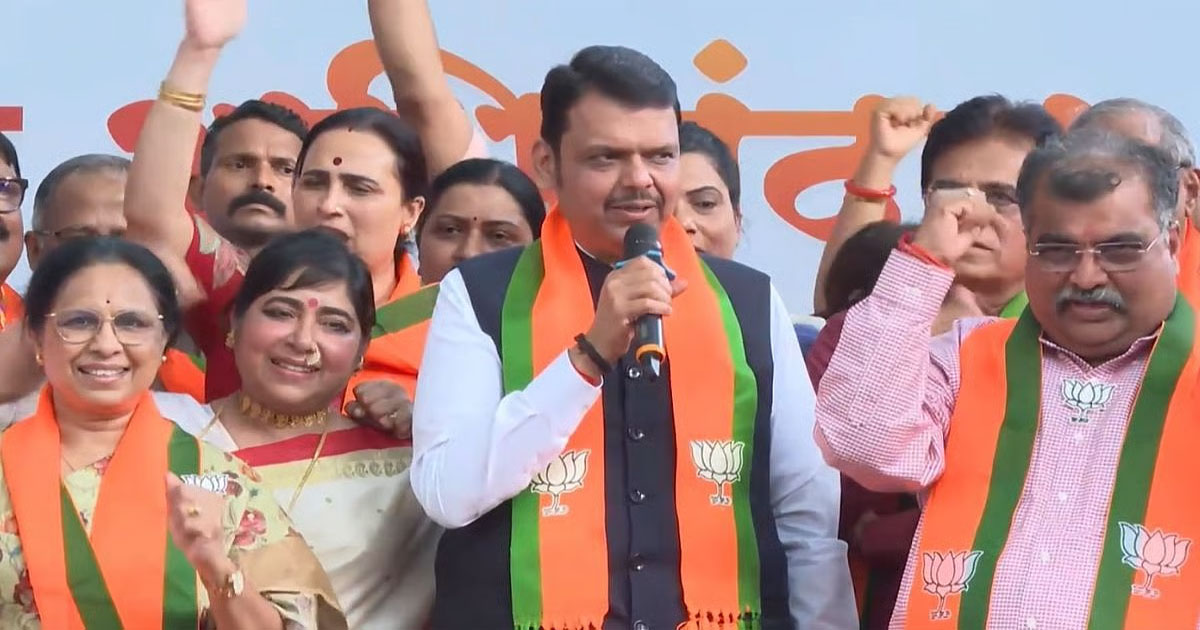
Mumbai, May 4: Maharashtra Chief Minister Devendra Fadnavis on Monday said the BJP’s victory in West Bengal would help save the country from infiltrators and terrorist activities, asserting that people had reposed strong faith in the party and Prime Minister Narendra Modi.
Citing the BJP’s performance in Bengal, Assam, and Puducherry, he said 78 per cent of the country is now ruled by the BJP-led NDA.
The BJP has won six seats and is leading in 196 seats, while the TMC has bagged one as the counting of votes in the West Bengal Assembly polls progressed, indicating a saffron surge in the state.
“The victory in West Bengal will save our country from infiltrators, terrorist activities, and attacks. The way the Mamata Banerjee-led government functioned would ensure infiltrators from Bangladesh and send them across the country. These people would take away our jobs and pose a threat to our security, sovereignty, and unity,” Fadnavis said.
Referring to his campaign during the Bengal polls, Fadnavis said he was told that locals considered the BJP an outsider party, to which he responded that the party was founded by Shyama Prasad Mukherjee and had deep roots.
He claimed the BJP has secured a two-thirds majority in the state, reflecting people’s trust in Modi.
Fadnavis said there was a growing trust factor for the BJP and PM Modi across states such as West Bengal, Puducherry, and Assam, adding that the party would bring West Bengal out of “bad rule”.
He criticised the erstwhile governments of Congress and the Left, calling the last 15 years under Banerjee the “worst of all” tenures.
He said West Bengal, once the country’s financial hub with Kolkata as its economic capital, had declined due to the previous governments.
“Of the total FDI which our country receives, West Bengal could not even attract half a per cent,” Fadnavis said.
The Chief Minister said West Bengal was once highly industrialised, but nearly 7,000 major industries had left, turning it into a “jungle raj”.
He credited PM Modi’s vision and infrastructure push, including roads and metro projects, for convincing voters about real transformation.
Fadnavis hailed Union Home Minister Amit Shah as a master strategist and also lauded BJP president Nitin Nabin for ensuring a major victory.
He said the Bengal victory was dedicated to BJP workers who were attacked or killed after the previous assembly elections, asserting that the party’s “chariot of victory cannot be stopped”.
Drawing a comparison with Assam, Fadnavis said infiltration and terror activities had stopped after the BJP came to power and that the north-eastern state is now contributing significantly to growth.
“Similarly, West Bengal will be seen as a growth partner of the country in the coming days,” he added.
Fadnavis also thanked the Election Commission for conducting peaceful polls, claiming that no lives were lost.

The Ministry of Statistics and Programme Implementation (MoSPI), with the RBI as the knowledge partner, organised a conference here on Monday to familiarise data users with the New Series of Gross Domestic Product (GDP), Consumer Price Index (CPI) and Index of Industrial Production (IIP).
Following the release of revised series of GDP, CPI and IIP at different points during 2026, the conference was organised to acquaint data users with the methodological changes, data sources and key improvements incorporated in each of the revised series.
It also aimed to facilitate a better understanding of these changes and their implications for the resulting estimates.
The conference brought together representatives of the Reserve Bank of India (RBI), SEBI, economists, forecasters, credit rating agencies, experts from financial institutions and the banking sector, academia, research institutions, industry and investor organisations, users of official statistics and senior officials of the Central and State Governments.
Dalip Singh, Director General (Central Statistics), in his welcome address, noted that macroeconomic statistics form the foundation of economic analysis, policy making and informed decision making and that GDP, CPI and IIP together provide a comprehensive measure of economic activity and growth.
He observed that, as the structure of the economy, production processes, consumption patterns and technology continue to evolve, the statistical system must evolve continuously to remain representative of prevailing economic realities.
Saurabh Garg, Secretary, MoSPI, while setting the context, noted that the conference was being held in Mumbai after about a year, this time after the completion of the base revision exercise, with the first-quarter GDP estimates of the new series already released and the second-quarter estimates due shortly.
Looking ahead, he outlined the Ministry’s priorities, including the rebasing of Gross State Domestic Product to 2022-23 and the development of District Domestic Product estimates for more granular decision-making; preparation for the implementation of the System of National Accounts (SNA) 2025, with its focus on well-being and distributional accounts.
Poonam Gupta, Deputy Governor, RBI, in her inaugural address, congratulated MoSPI on completing the base revision of the three series in a timely manner and commended the Ministry’s extensive consultations with users.
She highlighted the key features of the revised series — the use of double deflation and a wider range of administrative data in the national accounts, the alignment of demand- and supply-side GDP estimates through the Supply-Use Table framework, the updated weighting pattern and more precise measurement of core inflation in the CPI and the greater weight assigned to technology- and consumption-oriented sectors in the IIP.
Deepak Parekh, former chairman, HDFC, in his keynote address, described 2026 as a year of modernising India’s statistical architecture, noting that the revisions address concerns earlier raised on the national accounts and welcomed the growing use of high-frequency indicators and new data sources such as night lights and online search trends, while cautioning that technology and AI must be supported by appropriate safeguards and cannot substitute for judgement.
The inaugural session was followed by three technical sessions on the new series of GDP, CPI and IIP, in which officers of MoSPI and the RBI presented the methodological changes, data sources and key improvements.
Maharashtra
Tracking drug addicts in Mumbai now easier: Advanced van deployed at Mahalaxmi concert; action taken against 12 drug users.

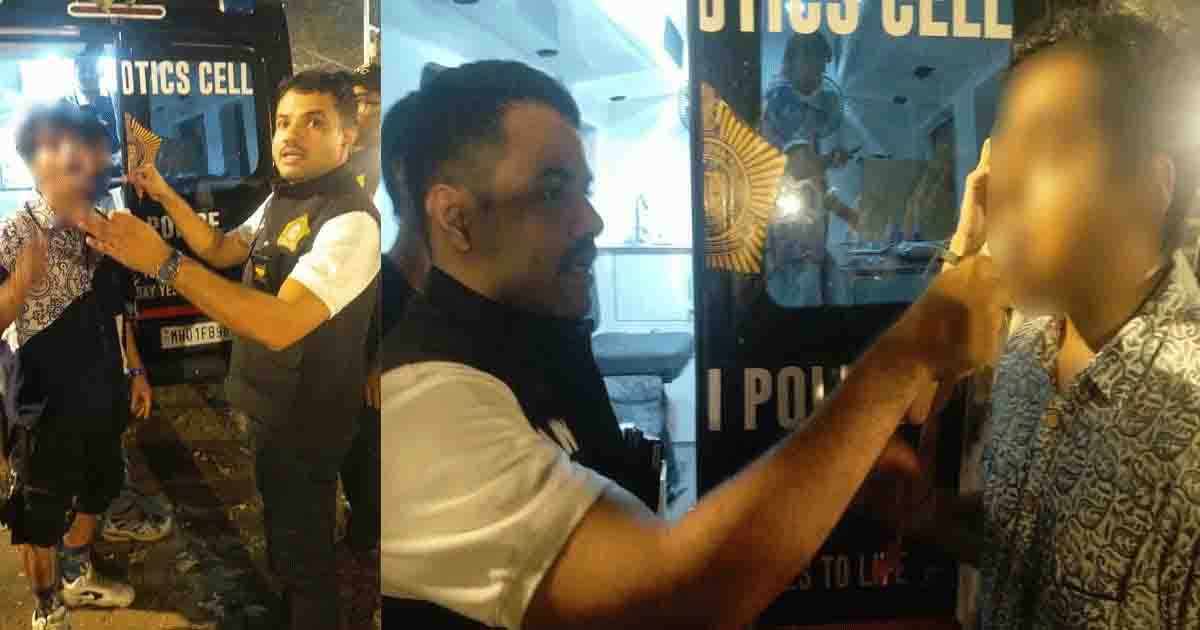
Mumbai: Detecting drug users at concerts, parties, or other events in Mumbai has become significantly easier. The Anti-Narcotics Cell (ANC) has added a state-of-the-art van to its fleet, specifically designed to identify individuals under the influence of drugs. In its very first operation, the van helped detect 12 individuals involved in drug use, leading to subsequent legal action against them. To curb drug consumption and trafficking, the Mumbai Police’s Anti-Narcotics Cell has begun utilizing this specialized “Anti-Narcotics Investigation Van,” which was inaugurated by Chief Minister Devendra Fadnavis. The van is custom-built for tasks such as detecting narcotics, conducting on-site analysis, and collecting samples, while also facilitating technical investigations. Following its induction into the force, the van was deployed on November 22 at the ‘AEDE’ live music concert held at the Mahalaxmi Racecourse. Attendees were screened to determine if they had consumed drugs; a total of 12 individuals were found to be under the influence and faced appropriate action. The van can be parked in various neighborhoods, streamlining investigative procedures.
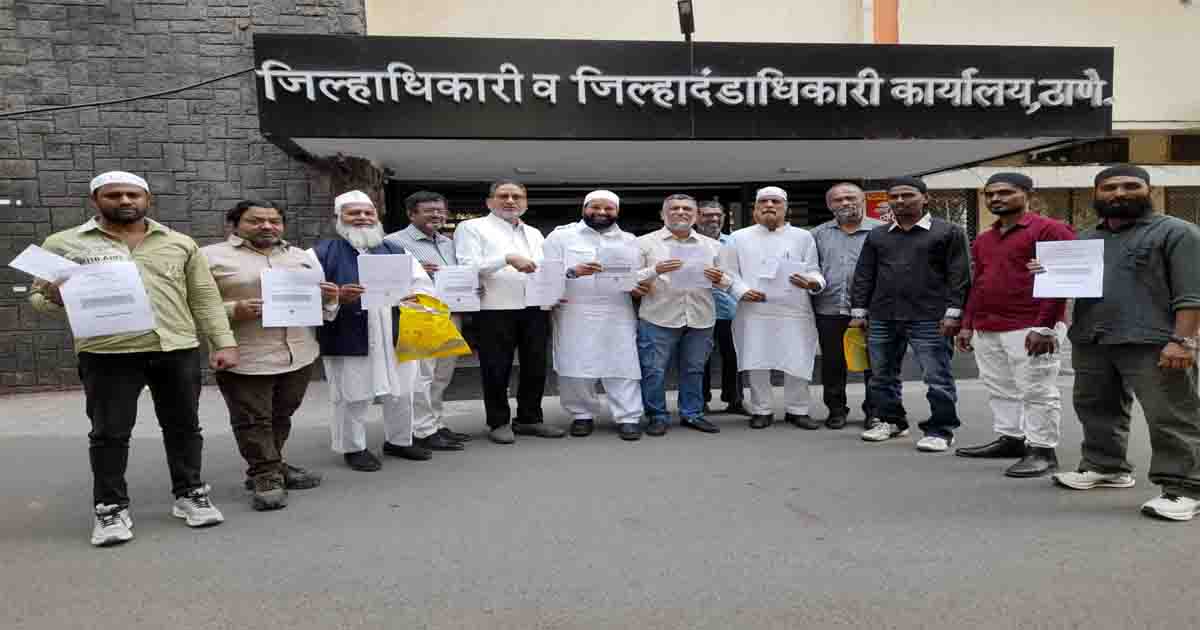
Thane: A public hearing regarding the proposed Uniform Civil Code (UCC) in Maharashtra was held for the residents of Thane district, drawing participants from various walks of life, including representatives from diverse social and community organizations. During the session, objections and opposition were raised against several provisions of the proposed UCC. In particular, the government’s attempt to impose uniformity—specifically concerning live-in relationships, divorce, and inheritance—drew sharp criticism.
A delegation from Bhiwandi, comprising individuals such as Maulana Ehsan Falahi, Mr. Fazil Ansari, and Mr. Abu Bhai, arrived in Thane. Also present were Mr. Anjum Ali Bape (representing the ‘All-Party Federation’ of Thane city), Mr. Syed Hussain (from ‘Wahdat-e-Islami’), and Mr. Sabir Baig (from ‘Jamaat-e-Islami’).
The hearing was organized in a conference room located on the fifth floor of the Collector’s Office. At precisely 11:30 AM, the Resident Deputy Collector, Mr. Sandeep Mane, commenced the proceedings. The first 15 minutes were dedicated to explaining the hearing process and the Standard Operating Procedures (SOPs).
Subsequently, members of the UCC Committee were stationed at Konkan Bhavan, where various delegations presented their suggestions, objections, and concerns via online channels. A delegation consisting of five members from the LGBT community also participated in the hearing. Furthermore, individuals from various communities—hailing from Thane’s Naupada area and other localities—arrived to register their objections regarding the proposed UCC.
The proceedings continued until approximately 1:30 PM. During the proceedings, various representatives and participants expressed strong opposition to several aspects of the proposed Uniform Civil Code (UCC). In particular, the government’s intention to impose uniformity—specifically regarding live-in relationships, divorce, and inheritance—drew sharp criticism.
Muslim representatives stated clearly that the Muslim community has neither demanded such a Uniform Civil Code nor does it have any need for such a new law. They voiced their objections regarding the proposed legislation, viewing it as an interference in the religious and Sharia-based affairs of the Muslim community.
The process of conducting hearings and recording objections concluded at approximately 1:30 PM. This was followed by a group photo session involving all the delegations. Finally, the representatives parted ways, with a mutual commitment to meet again in the future and continue discussions on this matter.

MoSPI briefs data users on new series of GDP, CPI and IIP

Security in Hormuz can be restored if US fulfils commitment: Iran

Tracking drug addicts in Mumbai now easier: Advanced van deployed at Mahalaxmi concert; action taken against 12 drug users.

Public hearing on proposed UCC in Thane; Muslim delegations strongly protest.

Mumbai self-styled police arrested for duping foreign nationals

Congress trying to protect 3 crore Bangladeshi infiltrators in voter list: HM Shah

Red Fort car blast probe exposes blueprint for spread of terror modules across India

Trump flags Iran targets as talks continue

‘Conspiracy, not accident’: NCP on Ajit Pawar death

BJP, Shiv Sena slam Mallikarjun Kharge for terming Diwali ‘Khushiyon ka Eid’
-

 Crime4 years ago
Class 10 student jumps to death in Jaipur
-

 Maharashtra2 years ago
Mumbai Local Train Update: Central Railway’s New Timetable Comes Into Effect; Check Full List Of Revised Timings & Stations
-

 Maharashtra2 years ago
Mumbai To Go Toll-Free Tonight! Maharashtra Govt Announces Complete Toll Waiver For Light Motor Vehicles At All 5 Entry Points Of City
-

 Maharashtra2 years ago
False photo of Imtiaz Jaleel’s rally, exposing the fooling conspiracy
-

 National News2 years ago
Ministry of Railways rolls out Special Drive 4.0 with focus on digitisation, cleanliness, inclusiveness and grievance redressal
-

 Maharashtra2 years ago
Maharashtra Elections 2024: Mumbai Metro & BEST Services Extended Till Midnight On Voting Day
-

 National News2 years ago
J&K: 4 Jawans Killed, 28 Injured After Bus Carrying BSF Personnel For Poll Duty Falls Into Gorge In Budgam; Terrifying Visuals Surface
-

 Crime2 years ago
Baba Siddique Murder: Mumbai Police Unable To Get Lawrence Bishnoi Custody Due To Home Ministry Order, Says Report