
General
Cervical cancer 4th most common among women, policymakers should urgently move to eliminate: WHO


The World Health Organization and its member states in the South-East Asia Region and across the world marked the second Cervical Cancer Elimination Day of Action on Thursday.
The cervical cancer is the fourth most common cancer among women with an estimated 604,000 new cases and 342,000 deaths in 2020, of which the South East Region accounted for 32 per cent and 34 per cent, respectively, said Dr Poonam Khetrapal Singh, WHO Regional Director for South-East Asia.
“Vaccination of girls against human papillomavirus (HPV), screening and treatment of pre-cancer lesions, and improved access to diagnosis and treatment of invasive cancers are critical, cost-effective measures that policy makers should urgently apply to eliminate cervical cancer as a public health problem,” WHO Regional Director for South-East Asia said on the occasion.
Dr Singh said that the countries of the region continue to make steady and sustained progress against cervical cancer, in line with the Region’s Flagship Priority on preventing and controlling non-communicable diseases, as well as the 2021 Regional Implementation Framework on eliminating cervical cancer as a public health problem.
“Five Member States – Bhutan, Maldives, Myanmar, Sri Lanka and Thailand – have introduced nation-wide HPV vaccination, which Bangladesh, India and Timor-Leste will soon also introduce. HPV vaccination has been introduced in several provinces of Indonesia, protecting tens of millions of girls,” Dr Singh said.
The gaps and challenges nevertheless persist, which if unaddressed, will prevent the Region from achieving the global 90-70-90 targets: that is, by 2030, ensure that 90 per cent of girls are fully vaccinated with HPV vaccine; that 70 per cent of women are screened using a high-performance test by 35 years of age, and again by 45 years of age; that 90 per cent of women identified with cervical disease or pre-cancer are treated; and that 90 per cent of women with invasive cancer are effectively managed, said South East Director.
Dr Singh said that WHO has called for action in several key areas to achieve the elimination target of four or less cases per 100,000 women.


Maharashtra
Tracking drug addicts in Mumbai now easier: Advanced van deployed at Mahalaxmi concert; action taken against 12 drug users.

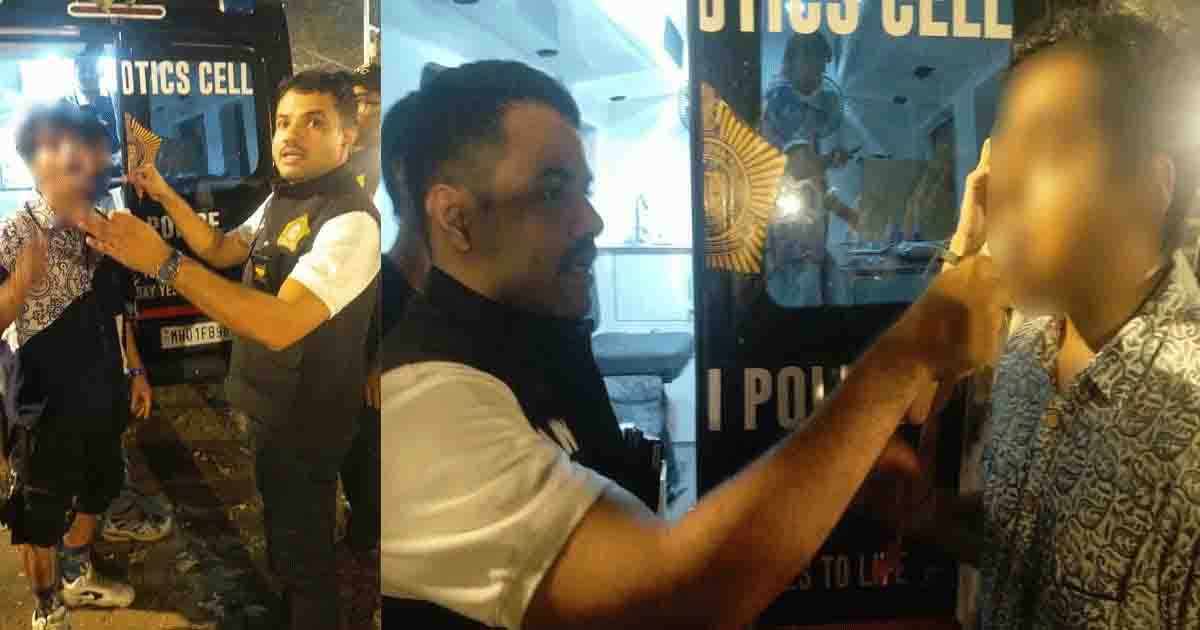
Mumbai: Detecting drug users at concerts, parties, or other events in Mumbai has become significantly easier. The Anti-Narcotics Cell (ANC) has added a state-of-the-art van to its fleet, specifically designed to identify individuals under the influence of drugs. In its very first operation, the van helped detect 12 individuals involved in drug use, leading to subsequent legal action against them. To curb drug consumption and trafficking, the Mumbai Police’s Anti-Narcotics Cell has begun utilizing this specialized “Anti-Narcotics Investigation Van,” which was inaugurated by Chief Minister Devendra Fadnavis. The van is custom-built for tasks such as detecting narcotics, conducting on-site analysis, and collecting samples, while also facilitating technical investigations. Following its induction into the force, the van was deployed on November 22 at the ‘AEDE’ live music concert held at the Mahalaxmi Racecourse. Attendees were screened to determine if they had consumed drugs; a total of 12 individuals were found to be under the influence and faced appropriate action. The van can be parked in various neighborhoods, streamlining investigative procedures.
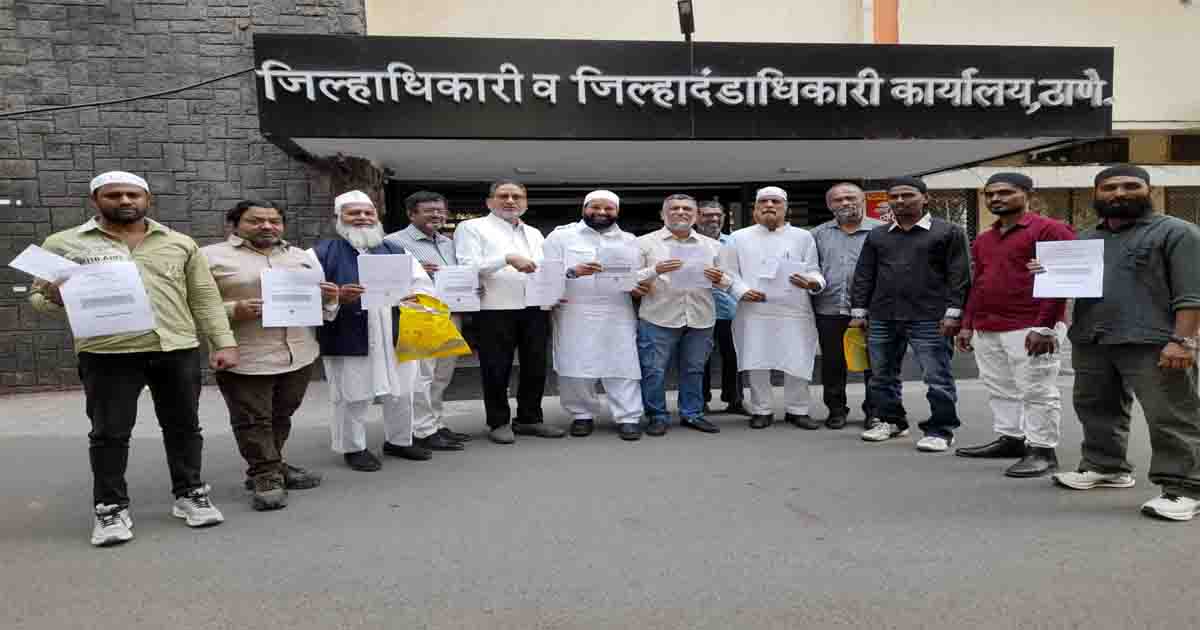
Thane: A public hearing regarding the proposed Uniform Civil Code (UCC) in Maharashtra was held for the residents of Thane district, drawing participants from various walks of life, including representatives from diverse social and community organizations. During the session, objections and opposition were raised against several provisions of the proposed UCC. In particular, the government’s attempt to impose uniformity—specifically concerning live-in relationships, divorce, and inheritance—drew sharp criticism.
A delegation from Bhiwandi, comprising individuals such as Maulana Ehsan Falahi, Mr. Fazil Ansari, and Mr. Abu Bhai, arrived in Thane. Also present were Mr. Anjum Ali Bape (representing the ‘All-Party Federation’ of Thane city), Mr. Syed Hussain (from ‘Wahdat-e-Islami’), and Mr. Sabir Baig (from ‘Jamaat-e-Islami’).
The hearing was organized in a conference room located on the fifth floor of the Collector’s Office. At precisely 11:30 AM, the Resident Deputy Collector, Mr. Sandeep Mane, commenced the proceedings. The first 15 minutes were dedicated to explaining the hearing process and the Standard Operating Procedures (SOPs).
Subsequently, members of the UCC Committee were stationed at Konkan Bhavan, where various delegations presented their suggestions, objections, and concerns via online channels. A delegation consisting of five members from the LGBT community also participated in the hearing. Furthermore, individuals from various communities—hailing from Thane’s Naupada area and other localities—arrived to register their objections regarding the proposed UCC.
The proceedings continued until approximately 1:30 PM. During the proceedings, various representatives and participants expressed strong opposition to several aspects of the proposed Uniform Civil Code (UCC). In particular, the government’s intention to impose uniformity—specifically regarding live-in relationships, divorce, and inheritance—drew sharp criticism.
Muslim representatives stated clearly that the Muslim community has neither demanded such a Uniform Civil Code nor does it have any need for such a new law. They voiced their objections regarding the proposed legislation, viewing it as an interference in the religious and Sharia-based affairs of the Muslim community.
The process of conducting hearings and recording objections concluded at approximately 1:30 PM. This was followed by a group photo session involving all the delegations. Finally, the representatives parted ways, with a mutual commitment to meet again in the future and continue discussions on this matter.
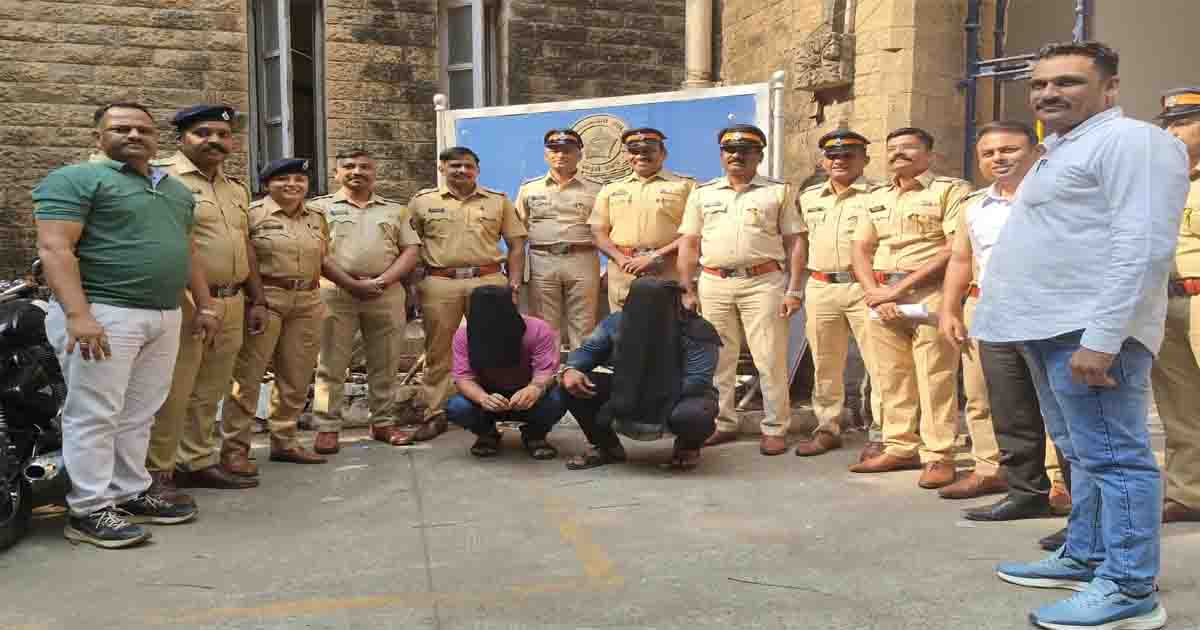
The Mumbai Azad Maidan Police claim to have arrested a group of impostors who posed as police officers to rob foreign nationals. A case has been registered at the Azad Maidan Police Station under Sections 309(4), 299, 290(5), 243, and 3(5) of the Bharatiya Nyaya Sanhita (BNS).
According to the details, on the night of November 20, a foreign national named Darshila—residing in Malawi, Africa—was traveling toward Colaba in a taxi with a foreign friend upon her arrival in Mumbai. During the journey, the taxi was intercepted by individuals on a motorcycle who claimed to be police officers. Near Metro Cinema, they stopped the vehicle, posed as police, intimidated the occupants, robbed them of cash and other belongings, forcibly snatched their bags, and fled the scene. A case was subsequently registered by the police. Under the guidance of the Additional Commissioner of Police and DCP Manish Kalwaniya, a specialized team was formed to investigate the incident.
An investigation was launched to track down the unidentified suspects. Based on evidence gathered and technical analysis, the team conducted searches in Chembur, Wadala, Thane, and Ahilya Nagar. Within 48 hours, they successfully uncovered the gang responsible for the robbery and recovered the stolen property and cash.
The Azad Maidan Police took the suspects into custody and recovered 100% of the stolen items.
This operation was carried out under the supervision of Additional Commissioner Shailesh Balkawade, DCP Manish Kalwaniya, and the Azad Maidan Police team.

Bhuvan Bam recalls Shah Rukh Khan giving him a head massage, Madhuri Dixit calls him a ‘generous actor’

‘Ma’s journey has been full of love and tragedy’: LoP Rahul Gandhi shares video featuring mother Sonia, sister Priyanka

Earthquake tremors felt across Bihar, no damage reported

Five killed, three injured as Scorpio collides with coal-laden truck in Lakhisarai

Hema Malini gets emotional remembering Dharmendra on his first death anniversary: ‘Life seems so empty without him’

Congress trying to protect 3 crore Bangladeshi infiltrators in voter list: HM Shah

Red Fort car blast probe exposes blueprint for spread of terror modules across India

Trump flags Iran targets as talks continue

‘Conspiracy, not accident’: NCP on Ajit Pawar death

BJP, Shiv Sena slam Mallikarjun Kharge for terming Diwali ‘Khushiyon ka Eid’
-

 Crime4 years ago
Class 10 student jumps to death in Jaipur
-

 Maharashtra2 years ago
Mumbai Local Train Update: Central Railway’s New Timetable Comes Into Effect; Check Full List Of Revised Timings & Stations
-

 Maharashtra2 years ago
Mumbai To Go Toll-Free Tonight! Maharashtra Govt Announces Complete Toll Waiver For Light Motor Vehicles At All 5 Entry Points Of City
-

 Maharashtra2 years ago
False photo of Imtiaz Jaleel’s rally, exposing the fooling conspiracy
-

 National News2 years ago
Ministry of Railways rolls out Special Drive 4.0 with focus on digitisation, cleanliness, inclusiveness and grievance redressal
-

 Maharashtra2 years ago
Maharashtra Elections 2024: Mumbai Metro & BEST Services Extended Till Midnight On Voting Day
-

 National News2 years ago
J&K: 4 Jawans Killed, 28 Injured After Bus Carrying BSF Personnel For Poll Duty Falls Into Gorge In Budgam; Terrifying Visuals Surface
-

 Crime2 years ago
Baba Siddique Murder: Mumbai Police Unable To Get Lawrence Bishnoi Custody Due To Home Ministry Order, Says Report