
Politics
Bypoll to 1 Rajya Sabha seat in Odisha on June 13

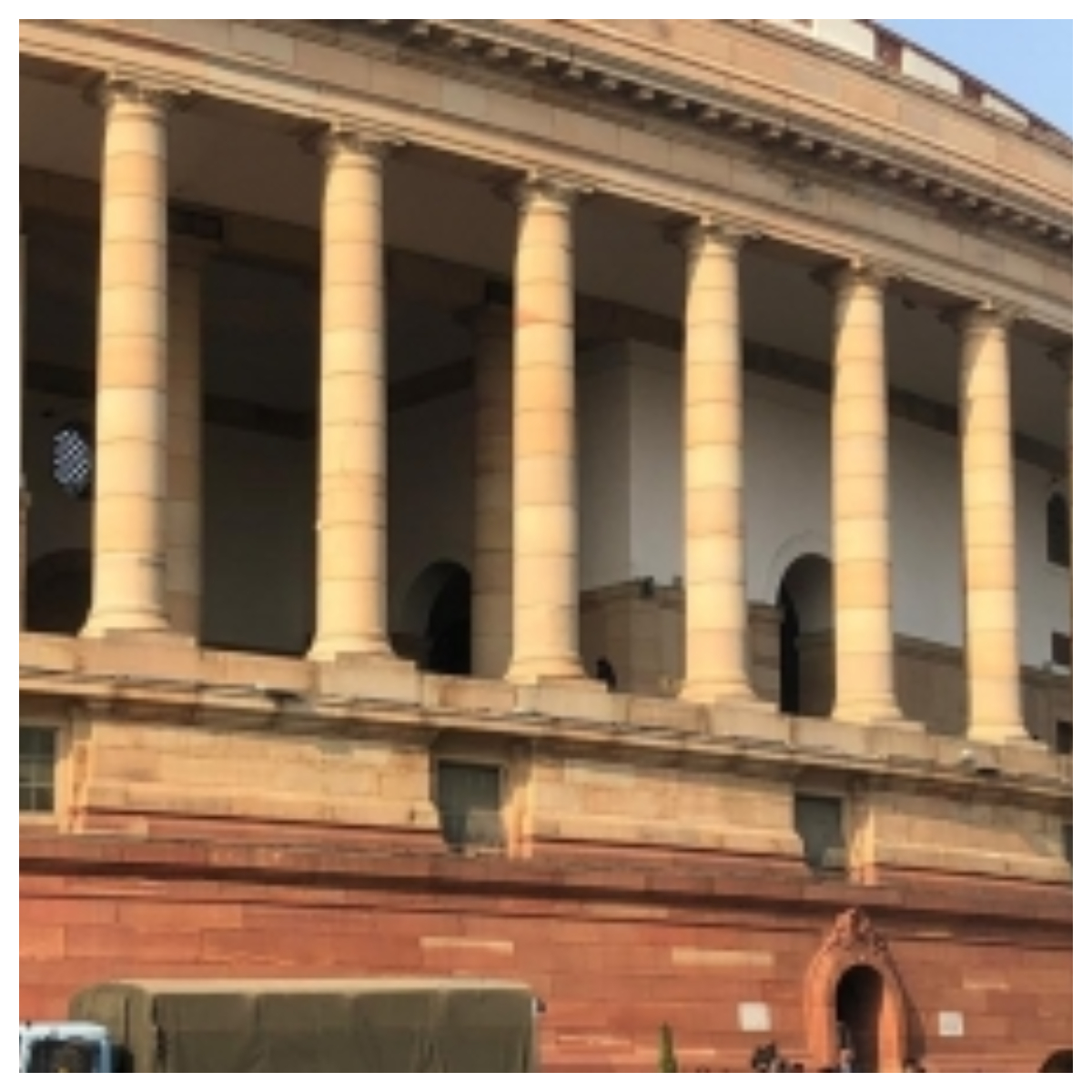
Bypoll to one Rajya Sabha seat in Odisha will be held on June 13, the Election Commission announced on Friday.
The seat fell vacant following the resignation of BJD MP Subhas Chandra Singh in April. The poll is being held for the rest of the period that is from April 24, 2022 to April 24, 2026.
According to the Commission, while the notification for this poll will be issued on May 26, last date of making nomination is June 2, scrutiny of nominations on June 3, last date withdrawal of candidature is June 6 and the poll will be held on June 13 between 9 a.m to 4 p.m.
Counting of the votes will be carried out the same evening from 5 p.m. onwards.
The poll panel also said that broad guidelines of Covid-19 issued by ECI has to be followed, wherever applicable, during the entire election process by all persons.
Odisha Chief Secretary has been directed to depute a senior officer from the state to ensure that the extent instructions regarding Covid-19 containment measures are complied with while making arrangements for conducting the said by-election.
On May 12, the EC has also announced the schedule of biennial polls for 57 seats from the 15 states and the counting of the votes will take place on June 10.
Among the 57 Rajya Sabha seats, the biennial poll will be held for three seats from Odisha.


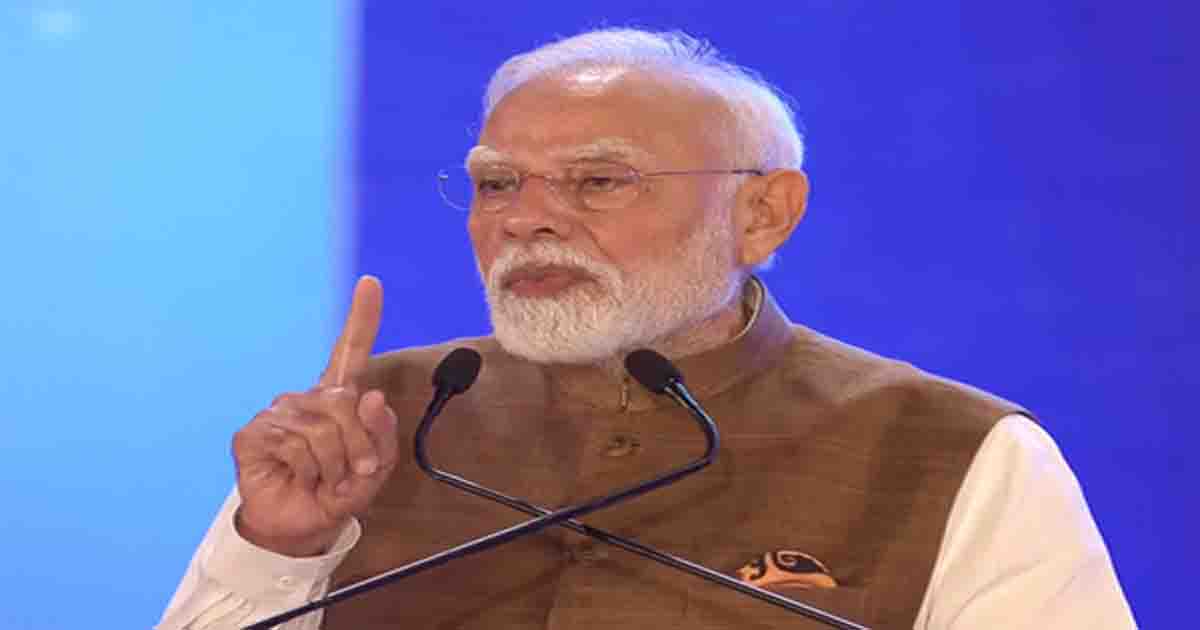
Prime Minister Narendra Modi on Tuesday said that the true success of science is achieved when innovations move beyond laboratories and create a tangible impact in people’s lives, asserting that India views science and technology as tools for serving humanity rather than instruments of power or conflict.
Addressing the Emerging Science, Technology and Innovation Conclave (ESTIC) 2026 in the national capital, the Prime Minister said that while the requirements of various technology-driven sectors differ, they all reflect a common message that India is rapidly building its technological strength and self-reliance.
“There has been a persistent challenge in how science and technology are viewed, often seen merely as tools of power or conflict. However, India firmly believes that science and technology are instruments for serving humanity,” PM Modi noted.
“The true success of science is realised when it moves from the lab to the land, directly improving the lives of ordinary citizens,” the Prime Minister stated.
Emphasising the societal role of innovation, PM Modi said science and technology should be judged not merely by their sophistication but by their ability to solve real-world problems and improve people’s lives.
The Prime Minister noted that science and technology have often been viewed globally through the lens of power and conflict, but India believes they should be harnessed for the welfare of humanity.
“The success of a technology is not determined solely by how advanced it is. Its true strength lies in how effectively it solves major problems and how many people’s lives it transforms,” PM Modi noted.
Highlighting India’s long scientific tradition, the Prime Minister said the country’s culture has been rooted in knowledge and discovery, citing contributions ranging from the discovery of zero and the development of the number system to advances in astronomy.
“India is moving forward by evaluating itself against this very benchmark. We all know that a country’s technology and its ability to create technology depend on its research. Research is the force that enables a country to find solutions to its problems and become self-reliant in critical technologies,” PM Modi mentioned.

Just days after a Class 12 student died after allegedly immolating herself in East Delhi, another student died by suspected suicide at her residence in Delhi’s Bharat Nagar area, police said on Tuesday.
The body of the Class 12 student was found at her home with a scarf tied around her neck, under the Bharat Nagar police station area. According to the investigators, a preliminary probe suggests it is a case of suicide.
The Bharat Nagar police have taken custody of the body and initiated an investigation into the matter.
Police said that some chat messages have surfaced during the initial probe, indicating that the girl had been under distress.
However, the case is being investigated from all possible angles.
The incident comes days after a Class 12 student died after allegedly pouring an inflammable substance on herself and setting herself on fire at Sarvodaya Bal/Balika Vidyalaya in East Delhi’s Krishna Nagar area.
The recovery of the student’s charred body at Sarvodaya Bal/Balika Vidyalaya triggered panic among teachers and students on the school premises, prompting the authorities to initiate an investigation into the circumstances surrounding the student’s death.
Officials said certain suspicious items were reportedly found in the student’s school bag. However, the nature of these items had not been officially confirmed at the time of filing the report.
According to officials, a Police Control Room (PCR) call reporting a fire incident was received from the school located in the Krishna Nagar area of Delhi’s Shahdara district.
“Upon receipt of the information, police staff from PS Krishna Nagar promptly reached the spot, where an approximately 18-year-old female student of Class 12th was found in a burnt condition behind the school guard room,” officials said.
They further stated that some materials were recovered during the initial proceedings at the scene and from the deceased student’s school bag. These items are being examined as part of the investigation.
The police said a Crime Team of the Delhi Police was called to the school to inspect the scene, examine the circumstances and collect relevant evidence that could help establish the sequence of events leading to the incident.
“The circumstances leading to the incident are being examined, and further enquiry is in progress,” the police said.
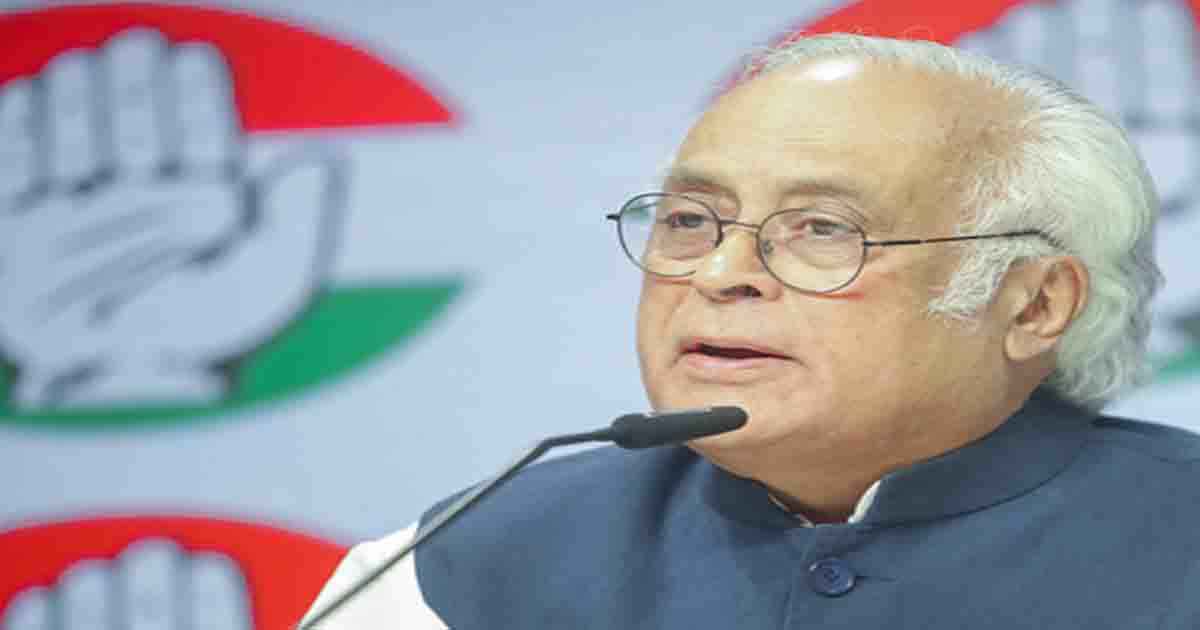
Congress leader Jairam Ramesh on Tuesday sharply criticised the Election Commission of India’s affidavit filed in the Supreme Court, calling it deceptive, deceitful and duplicitous, and said it had severely damaged the poll body’s own credibility.
In a detailed statement, Ramesh alleged that the ECI had engaged in patent deception over the amendment of Form 6.
He said the Commission first claimed that a new declaration attached to Form 6 had been upheld by the Supreme Court, a claim the Court later contradicted.
The ECI subsequently maintained that the declaration was separate and that Form 6 itself had not been amended. Ramesh rejected this explanation, noting that Form 6 could not be submitted online without filling the mandatory declaration.
He also pointed to shifting stands; on 26 September 2026, the Commission described the declaration as attached to Form 6, but later asserted it was not part of the form.
According to him, this amounted to a clear violation of the Registration of Electors Rules, 1960. Ramesh further accused the Commission of unilateral decision-making by the Chief Election Commissioner.
While the affidavit claimed that major Special Intensive Revision (SIR) orders had been formally approved by all three Election Commissioners, the two other Commissioners had objected on record to what they described as grave violations and illegal actions ordered by the CEC. Their objections were disregarded, and in some cases they learnt of the decisions only through news reports, he said.
The Congress leader also highlighted the use of the ECINET system to centralise control over electoral rolls and override Electoral Registration Officers, who are the statutory authorities.
He said the two Commissioners had placed their concerns on record, and evidence of EROs being overruled had emerged from several SIR states including Goa, West Bengal, Uttar Pradesh and Uttarakhand.
Ramesh criticised the IT division of the Commission, alleging that it operated opaquely, overstepped its mandate and took unauthorised actions.
The two Commissioners had written to the Cabinet Secretary about these issues and about ECINET, yet no corrective action had been taken despite subsequent revelations.
He described the SIR exercise itself as a disaster marked by numerous illegalities, including the widespread misuse of Form 7 for mass deletions across states.
Ramesh noted that the ECI’s affidavit did not deny the veracity of media reports on these matters, which he said further confirmed gross malpractice and legal violations by the CEC.
Quoting the proverb “Oh what a tangled web we weave, when first we practice to deceive,” Ramesh concluded that prolonged deception eventually surfaces in a crooked style.

True success of science lies in taking innovation from lab to land: PM Modi

Another Class 12 student found dead in Delhi; suicide suspected

ECI’s affidavit on SIR deceptive: Jairam Ramesh

Maha CM defends pumped storage project in Karjat amid environmental backlash

Waqf Property Report Pending for Three Years: Rais Shaikh Accuses NCP of Ignoring Muslim Community’s Issues

Rahul, Cong ecosystem want to force regime change: BJP after Neha Bora praises B’desh Gen-Z protest

Attack on democratic rights: INDIA Bloc leaders on detentions of anti-ECI protestors

BJP pays tribute to ex-President Abdul Kalam, recalls his enduring influence on generations of India’s youth

INDIA bloc begins protest march against ECI

Maha Congress stages agitation against Gyanesh Kumar
-

 Crime4 years ago
Class 10 student jumps to death in Jaipur
-

 Maharashtra2 years ago
Mumbai Local Train Update: Central Railway’s New Timetable Comes Into Effect; Check Full List Of Revised Timings & Stations
-

 Maharashtra2 years ago
Mumbai To Go Toll-Free Tonight! Maharashtra Govt Announces Complete Toll Waiver For Light Motor Vehicles At All 5 Entry Points Of City
-

 Maharashtra2 years ago
False photo of Imtiaz Jaleel’s rally, exposing the fooling conspiracy
-

 National News2 years ago
Ministry of Railways rolls out Special Drive 4.0 with focus on digitisation, cleanliness, inclusiveness and grievance redressal
-

 Maharashtra2 years ago
Maharashtra Elections 2024: Mumbai Metro & BEST Services Extended Till Midnight On Voting Day
-

 National News2 years ago
J&K: 4 Jawans Killed, 28 Injured After Bus Carrying BSF Personnel For Poll Duty Falls Into Gorge In Budgam; Terrifying Visuals Surface
-

 Crime2 years ago
Baba Siddique Murder: Mumbai Police Unable To Get Lawrence Bishnoi Custody Due To Home Ministry Order, Says Report