
National News
Assam Floods: Death Toll Rises To 106, Situation Remains Grim; Visuals Surface

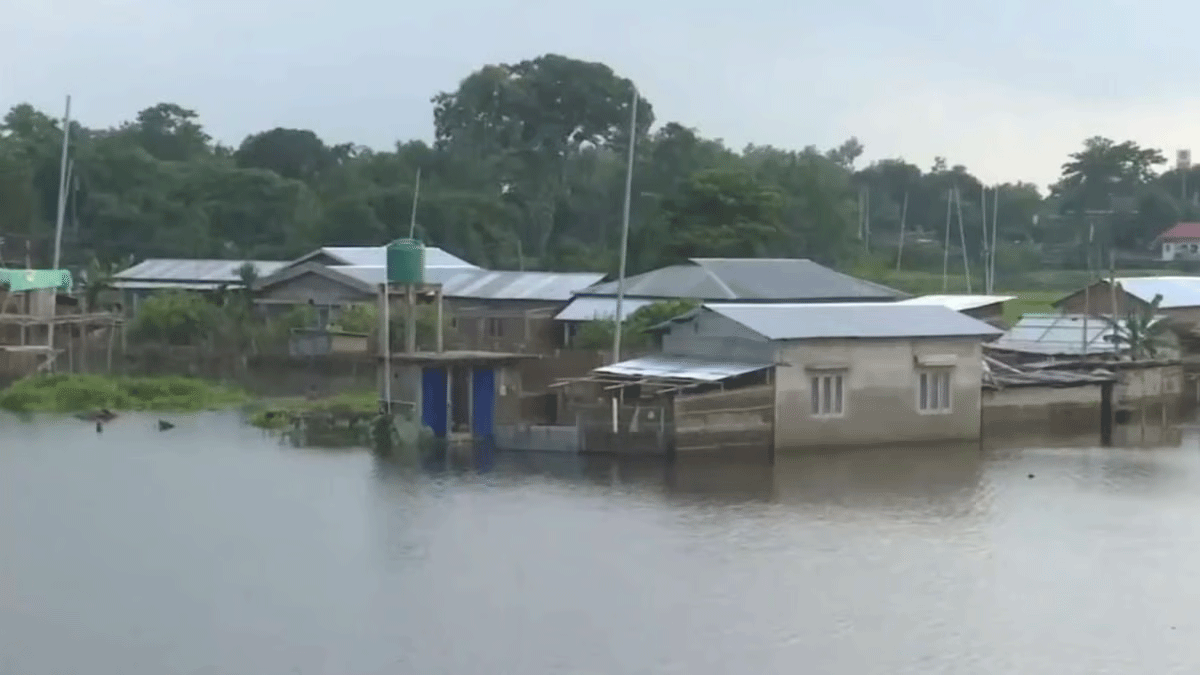
Guwahati: The flood situation in Assam remained grim on Saturday even though the water levels have started receding in many parts of the state, officials said.
The India Meteorological Department’s Regional Meteorological Centre (RMC) in Guwahati has said that moderate rainfall is very likely to occur at most places of Assam with isolated heavy to very heavy rain likely over Kokrajhar district.
“Low to moderate flash flood risk is likely over few watersheds and neighbourhoods of Arunachal Pradesh and southern parts of Assam and Meghalaya,” it added.
Details Revealed By A Report By The Assam State Disaster Management Authority
Meanwhile, a report by the Assam State Disaster Management Authority (ASDMA) on Friday night said that seven more people lost their lives and over 12.33 lakh people are reeling under the deluge across 23 districts.
The total number of people losing their lives in this year’s flood, landslide, storm and lightning has increased to 106. Dhubri is the worst hit with over 3.18 lakh people affected, followed by Cachar with almost 1.5 lakh people and Golaghat with more than 95,000 people reeling under flood waters, it added.
“Flood water is receding in many parts of the state. As the rain has stopped in most areas, the condition is likely to improve further,” a senior official of ASDMA said.
The administration has been operating 316 relief camps and relief distribution centres in 18 districts, taking care of 2,95,651 displaced people at present.
The state government has distributed 3,621.01 quintals of rice, 666.3 quintals of dal, 6,266.61 quintals of salt and 11,446.82 litres of mustard oil among the flood victims of the state during the last 24 hours.
Impact Of Floods On The State
At present, 2,406 villages are under water and 32,924.32 hectares of crop areas have been damaged across Assam, the ASDMA said.
Embankments, roads, bridges and other infrastructure have been damaged by flood waters in many districts across the state.
At present, the mighty Brahmaputra is flowing above the danger mark at Nimatighat, Tezpur and Dhubri. Its tributaries Burhidihing at Chenimari and Disang at Nanglamuraghat are flowing above the danger level. The Barak river’s tributary Kushiyara is also flowing above the danger mark at Karimganj town, ASDMA said.
On account of widespread flooding, over 6,67,175 domestic animals and poultry are affected across the state.

New Delhi, March 19: India’s thermal power plants have adequate coal stocks of around 53.41 million tonnes which are adequate for nearly 23 days at the present rate of consumption, and further stocks are also being built up at the pitheads of coal mining companies as a proactive measure to meet any exigency amid the disruption in oil and gas supplies due to the Iran war, the Ministry of Coal said on Thursday.
The pithead coal stock at the mines of Coal India Limited (CIL), which was 106.78 million tonnes (MT) as on April 1, 2025, has grown to about 125.54 MT as on March, 18, 2026. Further, there is around 5.75 MT of coal at the mines of Singareni Collieries Company Limited (SCCL) and another 15.75 MT coal at the mines of captive/commercial mines and about 12 MT in transit and about 5.49 MT in ports and good-shed sidings, according to a statement issued by the ministry.
Coal is continuing to ensure reliable baseload power to support core industries such as steel and cement that underpin the economic growth of the country. The coal production in the country continues at a pace matching the prevailing demands of the consumer and building adequate stocks at the mine-end for maintaining adequate supplies to the consumers as per their requirements, with the continued support of Railways, the statement said.
Coal India Limited is taking adequate measures to ensure the supply of coal to all consumers, including small, medium, and other consumers. As a proactive step, CIL has planned 29 e-auctions in the month of March, offering about 23.56 MT of coal. Out of these 29 auctions, 5 auctions have already been conducted since March 12, wherein 73.1 lakh ton of coal was offered, and 31.96 lakh ton of coal has been booked, indicating adequacy of coal offered in the e-auctions, the statement said.
In addition to this, CIL has also taken necessary action to ensure coal availability to the small, medium and other consumers through the State Nominated Agencies (SNAs) route and requested the state governments to provide the additional coal requirement, which can be met in full to avoid any energy shortages. The coal offtake of the states through the SNAs is being constantly monitored by CIL to ensure that uninterrupted supplies are ensured, the statement said.
The Ministry of Coal is ensuring a performance-driven ecosystem through sustained policy facilitation, robust monitoring mechanisms, and proactive stakeholder engagement. These concerted efforts are aimed at providing reliable coal availability, enabling uninterrupted operations across critical sectors, and effectively meeting the nation’s growing energy demands, the statement added.
National News
Massive Fire Breaks Out In Bhiwandi, Furniture Shops Destroyed; Firefighters Rush To Contain Blaze

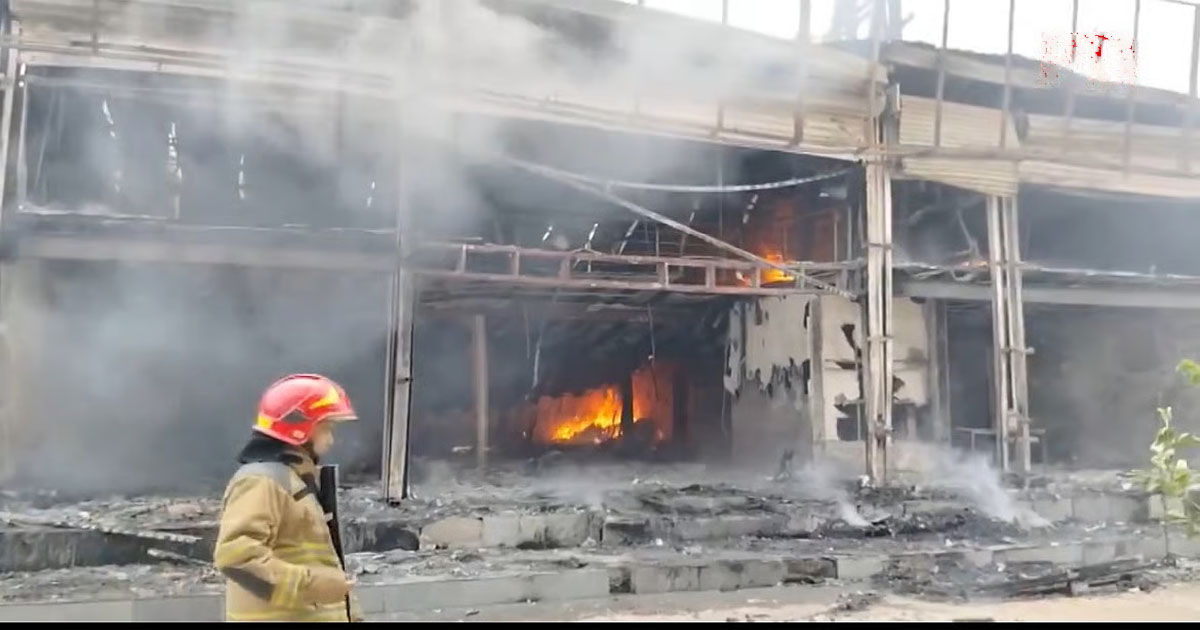
A massive fire broke out at a furniture market in Bhiwandi, Maharashtra, on Thursday morning, gutting several shops and triggering panic in the area. The blaze was reported from a warehouse located inside the Chamunda Complex near Kasheli Bridge, a busy commercial stretch known for furniture storage and trade.
According to information shared by Media on X, flames quickly spread across the premises, fuelled by highly flammable materials stored inside the warehouse.
Officials from the Regional Disaster Management Cell said the fire was reported at approximately 11:30 am. Thick plumes of smoke were seen rising from the site, drawing the attention of nearby residents and traders.
The warehouse, primarily used for storing furniture, bore the brunt of the damage. Several adjoining units were also affected as the fire intensified before emergency teams could fully contain it.
Firefighting operations were launched immediately after the incident was reported. Personnel from the local fire department reached the spot with two fire engines, while the Thane Fire Department deployed a jumbo water tanker to assist in dousing the flames.
Officials confirmed that teams are actively working to bring the situation under control. Efforts are ongoing to prevent the fire from spreading further within the complex.
Authorities have stated that, as of now, no injuries or casualties have been reported. However, significant damage to property is feared, given the scale of the blaze and the nature of goods stored in the affected units.
The Bhiwandi Fire Control Centre continues to monitor the situation closely, with multiple teams engaged in containment efforts.
The exact cause of the fire remains unknown at this stage. Officials have said that further details will emerge once the situation is fully under control and a preliminary assessment is carried out.
Meanwhile, local authorities have urged residents to avoid the area to ensure smooth emergency operations.
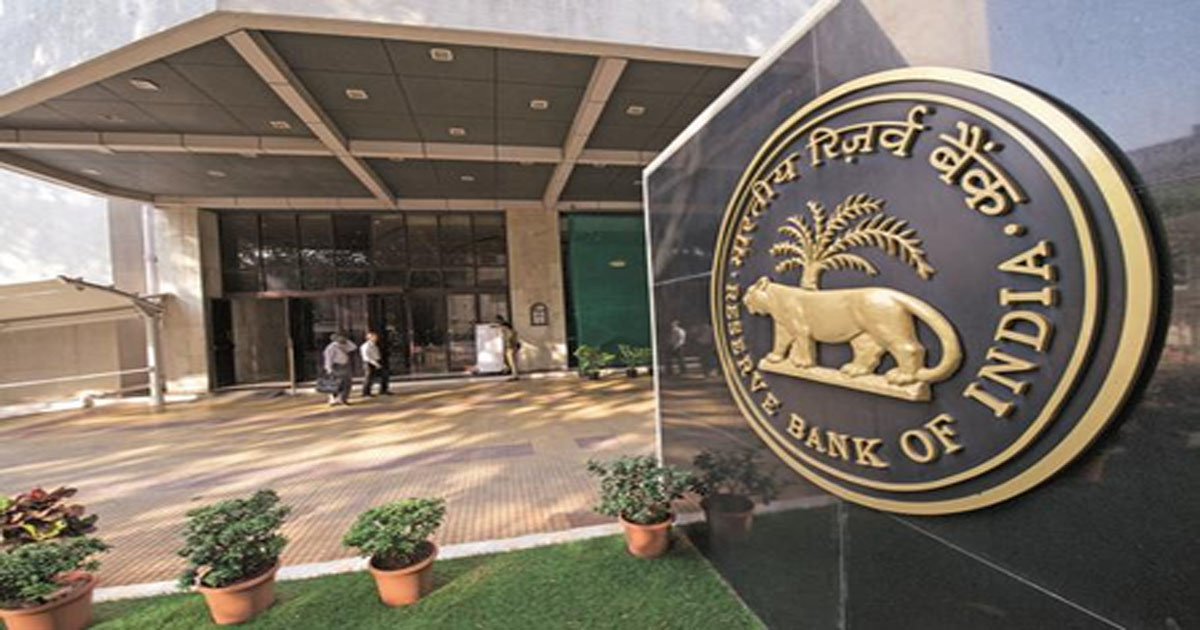
New Delhi, March 19: The Reserve Bank of India (RBI) on Thursday said that HDFC Bank is a Domestic Systemically Important Bank (D-SIB) with sound financials, professionally run board and competent management team, after the resignation of part-time chairman Atanu Chakraborty over alleged “ethical differences” in one of the biggest private lenders.
The Central Bank said in a statement that it has taken note of the recent developments in HDFC Bank.
“A transition arrangement as requested by the Bank has been approved by Reserve Bank as regards the position of Part Time Chairman of the Bank,” said the RBI.
It added that basis its periodical assessment, “there are no material concerns on record as regards its conduct or governance”.
“The bank remains well-capitalised and the financial position of the bank remains satisfactory with sufficient liquidity. Reserve Bank will continue to engage with the Board and management on the way forward,” said the Central Bank in a statement.
Chakraborty had resigned citing differences with the lender over “values and ethics”.
The RBI approved the appointment of long-time group insider Keki Mistry as an interim part-time chairman for three months, effective March 19, the bank said in its exchange filing.
Mistry sought to reassure investors and analysts that there are “no major issues” at the bank following the sudden resignation of Chakraborty, even as the bank shares came under pressure.
Speaking on a conference call, Mistry said he would not have accepted the interim role if it did not align with his values and principles. “I would not have taken this responsibility at the age of 71 if it is not aligning to my values and principles,” Mistry said.
There was no power struggle in the bank as you put it, he said, adding that “there was nothing substantive”.
He further stated that the fact that RBI are comfortable with what is going on in the bank is reflected in the fact that, “within a short period of time, they approved my appointment for three months”.

All rhetoric, no action: Saudi Arabia realises Pakistan not dependable security partner

Mumbai Accident: Elderly Woman Hit By Garbage Truck Near Shitladevi Metro Station In Mahim; Suffers Heavy Blood Loss

India’s power plants well stocked with coal as PSUs step up production

India’s Rs 5 trillion gold hoard fuels boom in fast-growing gold loan market, draws global investors

Mumbai Local: 395 Without Tickets Fined At Ghatkopar During Evening Peak Hours, Central Railways Collects Over ₹1 Lakh Fine

Married Mumbai Woman Mocked In Andheri Society Over ‘Lift Kissing’ CCTV Video, Files Police Complaint

Mumbai: JBCN International School In Borivali Gets Bomb Threat, Search Reveals Hoax, Students Safe

Former Arsenal Star Mesut Ozil’s Convoy Gets Involved In Road Accident During Bangladesh Visit

Gold and silver surge on safe haven demand, margin cut

Mumbai Crime Branch Issues LOC Against Lawrence Bishnoi Aide Harry Boxer For Threatening Actor Ranveer Singh
-

 Crime4 years ago
Class 10 student jumps to death in Jaipur
-

 Maharashtra1 year ago
Mumbai Local Train Update: Central Railway’s New Timetable Comes Into Effect; Check Full List Of Revised Timings & Stations
-

 Maharashtra1 year ago
Mumbai To Go Toll-Free Tonight! Maharashtra Govt Announces Complete Toll Waiver For Light Motor Vehicles At All 5 Entry Points Of City
-

 Maharashtra1 year ago
False photo of Imtiaz Jaleel’s rally, exposing the fooling conspiracy
-

 National News1 year ago
Ministry of Railways rolls out Special Drive 4.0 with focus on digitisation, cleanliness, inclusiveness and grievance redressal
-

 Maharashtra1 year ago
Maharashtra Elections 2024: Mumbai Metro & BEST Services Extended Till Midnight On Voting Day
-

 National News1 year ago
J&K: 4 Jawans Killed, 28 Injured After Bus Carrying BSF Personnel For Poll Duty Falls Into Gorge In Budgam; Terrifying Visuals Surface
-

 Crime1 year ago
Baba Siddique Murder: Mumbai Police Unable To Get Lawrence Bishnoi Custody Due To Home Ministry Order, Says Report