
International
Ashes, 1st Test: Malan, Root fightback to help England close day three on a high

Dawid Malan and Joe Root’s spirited fightback helped England close day three of first Ashes Test at The Gabba on a high as the tourists reached 220/2 at stumps, trailing by 58 runs.
The 159-run partnership between Malan (80 not out) and Root (86 not out) has set the scene for an intriguing day four with eight wickets in hand. It was the day where England finally managed to claw their way back into the match after Australia took a lead of 278 runs.
The tourists were 61/2 after 21 overs when Root joined Malan in the middle. Australia skipper Pat Cummins had taken the first wicket, with Rory Burns trying to cut but the short ball took the glove edge behind to keeper Alex Carey. Haseeb Hameed looked set for a big score before getting strangled down leg off Mitchell Starc in the 21st over.
From that point, the fightback began with Root and Malan adding 46 runs off 90 balls till tea came. Malan was tentative in the beginning and Root took 20 balls to hit his first boundary of the innings, a clip through mid-wicket off Josh Hazlewood. Though the duo had their own shares of luck and survival, especially for Malan against off-spinner Nathan Lyon, the duo turned the tide in the final session, playing with fluency and positivity as pitch started to become very good for some scintillating strokeplay.
The partnership grew in confidence and runs as England made 113 runs in the final session but did not lose a single wicket. Add to it, Root went past former skipper Michael Vaughan for most Test runs by an England player in a calender year.
Starc, Cummins (with his short-ball plan) and Lyon along with other bowling options in Cameron Green and Marnus Labuschagne weren’t able to trouble Malan and Root much. But now it seems that the second new ball could provide Australia with much-needed breakthrough and could begin with Hazlewood, who was given just eight overs in the final session.
Earlier, Travis Head, resuming from his overnight score of 112, started off in his aggressive fashion on day three with a pull through square leg off Chris Woakes. Starc gave him good company by smashing boundaries against Woakes, Ollie Robinson and Mark Wood.
Though Starc fell to Woakes, Head was unperturbed as he slammed a six each off Stokes and Wood over mid-off and fine leg respectively, before slog-sweeping Jack Leach through wide of mid-wicket to bring up his 150.
Head was eventually bowled for 152 off 148 balls by a cracking yorker from Wood, becoming the last wicket to fall as Australia were 425 all out in 104.3 overs. Head’s stands with Starc (85 runs) and Lyon (29 runs) were crucial for the hosts in stretching their lead to 278 runs, something which may not turn out to be enough if Root and Malan’s association continues on Saturday.
Brief scores: England 147 & 220/2 in 70 overs (Joe Root 86 not out, Dawid Malan 80 not out, Pat Cummins 1/43, Mitchell Starc 1/60) trail Australia 425 in 104.3 overs (Travis Head 152, David Warner 94, Ollie Robinson 3/58, Mark Wood 3/85) by 58 runs.


International
Iran vs US-Israel War: India Sets Up MEA Control Room, Shares Embassy Helplines To Assist Citizens Stranded In Gulf Amid Middle East Tensions

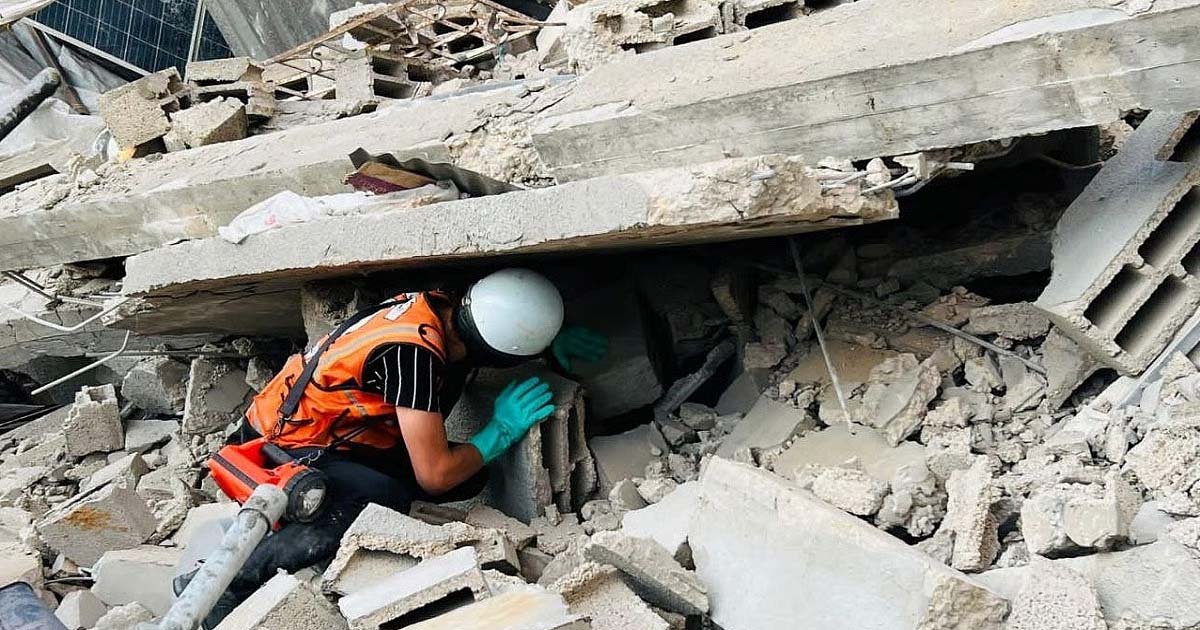
New Delhi: India has intensified efforts to assist its citizens stranded across Gulf countries as tensions continue to escalate in the Middle East. The Ministry of External Affairs (MEA) has set up a dedicated control room to coordinate assistance and provide real-time support to Indian nationals affected by the crisis.
MEA Official Spokesperson Randhir Jaiswal shared the update on X, announcing that the control room will operate daily from 9 am to 9 pm. The helpline numbers issued by the ministry are 1800118797 (toll-free), +91 11 2301 2113, +91 11 2301 4104 and +91 11 2301 7905.
In addition, the MEA released a list of emergency contact numbers for Indian embassies and missions across the region to ensure stranded citizens can seek immediate help. These include Bahrain, Iran, Iraq, Israel, Jordan, Kuwait, Lebanon, Oman, Qatar, Ramallah, Saudi Arabia and the United Arab Emirates.
In a statement issued on Tuesday, the MEA said India has once again strongly called for dialogue and diplomacy to bring an early end to the conflict in West Asia. Jaiswal said New Delhi is ‘raising its voice clearly’ for de-escalation and expressed grief over the large number of lives lost in the violence.
Safety & Well-Being Of Indians Top Priority
He emphasised that nearly one crore Indian citizens live and work in the Gulf region, making their safety and well-being a top priority for the government. “India cannot be immune to developments that negatively affect this region,” Jaiswal said, noting that vital trade routes and energy supply chains pass through West Asia. He warned that any major disruption could have serious consequences for the Indian economy.
The spokesperson also said India is firmly opposed to attacks on merchant shipping, pointing out that some Indian nationals have been killed or are missing following recent incidents at sea. He added that the conflict has not only intensified but also spread to other countries, bringing normal life and economic activity in parts of the region to a standstill.
India had earlier expressed deep concern when hostilities began in Iran and the Gulf region on February 28, urging all sides to exercise restraint and prioritise civilian safety. Jaiswal said it was particularly unfortunate that the situation has worsened during the holy month of Ramadan.
The MEA said Indian embassies and consulates in affected countries remain in close contact with Indian nationals and community organisations, issuing regular advisories and extending all possible assistance to those stranded by the conflict.
International
UNSC asks all countries to cooperate in bringing Pahalgam terrorists, backers to justice
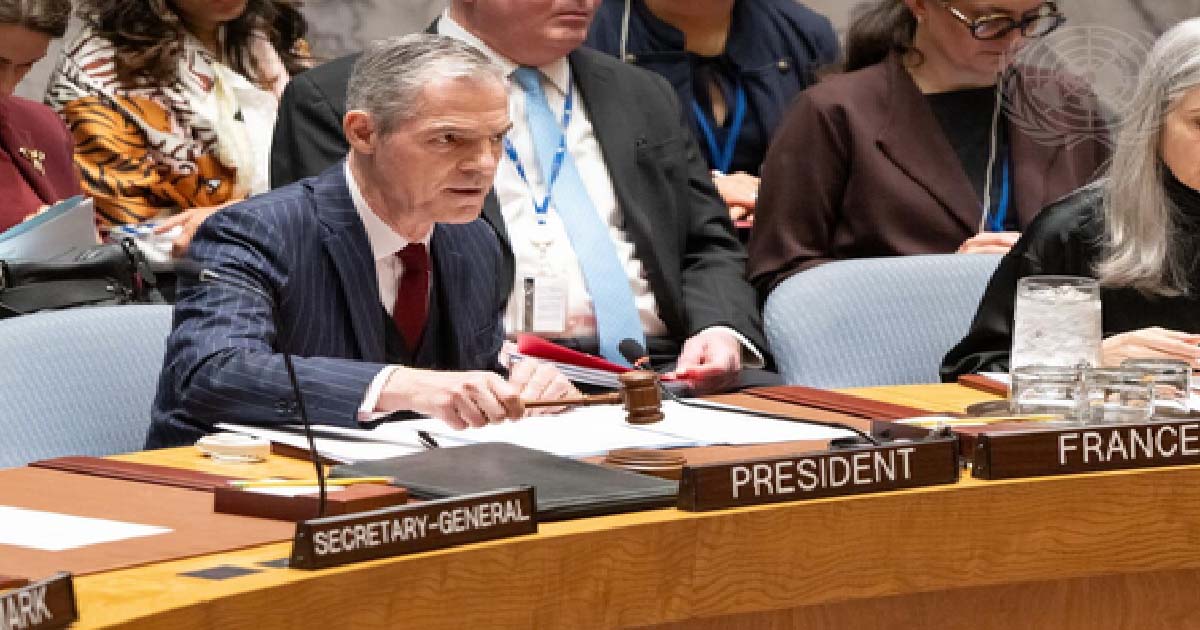
United Nations, April 26: The Security Council has “condemned in the strongest terms” the Pahalgam terrorist attack and urged all countries to cooperate in bringing all those involved in the massacre, to justice.
The members of the Security Council “stressed that those responsible for these killings should be held accountable, and urged all States, in accordance with their obligations under international law and relevant Security Council resolutions, to cooperate actively with all relevant authorities in this regard”, Council President Jerome Bonnafont said in a Press statement on Friday.
A front organisation of the Pakistan-based terrorist group Laskhar-e-Tayiba has owned responsibility for the attack.
The statement issued by France’s Permanent Representative Bonnafont who is the Council president for this month, took a broad view of those involved in the massacre by including the financiers and sponsors.
“The members of the Security Council underlined the need to hold perpetrators, organisers, financiers and sponsors of this reprehensible act of terrorism accountable and bring them to justice”, the statement said.
Pakistan, which is on the Council as an elected member, went along with the other members in endorsing the statement, committing itself – at least on paper – to bringing those involved to justice.
A Press statement expresses the consensus of the Council and carries moral authority, while not being legally binding like a resolution.
The statement also shot down the attempts by some in Pakistan to give terrorist attacks a veneer of justification.
“The members of the Security Council reiterated that any acts of terrorism are criminal and unjustifiable, regardless of their motivation, wherever, whenever and by whomsoever committed”, it said.
The Council members “reaffirmed the need for all States to combat by all means, in accordance with the Charter of the United Nations and other obligations under international law, including international human rights law, international refugee law and international humanitarian law, threats to international peace and security caused by terrorist acts”, the statement added.
Earlier, the spokesperson for Secretary-General Antonio Guterres hinted that a diplomatic effort by him may be afoot.
Asked by a reporter, if Guterres would speak to leaders of India and Pakistan, Spokesperson Stephane Dujarric said that he hoped to have something to share on that later.
Reiterating the condemnation of the terrorist attacks, Dujarric said, “We again urge both the Government of India and the Government of Pakistan to exercise maximum restraint to ensure the situation does not deteriorate further.”
When a reporter asserted that the possibility that “two nuclear countries” might “go to war” was getting insufficient attention, Dujarric said, “I don’t agree with your comment. We are paying very close attention to the situation between India and Pakistan.”
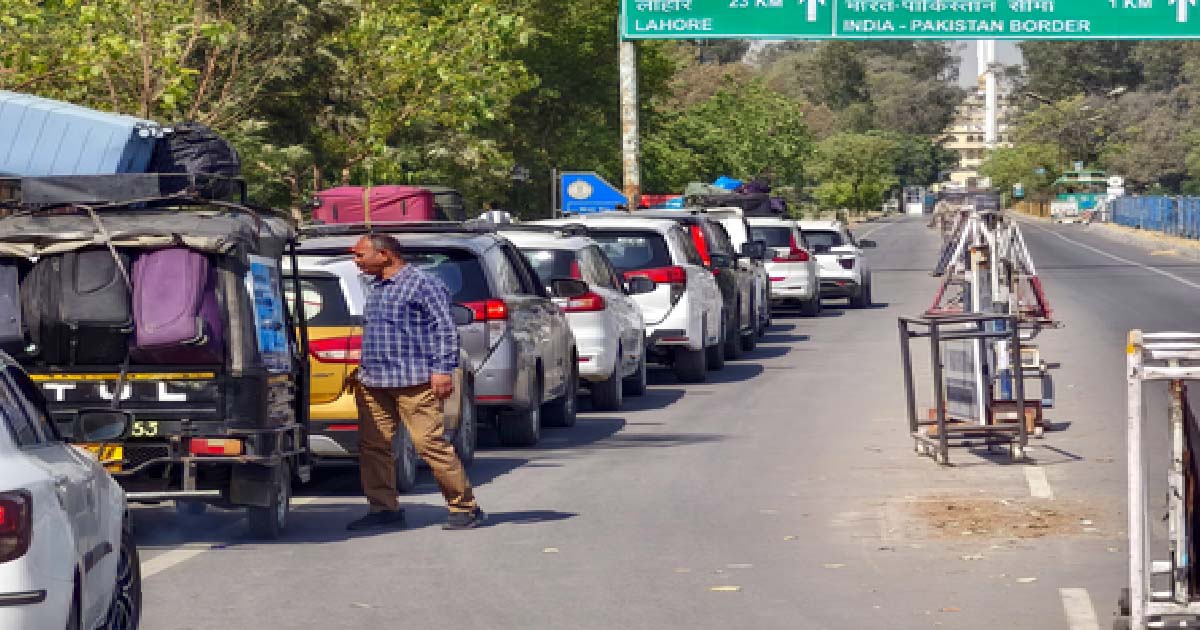
Islamabad, April 25: Pakistan and India’s decision to shut down the Wagah-Attari border crossing after the deadly Pahalgam terror attack has forced several citizens from both countries to cut short their visit and rush back home.
On Thursday, after both countries announced closure of border crossing and gave a deadline for citizens to leave for their respective countries, at least 28 Pakistanis nationals returned from India while 105 Indian citizens in Pakistan crossed over into India.
A Hindu family from Balochistan’s Sibi was reportedly denied entry into India after the closure of border crossing.
“We were on our way to Indore in Madhya Pradesh to attend a wedding. Seven members of our family were excited to join our relatives in India and take part in the celebrations. But upon reaching Wagah, we learned that the border had been sealed. We will spend the night at Dera Sahib in Lahore and head back home tomorrow,” said Akshay Kumar.
Meanwhile, a Sikh family from India, in Pakistan to attend a wedding, decided to leave for India immediately.
“We had come to Pakistan for a wedding. While the ceremony took place, several important rituals remained. Once we heard the border was closed, we decided to return immediately,” said Raminder Singh, an Indian national.
A Hindu family from Ghotki in Pakistan’s Sindh province, now residing in New Delhi, was visiting Pakistan for the last two months to meet their relatives. However, they are now unsure about getting permission to return to India.
“There are five of us, including my young son and daughter, uncle and aunt. We all hold Pakistani passports and were granted No Obligation to Return to India (NORI) certificate by India. But uncertainty looms now, said a family member named Indira.
“Families with cross-border ties often bear the brunt of rising tensions between the two neighbours. With tensions between Pakistan and India once again on the rise, human connections across borders are becoming the first casualty,” said Asif Memood, a Lahore-based journalist.
“The closure of the Wagah-Attari border has left many families in limbo, uncertain when they will next reunite with their loved ones,” he added.

Bombay HC Stays Charity Commissioner’s Order Deferring Asiatic Society Elections, Flags Natural Justice Lapse

Pune: Chhagan Bhujbal’s Helicopter Makes Wrong Landing In Purandar Village

Fake Baba Ashok Kharat predicted his own death, investigation agency also surprised, serious allegation of asthma threatens Kharat’s life

Central Railway To Run Special Midnight Trains On CSMT–Kalyan & Panvel Routes For Ambedkar Jayanti On April 14 | Details Here

Iran struggles to reopen Strait of Hormuz as missing sea mines complicate navigation: Report

Married Mumbai Woman Mocked In Andheri Society Over ‘Lift Kissing’ CCTV Video, Files Police Complaint

LPG Crisis In Maharashtra: Cyber Crime On Rise Amid Shortage, 2 Women Lose ₹4 Lakh In ‘Gas Update’ Online Scam In Kalyan-Dombivli

Dhurandhar 2 Box Office Collection Day 1: Ranveer Singh Starrer Takes An Exceptional Opening; Crosses ₹100 Crore Mark

Mumbai Police Busts Fake Apple Accessories Racket In Ghatkopar, ₹16.33 Lakh Goods Seized; Six Booked

Mumbai: 28-Year-Old Ghatkopar Woman Killed By Speeding Tanker While Crossing Road, Driver Arrested
-

 Crime4 years ago
Class 10 student jumps to death in Jaipur
-

 Maharashtra2 years ago
Mumbai Local Train Update: Central Railway’s New Timetable Comes Into Effect; Check Full List Of Revised Timings & Stations
-

 Maharashtra1 year ago
Mumbai To Go Toll-Free Tonight! Maharashtra Govt Announces Complete Toll Waiver For Light Motor Vehicles At All 5 Entry Points Of City
-

 Maharashtra2 years ago
False photo of Imtiaz Jaleel’s rally, exposing the fooling conspiracy
-

 National News1 year ago
Ministry of Railways rolls out Special Drive 4.0 with focus on digitisation, cleanliness, inclusiveness and grievance redressal
-

 Maharashtra1 year ago
Maharashtra Elections 2024: Mumbai Metro & BEST Services Extended Till Midnight On Voting Day
-

 National News2 years ago
J&K: 4 Jawans Killed, 28 Injured After Bus Carrying BSF Personnel For Poll Duty Falls Into Gorge In Budgam; Terrifying Visuals Surface
-

 Crime1 year ago
Baba Siddique Murder: Mumbai Police Unable To Get Lawrence Bishnoi Custody Due To Home Ministry Order, Says Report