
Business
Airtel Africa FY22 revenue up 21% YoY, announces final dividend of 3 cents

Airtel Africa has reported a revenue growth of 20.6 per cent for the year FY22, to $4,714 million, and 17.8 per cent for Q4FY22.
Airtel Africa is a leading provider of telecommunications and mobile money services, with a presence in 14 countries primarily in East Africa and Central and West Africa.
Constant currency underlying revenue grew 23.3 per cent for the year and 19.1 per cent in Q4.
Constant currency underlying revenue growth was strong in all regions — Nigeria up 27.7 per cent, East Africa up 22.7 per cent and Francophone Africa up 17.2 per cent and across all key services, with revenue in voice up 15.4 per cent, Data up 34.6 per cent and Mobile Money up 34.9 per cent.
Further, profit after tax grew by 82.0 per cent to $755 million.
The Board recommended a final dividend of 3 cents per share, making total dividends at 5 cents per share for the entire fiscal.
Segun Ogunsanya, Airtel Africa Chief Executive Officer, said: “This is another strong set of results for Airtel Africa, demonstrating our solid execution as we continue to enrich the lives of a growing number of people through leveraging the sizeable opportunity to promote digital and financial inclusion across our markets.”
The company has delivered strong double-digit growth in revenues across all our regions and all our key services, with improving margins driven by strong cost control, and expanding cash generation which is enabling it to continue to invest in it’s network and services and expand distribution, as well as strengthening balance sheet and increasing returns to shareholders.
“We are connecting more customers in new and existing coverage areas and driving usage levels and ARPUs to new highs. We have successfully executed on a number of strategic initiatives in the year, with tower sales completed in four countries, $550m of minority investments secured for our mobile money business and a successful buyout of minorities in our Nigerian operation.”

Business
G7 Summit: PM Modi, Prez Trump discussed West Asia, India-US trade deal & bilateral cooperation across sectors: MEA

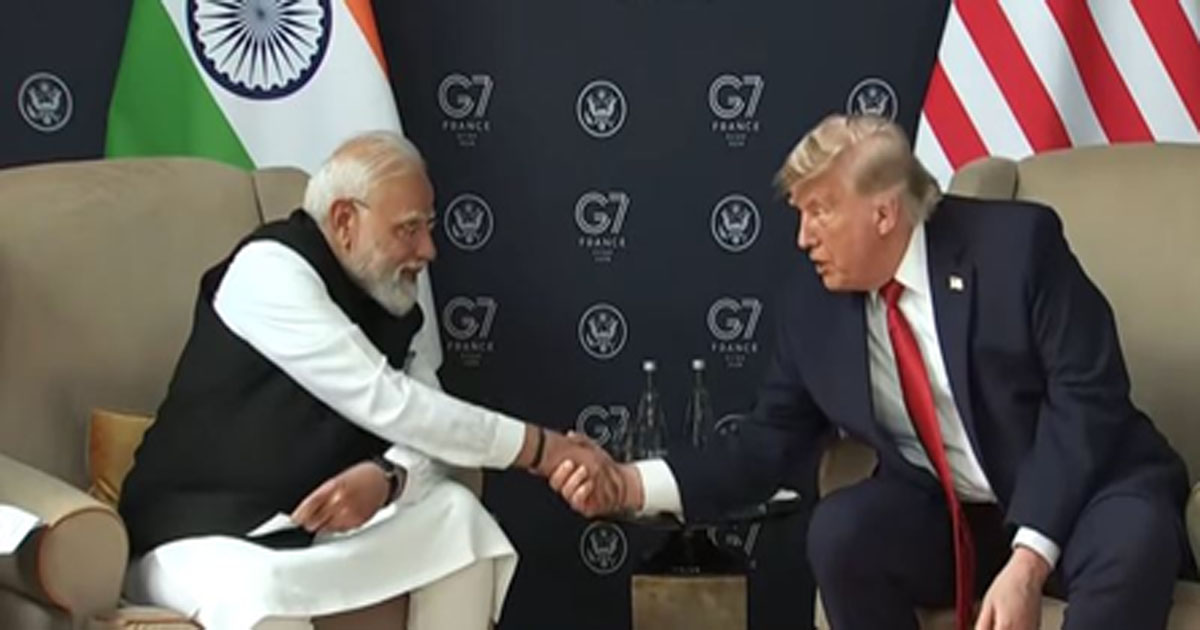
Evian (France), June 18: The Ministry of External Affairs (MEA) said on Thursday in an official statement that Prime Minister Modi met the US President Donald Trump on the sidelines of the G7 Summit in France’s Evian and discussed end of West Asia conflict, significant progress in the India-US interim trade deal and bilateral cooperation in terms of defence, strategic technologies, energy, and trade sectors between the two countries.
Prime Minister Modi commended President Trump for his efforts that had resulted in an understanding to end the ongoing conflict in West Asia and restore peace and stability across the broader region, the MEA statement said.
The Prime Minister also underlined the importance of maintaining freedom of navigation and unimpeded commerce in the Strait of Hormuz and the need to ensure the safety of seafarer, the MEA statement added.
Taking to his official social media plaform X, PM Modi said: “Pleased to meet President Trump in Evian. We reviewed the sustained progress in our bilateral cooperation in trade, energy, defence, technology and people-to-people ties. Conveyed India’s appreciation on the progress in the efforts for restoring peace and stability in West Asia. Keeping the Strait of Hormuz open is vital for the global economy. Reiterated the importance of ensuring the safety and security of civilians, including seafarers.”
“Both PM Modi and President Trump reviewed the substantial progress achieved under the India–US COMPACT (Catalysing Opportunities for Military Partnership, Accelerated Commerce and Technology) since their meeting in Washington D.C. in February 2025,” the MEA said in the statement.
The two leaders welcomed key developments across the defence, strategic technologies, energy, and bilateral trade sectors, the MEA statement added.
“The leaders noted with particular satisfaction the significant progress made in negotiations towards an interim Bilateral Trade Agreement and instructed their officials to work towards a “balanced, mutually beneficial, and commercially meaningful agreement at the earliest”. The US Trade Representative Jamieson Greer, will be visiting India next week in this connection.”
“Prime Minister Modi and President Trump reaffirmed their commitment to further strengthening the India-US Comprehensive Global Strategic Partnership and advancing cooperation across all domains for the mutual benefit of the two countries and their people,” the MEA added.
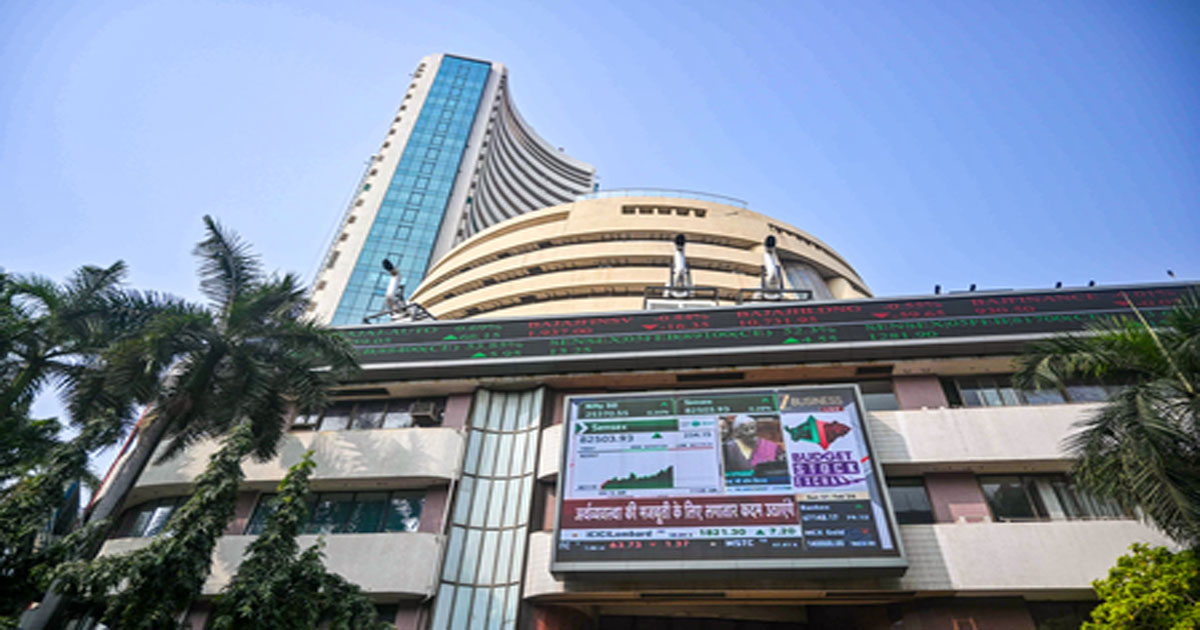
Mumbai, June 18: Indian equity markets traded flat on Thursday in morning trade amid mixed global cues as investors and traders assessed indications that the US Federal Reserve may still raise borrowing costs later this year, despite the benefits of lower oil prices and the Fed’s decision to keep rates unchanged.
Sensex was trading at 77,095.99, down 59 points or 0.08 per cent in early trade, while Nifty was at 24,076.95, down 8.75 points or 0.04 per cent.
Sector-wise, IT stocks remained under pressure, with Nifty IT declining 1.70 per cent. In contrast, Nifty Consumer Durables and Nifty FMCG rose 0.31 per cent each, while Nifty Metal advanced 0.25 per cent and Nifty Chemicals gained 0.21 per cent.
From the Nifty pack, Infosys, HCLTech, Tata Consultancy Services (TCS), Tech Mahindra, Wipro, Bajaj Finance and Bajaj Finserv were the top losers.
Moreover, the US Federal Reserve left interest rates unchanged, while indicating that further rate hikes remain possible this year as inflation continues to stay above its 2 per cent target.
According to market experts, Indian markets will not be unduly influenced by developments on the Fed rate front.
“In the near term, the market will remain resilient, supported by the crash in Brent crude to around $78 levels. The rupee is stable at around the 94.52 level,” they said.
Analysts stated that FII selling has tapered off, as expected, and that FIIs turned buyers yesterday, though in limited quantities. Brent crude prices at around $78 levels and stability in the rupee are big positives from the market perspective. Bank Nifty will remain strong with an upward bias.
Meanwhile, international oil benchmark Brent crude declined 1.64 per cent to $78.24 per barrel, while US West Texas Intermediate (WTI) crude slumped 2 per cent to $75 per barrel.
In Asian markets, indices showed a mixed trend. Japan’s Nikkei traded over 1 per cent higher, while Hong Kong’s Hang Seng was trading around 2 per cent lower. South Korea’s KOSPI was up more than 1 per cent, while Indonesia’s Jakarta Composite and China’s Shanghai Composite declined by up to 1 per cent.
Overnight in the US, Wall Street ended lower, with the S&P 500 decreasing 1.21 per cent and the Nasdaq closing 1.34 per cent down.
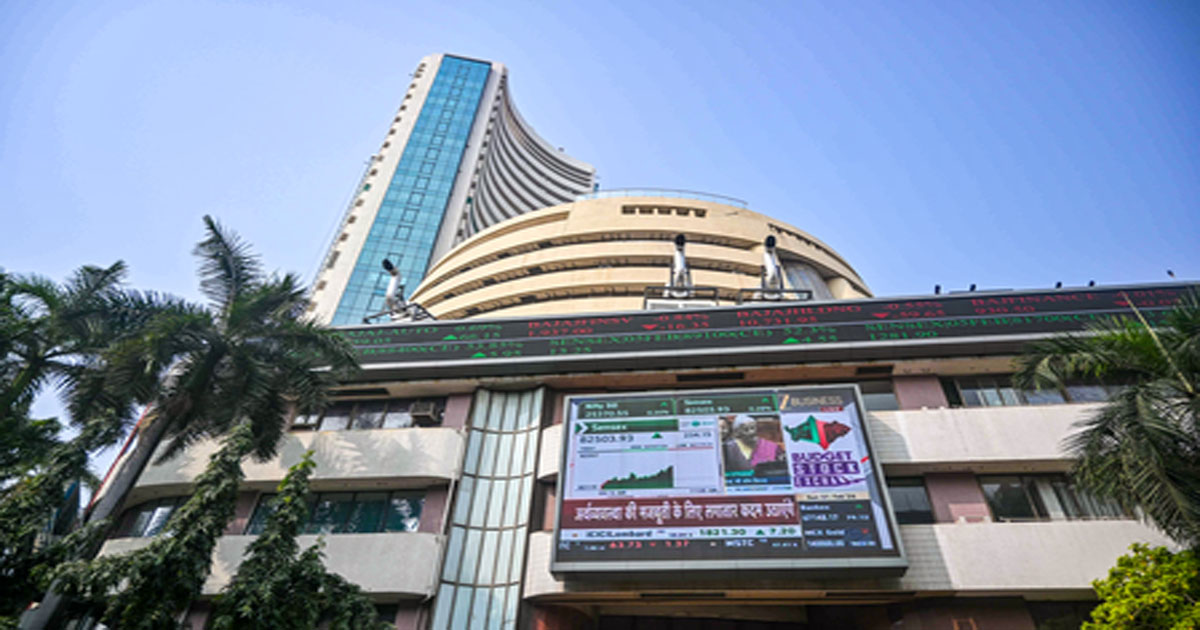
Mumbai, June 17: Domestic equity benchmarks traded flat in morning session on Wednesday after a three-day rally driven by lower crude oil prices and optimism over a US-Iran peace deal.
Sensex was trading at 76,817.58, up 8.58 points or 0.01 per cent, while Nifty was at 23,988, down 1 point in early trade.
Earlier in the day, the 30-share index opened higher, rising 284.69 points or 0.37 per cent to hit an intraday high of 77,093.17. The 50-script basket began the day at 24,044.50, up 58.89 points or 0.24 per cent.
On the sectoral front, Nifty Consumer Durables was the top performer, gaining 1.26 per cent, followed by Nifty IT and Nifty Media.
In addition, healthcare and pharma stocks remained in demand, with Nifty Pharma advancing 0.24 per cent and Nifty Healthcare rising 0.18 per cent.
In contrast, selling pressure was visible in metal and realty stocks. Nifty Metal fell 0.87 per cent, while Nifty Realty declined 0.68 per cent. Nifty Auto, Private Bank and PSU Bank indices also traded in the red.
Among the Nifty 50 constituents, Hindalco Industries, NTPC, Trent, ONGC, Bharti Airtel, Dr Reddy’s Laboratories and Axis Bank were among the top losers.
According to market experts, two factors are likely to influence market trends in the near term — one positive and the other negative.
“The positive factor is the steady and sharp decline in crude oil prices. Brent crude has fallen by around 16 per cent over the last five days to about $79 per barrel, easing concerns over a widening balance of payments deficit in India,” they said.
The negative factor is the deficient monsoon, which is raising concerns about food inflation. However, experts noted that monsoon activity could improve in the coming days, as has happened in the past, easing such concerns.
The positive trend is likely to continue as the rupee has been steadily strengthening and could appreciate further, experts added.
On the commodities front, international benchmark Brent crude declined 0.72 per cent to $78.39 per barrel, while US West Texas Intermediate (WTI) crude decreased almost 1 per cent to $75.35.

Public representatives have high confidence in Shinde’s work, Uddhav Thackeray MPs did not have confidence in his leadership: Milind Deora

Mumbai Municipal Corporation and Customs Department sign MoU for conservation and restoration of Mahim Fort

Operation Tiger rebel MPs in Maharashtra should be disqualified: Abu Asim Azmi

Additional Municipal Commissioner (Western Suburbs) Dr. Vipin Sharma reviewed the functioning of the Hospital Management and Information System.

As 6 MPs of Uddhav Thackeray-led Shiv Sena-UBT set to join Shinde faction, Sanjay Raut unveils legal action plan

G7 Summit: PM Modi, Prez Trump discussed West Asia, India-US trade deal & bilateral cooperation across sectors: MEA

Trump, Netanyahu hold phone talks after Iranian missile fire: Israeli state media

Virar Citizens Protest Demolition Drive In Arnala; Police Block Lal Bawta March, Sit-in Held On Road

Indian equity markets trade higher as Iran-Israel tensions ease

Rubio says Hamas disarmament key to Gaza rebuild
-

 Crime4 years ago
Class 10 student jumps to death in Jaipur
-

 Maharashtra2 years ago
Mumbai Local Train Update: Central Railway’s New Timetable Comes Into Effect; Check Full List Of Revised Timings & Stations
-

 Maharashtra2 years ago
Mumbai To Go Toll-Free Tonight! Maharashtra Govt Announces Complete Toll Waiver For Light Motor Vehicles At All 5 Entry Points Of City
-

 Maharashtra2 years ago
False photo of Imtiaz Jaleel’s rally, exposing the fooling conspiracy
-

 National News2 years ago
Ministry of Railways rolls out Special Drive 4.0 with focus on digitisation, cleanliness, inclusiveness and grievance redressal
-

 Maharashtra2 years ago
Maharashtra Elections 2024: Mumbai Metro & BEST Services Extended Till Midnight On Voting Day
-

 National News2 years ago
J&K: 4 Jawans Killed, 28 Injured After Bus Carrying BSF Personnel For Poll Duty Falls Into Gorge In Budgam; Terrifying Visuals Surface
-

 Crime2 years ago
Baba Siddique Murder: Mumbai Police Unable To Get Lawrence Bishnoi Custody Due To Home Ministry Order, Says Report