
Business
Zee Entertainment Shares Fall 7% After Sebi Bars Subash Chandra, Punit Goenka From Holding Directorial Roles


Shares of Zee Entertainment Enterprises fell over 6.50 per cent in morning trade on Tuesday after Securities and Exchange Board of India banned Essel Group chairman Subhash Chandra and Zee Entertainment Enterprises Limited’s (ZEEL) Punit Goenka from holding any directorial or key managerial position in any listed firm.
The stock tumbled 6.28 per cent to an intraday low of Rs 182.60 apiece on the BSE after a weak beginning.
On the NSE, it tanked 6.59 per cent to Rs 182 each share.
In the broader equity market, the 30-share BSE benchmark traded with a gain of 328.44 points or 0.52 per cent at 63,053.15.
In an interim order on Monday, Sebi barred Chandra and Goenka from holding the position of a director or key managerial personnel (KMP) in any listed company as they were involved in diverting company funds to the group’s related entities.
The case pertains to Chandra, who was also the chairman of ZEEL during the alleged violation, and Goenka having abused their position as directors or KMPs of a listed company for siphoning off funds for their own benefit.
In its interim order, Sebi noted that Chandra and Goenka alienated the assets of ZEEL and other listed companies of Essel Group for the benefit of associate entities, which are owned and controlled by them.
Sebi noted that the share price of ZEEL has come down from a high of close to Rs 600 per share to the current price of less than Rs 200 per share during the period FY 2018-19 to FY 2022-23. This erosion of wealth despite the company being so profitable and generating profit after tax consistently would lead to a conclusion that “all was not well with the company”.
Roadblock for Zee-Sony Merger
This decision by Sebi could become a major roadblock for Zee-Sony merger as Goenka is slated to be the MD and CEO of the merged company.
The merger that was expected to be completed by the first half of the current fiscal year ending March 31, 2024 has been facing one roadblock after another. Earlier, ZEEL was facing issues from its operational and financial creditors; now the merger is facing another issue.
The National Company Law Tribunal on May 11 had asked both BSE and NSE to reconsider Zee’s merger with Sony Pictures Networks India after the Shirpur Gold Refinery fund diversion case. However, the National Company Law Appellate Tribunal set aside this order.
The next hearing in NCLT will be on June 16.


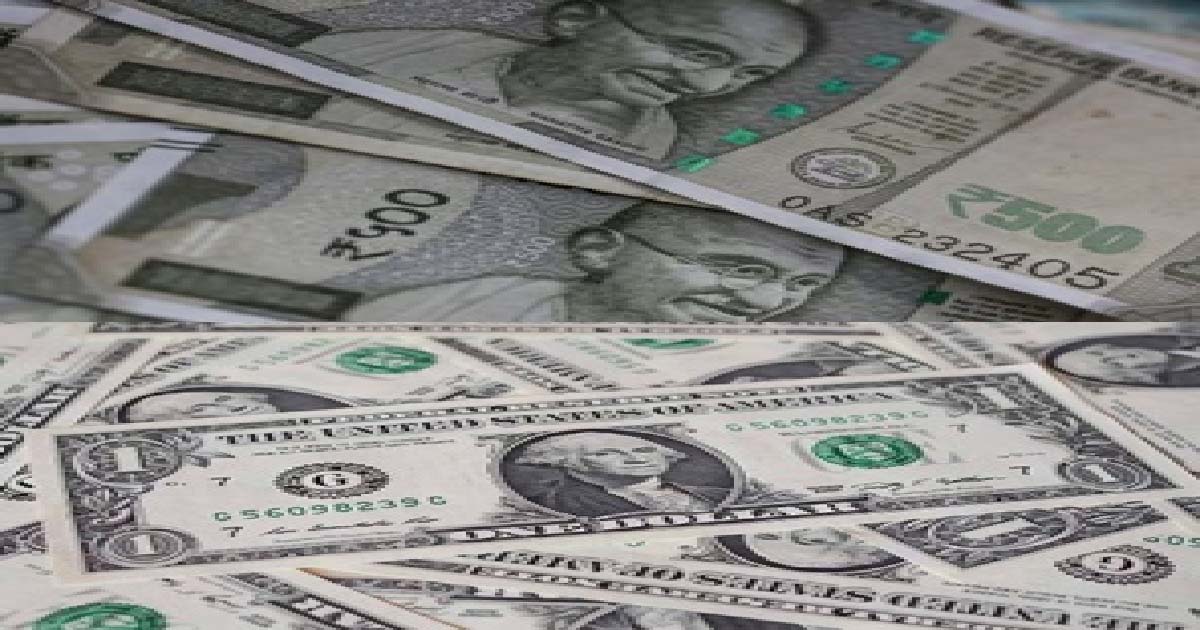
New Delhi, Dec 17: Geopolitical uncertainties driven by the delay in the India-US trade deal have been the single-most important reasons for the rupee sliding against the US dollar, an SBI Research report said on Wednesday, adding that the rupee is likely to bounce back strongly in the second half of the next fiscal.
India’s trade data shows the remarkable resilience in navigating through prolonged uncertainty, more protectionism and labour supply shocks.
“While the geopolitical risk index has moderated since April 2025, the current average value of the index for April-October 2025 is much greater than its decadal average, which indicates how much pressure global uncertainties are exerting on INR,” State Bank of India’s (SBI) Group Chief Economic Advisor, Dr Soumya Kanti Ghosh, said.
Dr Ghosh further stated that consistent with their empirical analysis, “the rupee is currently in a depreciating regime and is likely to exit it”.
After breaching the psychologically important mark of 90 per US dollar, the rupee crossed the 91-level on Tuesday.
However, the rupee staged a sharp recovery on Wednesday, trading as strong as 90.25 during the day, as the cooling of crude prices also contributed to improved sentiment.
According to the SBI report, the data also indicates that the current fall is the quickest (in terms of number of days) of the rupee, scaled to 5 per USD. In less than a year, the rupee has slid from 85 to 90 per dollar.
The current slide appears to be primarily driven by FPI outflows, chiefly equities (after two years of robust inflows) and uncertainty regarding the US-India trade deal.
Since April 2, 2025, when the US announced sweeping tariff hikes across economies, the Indian rupee (INR) has depreciated by 5.7 per cent against USD (most amongst the major economies), notwithstanding sporadic phases of appreciation owing to optimism over the US-India trade deal.
“While INR is the most depreciated currency, it is not the most volatile. This clearly indicates that the 50 per cent tariff imposed on India is one of the major factors behind the current phase of rupee depreciation,” the SBI report noted.
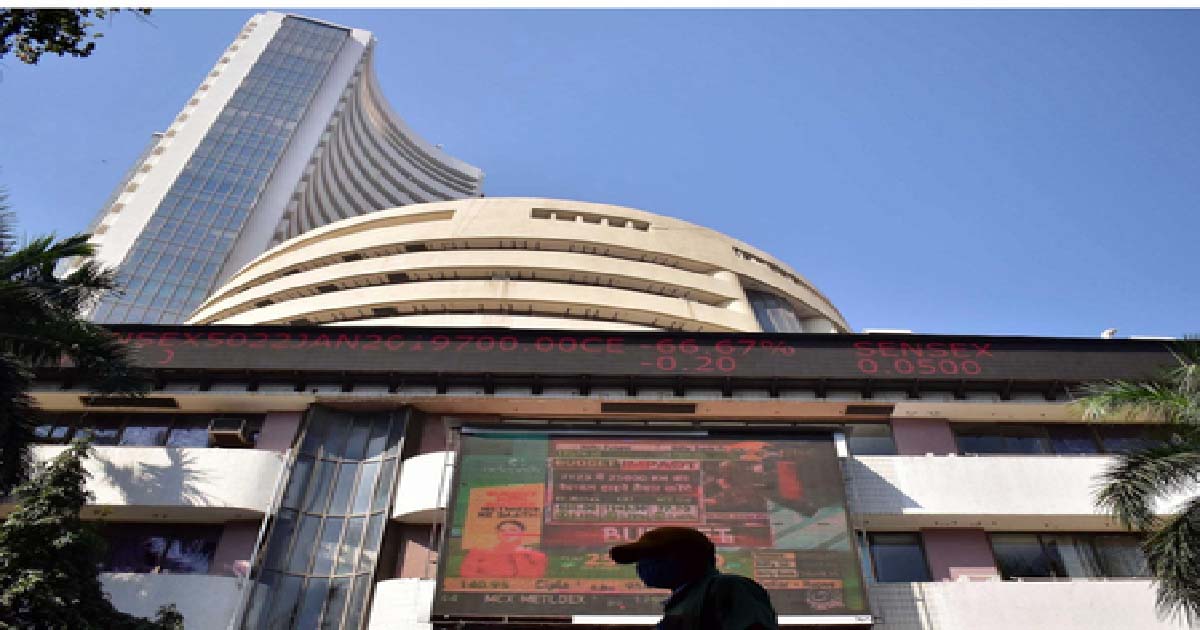
Mumbai, Dec 17: Indian equity markets touched fresh all-time highs in November and clearly outperformed global markets, a new report said on Wednesday.
The data compiled by PL Asset Management said India emerged as a bright spot at a time when many global markets struggled due to weak technology stocks, fading enthusiasm around artificial intelligence and soft economic data from China.
The report noted that record-low inflation, steady domestic growth and reasonable valuations improved the overall outlook for investors.
“While global markets remained uneven, India benefited from strong local demand, supportive liquidity and a predictable policy environment,” the report said.
Inflation played a major role in boosting market sentiment during the month. Consumer price inflation fell sharply to just 0.25 per cent, the lowest level on record and far below the Reserve Bank of India’s target of 4 per cent.
This sharp fall strengthened expectations of further interest rate cuts, which supported equity valuations. Reflecting confidence in the economy, the RBI raised its GDP growth forecast for FY26 to 7.3 per cent.
India also recorded strong GDP growth of 8.2 per cent in the second quarter of FY26, reinforcing its position as the fastest-growing major economy in the world, the report said.
Domestic economic indicators remained healthy despite global challenges. Manufacturing activity stayed strong, even though exports were slightly affected by tariffs.
Goods and Services Tax collections remained robust at Rs 1.70 lakh crore, as per the report.
Festive season spending also supported growth. In addition, India’s current account deficit improved to 1.3 per cent of GDP.
Global markets, meanwhile, showed signs of fatigue. US technology stocks faced profit booking, China and Hong Kong markets weakened due to poor economic data, and investors turned to precious metals for safety.
Crude oil prices softened amid expectations of interest rate cuts by the US Federal Reserve. Against this global backdrop, India’s stable fundamentals helped it continue to outperform.
Siddharth Vora, Head – Quant Investment Strategies & Fund Manager, PL Asset Management, said, “Indian markets continue to demonstrate relative resilience at a time when global risk assets are undergoing a phase of recalibration.”

New Delhi, Dec 15: The government on Monday said it has released Rs 260.20 crore to rural local bodies in Kerala as part of the 15th Finance Commission grants for the financial year 2025-26.
The amount represents the first instalment of untied grants and covers all 14 district panchayats, 152 block panchayats and 9,414 gram panchayats (GPs) in the state, according to an official statement.
Untied grants are meant to be utilised by rural local bodies/PRIs for location-specific felt needs under the 29 subjects listed in the Eleventh Schedule of the Constitution, except for salaries and other establishment expenditures.
Tied Grants, on the other hand, are earmarked for basic services relating to sanitation and maintenance of ODF (open defecation-free) status, including management and treatment of household waste, human excreta and faecal sludge, and supply of drinking water, rainwater harvesting, and water recycling.
Last week, the government released Rs 717.17 crore to strengthen rural local bodies in Maharashtra as part of the first instalment of untied grants for the financial year 2025-26. The funds were released to duly elected and eligible rural local bodies in the state, covering two district panchayats (Zilla Parishads), 15 block panchayats (panchayat samitis), and 26,544 gram panchayats.
The government, through the Ministry of Panchayati Raj and the Ministry of Jal Shakti (Department of Drinking Water and Sanitation), recommends release of 15th Finance Commission grants to states for Panchayati Raj Institutions, which are then released by the Ministry of Finance.
The allocated grants are recommended and released in two instalments in a financial year.
Earlier in November this year, the Centre released over Rs 223 crore for rural local bodies in Assam and another Rs 444.38 crore to strengthen panchayat bodies in Odisha as part of the 15th Finance Commission grants.

Bhiwandi Workers Protest ‘Anti-Worker’ Labour Codes, Demand Withdrawal Of Reforms Diluting Decades-Old Labour Rights

NIA attaches properties in Bihar and Maha linked to cyber fraud kingpin

One more accused arrested for vandalism during Lionel Messi’s Kolkata event

What Prithviraj Chavan has said on ‘Operation Sindoor’ is completely false: Ramdas Athawale

BMC elections announced but Mahayoti and Maha Vikas Aghadi clash over electoral pact

Kalyan College Namaz Controversy: SIO Demands Action Against Perpetrators

Sensex, Nifty open lower amid weak global cues

SS Rajamouli Faces FIR For ‘Hurting’ Religious Sentiments Over Controversial Lord Hanuman Remark At Varanasi Event In Hyderabad

Sensex, Nifty open marginally down amid negative global cues

Veteran Bollywood Actor Dharmendra Passes Away at 89
-

 Crime3 years ago
Class 10 student jumps to death in Jaipur
-

 Maharashtra1 year ago
Mumbai Local Train Update: Central Railway’s New Timetable Comes Into Effect; Check Full List Of Revised Timings & Stations
-
 Maharashtra1 year ago
Mumbai To Go Toll-Free Tonight! Maharashtra Govt Announces Complete Toll Waiver For Light Motor Vehicles At All 5 Entry Points Of City
-

 Maharashtra1 year ago
False photo of Imtiaz Jaleel’s rally, exposing the fooling conspiracy
-
 National News1 year ago
Ministry of Railways rolls out Special Drive 4.0 with focus on digitisation, cleanliness, inclusiveness and grievance redressal
-
 Maharashtra1 year ago
Maharashtra Elections 2024: Mumbai Metro & BEST Services Extended Till Midnight On Voting Day
-

 National News1 year ago
J&K: 4 Jawans Killed, 28 Injured After Bus Carrying BSF Personnel For Poll Duty Falls Into Gorge In Budgam; Terrifying Visuals Surface
-

 Crime1 year ago
Baba Siddique Murder: Mumbai Police Unable To Get Lawrence Bishnoi Custody Due To Home Ministry Order, Says Report