
Business
PhonePe Payment Gateway helps small, medium businesses save upto Rs 8 lakhs

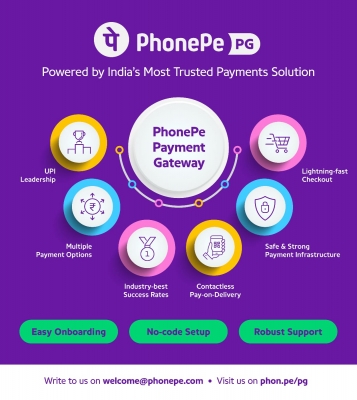
Leading fintech company PhonePe on Wednesday announced that its Payment Gateway enables small and medium businesses to save up to Rs 8,00,000.
While most payment gateways charge a standard transaction fee of 2 per cent, the PhonePe Payment Gateway has a special offer for new merchants to onboard for free, with no hidden charges, setup fees, or annual maintenance fees. For instance, if businesses with a monthly sales volume of Rs 1 crore choose the PhonePe Payment Gateway for free, they could potentially save around Rs 2 lakh per month.
With this limited-period offer from PhonePe Payment Gateway, businesses across India that join the platform can save up to Rs 8 lakh. This straightforward and transparent pricing helps merchants enhance their payment experience seamlessly, allowing them to invest the savings from onboarding costs into growing their businesses.
Talking about the true potential of PhonePe Payment Gateway, Suman Patra, Co-Founder, FlowerAura & Bakingo said: “As an e-commerce business, it is important to have a reliable payment gateway partner and we are happy to have PhonePe Payment Gateway as our growth partner because of their legacy and experience. PhonePe has helped us improve the customer experience, reduce drop-offs, and increase the overall success rate of payments. PhonePe’s smooth onboarding process and excellent merchant support have been key factors in our decision to continue working with them”.
PhonePe is already a market leader in UPI with over 50 per cent market share by value. The company’s ability to handle large-scale transactions and the strong consumer trust in the platform have translated into PhonePe launching its Payment Gateway business to provide the best-in-class payment experience to consumers and merchants alike.
The ease of use to enhance merchant experience which includes effortless integration, digital self-onboarding, and a seamless checkout experience for customers is making the PhonePe Payment Gateway a preferred choice among businesses and MSMEs across the country.
Nishchay AG, Co-Founder & CEO at Jar shares his experience of working with PhonePe Payment Gateway’s best-in-class payment experience: “When we started Jar, we were clear from day one that we wanted PhonePe as our payment partner because of its reach and responsiveness. PhonePe’s massive distribution network makes it a lot easier for us because users are already UPI-ready.
“The Payment Gateway team at PhonePe has been very collaborative throughout and has been working together to continuously improve the overall systems, which has resulted in higher success rates for us.”
Moreover, the company said that the PhonePe Payment Gateway is reliable and ensures 100 per cent uptime for merchants and comes with industry-best success rates. It proactively detects downtimes and ensures stable success rates of transactions with real-time instrument health-tracking capability.
The PhonePe Payment Gateway is also preferred by merchants as it comes with a hassle-free, no-code setup for effortless integration across all platforms. PhonePe helps its merchant partners and businesses to accept online payments across Android, iOS, mobile web, and desktop.
The PhonePe Payment Gateway is in compliance with RBI Laws to securely store customers’ tokenised cards in the PhonePe Card Vault after taking consumer consent.


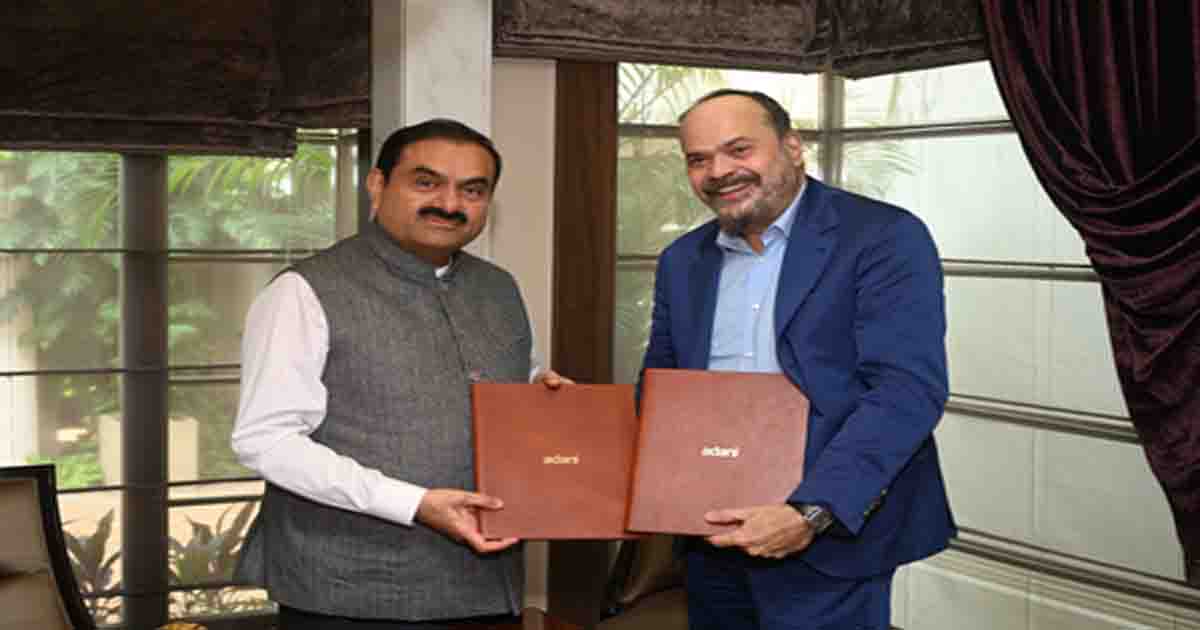
New Delhi, Oct 13: Adani Enterprises Limited (AEL) and global engineering, supply chain and manufacturing company Jabil Inc. on Tuesday said they have signed a non-binding Memorandum of Understanding (MoU) for a proposed 50:50 joint venture to manufacture and assemble artificial intelligence (AI) and data centre equipment in India.
The MoU follows the June 2026 announcement of Adani Group and Jabil’s intent to establish a strategic alliance to develop an AI and data centre infrastructure manufacturing ecosystem in India.
“The AI revolution will demand far more than just breakthroughs in algorithms. It will require an entire new industrial architecture where energy, hyperscale infrastructure, advanced computing and precision manufacturing converge to power the intelligence economy,” Adani Group Chairman Gautam Adani said.
At Adani, “our vision is to expand up the AI value chain evolving from powering and hosting AI infrastructure to engineering and manufacturing the critical systems that will define the next generation of computing”, the billionaire industrialist said.
According to a statement, the proposed joint venture remains subject to execution of definitive agreements, receipt of applicable approvals, and satisfaction of customary conditions.
“Our proposed joint venture with Jabil marks a strategic step towards this future, combining Jabil’s world-class engineering and manufacturing capabilities with Adani’s integrated strengths in energy, infrastructure and data centres to help build the physical backbone of the global AI economy,” said Gautam Adani.
The venture would provide a manufacturing base in India to serve domestic demand and support exports.
The companies estimate the global market opportunity at more than $3 trillion over the next seven years, driven by investment in AI computing.
“The signing of this MoU is the next step forward in our shared efforts to establish a scaled AI infrastructure manufacturing platform in India, a market we believe will become increasingly important for both domestic and global AI infrastructure demand,” Jabil Inc. Chief Executive Officer Mike Dastoor said.
“Integrating Jabil’s 60 years of engineering and manufacturing expertise with Adani’s significant infrastructure and energy capabilities, we can bring our rack-level data centre solutions to more hyperscalers in India and around the world,” he added.
The venture is aligned with Adani Group’s $100 billion commitment to develop 5 GW of green-energy-powered, hyperscale AI-ready data centres by 2035. The proposed venture would add hardware manufacturing to the Group’s presence across infrastructure, energy, logistics and data centres.
The joint venture would manufacture and assemble AI racks, servers, storage and networking equipment used in data centres. The racks would house high-performance computing systems for AI applications and other digital services, the statement said.
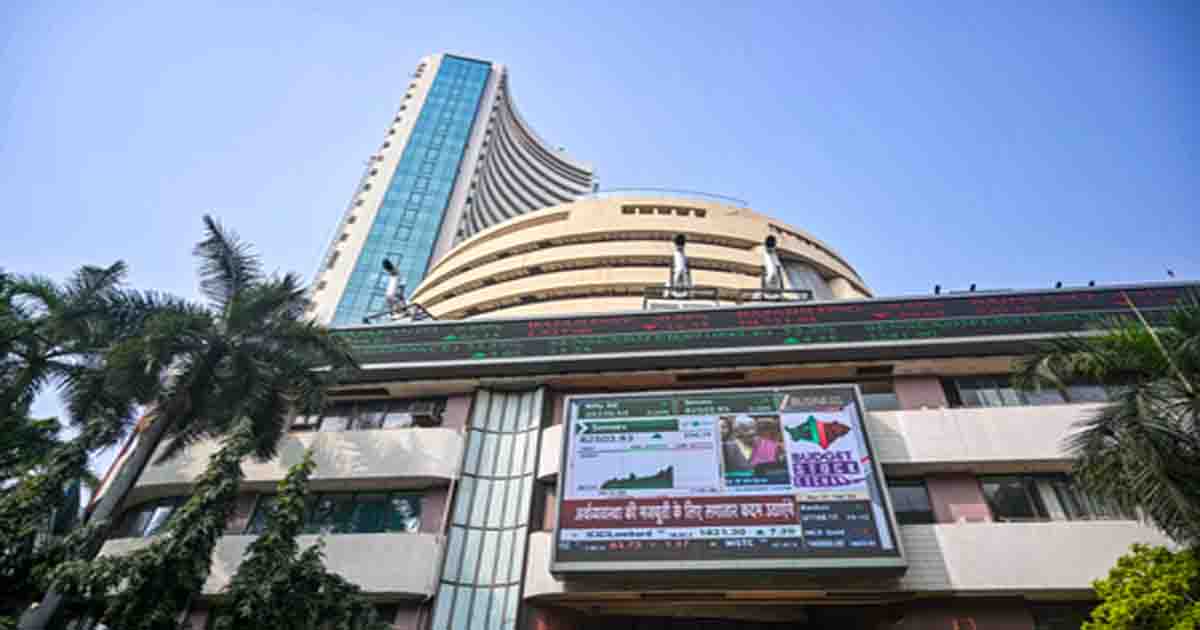
Mumbai, Oct 13: India equity benchmark indices opened flat on Tuesday amid buying in IT and realty sector shares.
At the opening bell, Sensex was at 71,951.73, up 27.05 points or 0.04 per cent. Meanwhile, Nifty began trading session at 22,364.15, up 0.80 points or flat.
Sector-wise, Nifty IT, Nifty Midsmall IT & Telecom and Nifty Realty jumped up to up 2 per cent. Nifty PSU Bank was up 0.31 per cent, Nifty FMCG up 0.22 per cent and Nifty Oil & Gas up 0.20 per cent.
On the downside, healthcare and pharmaceuticals shares witnessed selling pressure as Nifty Midsmall Healthcare fell, Nifty 500 Healthcare, Nifty Pharma and Nifty Healthcare declined up to 0.75 per cent.
Market experts said there are no triggers to change ongoing trend of sustained FII selling and DII buying in the cash market.
But with the US 10-year bond yield above 5.2 per cent, FIIs are likely to continue selling in cash market. With net inflows into mutual funds touching a record high of Rs 38,307 crore in September, DIIs will continue to absorb selling from FIIs, experts said.
Moreover, CPI inflation at 5.54 per cent came on expected lines with food inflation at 7.74 per cent and Brent above $100. A rate hike by the RBI in December is a foregone conclusion and will be margin accretive for banks, they added.
Technical analysts said recovery construct has weakened significantly, but day will start with hopes of bounce back as yesterday’s slippage paused without breaking the recent low.
Such an upmove would need to push beyond 22,435 to signal strength, inability to do so could pave way for drop to 22,070-21,900, they said.
Additionally, Asian equities traded lower as AI rally came under fresh pressure ahead of key earnings season.
Nasdaq ended lower on Monday as oil prices surged following attacks on Saudi airport, while investors awaited start of third-quarter bank earnings and key economic data this week.

Mumbai, Oct 12: Domestic equity benchmark indices opened higher on Monday amid positive factors like gains in Asian markets and a decline in crude oil prices.
Nifty began trading session at 22,593.20, up 72.75 points or 0.32 per cent.
Meanwhile, Sensex opened at 72,771.32, up 298.99 points or 0.41 per cent.
In early deals, mostly sectoral indices were trading in positive territory. Nifty Media, Nifty Auto and Nifty Chemicals jumped up to 1 per cent.
Similarly, Nifty Realty, Nifty Oil & Gas, Nifty Cement, Nifty Metal and Nifty IT surged between 0.81 per cent to 0.64 per cent. However, other sectoral indices were also trading marginally higher.
On the downside, Nifty PSU Bank just slipped 0.01 per cent.
Market experts said external headwinds are dominating domestic tailwinds, adding that the market is going through a stage wherein external headwinds are dominating domestic tailwinds.
Elevated crude prices and high US bond yields will continue to impact market. FIIs will continue to sell in the near term, and DIIs will continue to absorb FII selling, according to them.
Moreover, an impressive GDP growth estimate of 7.1 per cent for FY27 and improving corporate profitability provide strong fundamental support to the market, the experts said.
“Therefore, investors can accumulate fairly valued growth stocks ignoring uncertainty and volatility in market. For investors with medium-to-long-term horizon, this market provides value buying opportunities. Patience is key,” they added.
They further noted that if crude declines sharply following favourable developments in the Middle East, the market can rally significantly from current levels.
Technically, Friday’s bounce and inside bar formation set up an environment for a rise to 22,800-23,200. However, inability to close above 22,575 will keep trend within bear grip. Downside marker for day may be kept at 22,295, Friday’s reaction low, another analyst said.
In addition, asian markets opened cautiously today in early hours as investors braced for earnings season which could test elevated technology valuations.
Oil prices eased on prospects of higher Russian supplies following agreement to halt attacks on energy facilities.

Delhi Police arrest 11 cyber criminals for digital arrests linked to Cambodia

Eknath Shinde Calls Rahul Gandhi’s Supreme Court March a Black Day in India’s History, Alleges INDIA Bloc Is Part of a Foreign Conspiracy.

Maha leads in creating an investment ecosystem for industries: CM Fadnavis

Indians in Saudi Arabia advised to stay indoors during aerial attacks; Embassy opens 24×7 control room

Adani Enterprises, Jabil plan to build mega AI, data centre infra platform in India

INDIA bloc begins protest march against ECI

Maha Congress stages agitation against Gyanesh Kumar

Complaint against Netflix & Mukesh Chhabra for inappropriate language on ‘India’s Got Latent 2’

Delhi court grants three-week interim bail to influencer Swatantra Bhardwaj

Bombay HC warns Vijay Mallya against posting court documents on social media
-

 Crime4 years ago
Class 10 student jumps to death in Jaipur
-

 Maharashtra2 years ago
Mumbai Local Train Update: Central Railway’s New Timetable Comes Into Effect; Check Full List Of Revised Timings & Stations
-

 Maharashtra2 years ago
Mumbai To Go Toll-Free Tonight! Maharashtra Govt Announces Complete Toll Waiver For Light Motor Vehicles At All 5 Entry Points Of City
-

 Maharashtra2 years ago
False photo of Imtiaz Jaleel’s rally, exposing the fooling conspiracy
-

 National News2 years ago
Ministry of Railways rolls out Special Drive 4.0 with focus on digitisation, cleanliness, inclusiveness and grievance redressal
-

 Maharashtra2 years ago
Maharashtra Elections 2024: Mumbai Metro & BEST Services Extended Till Midnight On Voting Day
-

 National News2 years ago
J&K: 4 Jawans Killed, 28 Injured After Bus Carrying BSF Personnel For Poll Duty Falls Into Gorge In Budgam; Terrifying Visuals Surface
-

 Crime2 years ago
Baba Siddique Murder: Mumbai Police Unable To Get Lawrence Bishnoi Custody Due To Home Ministry Order, Says Report