
Maharashtra
BMC Elections 2026: Mumbai’s Civic Polls Return After 4 Years, Setting Stage For High-Stakes Multi-Party Battle

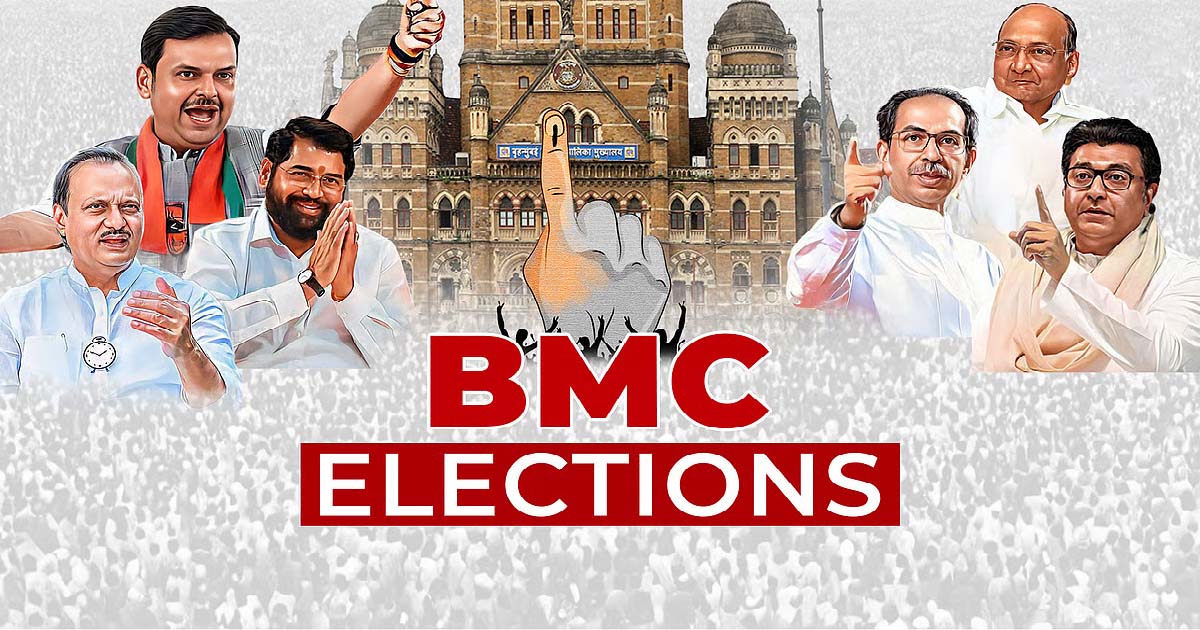
Mumbai: With the State Election Commission announcing the dates, preparations for the long-delayed BMC elections after nearly four years are finally underway.
During this period, the split in the Shiv Sena, shifting alliances among the BJP, Congress, and the Nationalist Congress Party (NCP), and repeated delays in holding polls led to the BMC being run by appointed administrators rather than elected representatives.
Reshaped by recent political upheavals in Maharashtra, the upcoming BMC election has transformed from a once-predictable contest into a high-stakes, multi-party battle.
As Mumbai moves back to elected governance, the results will reflect public opinion, political strength, and the future course of urban politics in India’s financial hub.
In the years after Independence, the Indian National Congress held a strong grip on the BMC, reflecting its dominance in Maharashtra politics. This began to change in the late 20th century, as the Shiv Sena, built on Marathi pride and regional identity, steadily gained influence in Mumbai.
The party first came to power in the BMC in 1985, and by 1997, it had established firm control, beginning nearly two decades of largely uninterrupted rule. For years, the Shiv Sena governed the BMC either alone or in alliance with the BJP.
However, the long-standing alliance was disrupted in 2017, a turning point when the Shiv Sena emerged as the single largest party while the BJP made significant gains, finishing a close second. Despite being allies at the state and national levels, the two parties clashed fiercely, exposing cracks in their partnership.
In 2019, Maharashtra politics saw major shifts with the formation of the Maha Vikas Aghadi (MVA) government, an alliance of the Shiv Sena, Congress, and NCP led by Uddhav Thackeray.
The political landscape changed further when the Shiv Sena split into Uddhav-led and Eknath Shinde-led factions, and the NCP divided into Sharad Pawar and Ajit Pawar groups in 2023.
In 2022, Shinde led a rebellion, with most Shiv Sena legislators joining him and the BJP to form the state government. This weakened the original Shiv Sena faction and removed a strong regional rival to the BJP in state politics.
With the Shiv Sena (Shinde faction), the BJP is poised to fulfil its long-standing goal of electing a mayor from its alliance. On the other hand, there is strong speculation that the Shiv Sena (UBT) and Maharashtra Navnirman Sena may join forces in an attempt to challenge the ruling alliance and regain power.
The upcoming BMC election is more than just about roads, flooding, or waste management—it marks the return of elected leadership after nearly four years under state-appointed administrators Iqbal Singh Chahal from March 2022, followed by Bhushan Gagrani in March 2024.
Voters will compare the performance of administrators with what elected leaders could deliver. For the rival Shiv Sena factions, the polls are a fight for legacy and legitimacy, the BJP aims to strengthen its hold in urban Maharashtra, and Congress and other regional parties hope to regain a foothold in Mumbai.
Major political parties
1992 | 2002 | 2012 | 2017
Shiv Sena — 69 | 98 | 75 | 84
BJP — 14 | 35 | 31 | 82
Congress — 112 | 60 | 52 | 31
NCP — 0 | 13 | 13 | 09
Samajwadi Party — 0 | 10 | 09 | 06
(In 1992, Mumbai had 220 wards, which have now been increased to 227.)

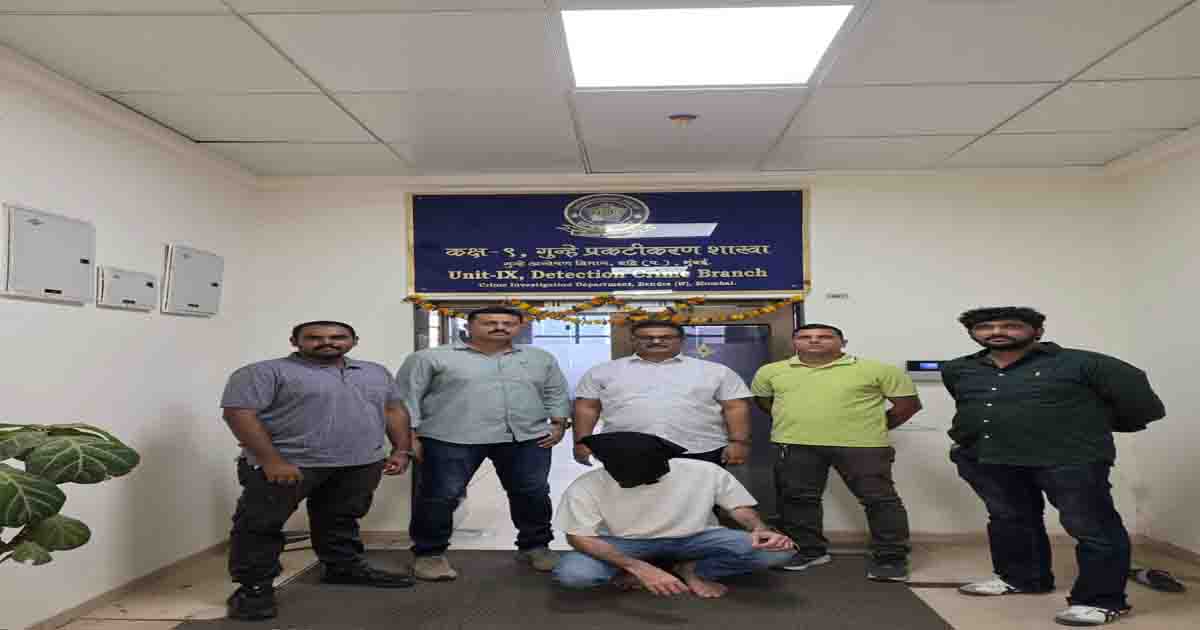
On October 24, Crime Branch Unit 9 (Bandra West, Mumbai) intensified its crackdown on drug peddlers, resulting in the arrest of an individual involved in the sale of narcotics. The police had received information that the accused was selling charas (cannabis resin) and other intoxicating substances from his residence. Acting on this intelligence and following the guidance of senior officers, a team from Crime Branch Unit 9—accompanied by independent witnesses (panches)—raided the premises on October 24. During the operation, 1.505 kilograms of charas were seized in accordance with legal procedures; the estimated value of the contraband is 15 million rupees (1.5 crore INR) based on international market rates.
A case has been registered in connection with this incident under the NDPS (Narcotic Drugs and Psychotropic Substances) Act. One individual, aged 40, has been arrested. Additionally, another person has been identified as a wanted suspect, and a search is currently underway to locate him.
This notable operation was carried out under the supervision of Police Commissioner Deven Bharti, Joint Commissioner of Police (Crime) Anil Kumbhare, Additional Commissioner of Police Krishnakant Upadhyay, and Deputy Commissioner of Police (DCP) Nonath Dhole.
Maharashtra
Lawrence Bishnoi gang shooters had practised shooting in the Aarey Colony forest before opening fire at Tiger Shroff’s residence.


Following the firing incident involving Tiger Shroff, an investigation has revealed that a businessman in Pune and a film star in Mumbai were on Lawrence Bishnoi’s target list. The gang’s objective is to instill fear among the film industry and the business community in order to extort money—specifically, to collect protection money or ransoms. The primary goal of the Lawrence Bishnoi gang is not necessarily murder, but rather the creation of terror and fear within the film industry and among business circles.
Currently, 56 operatives of the Lawrence Bishnoi gang are incarcerated in various Mumbai jails; they have been linked to over 10 criminal incidents in Mumbai and Pune over the past 2–3 years. Targeting Bollywood is a key objective for the Lawrence gang, and they have been involved in conspiracies to target film actors specifically to spread fear and terror throughout the business community.
In the Tiger Shroff case, it has emerged that the shooters underwent firearms training in the Aarey Colony forest. A shepherd witnessed the shooters practicing and serves as an eyewitness; according to him, three to four individuals trained there, and he saw them firing weapons. New revelations continue to surface in the case involving Tiger Shroff, with the Crime Branch making significant progress in its investigation.
Weapons have also been recovered in connection with the matter. Furthermore, the interrogation of the shooters arrested by the police has led to the discovery of a link to Anil Pandit—a member of the Lawrence Bishnoi gang—with whom the shooters were in contact.
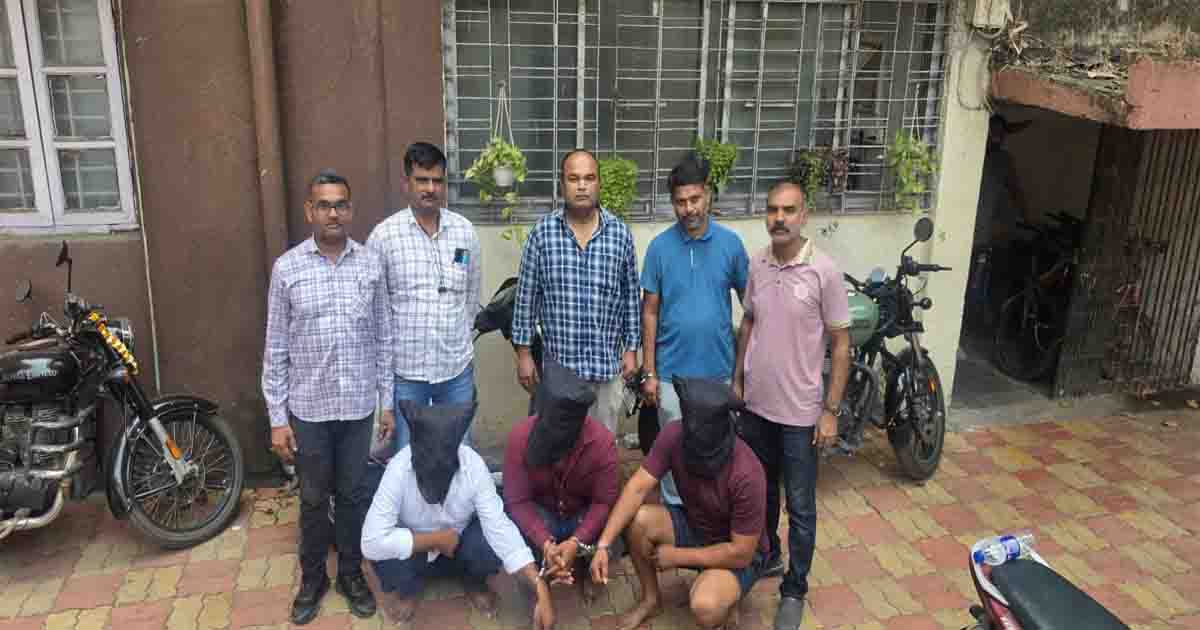
On October 25, the Anti-Narcotics Cell (ANC) of Mumbai claimed to have arrested individuals—who were also wanted in a murder case—while they were in possession of narcotics. During a patrol near the main gate of Shri Krishna Complex, opposite the National Park in Borivali West, Mumbai, the Ghatkopar unit of the ANC apprehended three individuals who were allegedly selling ‘MD’ (Mephedrone). Upon searching them, 1.028 kilograms of Mephedrone was recovered. The police registered a case (Kasturba Marg Police Station, Case No. 728/2026) under Sections 8(c) read with 22(c) and 29 of the NDPS Act, 1985. During the subsequent interrogation, it was revealed that the arrested individuals were also involved in a murder case. They had brought the narcotics from Nalasopara with the intent of selling them at this location.
The arrested individuals include a 28-year-old man, another 28-year-old man, and a 39-year-old man. A total of 1.028 kilograms of Mephedrone was seized from the three suspects.
This successful operation was carried out under the guidance of Police Commissioner Deven Bharti, Joint Commissioner of Police (Crime) Anil Kumbhare, Additional Commissioner Kant Upadhyay, and DCP Purnima Chougule-Shringi.

Drug dealer arrested in Mumbai with 1.5 kg of charas (cannabis resin)

Lawrence Bishnoi gang shooters had practised shooting in the Aarey Colony forest before opening fire at Tiger Shroff’s residence.

PM Modi witnesses IAF’s air show, inaugurates garment facility in Varanasi

Major action by Mumbai ANC: Drug peddlers arrested.

Delhi Police bust Jamtara-based cyber fraud syndicate, 2 held for credit card fraud

Rahul, Cong ecosystem want to force regime change: BJP after Neha Bora praises B’desh Gen-Z protest

BJP pays tribute to ex-President Abdul Kalam, recalls his enduring influence on generations of India’s youth

Attack on democratic rights: INDIA Bloc leaders on detentions of anti-ECI protestors

INDIA bloc begins protest march against ECI

Maha Congress stages agitation against Gyanesh Kumar
-

 Crime4 years ago
Class 10 student jumps to death in Jaipur
-

 Maharashtra2 years ago
Mumbai Local Train Update: Central Railway’s New Timetable Comes Into Effect; Check Full List Of Revised Timings & Stations
-

 Maharashtra2 years ago
Mumbai To Go Toll-Free Tonight! Maharashtra Govt Announces Complete Toll Waiver For Light Motor Vehicles At All 5 Entry Points Of City
-

 Maharashtra2 years ago
False photo of Imtiaz Jaleel’s rally, exposing the fooling conspiracy
-

 National News2 years ago
Ministry of Railways rolls out Special Drive 4.0 with focus on digitisation, cleanliness, inclusiveness and grievance redressal
-

 Maharashtra2 years ago
Maharashtra Elections 2024: Mumbai Metro & BEST Services Extended Till Midnight On Voting Day
-

 National News2 years ago
J&K: 4 Jawans Killed, 28 Injured After Bus Carrying BSF Personnel For Poll Duty Falls Into Gorge In Budgam; Terrifying Visuals Surface
-

 Crime2 years ago
Baba Siddique Murder: Mumbai Police Unable To Get Lawrence Bishnoi Custody Due To Home Ministry Order, Says Report