
International News
Xi Jinping expects to be in command till 2035

Certainly, some critique put him on a par with Deng Xiaoping or even Mao Zedong. Some years ago, Xi Jinping had made a classic statement – “One must build a good cage. If the cage is too loose, or is very good but the door is not closed, and one is free to go in and out, then that is of no use.”
Now, the Communists party in China moves on to a new central task — to achieve the “second centenary goal of building China into a great modern socialist country in all respects and to advance the rejuvenation of the Chinese nation on all fronts through a Chinese path to modernisation.
The mega Chinese goal is tied to the 100th anniversary of the founding of the People’s Republic of China — which would be 2049 — but Xi has pushed the date for “basically” realizing this goal forward to 2035.
Conveniently, that leaves the door open for Xi to still be in command of the party at the big celebration 13 years from now.
Marxists in once upon a time Red forte Tripura – used to often say the line from a play. The line of the play was of course penned obviously with a pro-Left liberal sentiment:
“Every war or struggle is for power; and power can never do good to anybody”.
The economic policy that Xi has put forward contains a similar sort of contradiction.
The central idea of the “dual circulation” policy is that China should increase its trade surplus with the wider world, while simultaneously becoming more dependent on its domestic economy to drive consumption.
Many economists think that this will be a hard balance to manage. But, in a sense, the strategy should not be seen as an exercise in economics but in politics. It mirrors precisely the idea of being highly connected to the world while closed to it physically.
But compared with real openness, it is one that would leave both sides poorer.
“China remains connected to the outside world largely through the virtual environment, in particular social media and video apps. Yet the vision of the world created within the country is very partial. State media pumps out images of the west still devastated by the virus,” says an article ‘The Guardian’.
China, Xi – And Peace in India’s North East
This is one of the most perilous periods in international history. There’s something big happening everywhere — China, Ukraine, Indo Pacific and of course Britain where Liz Truss had the shortest stint ever in history as Prime Minister.
On the last day of Communists Party Congress in China on Saturday, Oct 22, former President Hu Jintao, was ‘removed’ unceremoniously and by force by so-called ‘unnamed Chinese communist agents’.
Both China and the Chinese communists have many admirers in India and also in the northeast closer home as well.
To them New Delhi ‘could not be trusted’ but Xi Jinping’s polity should be applauded.
China is that country which has seen almost 30 years of 9 and 10 per cent of average growth even till fiscal 2016-17.
This was surely an unprecedented performance by any country at the global stage.
Importantly, during this period, around 50 per cent of global growth came from China and India was by default and otherwise part of the beneficiary list.
The drop in Chinese growth rate had impacted global trade and commerce too. In fact, the global trade shrunk as a result of the negative impact on China’s own growth graph.
At one time even India benefited and the country’s global trade was growing at an average of seven percent a year.
The politics of China and also the other global challenges make a lot of sense even in the neighbourhood.
It would impact now and it impacted regional politics even in the past.
In the context of northeast India, Mon and Tuensang were the battlefields of various ultra groups.
In the eighties, Indian security force reports used to suggest that communist China’s help and logistic support was crucial at least for one camp
Even the church lobby was unhappy.
One such internal security analysis had said that the league of western Christian countries led by the US and the United Kingdom were bemused while the Indian jawans reportedly watched from a distance what they called a snake-mongoose fight.
But enough water has flown in river Dhansiri near Dimapur since then. ‘Christ’ and his principles and values are now a public pledge. ‘Nagaland for Christ’ – as they put it.
However, it is altogether a different chapter that violence and threats pursue at different levels.
According to the annual report of the Ministry of Home Affairs, 2020, incidents of insurgency in six out of eight northeastern states declined by 80 per cent since 2014 and civilian deaths were down by 99 per cent.
The year 2020 also had recorded the lowest insurgency incidents and casualties among civilians and security forces in the last decades. This was the year of the Galwan valley conflict nevertheless.
But around September 2020, in a retort to Prime Minister Narendra Modi’s statement aimed at China that — the era of expansionism is over — the rebels also had issued a joint statement saying, as the entire world has made up its mind against expansionism, the people of West Southeast Asia are also countering the expansionism of India.
One must study these statements based on the availability of Chinese-made arms in the Northeast.
In 2020, when it was realised at the Government of India level that the Naga peace talks had been stalled, as expected the apprehension was Chinese hands.
On September 18, 2020, there was a clear setback to all efforts for reconciliation as the NSCN-IM issued a statement from its headquarters saying a separate Naga flag and constitution “must form a part of the Indo-Naga political solution”.
Given the contest, one source had said even during the UPA regime in 2011-12, Chinese agents including a woman posing as a TV journalist reportedly visited the headquarters of the NSCN-IM near Dimapur and held a three-hour-long meeting with top NSCN-IM leaders.
On September 28, 2022, NSCN-IM issued a statement alleging that the government of India has “hindered” the peace parleys.
It also said, “therefore there is an imperative need for third party intervention” in Naga talks.

International News
EAM Jaishankar and US counterpart Rubio discuss advancing ties, regional developments

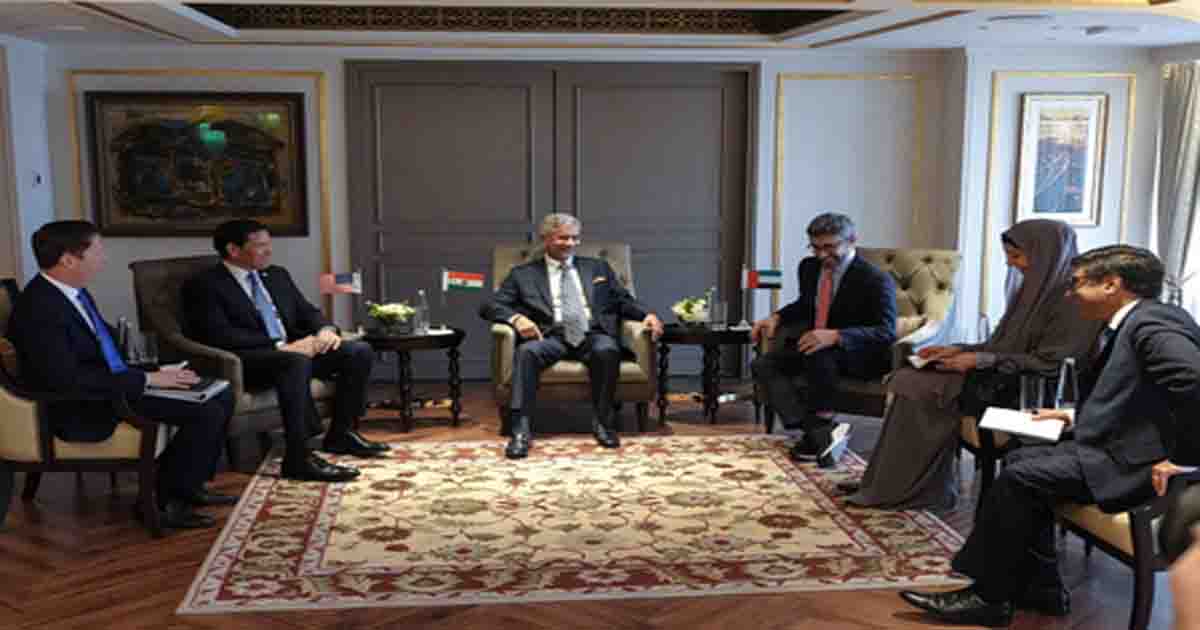
External Affairs Minister (EAM) S Jaishankar held a meeting with US Secretary of State Marco Rubio in Mumbai on Tuesday, with discussions focusing on further advancing bilateral ties.
During the meeting, the two ministers exchanged views on regional developments. Foreign Secretary Vikram Misri, US Ambassador to India Sergio Gor and other officials were also present at the meeting.
“Pleased to meet US Marco Rubio in Mumbai today. We shared views on further advancement of our ties, focusing on trade, energy, technology, defence and people-to-people ties. Also exchanged views on regional developments,” EAM Jaishankar stated on X after the meting.
Rubio said that he and EAM Jaishankar discussed energy security and defence cooperation.
“In Mumbai, Indian External Affairs Minister S Jaishankar and I discussed energy security and defense cooperation while reaffirming the importance of advancing the U.S.-India strategic partnership,” the US Secretary of State posted on X.
Earlier, EAM Jaishankar, Marco Rubio and UAE Foreign Minister Sheikh Abdullah bin Zayed Al Nahyan held a meeting in Mumbai, with discussions held on regional energy security and advancing shared economic priorities.
“It was great to meet with Indian External Affairs Minister S Jaishankar and UAE Foreign Minister Sheikh Abdullah bin Zayed Al Nahyan to discuss regional energy security and advance our shared economic priorities,” Rubio stated on X after the meeting.
Following the meeting, Ambassador Gor also took to X and wrote: “The US, India, and UAE have real opportunities to advance cooperation on energy, trade, technology, and regional connectivity. Marco Rubio, S Jaishankar, and UAE Foreign Minister Sheikh Abdullah bin Zayed Al Nahyan in Mumbai for a discussion on turning our close ties into concrete results!”
Earlier in the day, Marco Rubio arrived in Mumbai for an official visit to India. For his visit to Mumbai, Rubio is accompanied by his wife, Jeanette Rubio and US Ambassador to India Sergio Gor.
The Ministry of External Affairs (MEA) extended a warm welcome to Rubio as he arrived in Mumbai for his second visit to India, noting that it provides an opportunity to further advance cooperation across various pillars of the India-US Comprehensive Global Strategic Partnership.
“Welcome to Mumbai, US Secretary of State Marco Rubio, on your second visit to India! He was received by Shri Ashish Shelar, Minister of Culture, Electronics, IT and AI, Government of Maharashtra at the airport. The visit provides an opportunity to further advance cooperation across the various pillars of the India-US Comprehensive Global Strategic Partnership,” the MEA posted on X.
After concluding his engagements in Mumbai, Rubio will travel to Gujarat’s Jamnagar for talks that will include “enhanced energy cooperation”, the US State Department said.
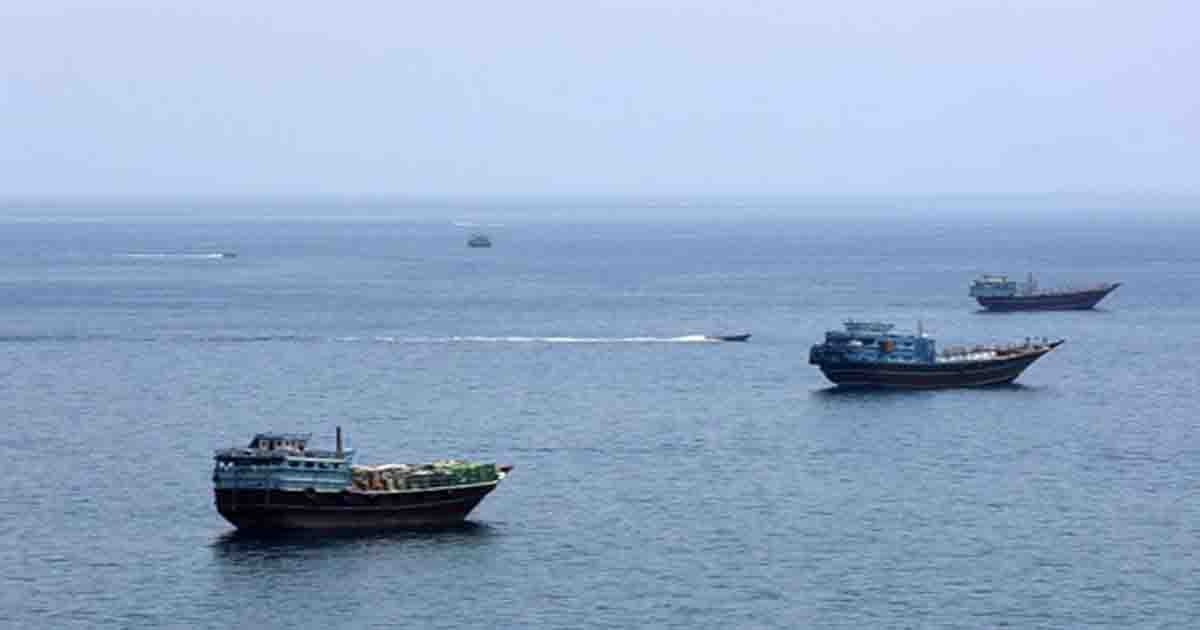
The United States has effectively blocked Iranian oil exports through the Strait of Hormuz while allowing millions of barrels of crude from other countries to reach global markets, Secretary of State Marco Rubio has said, describing the strategy as part of Washington’s efforts to weaken Tehran’s economy without disrupting international energy supplies.
Rubio said between 13 million and 14 million barrels of oil were passing through the strategic waterway daily, with American military forces escorting and protecting commercial vessels against Iranian attacks.
The remarks, made during an interview with Breitbart News on October 15 and released by the State Department on October 19, offered an account of Washington’s military and economic strategy in the Gulf.
“Today, on average over the last 10 days and certainly over the last 30, about 13 to 14 million barrels of oil are going through the Straits of Hormuz out to the global market, and some days it’s actually equivalent to what it was pre-conflict,” Rubio said.
The figures represent the administration’s assessment and were not independently verified in the interview.
The Strait of Hormuz is one of the world’s most important energy corridors, connecting oil-producing Gulf countries with international markets, including India and other major Asian economies.
Rubio said American forces were helping maintain shipping movements despite continuing Iranian attacks.
“And the U.S. military is involved in escorting and defending these ships from these strikes,” he said.
The Secretary of State claimed that Iran had lost control of the waterway following American military operations and that Washington was now using sanctions and a blockade to restrict Tehran’s oil revenues.
“The only country in the world that cannot get a single barrel of oil through the Straits of Hormuz is Iran,” Rubio said.
The assertion was not accompanied by independent shipping data or figures showing the volume of Iranian exports affected by the restrictions.
Rubio said the administration’s objective was to prevent Iran from using energy supplies and maritime security as instruments of pressure against other countries.
He argued that American military operations had significantly weakened Iran’s conventional capabilities, including its naval forces, air defences and facilities producing missiles and drones.
According to Rubio, the administration had sought to prevent Tehran from developing a nuclear weapon while relying on conventional military capabilities to deter international intervention.
He said Iran continued to threaten shipping even after losing much of its ability to control the strait.
Rubio also defended the administration’s economic measures against Tehran, saying they were designed to reduce the resources available to Iran’s military and allied armed groups.
“Every dollar you deny them in sanctions is a dollar they don’t have for Hizballah, a dollar they don’t have for Hamas, a dollar they don’t have for the terrorist militias inside of Iraq, and a dollar they don’t have for their own military or their own nuclear ambitions,” he said.
The Secretary of State acknowledged public frustration over the continuing confrontation with Iran but maintained that Washington had achieved important military objectives.
He described the current American military role in the Strait of Hormuz primarily as defensive, involving the protection of shipping while economic pressure continued.
The claims about Iran’s military losses, oil exports and the effectiveness of the blockade could not be independently established from the interview alone.
The Strait of Hormuz connects the Persian Gulf with the Gulf of Oman and the Arabian Sea. It is a major transit route for crude oil and liquefied natural gas shipped from Gulf producers to international customers, making disruptions particularly significant for energy-importing Asian economies.
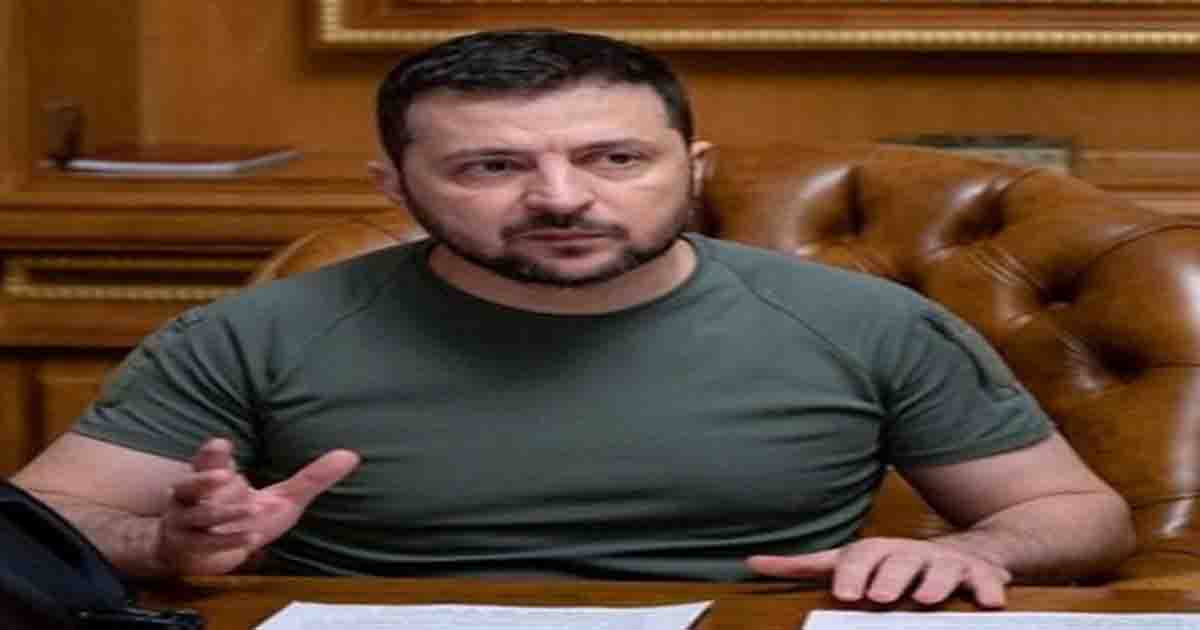
Ukrainian President Volodymyr Zelensky said that the United States temporarily suspended crucial intelligence sharing with Ukraine for three days, leaving its forces without American warnings of Russian ballistic missile attacks during that period.
In an interview with NBC’s Meet the Press, Zelensky also said restrictions on satellite communications used by Ukrainian forces had not been fully lifted, raising fresh questions about Washington’s military and intelligence support for Kyiv.
The Ukrainian leader said the intelligence interruption affected information that only the United States could provide, particularly advance warnings of ballistic missile strikes.
“We didn’t see attacks of Russia using ballistic missiles,” Zelensky said.
He said Ukraine continued receiving intelligence from European governments and other international partners, but their capabilities could not fully replace American systems.
“We have dozens of countries who help. But only United States has this unique intelligence to say, to tell us, to tell our side when Russia uses ballistic missiles,” he said.
“And we didn’t get it during ballistic attacks during three days.”
Zelensky said the intelligence-sharing arrangement had since been restored.
“It was blocked for some period of time. And then it was deblocked by American side. We are very thankful for this. Now it works,” he said.
The disclosure came amid growing tensions between Washington and Kyiv over President Donald Trump’s handling of the war with Russia.
Zelensky also raised concerns about restrictions affecting Starlink, the satellite internet network operated by Elon Musk’s SpaceX, and its military-related services.
Asked whether the interruption had been deliberate, Zelensky said Ukrainian military officials believed the restrictions originated with the American government.
“Of course the message came from government. I don’t know from whom, what cabinet, and etc,” he said.
He added that Ukrainian officials believed SpaceX had technically implemented the restrictions following instructions from Washington.
Zelensky acknowledged that he did not know which American official might have authorised the move.
Asked whether satellite services had been fully restored, he replied: “No, not of course. We have limitation.”
The Ukrainian President’s account was challenged by Treasury Secretary Scott Bessent, who appeared separately on the same programme.
Bessent said Trump and Secretary of State Marco Rubio had denied that anyone in the administration ordered restrictions on Starlink.
“President Trump and Secretary Rubio have categorically said that no one in the Trump administration did that,” Bessent said.
He called Zelensky’s allegation reckless and said he had no information about the reported intelligence interruption.
“Again, I don’t know anything about that, but we’ve been very clear,” Bessent said.
The conflicting accounts left unresolved who was responsible for the communications disruption and why American intelligence sharing had been temporarily interrupted.
Zelensky said Ukraine remained dependent on American military assistance despite its growing network of European partners.
“If it’s without United States’ support, it’s very difficult,” he said.
Russia launched its full-scale invasion of Ukraine in February 2022. Since then, American intelligence, weapons and satellite communications have played an important role in Ukraine’s defence against Russian military operations, including missile and drone attacks.

EAM Jaishankar and US counterpart Rubio discuss advancing ties, regional developments

Maha: Woman beaten to death with hammer over minor dispute in Palghar; two arrested

Woman arrested for extorting ₹4 crore by blackmailing victims with obscene videos

Major crackdown by Mumbai Crime Branch, 2 kg heroin worth ₹10 crore seized, three accused arrested.

Model Shraddha Dubey, wanted in businessman Shiva Sharma death case, arrested in Nagpur

Rahul, Cong ecosystem want to force regime change: BJP after Neha Bora praises B’desh Gen-Z protest

BJP pays tribute to ex-President Abdul Kalam, recalls his enduring influence on generations of India’s youth

Attack on democratic rights: INDIA Bloc leaders on detentions of anti-ECI protestors

INDIA bloc begins protest march against ECI

Maha Congress stages agitation against Gyanesh Kumar
-

 Crime4 years ago
Class 10 student jumps to death in Jaipur
-

 Maharashtra2 years ago
Mumbai Local Train Update: Central Railway’s New Timetable Comes Into Effect; Check Full List Of Revised Timings & Stations
-

 Maharashtra2 years ago
Mumbai To Go Toll-Free Tonight! Maharashtra Govt Announces Complete Toll Waiver For Light Motor Vehicles At All 5 Entry Points Of City
-

 Maharashtra2 years ago
False photo of Imtiaz Jaleel’s rally, exposing the fooling conspiracy
-

 National News2 years ago
Ministry of Railways rolls out Special Drive 4.0 with focus on digitisation, cleanliness, inclusiveness and grievance redressal
-

 Maharashtra2 years ago
Maharashtra Elections 2024: Mumbai Metro & BEST Services Extended Till Midnight On Voting Day
-

 National News2 years ago
J&K: 4 Jawans Killed, 28 Injured After Bus Carrying BSF Personnel For Poll Duty Falls Into Gorge In Budgam; Terrifying Visuals Surface
-

 Crime2 years ago
Baba Siddique Murder: Mumbai Police Unable To Get Lawrence Bishnoi Custody Due To Home Ministry Order, Says Report