
Maharashtra
Who will care about those who care about everyone’s life: JJ Hospital Mumbai

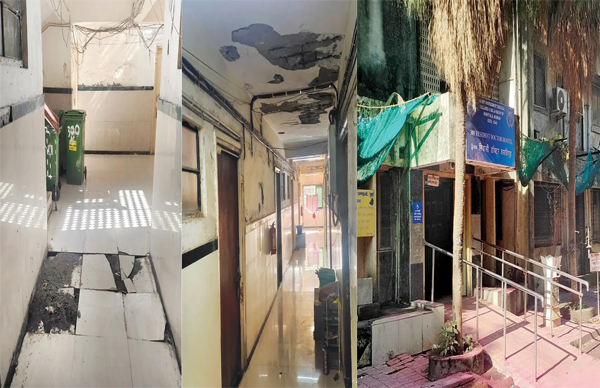
Resident doctors at Grant Medical College and Sir JJ Group of Hospitals, one of the most prestigious medical colleges in the city, live in fear as the hostels are on the verge of collapse. the 500 postgraduate medicos live in the hostel despite reports of broken beams and staircases and leaking ceilings. The latest structural audit report also stated that there was a need for structural repair work.
Tiles on the floor and on the side wall have crumbled down. Chunks of plaster from ceiling had fallen off in many places, including rooms and lobbies. The doctors even erected plastic sheds inside the rooms to escape the leakage.
A senior resident doctor on the condition of anonymity said, “We have no other option but to stay here. You can see that a part of the ceiling had collapsed. Fortunately, we were on duty at that time, so nobody was harmed.” “We live in misery. There is no floor, plasters are falling down. There are big cracks on pillars and iron rods, all rusted, are visible from the damaged wall. There is leakage issue too, which leads to fungal growth. Even the stairs are broken,” said another resident doctor.
A representative from Maharashtra State Association of Resident Doctors (MARD) said, “We have informed the administration about the bad condition of the building many times. But no decisions are being taken by the government. They have applied nets all around the building because the outside structure is falling. Is the government waiting for any mishap to take place?”
A senior official from JJ hospital said, “The hostel was built around three decades ago to accommodate 200 medical students. Now around 500 resident doctors live in this 7-storey building. The student strength has increased to 1,000, and half of them are living in another hostel. The number of resident doctors will soon increase to 1,500, so we need to build another building.” Attempts to contact Dean Dr Pallavi Saple went unanswered.
‘Structural repair needed’
A senior official from the Public Works Department (PWD) said, “There was a building collapse in the area after which the BMC ordered a structural audit of all buildings. We asked Veermata Jijabai Technological Institute (VJTI) to do so. The report, which was submitted to us recently, says that the building is not dangerous but needs structural repair work. As per my knowledge, no structural repair work has been conducted here in the three decades.”
“A proposal for repairs was sent earlier, but it got rejected. A new proposal for structural repairs at a cost of Rs 24.5 crore has been sent by the hospital administration to the Medical Education Department. Of this, Rs 12 crore will be for hostel repairs,” an official added.
PWD engineer Vijay Patil, who looks after JJ hospital works, said, “The building is safe as per the structural audit report, so doctors need not to worry. We have started the internal repair work. As far as the structural repair of the building is concerned, a proposal of Rs 12.50 crore has been sent. Once the resolution is passed, the work will start.” 500
No. of resident doctors living in the hostel


Maharashtra
Mumbai: Asif Dari’s son Sameer Khan opened fire in a money transaction dispute, two attackers arrested, claims Mumbai Crime Branch

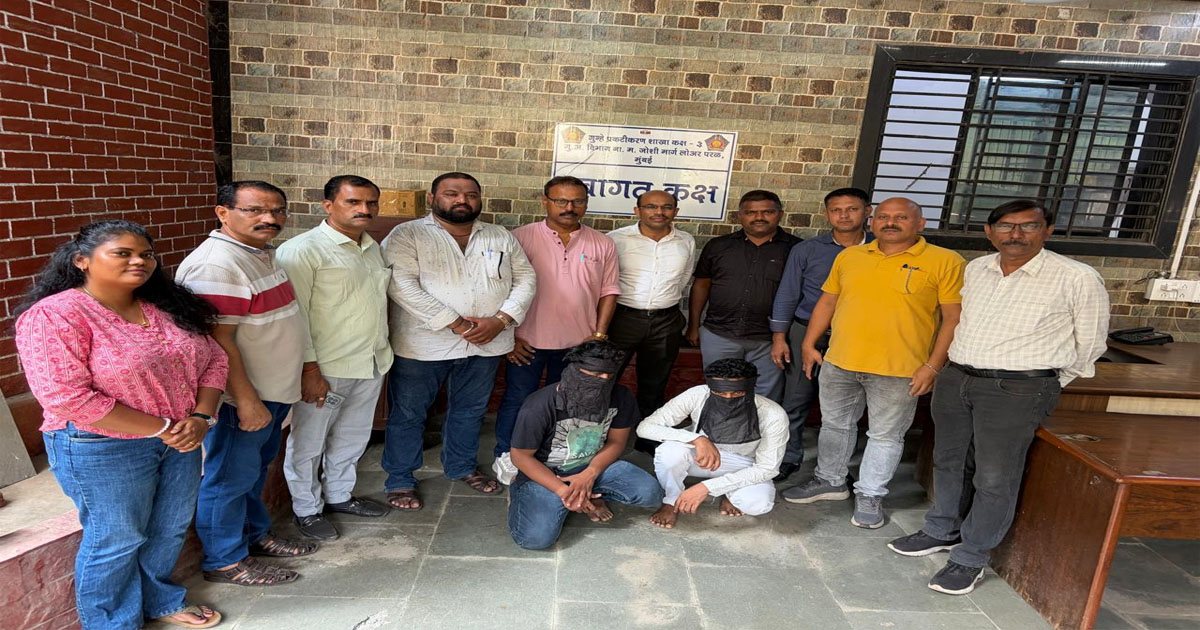
The Mumbai Crime Branch has claimed to have solved the case of the shooting of Sameer Khan, son of D and underworld don Dawood Ibrahim and Chhota Shakeel’s close aide Asif Dari, in the Mumbai Dockyard Road area. In this case, the Crime Branch has succeeded in recovering weapons, mobile phones and a motorcycle. Due to a money transaction and dispute, the accused targeted Asif Dari’s son Sameer Khan and attacked him. After that, the police reached the spot and conducted other investigations including forensic examination and started a parallel investigation in this case of the Mumbai Crime Branch and the Crime Branch found the trace of the accused attackers on technical grounds, after which the Crime Branch Unit 3 arrested both the shooters near Mahim Dargah on the outskirts of Mumbai in the middle of the night. On the instructions of Mumbai Police Commissioner Devin Bharti, Joint Police Commissioner Lakshmi Gautam and DCP Raj Tilak Roshan carried out this operation. The accused have confessed to the crime in the initial investigation and said that they were involved in a money dispute. After the shooting incident, a case was registered in the Byculla police under the Arms Act and a case of murder was registered in this case. The Mumbai Crime Branch is investigating the case from an angle. The two accused who have been arrested have been identified as Sadiq Sheikh Liaquat Sheikh, 30, and Zeeshan Anwar Sheikh, 30. Asif Dari has underworld connections, so the Crime Branch is also investigating this angle. It is said that Sameer Khan is also the owner of a construction company and has also obtained the contract for its construction. The Mumbai Crime Branch is also investigating this case. After this shooting, there was a sensation and tension in Mumbai, but the Mumbai Crime Branch solved the case within a few hours and the accused are in police custody. The Crime Branch is also investigating whether more people are involved in this or not and who had ordered the attack on Sameer. In the initial investigation, both the accused were found to be involved in this case.
Maharashtra
Palghar Accident: Mango-Laden Tempo Overturns On Mumbai-Ahmedabad Highway; Locals Collect Scattered Fruit
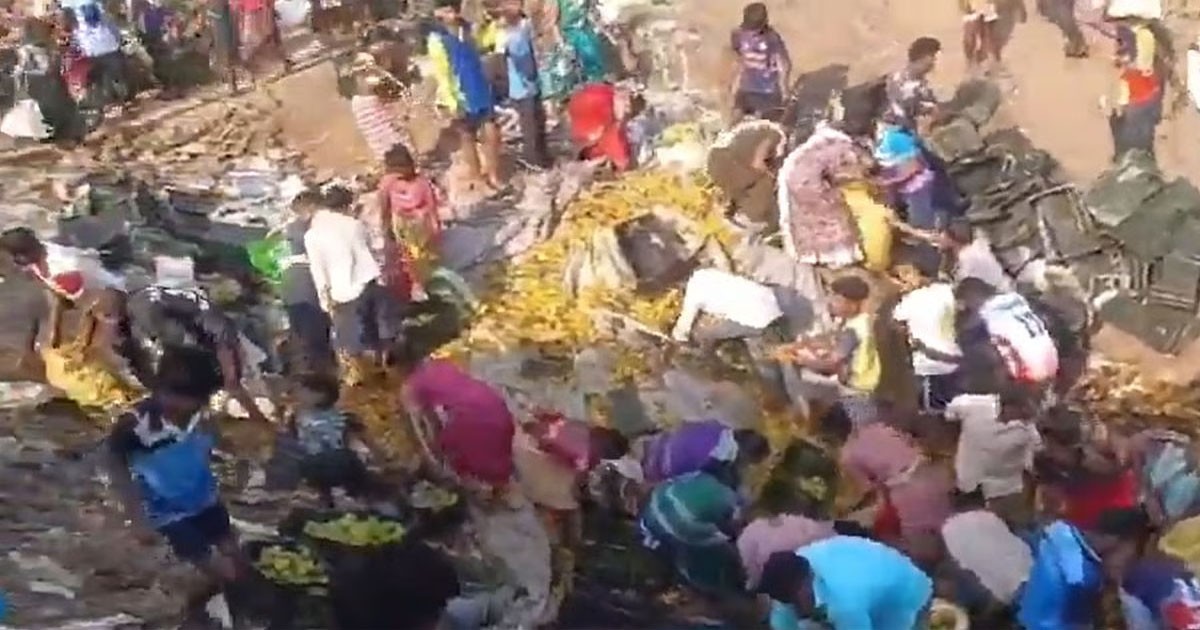
Palghar, May 13: A tempo carrying mangoes overturned on the Mumbai-Ahmedabad National Highway near the Chamadra bridge close to the Ghol toll plaza, leading to chaotic scenes as residents rushed to gather the fruit scattered across the road.
According to reports, the vehicle was transporting mangoes from Gujarat to Mumbai when the driver allegedly lost control of the tempo, causing it to overturn by the roadside. The driver sustained minor injuries in the accident.
Following the crash, several crates of mangoes spilled onto the highway, leaving the fruit strewn across a large stretch of road. As news of the incident spread, local residents rushed to the spot carrying bags, sacks, and other containers to collect the mangoes. Videos showing crowds scrambling to pick up the fruit have since gone viral on social media.
The sudden gathering of people also disrupted traffic movement on the busy national highway for some time.
Police and local authorities later arrived at the scene to regulate traffic and clear the road. No major injuries were immediately reported, and further investigation into the incident is currently underway.
Maharashtra
Maharashtra Tragedy: 8 Devotees Injured After Mini Bus Overturns On Mumbai–Pune Highway Near Khopoli
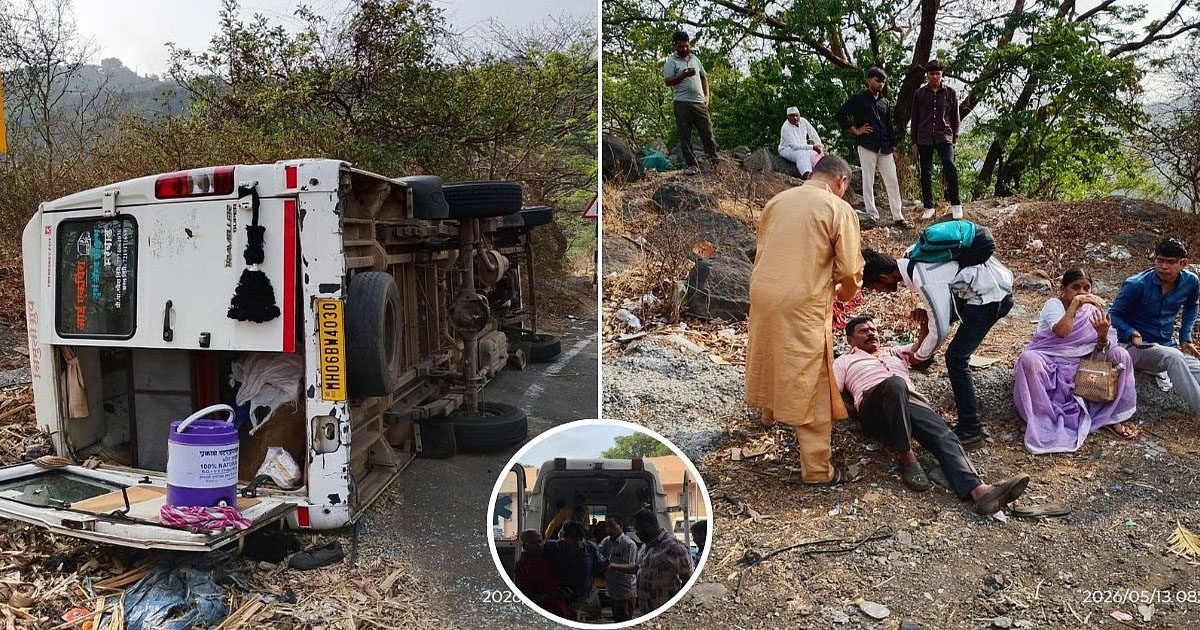
Navi Mumbai, May 13: Eight devotees were injured after a mini bus travelling from Murbad to Jejuri overturned at a dangerous curve on the Mumbai–Pune National Highway (NH-48) near the HOC bridge around 8:15 am on Wednesday.
The injured were first taken to Dr Babasaheb Ambedkar Khopoli Municipal Hospital and later shifted to MGM Hospital in Panvel for further treatment.
The accident involved a Force mini bus (MH-06-BW-4030) driven by Bharat Ramesh Shelke (28), a resident of Shelke Pada in Murbad, Thane district. The bus, carrying devotees, was heading towards Jejuri when the driver allegedly lost control on a downhill curve, causing the vehicle to overturn.
The injured have been identified as Kamalabai Ramchandra Mali (70), Gurunath Dongre (60), Balaram Bhoir (65), Ravindra Ram Mali (45), Gulabbai Dattu Humne (85), Ashok Jayaram Dongre (60), Kasturi Ganesh Mali (15), and Meenabai Gurunath Dongre. All the injured are residents of Shelke Pada in Murbad taluka.
Teams from the Borghat Highway Traffic Police, IRB patrolling unit, Delta Force, Maharashtra Security Force, along with ambulances from Lokmanya Hospital and Swamini services, and members of Help Foundation, rushed to the spot and carried out a rescue operation, safely evacuating the injured passengers.
“The driver lost control of the vehicle at a sharp turn, leading to the accident. The injured were immediately rescued and shifted for medical treatment. Further investigation is underway,” said Police Inspector Sachin Hire of Khopoli Police Station.
Traffic on the highway was restored after the damaged vehicle was moved aside, and police have initiated further investigation into the incident.

Mumbai: Asif Dari’s son Sameer Khan opened fire in a money transaction dispute, two attackers arrested, claims Mumbai Crime Branch

Palghar Accident: Mango-Laden Tempo Overturns On Mumbai-Ahmedabad Highway; Locals Collect Scattered Fruit

Maharashtra Tragedy: 8 Devotees Injured After Mini Bus Overturns On Mumbai–Pune Highway Near Khopoli

Western Railway Announces Midnight Block At Dadar Station, Several Local Trains Cancelled On May 15 & 16

‘PM Modi Urges Public Transport Use, But Maha Govt Is Curtailing Commute Options’: Priyanka Chaturvedi Slams Action Against Ola, Uber, Rapido

‘Son Falsely Implicated, We Are Well-Educated’: Father Of Accused Tausif Attar Defends Son After Skullcap, Namaz Coercion Allegations Rock TCS Nashik

Mumbai: 15th arrest in Rohit Shetty shooting case, shooter identified, arrested, more arrests possible

Maharashtra Shock: 22-Year-Old Arrested For Exploiting & Blackmailing Multiple Women In Kolhapur; Love Jihad Angle Suspected

27 Years After Gangster Sadiq Kalia’s Encounter By Daya Nayak, His Nephew Arrested For Alleged Revenge Killing In Mumbai

Google to invest up to $40 billion in Anthropic amid global AI race
-

 Crime4 years ago
Class 10 student jumps to death in Jaipur
-

 Maharashtra2 years ago
Mumbai Local Train Update: Central Railway’s New Timetable Comes Into Effect; Check Full List Of Revised Timings & Stations
-

 Maharashtra2 years ago
Mumbai To Go Toll-Free Tonight! Maharashtra Govt Announces Complete Toll Waiver For Light Motor Vehicles At All 5 Entry Points Of City
-

 Maharashtra2 years ago
False photo of Imtiaz Jaleel’s rally, exposing the fooling conspiracy
-

 National News2 years ago
Ministry of Railways rolls out Special Drive 4.0 with focus on digitisation, cleanliness, inclusiveness and grievance redressal
-

 Maharashtra1 year ago
Maharashtra Elections 2024: Mumbai Metro & BEST Services Extended Till Midnight On Voting Day
-

 National News2 years ago
J&K: 4 Jawans Killed, 28 Injured After Bus Carrying BSF Personnel For Poll Duty Falls Into Gorge In Budgam; Terrifying Visuals Surface
-

 Crime2 years ago
Baba Siddique Murder: Mumbai Police Unable To Get Lawrence Bishnoi Custody Due To Home Ministry Order, Says Report