
International News
West Asia conflict: India advises nationals in Iran against uncoordinated movement toward land borders

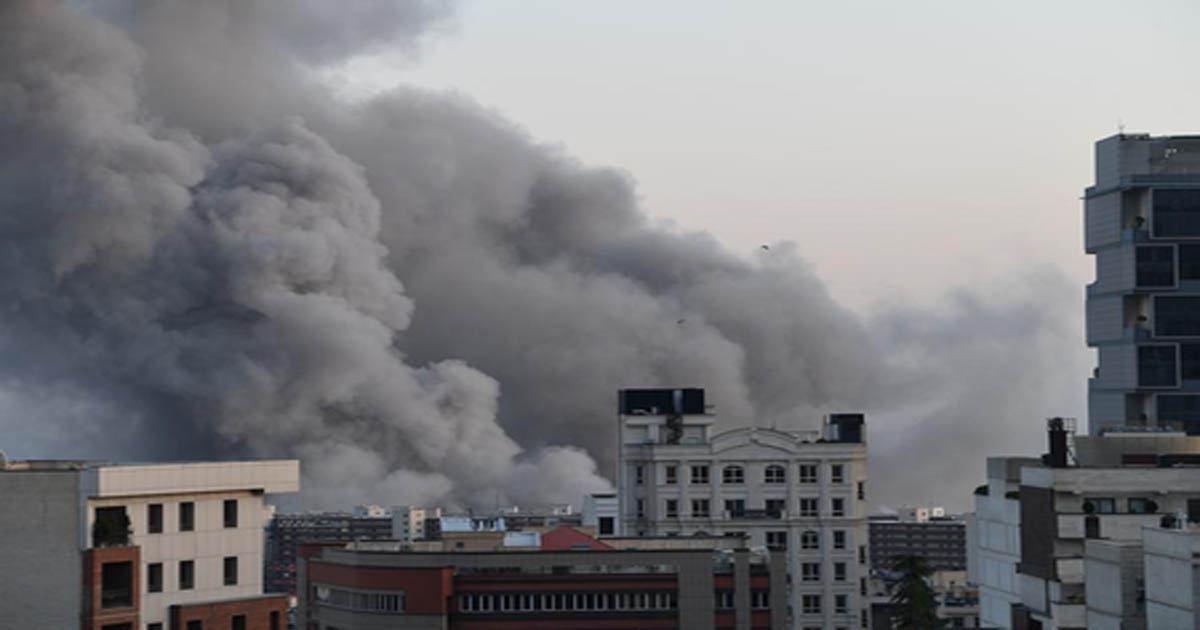
Tehran, March 16: India has again warned its citizens in Iran not to attempt to cross any land border without prior and explicit coordination with the Embassy in Tehran.
In an advisory on Monday, the Indian Embassy in Tehran said, “In continuation/ reiteration of our advisory of March 9, all Indian nationals currently in Iran are strictly advised not to approach or attempt to cross any land border of Iran for onward travel without prior and explicit coordination with the Embassy of India, Tehran.”
The Embassy stated that it is in regular contact with members of the Indian community, and coordinated arrangements are being undertaken wherever necessary.
“Uncoordinated movement toward land borders is strongly discouraged,” it said.
Indian nationals who attempt to leave Iran via land borders without the knowledge and guidance of the Embassy, it said, are “highly likely to encounter serious logistical and immigration difficulties”.
“Please note that the Embassy will not be in a position to provide assistance once individuals move outside Iranian territory without prior coordination,” the advisory read.
“All Indian nationals in Iran are therefore urged to strictly follow Embassy advisories and remain in touch with official channels, and before undertaking any travel,” it added.
Meanwhile, the first batch of 70 Indian students evacuated from Iran via Armenia has safely landed in Delhi, the J&K Students Association (JKSA) announced on Sunday.
Nasir Khuehami, national convenor of the JKSA, said: “The first batch of more than 70 Indian students — the majority of them from Jammu and Kashmir, along with several pilgrims — who had been stranded in Iran amid the ongoing war-like situation in the region, safely arrived at Indira Gandhi International Airport, New Delhi, on a commercial flight this morning as part of the initial phase of the evacuation process.
“The students returned to India via a connecting journey through Armenia and Dubai after undertaking a long and difficult land and air transit arranged in coordination with the concerned authorities.”
These students travelled from different cities in Iran by bus and crossed into Armenia, from where they boarded a Flydubai flight from Zvartnots International Airport in Yerevan to Dubai. From Dubai, the passengers boarded another connecting Flydubai flight that landed at Indira Gandhi International Airport at around 9.45 a.m. on Sunday.
The majority of the returning students had been studying at various universities across Iran, including Urmia University of Medical Sciences, Tehran University of Medical Sciences, and other universities across the country. Many of them had earlier been relocated to safer locations by the Indian Embassy in Tehran amid the deteriorating security situation.
The Association expressed gratitude to the Ministry of External Affairs and the Indian Embassy in Tehran for facilitating the safe evacuation and ensuring the students’ return to India during a challenging situation. This development has brought much-needed relief to students and families across Kashmir who had been deeply worried about the safety of their children in the conflict-affected region.


Washington, April 29: The United States is sharpening its military focus on China as its primary long-term strategic challenge, with senior commanders warning that cyber capabilities and special operations forces will be critical in maintaining an edge in an increasingly contested global environment.
At a Senate hearing on the posture of US Special Operations Command and Cyber Command, Admiral Frank Bradley said American forces must simultaneously address multiple threats but remain oriented toward Beijing.
“We must also orient our force on the long-term pacing challenge of China,” Bradley told lawmakers during his testimony as he outlined a security landscape shaped by overlapping risks from Russia, Iran and transnational networks.
He said US forces no longer have “the luxury of focusing on only a single goal or mission,” describing a strategic environment defined by what officials called “simultaneity” — managing competition and conflict across regions and domains.
Cyber Command leaders stressed that technological competition, particularly in artificial intelligence, is central to countering China’s military rise. General Joshua Rudd said maintaining superiority in advanced technologies is essential to preserving US advantages.
“I think it’s critical that the US has the technological advantage in every aspect of warfighting,” he said, adding that Washington must “retain and maintain our advantage” as AI becomes more deeply embedded in military operations.
Lawmakers warned that China is actively leveraging emerging technologies. In exchanges during the hearing, officials agreed that Beijing is using artificial intelligence in military applications, underscoring the urgency of the technological race.
The Pentagon is responding through a sweeping overhaul known as “Cybercom 2.0,” aimed at strengthening the cyber workforce and accelerating innovation. Katherine Sutton, Assistant Secretary of Defense for cyber policy, said adversaries are moving rapidly to exploit vulnerabilities.
“Our adversaries have moved beyond conducting espionage and theft, and are preparing for conflict by pre-positioning disruptive capabilities inside our nation’s critical infrastructure,” Sutton said.
Responding to a question, Sutton described cyber as “the connective tissue of modern warfare.” Integration across domains is essential to counter increasingly sophisticated threats, she added.
Highlighting the growing role of partnerships in countering China, particularly in the Indo-Pacific, Bradley said strengthening alliances and building partner capacity remain central to deterrence.
He pointed to long-standing relationships in the region, emphasising that trust and credibility built over decades enable the United States to share intelligence and support partners facing evolving threats.
“Foremost and most important in any strategy of deterrence is to have that stronger alliance,” he said.
Special operations forces, which make up a small fraction of the military, provide “an indispensable asymmetric advantage,” particularly in contested environments where conventional forces may be limited.
At the same time, lawmakers expressed concern about the pace of operations and the strain on personnel, warning that sustained high demand could affect readiness over the long term.
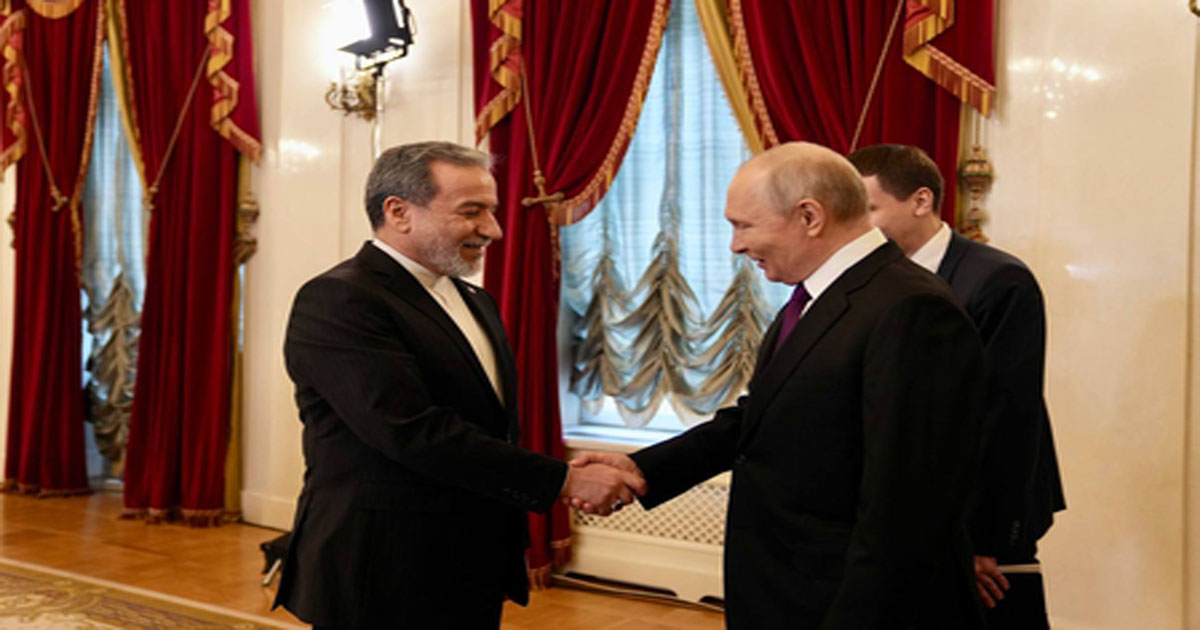
Saint Petersburg, April 28: Iranian Foreign Minister Abbas Araghchi on Tuesday said that Tehran is grateful for Russia’s solidarity and support for diplomacy as the war with the United States continues to escalate.
Araghchi on Monday called on Russian President Vladimir Putin in Saint Petersburg as the Kremlin reiterated its support for bringing peace to West Asia. He also held talks with his Russian counterpart, Sergey Lavrov.
Taking to X, Araghchi said, “Pleased to engage with Russia at the highest level as the region is in major flux. Recent events have evidenced the depth and strength of our strategic partnership. As our relationship continues to grow, we are grateful for solidarity and welcome Russia’s support for diplomacy.”
Putin on Monday reiterated Russia’s support for peace in Iran.
“For our part, we will do everything that serves your interests, the interests of all the peoples of the region, to ensure that this peace is achieved as quickly as possible. You know our position well,” Russia’s Tass news agency quoted Putin as saying during the meeting with the visiting Iranian minister.
Putin stated that the people of Iran are fighting “courageously and heroically” for their sovereignty. He expressed hope that the people of Iran will overcome this “difficult period of trials and peace will come”. He also expressed Moscow’s readiness to bolster its ties with Tehran.
During the meeting, Araghchi conveyed the wishes of Iran’s Supreme Leader, Mojtaba Khamenei and President Masoud Pezeshkian to Putin. He mentioned that people of Iran, through their courage, were able to resist “US aggression”.
He expressed gratitude to Putin and Russia for their support of Iran and stated that the ties between Iran and Russia share a “strategic partnership at the highest level” and will develop “regardless of everything that happens,” Tass reported.
Earlier in the day, Araghchi arrived in Russia’s St Petersburg to hold talks with President Putin. Upon arrival in St Petersburg, Araghchi was received by Russian officials and Iran’s Ambassador to Russia, Kazem Jalali, Iran’s Islamic Republic News Agency (IRNA) reported.
Speaking to IRNA, Jalali said Araghchi’s visit is part of “close consultations” between Iran and Russia as the two nations have similar approaches to regional and international issues. He further said that the Presidents of Iran and Russia have held three phone calls since the conflict began on February 28.
Araghchi arrived in Russia after concluding his visit to Oman amid the ongoing tensions in West Asia.
Iran and the US reached a two-week ceasefire starting on April 8. Later, the two nations held the first round of talks on April 11-12 aimed at ending the conflict. However, the talks collapsed after 21 hours of negotiations.
International News
Iran’s FM Araghchi arrives in St Petersburg to hold talks with Russian President Putin

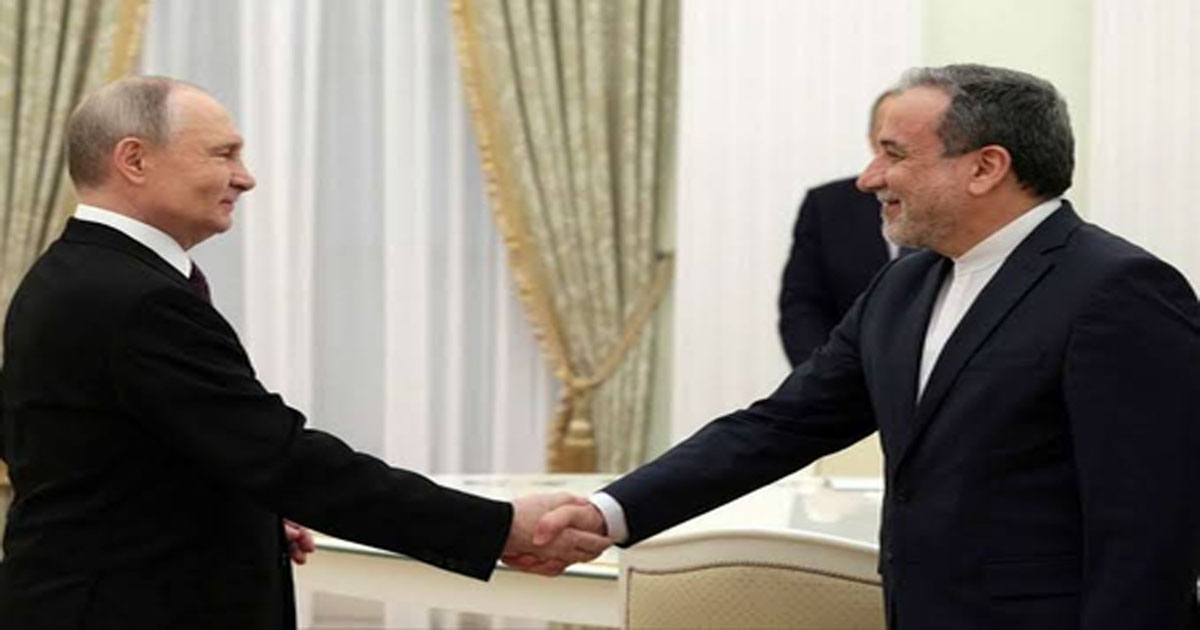
Moscow, April 27: Iran’s Foreign Minister Abbas Araghchi arrived in Russia’s St Petersburg on Monday to hold talks with President Vladimir Putin, local media reported on Monday.
Upon arrival in St Petersburg, Araghchi was received by Russian officials and Iran’s Ambassador to Russia, Kazem Jalali. According to Jalali, Araghchi and President Putin are set to hold talks in St Petersburg on Monday, Iran’s Islamic Republic News Agency (IRNA) reported.
Speaking to IRNA, Jalali said discussions between Araghchi and President Putin will focus on developments after the joint strikes by the US and Israel against Iran.
Jalali said Araghchi’s visit is part of “close consultations” between Iran and Russia as the two nations have similar approaches to regional and international issues. He further said that the Presidents of Iran and Russia have held three phone calls since the conflict began on February 28.
Araghchi arrived in Russia after concluding his visit to Oman amid the ongoing tensions in West Asia.
Earlier, the Iranian FM held a meeting with Oman’s Sultan Haitham bin Tariq, discussing bilateral ties, regional developments, and ongoing diplomatic efforts to resolve the regional crisis.
During the meeting, Araghchi briefed Oman’s Sultan about Iran’s stance on the latest developments of the conflict. He expressed appreciation for Oman’s support for dialogue and promoting efforts aimed at enhancing security and stability in the region, especially considering the current regional challenges, Iran’s Press TV reported.
Sultan Haitham highlighted Oman’s stance on advancing mediation efforts that would increase the chances of reaching sustainable political solutions and mitigate the impact of crises on the people of the region. He stressed the importance of using dialogue and diplomacy to resolve issues.
In a statement on X, Iran’s Foreign Ministry spokesperson Esmaeil Baqaei stated: “We are in Muscat for an official visit to the Sultanate of Oman — FM Araghchi’s first to the region following the recent US-Israeli aggression, which has impacted the broader region. Iran continues to place great importance on its relations with Persian Gulf states and remains committed to strengthening mutual trust and constructive cooperation. The Oman–Iran relationship stands as a testament to Iran’s genuine pursuance of respectful and mutually beneficial relations with its neighbours in the South.”
The tensions in West Asia escalated after the US and Israel carried out a joint military operation against Iran on February 28. The joint military strikes killed Supreme Leader, Ayatollah Ali Khamenei, triggering a large-scale military operation by Iran against Israel and the US bases in the Gulf nations. The conflict also led to the closure of the Strait of Hormuz, which triggered a global energy crisis.

Census 2027 campaign launched in Maharashtra, appeal to citizens to participate spontaneously in the national census: Devendra Fadnavis

Mumbai Kandivali shopkeeper attacked by gangster, attacker arrested, trying to create terror

Shock On Kasara Rail Line: Falling Rod From Hill Work Hits Moving Local, Passenger Dies; Officials Suspended

Navi Mumbai: NCB’s major operation, cocaine worth Rs 1745 crore seized, police arrest Ashwini from Titwala Padmavati Royals Society

Mumbai NCB freezes assets of kingpin and key associate of drug syndicate worth Rs 3.78 crore

Iran-Israel Conflict Hits India’s Real Estate: Supply Disruptions & Rising Costs Delay Project Possessions

‘Son Falsely Implicated, We Are Well-Educated’: Father Of Accused Tausif Attar Defends Son After Skullcap, Namaz Coercion Allegations Rock TCS Nashik

Mumbai: Pan-India Hawala Trail Exposes Chilling Conspiracy Behind Rohit Shetty House Firing Case

Asha Bhosle’s son says last respects to be paid at residence in Lower Parel, followed by last rites at Shivaji Park

Mumbai: 15th arrest in Rohit Shetty shooting case, shooter identified, arrested, more arrests possible
-

 Crime4 years ago
Class 10 student jumps to death in Jaipur
-

 Maharashtra2 years ago
Mumbai Local Train Update: Central Railway’s New Timetable Comes Into Effect; Check Full List Of Revised Timings & Stations
-

 Maharashtra2 years ago
Mumbai To Go Toll-Free Tonight! Maharashtra Govt Announces Complete Toll Waiver For Light Motor Vehicles At All 5 Entry Points Of City
-

 Maharashtra2 years ago
False photo of Imtiaz Jaleel’s rally, exposing the fooling conspiracy
-

 National News2 years ago
Ministry of Railways rolls out Special Drive 4.0 with focus on digitisation, cleanliness, inclusiveness and grievance redressal
-

 Maharashtra1 year ago
Maharashtra Elections 2024: Mumbai Metro & BEST Services Extended Till Midnight On Voting Day
-

 National News2 years ago
J&K: 4 Jawans Killed, 28 Injured After Bus Carrying BSF Personnel For Poll Duty Falls Into Gorge In Budgam; Terrifying Visuals Surface
-

 Crime2 years ago
Baba Siddique Murder: Mumbai Police Unable To Get Lawrence Bishnoi Custody Due To Home Ministry Order, Says Report