
Crime
Wardha ‘illegal abortions’: One more skull found in Kadam Hospital yard

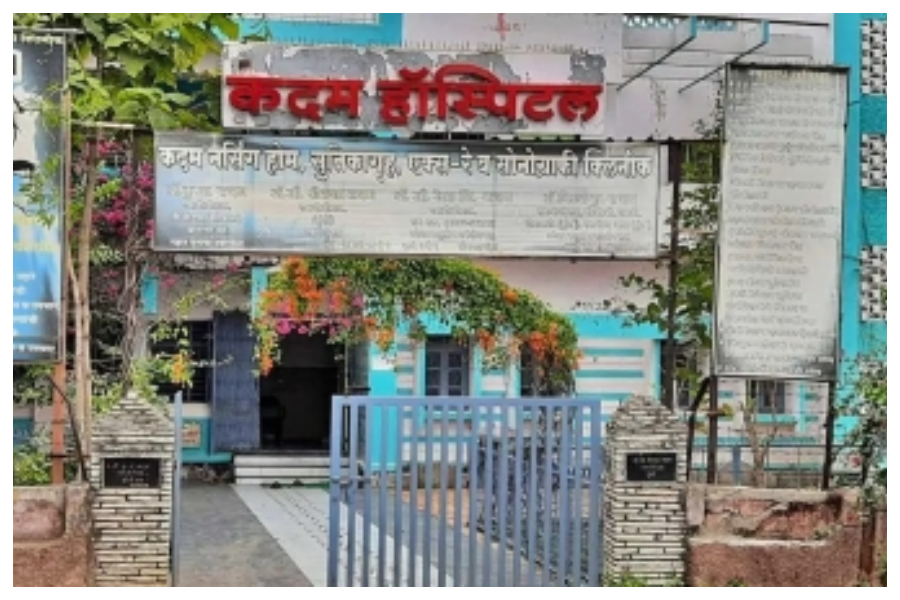
The police have recovered one more skull of an infant, allegedly aborted at the Kadam Hospital in Arvi town, and raids were carried out at several places, officials said here on Saturday.
The case, which has shaken the citizens’ collective conscience, first came to light after the Wardha Police arrested a lady medico, Dr Rekha N. Kadam, a nurse, and two others following the secret abortion performed on a 13-year-old girl there on January 4.
Interrogation of the accused and investigations led the police to discover a veritable ‘grave-yard’ of aborted foetuses or unwanted babies, found in the biogas plant of the hospital compound, stunning the people. (IANS – Jan 15).
In the ongoing digging work by a team of police officials, another skull of an aborted infant has been recovered, taking the total recoveries to 12 skulls and 54 other bones, all unidentified, besides bloodstained clothes and other evidence.
All the recoveries have been sent for forensic analysis to Nagpur, the reports of which are awaited, and further digging is being undertaken in the vicinity.
Simultaneously, raids were carried out at the hospital and the home of the prime accused and police have seized several files, medical records and reports and other evidence.
Police had also detained another relative of the prime accused (Dr Rekha Kadam) in connection with the probe, a lady senior citizen, but she suddenly took ill and was hospitalised.
Investigators and locals say that the hospital had earned a dubious reputation for “all types of abortions” for nearly four decades and people came here from all over Wardha and adjoining districts.
Prominent leaders including Shiv Sena’s Kishore Tiwari – accorded a MoS status – and Pune-based ‘Beti Bachao’ proponent Dr Ganesh Rakh have demanded a “thorough probe” into the medical racket, preferably by a SIT, to unravel the true ramifications like female infanticide on the sly besides illegal abortion, and punish all those found guilty.
As the probe progresses, the possible role or involvement of some persons in the local health department is expected to come under the scanner for their alleged lapses owing to which the illegalities thrived at the hospital for long, violating the provisions of the stringent Pre-Conception & Pre-Natal Diagnostic Techniques (PCPNDTA) Act, 1994.

Crime
Mumbai Crime: 3 Brothers Booked For Alleged ₹450 Crore Land Fraud In Bhandup Using Forged Documents


Mumbai, April 8: The Mumbai police have booked three brothers from Bhandup for allegedly forging affidavits and submitting false information to government authorities to fraudulently insert their names as legal heirs in official property records, including the property card and 7/12 extract. The accused are said to have subsequently sold this prime land parcel in Bhandup, currently valued at approximately Rs 450 crore.
The accused have been identified as Hitendra Shankar Gawand, Mahendra Shankar Gawand, and Narendra Shankar Gawand. Nimish Vajralal Sura, a partner in M/s Newkem Products Corporation, the company that purchased the land, has also been named as a co-accused in the case.
According to the FIR, the complaint was filed by Neeraj Prakash Malvi, 27, a resident of Thane West, who works at a private firm in Powai. He lives with his father, Prakash Malvi, 65, while his elder sister Hemangi, 29, recently got married in March 2026 and resides in Goregaon.
Neeraj’s mother, Bhavana Prakash Malvi (née Bhavana Shankar Gavand), passed away on May 9, 2005. Following her death, Neeraj and his sister, who were minors at the time, lived for a few years with their maternal uncle, Narendra Gavand.
The disputed land, located at Lake Road in Bhandup (West), bearing CTS Nos. 204 and 204/1 to 6, originally belonged to Neeraj’s grandfather, Shankar Narayan Gavand.
After his mother’s death, Neeraj’s father was allegedly assured by the three uncles that Bhavana Gavand was a legal heir and that her children would be entitled to a 5% share in the ancestral property.
The alleged fraud came to light in 2024 when Neeraj’s father initiated the process to sell a portion of the property for family needs. They discovered that the entire property had already been sold in 2010 by the three uncles to M/s Newchem Products Corporation.
Upon obtaining documents from the Mulund City Survey Office, it was revealed that shortly after Bhavana Gavand’s death, the accused brothers had submitted a false affidavit dated July 6, 2005, claiming that only they and their mother were the legal heirs of the deceased, deliberately excluding Bhavana’s children. Based on this affidavit, they allegedly got their names added to the property card and land records (7/12 extract).
Subsequently, on April 29, 2010, the brothers allegedly executed an illegal conveyance deed and sold the land to M/s Newkem Products Corporation.
The FIR further states that Nimish Sura was aware of Bhavana Gavand’s legal claim, as multiple meetings regarding the land transaction had taken place between 2003 and 2005 involving all family members, during which Bhavana had allegedly raised objections over her share.
Following Neeraj Malvi’s complaint, the Bhandup police have registered a case under relevant sections of the Indian Penal Code and have initiated further investigation.
Crime
Mumbai Crime: Anti‑Terrorism Branch Conducts Raids At 3 Locations In Kurar; Terror Funding Angle Being Probed
Mumbai: A Hawala racket was busted as the Anti-Terrorism Branch conducted raids at three locations in Mumbai’s Kurar area on April 8.
During the operation, they seized Rs 12.5 lakh cash, multiple fake passports, 9 mobile phones, a laptop, an iPad, and extensive documents, including bank wire transfer records. Authorities are probing a possible terror funding angle in the operation.
Earlier in March, a joint operation conducted by the police and the Anti-Terrorism Cell (ATC) detained two Ugandan women from the Vakola area for allegedly residing in India without valid documents.
The detained women were identified as Nakayondo Rose (37) and Kemigisa Proscovia (26). According to police sources, the duo had been living in the Kalina area of Mumbai for the past few years but did not possess valid visas or necessary legal documents to stay in the country. Acting on specific inputs about their prolonged illegal stay, police carried out a targeted raid in the area.
Prio to that, in February, the Mumbai Police, in coordination with the Anti-Terrorism Cell (ATC), intensified their crackdown on illegal Bangladeshi nationals residing in the city, detaining more than 30 individuals over the recent week as part of an ongoing verification and deportation drive.

Mumbai: witnessed a deeply unsettling incident in Baiganwadi, Govandi, where a young man was caught on CCTV allegedly stealing a mobile phone during Friday Jumma namaz at Noor e Illahi Masjid on Road No 8 on April 3, 2026.
The video, now widely shared across social media platforms, shows devotees immersed in prayer, completely unaware of their surroundings. In a matter of seconds, the accused quietly reaches into the pocket of a worshipper standing ahead of him, removes the phone, and walks away without drawing attention.
The brazenness of the act, carried out during a moment of faith and silence, has left residents disturbed. Many locals believe this may not be an isolated case and suspect the same individual could be linked to previous thefts in the area.
The incident has triggered concerns about safety even in places traditionally considered secure. Residents say the violation of trust within a place of worship has intensified unease.
While Mumbai continues to be known for its resilience and communal harmony, such incidents underline the need for vigilance and stronger security measures, even in spaces meant for peace.
In a separate case, a 20 year old woman was apprehended at Kandivali railway station on Monday morning after allegedly stealing a mangalsutra worth Rs 2 lakh from a fellow commuter.
The incident occurred around 8 am during peak hours, when heavy crowds move through Mumbai’s suburban railway network. According to reports circulating online, the accused targeted a commuter and attempted to flee after committing the theft.
However, alert commuters and authorities quickly intervened, chasing and detaining her within the station premises before she could escape.
Visuals from the scene show the woman being handcuffed by police, drawing attention from onlookers.
These back to back incidents have reignited concerns over safety in crowded public spaces. Daily commuters have long flagged theft and chain snatching as recurring issues, particularly during rush hours.
As investigations continue, many are calling for enhanced surveillance, stricter monitoring, and increased awareness to prevent such crimes in the future.

Search continues for absconding accused under trial in Mumbai Sessions Court, Crime Branch teams are active, case registered on constable’s complaint

Trump claims Iran reset, orders nuclear dust cleanup

Mumbai Crime: 3 Brothers Booked For Alleged ₹450 Crore Land Fraud In Bhandup Using Forged Documents

Mumbai: Instructions to identify low-lying areas and locations before monsoon, Municipal Commissioner inspects drains and sweet river works in City Division

All auctions of Worli plots should be stopped and an auction policy should be formulated in consultation with group leaders of all parties: Raees Shaikh

Married Mumbai Woman Mocked In Andheri Society Over ‘Lift Kissing’ CCTV Video, Files Police Complaint

LPG Crisis In Maharashtra: Cyber Crime On Rise Amid Shortage, 2 Women Lose ₹4 Lakh In ‘Gas Update’ Online Scam In Kalyan-Dombivli

Dhurandhar 2 Box Office Collection Day 1: Ranveer Singh Starrer Takes An Exceptional Opening; Crosses ₹100 Crore Mark

Mumbai Police Busts Fake Apple Accessories Racket In Ghatkopar, ₹16.33 Lakh Goods Seized; Six Booked

Thane Horror: Man Slashed With Chopper In Naupada For Refusing ‘Vargani’, Caught On Camera
-

 Crime4 years ago
Class 10 student jumps to death in Jaipur
-

 Maharashtra2 years ago
Mumbai Local Train Update: Central Railway’s New Timetable Comes Into Effect; Check Full List Of Revised Timings & Stations
-

 Maharashtra1 year ago
Mumbai To Go Toll-Free Tonight! Maharashtra Govt Announces Complete Toll Waiver For Light Motor Vehicles At All 5 Entry Points Of City
-

 Maharashtra2 years ago
False photo of Imtiaz Jaleel’s rally, exposing the fooling conspiracy
-

 National News1 year ago
Ministry of Railways rolls out Special Drive 4.0 with focus on digitisation, cleanliness, inclusiveness and grievance redressal
-

 Maharashtra1 year ago
Maharashtra Elections 2024: Mumbai Metro & BEST Services Extended Till Midnight On Voting Day
-

 National News2 years ago
J&K: 4 Jawans Killed, 28 Injured After Bus Carrying BSF Personnel For Poll Duty Falls Into Gorge In Budgam; Terrifying Visuals Surface
-

 Crime1 year ago
Baba Siddique Murder: Mumbai Police Unable To Get Lawrence Bishnoi Custody Due To Home Ministry Order, Says Report