
National News
One year of MahaYuti govt: Infrastructure fast-tracked amid Maratha quota turbulence

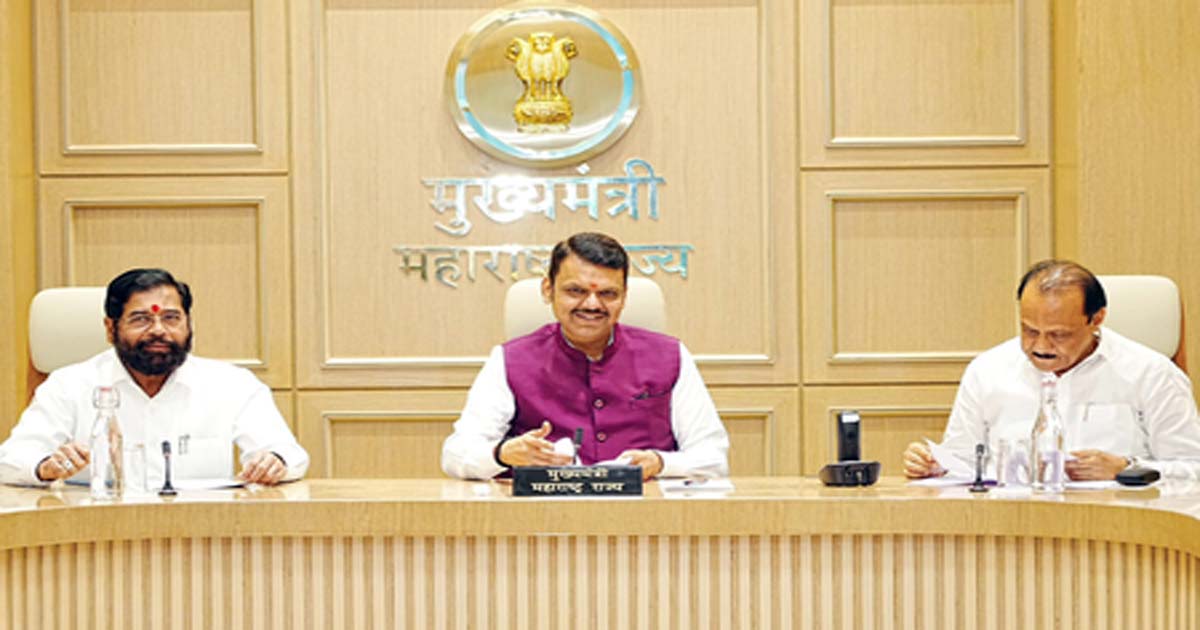
Mumbai, Dec 5: Amid its pursuit of making Maharashtra a trillion-dollar economy by 2030, and in the backdrop of controversies over reservation and allegations of corruption, the Devendra Fadnavis-led MahaYuti government in Maharashtra completes one year in office on Friday.
The year has been defined by a strong push for accelerated development, economic growth, and administrative speed, set against persistent political volatility arising from the coalition structure and wider social pressures.
A central focus of the administration has been the fast-tracking of major urban and state infrastructure projects. Chief Minister Devendra Fadnavis repeatedly highlighted a “clear vision, fast decision-making process, and focus on implementation.”
The Infrastructure War Room was used actively to clear bottlenecks and impose tighter timelines on long-pending works. The government unveiled its Viksit Maharashtra 2047 vision document with the goal of reaching a five trillion-dollar economy, while also working to position the state as the country’s top investment destination.
Efforts were directed towards improving the ease of doing business and bringing in global investment. Several policy and administrative reforms were advanced across sectors.
The cabinet approved a government guarantee for a Rs 2,000 crore HUDCO loan to the Maharashtra State Road Development Corporation for land acquisition required for the Virar-Alibaug Multi-Modal Corridor.
With the Navi Mumbai International Airport set to begin operations on December 25, the government firmed up plans for a proposed Third Mumbai. This includes specialised clusters such as an Edu City with foreign university campuses and an Innovation City.
The state is also banking on the Vadhavan port project involving an investment of Rs 76,000 crore, with the Chief Minister claiming it will rank among the world’s top ten ports once completed.
To strengthen regional connectivity, the government approved an additional Rs 491 crore for converting the Nagpur-Nagbhid narrow-gauge line to broad gauge to improve links in Vidarbha.
In the health sector, the coverage of state health schemes was expanded to 2,399 treatments across 38 specialities. Financial support was sanctioned for nine major diseases, including heart, lung, liver, and bone marrow transplants, with assistance ranging from Rs 9.5 lakh to Rs 22 lakh. A one-time regularisation was approved for contract staff under the National Health Mission who had completed ten years of service. The government also cleared the creation of an Urban Health Commissionerate to improve healthcare management in cities.
To strengthen administrative reforms, amendments were made to the Maharashtra Land Revenue Code, 1966, including changes to non-agricultural tax and conversion charges. Full legal validity was granted to Digital 7/12 and other key land records to support e-governance. New District and Additional Sessions Courts were sanctioned in locations such as Ghodnadi-Shirur for enhancing the judicial framework.
The fisheries sector was granted the same priority status as agriculture, qualifying it for infrastructure support and concessions. The government also cleared the winding up of the state-owned asset reconstruction firm Maha ARC Ltd after the Reserve Bank of India declined to grant it an operational licence.
Despite a strong mandate in the 2024 assembly elections, the BJP-Shiv Sena-NCP coalition required a “delicate balancing act.” The government faced scrutiny over coordination among the coalition partners, even as the Opposition maintained a constant combative stance.
Controversies related to land deals (Pune land transactions) and law and order issues (the fallout from the Beed sarpanch murder case) kept the government on the defensive. The Chief Minister’s announcement of performance audits for ministers hinted at efforts to reinforce accountability.
The most serious challenge emerged from the Maratha quota agitation led by Manoj Jarange, coupled with resistance from sections of the OBC community. The government was forced to set up cabinet sub-committees to handle these demands, highlighting the delicate social balancing required.
The government also faced criticism for delays in fulfilling certain campaign promises, including a state-wide farm loan waiver and higher monthly assistance under schemes such as Ladki Bahin Yojana. While trying to meet pre-poll commitments, the government must navigate a tight fiscal environment, with public debt crossing Rs 9.30 lakh crore, a revenue deficit of Rs 45,891 crore, and a fiscal deficit of Rs 1,36,325 crore.


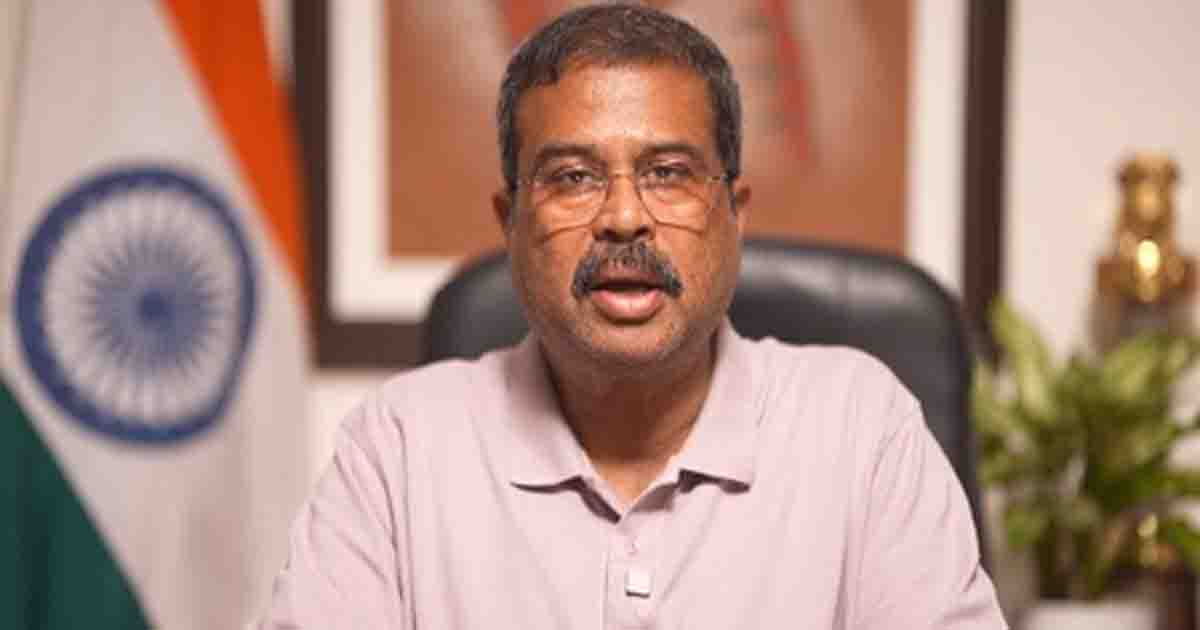
Bhubaneswar, Oct 5: Sambalpur MP and former Union Minister Dharmendra Pradhan on Monday appealed to the people from all sections of society in his constituency to participate in a massive cleanliness drive, ‘Swachhta Abhiyan’, to be organised in Sambalpur district on October 10 under the Seva Sankalp Abhiyan.
In a video message shared on his X handle, Pradhan said, “I appeal to every citizen of Sambalpur, my young friends, mothers and sisters, people’s representatives and members of various organisations to participate in this drive and contribute to cleaning their villages, hamlets, wards, localities and public places. Come, let us turn the cleanliness drive (Swachhta Abhiyan) into a mass movement and make Sambalpur a clean, beautiful and healthy district.”
Highlighting the importance attached to cleanliness and purity in Odia traditions and culture, he said, “Cleanliness is not confined merely to the four walls of our homes. Cleanliness is our way of life, our values and our character.”
The former Union minister further added that in the religious text ‘Lakshmi Purana’, it is clearly said that where there is cleanliness, Goddess Lakshmi resides there. Pradhan emphasised that no puja or religious ritual in an Odia household can be complete without cleanliness and purity.
“This is not merely an ordinary task; it is a spiritual and social value handed down to us by our ancestors,” he added.
The Sambalpur MP noted that Mahatma Gandhi regarded cleanliness not merely as a personal habit, but as the foundation of a healthy society and a better life.
Gandhiji himself participated in cleanliness drives and taught the entire nation the importance of cleanliness through his example. Pradhan also highlighted that Prime Minister Narendra Modi has repeatedly emphasised one message: “Swachhata Hi Seva” — cleanliness is service.
“When we keep our surroundings clean, we are serving society, the nation and our future generations. To carry forward this principle, this noble thought and the values of our culture, a massive cleanliness drive is being organised in Sambalpur district on the morning of October 10 under the Seva Sankalp Abhiyan,” noted Pradhan.
Referring to the great personalities from Sambalpur and the spiritual significance of the region, the former Union minister stated that Sambalpur is the heartland of Odia literature, culture, art and values.
“It is our paramount duty to keep this sacred land clean, beautiful, free from waste and healthy,” noted Pradhan.
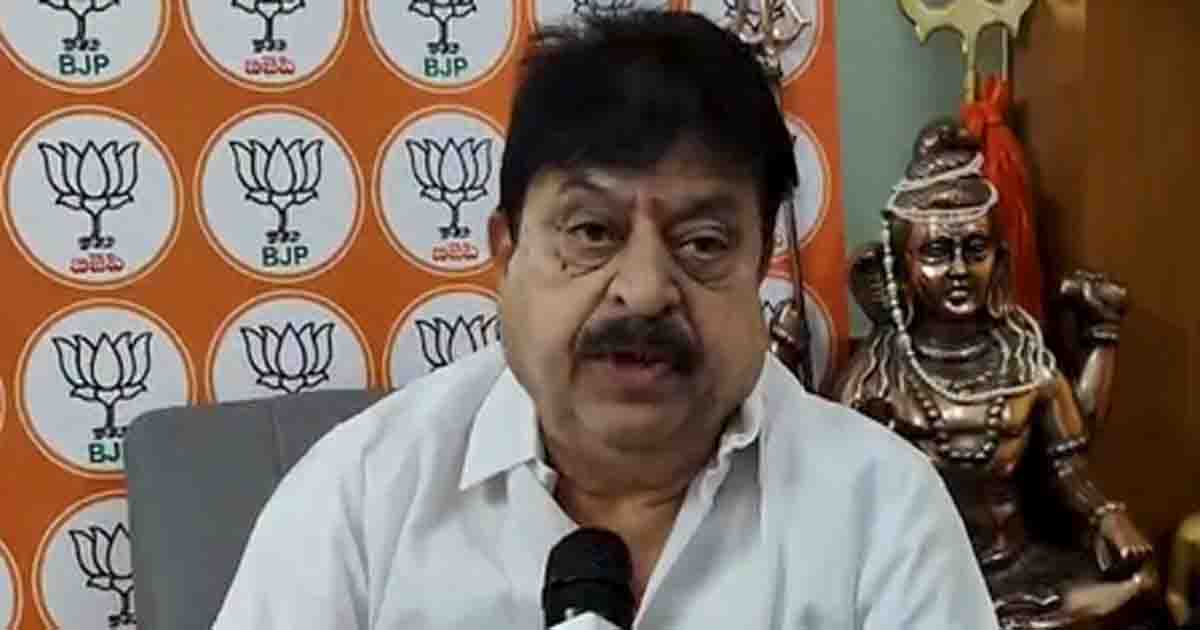
Hyderabad, Oct 5: Hitting out at the Opposition for allegedly misleading the masses, Telangana BJP President R. Rao said that the Special Intensive Revision (SIR) is not done by the Bharatiya Janata Party (BJP) but by the Election Commission of India (ECI), and that it was just a process to remove fake and dead voters from the voters’ list.
Rao said, “AIMIM chief Asaduddin Owaisi and other leaders who are opposing the SIR process should know that it is initiated by the Election Commission of India, and not the BJP.”
He added that the process was also done during the Congress’ rule, but it was not opposed then.
Rao said, “Owaisi and other leaders who are opposing SIR should know that it is a process not introduced by the BJP. It is an Election Commission process. It was also carried out during the Congress’ rule. They did not oppose it then, so why are they opposing it now?”
He said, “Even in Keralam, Congress won after SIR, but they have no answer for it. Whenever the Congress or the INDIA Bloc loses elections, they blame either the Election Commission of India or EVMs.”
He added, “Owaisi and Congress are frustrated because the BJP has been in power for the last 12 years, and it appears that it will continue to be in power, because people have lost faith in the Congress and the INDIA Bloc.”
He also said, “Therefore, Congress and Owaisi are trying to mislead the people about SIR, which is a process to delete voters who are dead, duplicate voters, or foreigners, and it is also a process where, if people are residing elsewhere, their votes must be shifted there; this is what SIR is. So there is no illegality; there is nothing to object to; there should be no objection in this regard.”
The Opposition parties staged protests at several places across the country, including at Jantar Mantar in Delhi on Sunday, accusing the Election Commission of using the SIR process to exclude voters and stating that over 13 crore names had been dropped from the draft rolls. They also alleged that the exercise could benefit the BJP.
Opposition parties have also alleged that the CEC has compromised the fairness of the electoral process and have demanded that the SIR exercise be withdrawn. The ruling BJP, however, has rejected the allegations.
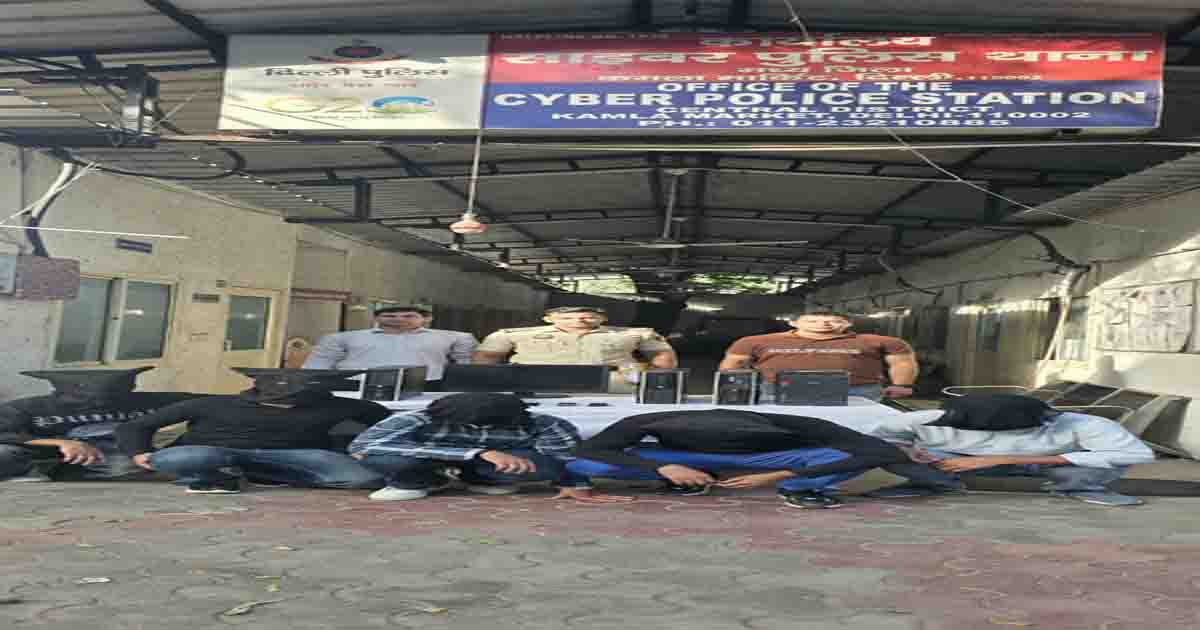
New Delhi, Oct 5: Delhi Police have busted two fake job-placement call centres operating from Lal Ratan Building near Shadipur Metro Station in Ranjit Nagar and apprehended 11 operatives in separate raids.
According to police, the two operations were carried out by teams of Special Staff, Ranjit Nagar Police Station and Cyber Police Station, Central District. The accused targeted unemployed job seekers by obtaining their personal data from online job-search and recruitment platforms and using it to make targeted calls.
The fraudsters posed as recruiters and offered attractive employment opportunities to prospective candidates. They subsequently demanded registration and processing fees under different pretexts. Police said amounts of Rs 3,500, Rs 1,400 and Rs 1,200 were demanded from job seekers under different packages.
The first operation was conducted on October 3 after police received information about a suspected fake job-placement centre functioning in the area. Technical analysis and field verification indicated that a significant number of calls linked to the suspected recruitment activity were originating from the location.
A police team subsequently raided the premises and apprehended six persons, including four women and two men. During the search, police examined computer systems, calling applications and digital material allegedly being used to contact job seekers.
Police said the suspects were using job-seeker data and contact details to approach prospective candidates and offer them employment. After collecting registration fees, the callers allegedly continued communicating with the candidates for a few days, assuring them about the proposed employment and further formalities. Communication was then allegedly discontinued without providing the promised jobs.
In a separate operation, a joint team of Special Staff and Police Station Cyber, Central District, raided another suspected fake job-placement call centre in the same building based on specific intelligence. Five male operatives were allegedly found actively working from calling cubicles and were apprehended.
When questioned, the operatives failed to produce corporate authorisation letters, placement agreements or records establishing that candidates had actually been placed in jobs. Police also found “Xlite” VoIP calling software installed on computers, along with job-seeker data and other digital evidence.
The two raids resulted in the apprehension of 11 persons in total.
Those apprehended from the first centre have been identified as Arpit, 38; Sakina, 29; Karishma, 27; Meenakshi, 28; Chanchal, 27; and Ashok, 36. All are residents of different parts of Delhi.
The five operatives apprehended in the second centre have been identified as Asim, 32; Sandeep, 29; Gaurav Malik, 34; Gyan Singh, 32; and Rohit, 34.
Police seized 13 computer systems, five mobile phones, calling applications, job-seeker data, contact details, communication records and digital evidence related to suspected financial transactions from the two premises.
According to police, the accused allegedly obtained job-seeker information from online recruitment platforms, including Shine.com in one case, and used the data to make targeted calls. They lured candidates with attractive job offers before demanding registration or processing fees.
Further investigation is underway to identify the alleged owners and masterminds behind the two operations, trace the source of the job-seeker data, examine financial transactions and identify other persons involved in the suspected network.
A case under Sections 319(2), 318(4), and 3(5) of the Bharatiya Nyaya Sanhita (BNS) has been registered in the case investigated by Police Station Ranjit Nagar. The seized electronic devices and digital data are being examined as per the law.

Rakul Preet Singh breaks silence on IT raid reports, clarifies, ‘The search was not pertaining to me’

Shiv Sena(UBT) attacks Maha govt over rising farmer distress as monsoon retreats dry

Current SIR exercise natural next phase of decades-old tradition, says CM Fadnavis

Eknath Shinde lauds Capt Smit Machchhar, calls his bravery a rare feat in entire world

Dharmendra Pradhan calls for mass participation in Sambalpur cleanliness drive

Gift to President Putin part of PM Modi bid to globally display India’s heritage

PM Modi’s warm camaraderie with Putin, Xi on full display at BRICS Summit

Corporators of all parties in trouble! Corporators of all major parties including Shiv Sena (UBT), BJP and Congress are facing legal challenges.

Complaint against Netflix & Mukesh Chhabra for inappropriate language on ‘India’s Got Latent 2’

Maha Congress stages agitation against Gyanesh Kumar
-

 Crime4 years ago
Class 10 student jumps to death in Jaipur
-

 Maharashtra2 years ago
Mumbai Local Train Update: Central Railway’s New Timetable Comes Into Effect; Check Full List Of Revised Timings & Stations
-

 Maharashtra2 years ago
Mumbai To Go Toll-Free Tonight! Maharashtra Govt Announces Complete Toll Waiver For Light Motor Vehicles At All 5 Entry Points Of City
-

 Maharashtra2 years ago
False photo of Imtiaz Jaleel’s rally, exposing the fooling conspiracy
-

 National News2 years ago
Ministry of Railways rolls out Special Drive 4.0 with focus on digitisation, cleanliness, inclusiveness and grievance redressal
-

 Maharashtra2 years ago
Maharashtra Elections 2024: Mumbai Metro & BEST Services Extended Till Midnight On Voting Day
-

 National News2 years ago
J&K: 4 Jawans Killed, 28 Injured After Bus Carrying BSF Personnel For Poll Duty Falls Into Gorge In Budgam; Terrifying Visuals Surface
-

 Crime2 years ago
Baba Siddique Murder: Mumbai Police Unable To Get Lawrence Bishnoi Custody Due To Home Ministry Order, Says Report