
Business
Vodafone Idea’s board to finalise fund raising plan on Friday

Debt-ridden telecom company Vodafone Idea’s board will meet on Friday to finalise plans for raising funds.
Vodafone Idea has informed Bombay Stock Exchange (BSE) that its board will meet on October 21 to consider a proposal to raise funds through issuance of convertible debentures.
“Vodafone Idea Ltd has informed the BSE that the meeting of the Board of Directors of the company is scheduled on October 21, to consider and approve a proposal for issuance of debenture securities convertible into equity shares on a preferential or private placement basis to a vendor, subject to regulatory and other statutory approvals as may be required, including shareholders’ approval,” the company said in a notice to the BSE.
Vodafone Idea has been trying to raise funds for a long time but has not succeeded.
It may try and raise funds through issuance of convertible debentures through private placement to a vendor.
Vodafone Idea owes an estimated Rs 6,800 crore to mobile tower giant Indus Towers and also Rs 2,400 crore to ATC.
Indus Towers is said to have asked Vodafone Idea to clear its outstanding dues and pay every month on time for continuity of business post-November 2022.


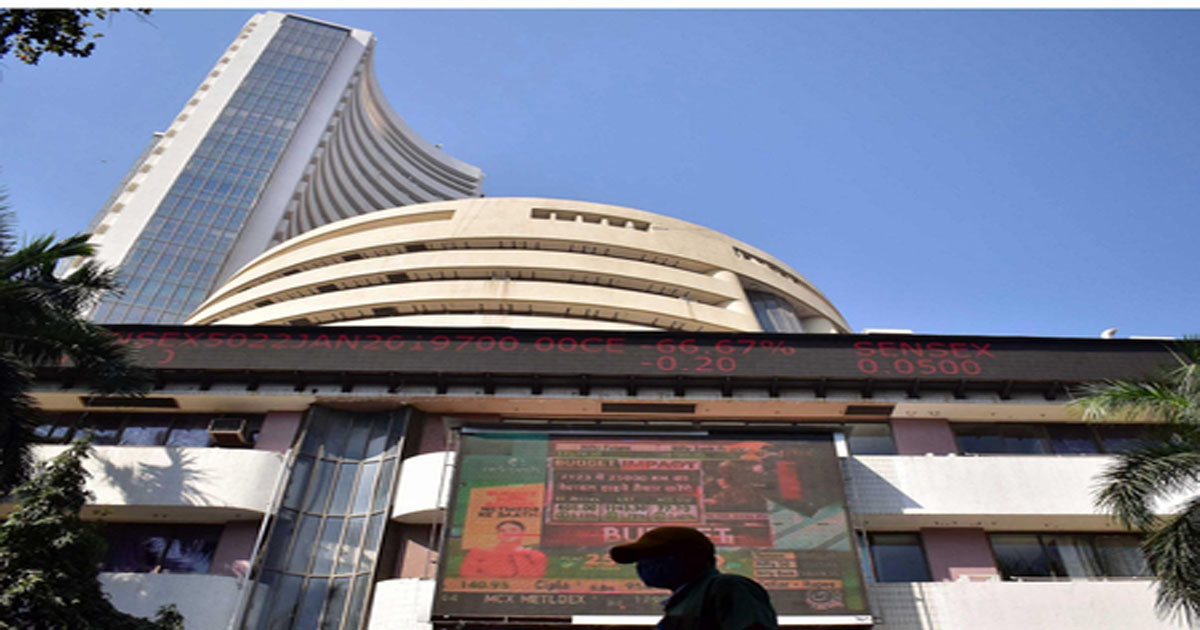
Mumbai, April 21: Indian equity benchmarks extended their gains for a third consecutive session on Tuesday, as investor sentiment improved amid expectations that the United States and Iran may prolong their ceasefire during upcoming talks.
The Nifty and the Sensex ended higher, supported by buying in select heavyweight stocks and optimism around easing geopolitical tensions in West Asia.
At the closing bell, the Nifty was at 24,576.60, up by 0.87 per cent or 211.75 points. The Sensex ended the intra-day session 0.96 per cent or 753.03 points higher at 79,273.33.
Commenting on Nifty technical outlook, experts said that the 24,600 level now acts as an immediate resistance where minor supply was observed.
“A decisive breakout and sustained move above this level could open further upside toward 24,850, followed by the key psychological level of 25,000, where stronger supply is expected,” an analyst stated.
“On the downside, the 24,350–24,400 range has now turned into an immediate support zone after acting as resistance earlier,” an analyst mentioned.
Among the top gainers on the Nifty were Nestle India, Trent, and Hindustan Unilever, which helped lift the benchmark index.
Broader markets also reflected positive momentum, with the Nifty MidCap index closing 0.49 per cent higher and the Nifty SmallCap index rising 0.88 per cent.
On the sectoral front, the Nifty FMCG and the Nifty Realty outperformed other indices, driven by strong buying interest.
In contrast, the Nifty Pharma lagged and emerged as the worst-performing sector for the day.
Investors remained cautiously optimistic about geopolitical developments, as both Iranian and US delegations, along with US Vice President JD Vance, are expected to participate in talks aimed at reaching a broader agreement to end hostilities in the region.
However, uncertainty persists as tensions between the two countries escalated ahead of the meeting.
Iran’s Parliament Speaker Mohammad Bagher Ghalibaf said in a post on X that Tehran does not support negotiations under threats and indicated that the country is prepared to respond strongly if required.
Earlier, US President Donald Trump warned that failure to reach an agreement before the ceasefire deadline could trigger fresh military escalation, stating that “a lot of bombs” could go off if talks collapse.
“Indian equities are expected to continue their gradual upmove, supported by improving macros, easing crude, and strong Q4 earnings momentum,” an analyst stated.
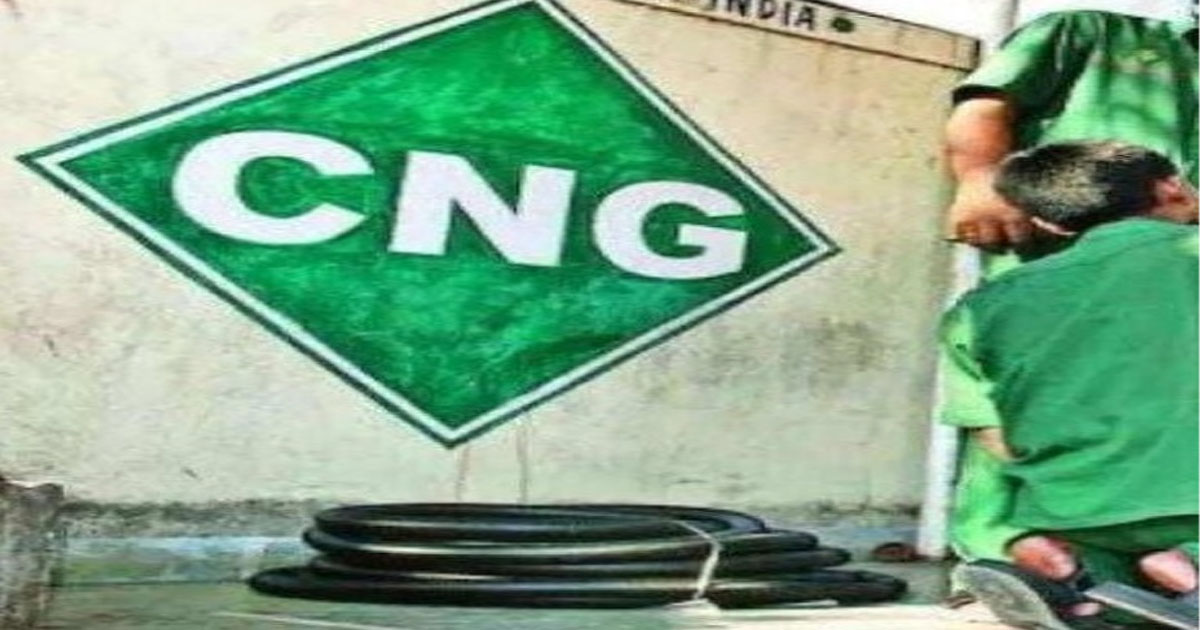
New Delhi, April 17: A high-level government committee, supported by the Petroleum and Natural Gas Regulatory Board (PNGRB), has recommended removing excise duty on Compressed Natural Gas (CNG) to lower prices and promote consumption of the green fuel to meet India’s target of achieving a 15 per cent share of natural gas in the fuel mix by 2030.
The key recommendations include removing the 14 per cent excise duty to make CNG a more attractive fuel option and also lowering GST on CNG vehicles to 5 per cent to bring them on par with electric vehicles to accelerate adoption.
The recommendations favour maintaining a competitive price difference between CNG and petrol so that consumers are encouraged to switch to the green fuel.
The tax relief on natural gas is anticipated to impact roughly 1.9 crore households and 38.41 lakh potential users.
These proposals aim to address the currently high taxes, such as the 14 per cent excise duty and state VAT, which have made CNG less competitive in certain regions, particularly in the southern states.
Meanwhile, the government has also been encouraging households to switch to piped natural gas (PNG) from LPG as the West Asia crisis has disrupted supply chains. The expansion of piped natural gas (PNG) has gained momentum, with about 4.58 lakh new PNG connections being gasified and about 5.1 lakh additional customers registering for new connections since March this year.
Till April 15, about 35,000 PNG consumers have surrendered their LPG connections via MYPNGD.in website. States have been advised to facilitate new PNG connections for domestic and commercial consumers.
The government is encouraging natural gas adoption through synergy between the PNGRB and states as part of India’s transition toward a cleaner and more sustainable energy future. As part of the strategy to increase the share of natural gas in the country’s energy mix, the expansion of the City Gas Distribution (CGD) network through Piped Natural Gas (PNG) connections has emerged as one of the key performing areas.
Spearheaded by entities authorised by the PNGRB, the CGD network now spans 307 geographical areas (GAs), covering nearly 100 per cent of the country’s geographical area except islands, touching around 784 districts across 34 states and Union Territories. The government has undertaken a series of policy and regulatory measures to catalyse growth in this sector.
These measures range from allocating administered price domestic gas and easing supply mechanisms to mandating PNG provisions in government and defence residential complexes, granting Public Utility status to CGD projects, and directing the CPWD and the NBCC to include PNG provisions in all government residential complexes.

Mumbai, April 16: The Indian stock markets opened on a higher note on Thursday, with the equity benchmarks mirroring global cues amid hopes of easing geopolitical tensions between Washington and Tehran.
Sensex opened 566 points or 0.73 per cent higher at 78,677 in opening trade, while Nifty began the session at 24,385, up 154 points or 0.64 per cent. Sectorally, gains were led by realty, media, consumer durables and financial stocks.
Category-wise, small-cap and mid-cap stocks were the top gainers, with the Nifty Smallcap 100, Nifty Smallcap 250 and Nifty Midcap 100 rising up to 1 per cent in early trade.
On Wednesday, FIIs remained net buyers to the tune of approximately Rs 666 crore, while DIIs turned net sellers with outflows of around Rs 569 crore.
According to analysts, volatility could pick up again depending on global developments and upcoming triggers.
After the recent sharp rally, the market may witness some consolidation or profit booking at higher levels, they added.
In contrast, oil commodities traded on a firm note, with Brent crude futures at $94.92 per barrel, down 0.03 per cent, while US WTI crude traded at $91.52, up 0.25 per cent.
On the global front, both US and Asian markets showed positive momentum. Japan’s Nikkei was trading over 2 per cent higher, Hang Seng climbed more than 1 per cent, and South Korea’s KOSPI was up about 2 per cent.
In the US overnight, Wall Street’s major indices — the S&P 500 and the Nasdaq — ended 0.80 per cent and 1.6 per cent higher, respectively.
Meanwhile, the US President said that China is ‘very happy’ with the permanent opening of the Strait of Hormuz.
“I am doing it for them also – and the world. This situation will never happen again. They have agreed not to send weapons to Iran,” he said on his social media platform, Truth Social.
However, the war has resulted in the largest-ever disruption of global oil and gas supplies by choking traffic through the strait, pushing crude prices to nearly $120 per barrel.

Employee arrested from UP for stealing from Mumbai spice shop, cash recovered

Mumbai: Eviction proceedings against furniture vendors on Do Tanki Maulana Shaukat Ali Marg in ‘E’ ward

Don’t target the bodyguard… Important comment of the Bombay High Court in the Sameer Wankhede case

Minor Scratch On Two-Wheeler Snowballs Into Violent Youth Brawl At Telephone Exchange Chowk In Nagpur

Mumbai: Impostor Ashok Kharat now under police station connection, rape case registered against municipal officer

Mumbai: 28-Year-Old Ghatkopar Woman Killed By Speeding Tanker While Crossing Road, Driver Arrested

Dhurandhar 2 Box Office Collection Day 9: Ranveer Singh Starrer Earns ₹41.55 Crore On Its Second Friday; Enters ₹700 Crore Club

Bharti Airtel Receives ₹1,74,000 Penalty Notice From DoT For Subscriber Verification Lapses

Thane Horror: Man Slashed With Chopper In Naupada For Refusing ‘Vargani’, Caught On Camera

PM Modi & US President Donald Trump Hold Crucial Talks As West Asia Crisis Deepens; Musk Joins Call
-

 Crime4 years ago
Class 10 student jumps to death in Jaipur
-

 Maharashtra2 years ago
Mumbai Local Train Update: Central Railway’s New Timetable Comes Into Effect; Check Full List Of Revised Timings & Stations
-

 Maharashtra2 years ago
Mumbai To Go Toll-Free Tonight! Maharashtra Govt Announces Complete Toll Waiver For Light Motor Vehicles At All 5 Entry Points Of City
-

 Maharashtra2 years ago
False photo of Imtiaz Jaleel’s rally, exposing the fooling conspiracy
-

 National News2 years ago
Ministry of Railways rolls out Special Drive 4.0 with focus on digitisation, cleanliness, inclusiveness and grievance redressal
-

 Maharashtra1 year ago
Maharashtra Elections 2024: Mumbai Metro & BEST Services Extended Till Midnight On Voting Day
-

 National News2 years ago
J&K: 4 Jawans Killed, 28 Injured After Bus Carrying BSF Personnel For Poll Duty Falls Into Gorge In Budgam; Terrifying Visuals Surface
-

 Crime2 years ago
Baba Siddique Murder: Mumbai Police Unable To Get Lawrence Bishnoi Custody Due To Home Ministry Order, Says Report