
International News
US-Israel-Iran War: Mumbai Seafarer Dies After Missile Strike On Tanker In The Strait Of Hormuz

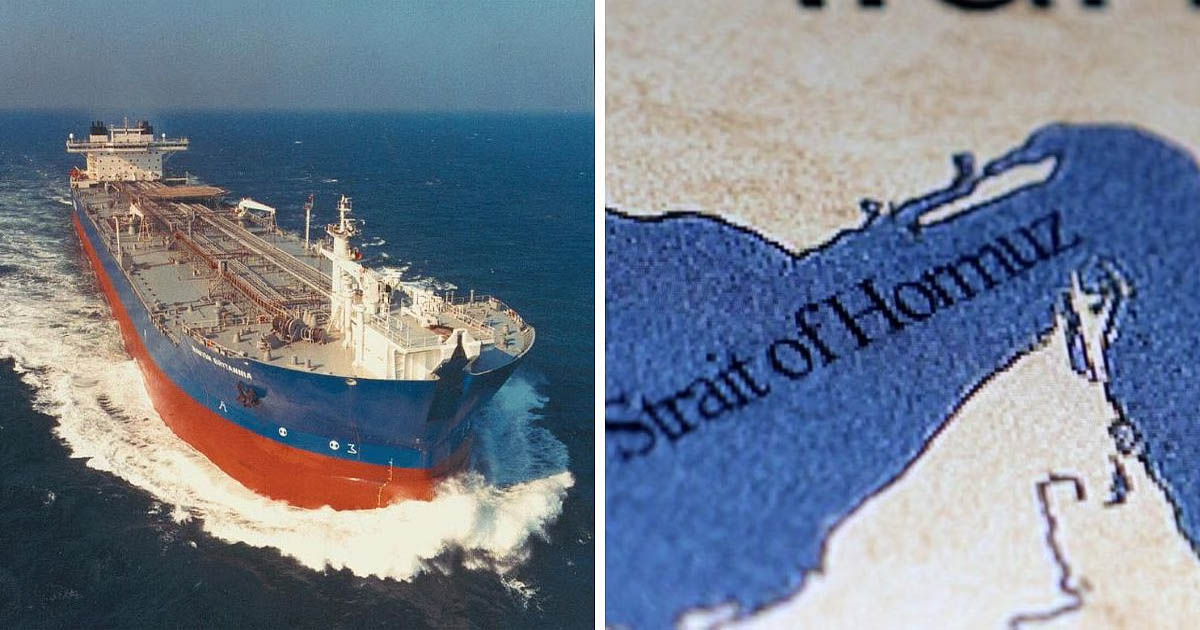
Mumbai: A 33-year-old seafarer from Kandivali lost his life after a missile reportedly struck the product tanker MT MKD Vyom in the Strait of Hormuz on March 1, amid escalating attacks on merchant vessels in the region. The deceased has been identified as Dixit Amritlal Solanki, who was working as an oiler on board the vessel.
Solanki had joined the tanker on December 10, 2025, and had been serving on board for nearly 80 days at the time of the incident. The vessel had departed from Europe on February 8 and was sailing towards Ras Tanura in Saudi Arabia when it reportedly came under attack in the strategically sensitive Strait of Hormuz.
Solanki was initially reported missing after the explosion caused by the missile strike and is now believed to have died in the blast. Efforts are currently underway to retrieve his body.
The remaining 21 crew members on board the vessel were rescued unharmed by another tanker, MT SAND, and are presently in Muscat, Oman, where they are completing legal formalities before returning to the port of origin. Two crew members from the Palau-flagged tanker Skylight are currently reported missing, while another seafarer reportedly died in Basra, Iraq, following a missile strike. Additionally, four Indian seafarers are awaiting repatriation from Bandar Abbas in Iran.
The incident comes amid growing concerns over the safety of merchant shipping in the region due to the on-going war between the US-Iran-Israel. The Strait of Hormuz, located between Iran to the north and Oman and the UAE to the south, is one of the world’s most critical maritime corridors for global oil and cargo movement.


International News
Trump clears waiver for India to purchase Russian oil to stabilise energy markets: White House


Washington, March 11: The White House said that President Donald Trump personally approved a temporary waiver allowing India to purchase Russian oil as part of a broader effort to stabilise global energy markets amid disruptions caused by the ongoing US military campaign against Iran.
The decision was taken after consultations between the President, the Treasury Department, and members of the national security team, White House Press Secretary Karoline Leavitt said.
“The President and the Secretary of the Treasury and the whole national security team came to this decision because our allies in India have been good actors and have previously stopped buying sanctioned Russian oil,” Leavitt told reporters in response to a question.
She said the temporary measure was meant to address disruptions in global oil supply triggered by the crisis surrounding Iran.
“So as we work to appease this temporary gap of oil supply around the world because of the Iranians, we have temporarily permitted them to accept that Russian oil,” she said.
Leavitt noted that the shipments involved had already been dispatched before the waiver was granted.
“This Russian oil was already at sea, it was already out on the water,” she said.
According to the White House, the administration does not expect the arrangement to significantly benefit Moscow financially.
“So this short-term measure, we don’t believe it will provide significant financial benefit to the Russian government at this time,” Leavitt said.
The remarks came as the White House provided updates on Operation Epic Fury, the US military campaign targeting Iran’s missile infrastructure and naval capabilities.
Leavitt said the operation had achieved rapid progress since it began ten days ago. “More than 5000 enemy targets have been struck so far,” she said.
She added that Iran’s ability to retaliate had sharply declined.
“Iran’s ballistic missile attacks are down more than 90 per cent, and their drone attacks are down by approximately 35 per cent since the start of Operation Epic Fury,” Leavitt said.
US forces have also targeted Iran’s naval assets.
“We have destroyed more than 50 Iranian naval vessels, including a major drone carrier ship,” she said, adding that the Iranian navy has been assessed as “combat ineffective.”
The administration said the operation’s goals remain unchanged.
“The stated objectives for Operation Epic Fury remain the same: destroy the terrorist regime’s ballistic missiles, raise their Iranian missile industry to the ground, ensure their terrorist proxies can no longer destabilize the region, and ensure that Iran never obtains a nuclear weapon,” Leavitt said.
The White House also stressed that the United States would ensure the continued flow of energy through the Strait of Hormuz, one of the world’s most critical oil shipping routes.
Leavitt said President Trump had reiterated his commitment to protecting energy supply routes.
“President Trump reiterated his commitment toward keeping oil flowing through the Strait of Hormuz so the United States and all of our allies can receive their energy needs,” she said.
She added that the administration had already taken steps to stabilise energy markets.
“Thus far, the Trump administration has offered political risk insurance to tankers operating in the Gulf,” she said.
Officials also said the US Navy could escort tankers if necessary to keep the vital waterway open.

Washington, March 10: President Donald Trump said that the US campaign against Iran would end “very soon”, defining victory as the point at which Tehran no longer has the capacity to develop weapons that could threaten the United States, Israel, or its allies.
At a Florida news conference, Trump said the military campaign had already destroyed major elements of Iran’s military capability and leadership.
“No. But I think soon,” Trump said when asked how long the conflict might last. “Very soon.”
Trump said the United States had already severely degraded Iran’s military structure, including its naval power, missile systems, and drone capability.
“Everything they have is gone, including their leadership,” he said.
“In fact, there are two levels of leadership and even actually, as it turns out more than that.”
The president said the US and Israeli forces had struck thousands of targets during the operation.
“We’ve struck over 5,000 targets to date,” Trump said. He also claimed the Iranian navy had been largely destroyed. “Most of Iran’s naval power has been sunk,” he said.
Trump said US forces were also targeting the country’s drone and missile manufacturing networks.
“Their missile capability is down to about 10 percent, maybe less,” he said.
“Their drone manufacturing has been hit starting today.”
Despite declaring the campaign largely successful, Trump said the United States could expand strikes if necessary.
“We’ve left some of the most important targets for later in case we need to do it,” he said.
“If we hit them, it’s going to take many years for them to be rebuilt.”
Asked what would constitute a final victory, Trump said the goal was to eliminate Iran’s ability to build weapons capable of threatening the United States or its allies.
“When basically I can see that they will no longer have any capacity whatsoever for a very long period of time for developing weaponry that could be used against the United States, Israel, or any of our allies,” he said.
Trump also warned Iran against attempting to disrupt global energy supplies through the Strait of Hormuz, one of the world’s most important oil shipping routes.
“So the Strait of Hormuz is going to remain safe,” he said. “We have a lot of Navy ships there.”
The United States launched major strikes against Iranian targets earlier this month as part of a joint military campaign with Israel aimed at degrading Tehran’s military and nuclear capabilities.

Riyadh, March 9: Riyadh on Monday condemned the Iranian attacks against Saudi Arabia and Gulf Cooperation Council (GCC) members – including a number of Arab, Islamic, and friendly countries – affirming its right to take all measures to protect its security, sovereignty and safety of people. Saudi Foreign Ministry stated that continued Iranian attacks showcase further escalation, with significant impact for bilateral ties.
The targetting of civilian objects, airports, and oil facilities, stated Saudi Arabia’s Foreign Ministry, demonstrates “a determination to threaten security and stability and to persist in blatantly violating international charters and international law.”
“With regard to the statement made by the President of the Islamic Republic of Iran, in which he indicated that there are no plans to attack neighbouring countries and the decision had been taken by the Leadership Council, the Kingdom affirms that the Iranian side has not reflected that statement in practice, whether during the Iranian President’s speech or afterwards, and has continued its attacks based on baseless claims that are not grounded in fact, including allegations that the Kingdom had previously clarified were false, namely the claim that fighter jets and refueling aircraft had departed from the Kingdom to participate in the war, while it was clarified that these aircrafts mission is to conduct air patrols to monitor and protect the airspace of the Kingdom and the GCC states from Iranian missiles and drones,” read a statement posted by Saudi Arabia’s Foreign Ministry on X.
“The Kingdom affirms that the continued Iranian attacks represent further escalation, with significant implications for bilateral relations both now and in the future. The Kingdom also stresses that Iran’s current actions toward our countries do not reflect wisdom or serve the interest of avoiding a widening of escalation, in which Iran would be the greatest loser,” it added.
Saudi statement comes after two people were killed and 12 others injured following a military projectile striking a residential area in Al-Kharj Governorate on Sunday.
Saudi Arabia’s Civil Defence spokesperson said that civil defence responded to a military projectile that hit a residential compound belonging to a maintenance and cleaning company in Al-Kharj Governorate, causing death of two people of Indian and Bangladeshi nationalities. It also caused injuries to 12 Bangladeshi residents and material damage.
In a statement shared on X, the spokesperson termed targetting of the civilian infrastructure as a “blatant violation of international humanitarian law” and emphasised that the standard procedures for such incidents were implemented.

Mumbai: Anti-trespass action taken by IMC at 13 unauthorized shops in Goregaon (Maghribi) area.

Attention Thanekars! TMC Announces 24-Hour Water Cut On March 12 Due To Pipeline Work; Check Areas Affected

Mumbai: BMC Begins TBM Installation For Goregaon Mulund Link Road Twin Tunnels In Aarey, Bhushan Gagrani Inspects Work

Bihar Police issues alert to prevent hoarding of petrol, LPG

Mumbai: WR Begins Fencing 150-Metre Stretch Near Bandra East Tracks To Curb Garbage Dumping & Trespassing From Nearby Slums

Salim Khan hospitalised following complaints of swelling

Salman Khan’s Close Associate Receives Threatening Email Demanding Crores, Sender Claims Bishnoi Gang Ties

Threatening WhatsApp Audio Note To Ranveer Singh And Rohit Shetty Goes Viral; Voice Linked To Harry Boxer Under Verification

Mulund Horror: Maharashtra CM Devendra Fadnavis Expresses Grief After 1 Killed In Mumbai Metro 4 Slab Collapse; ₹5 Lakh Aid Announced For Deceased

Mumbai Crime Branch Issues LOC Against Lawrence Bishnoi Aide Harry Boxer For Threatening Actor Ranveer Singh
-

 Crime4 years ago
Class 10 student jumps to death in Jaipur
-

 Maharashtra1 year ago
Mumbai Local Train Update: Central Railway’s New Timetable Comes Into Effect; Check Full List Of Revised Timings & Stations
-

 Maharashtra1 year ago
Mumbai To Go Toll-Free Tonight! Maharashtra Govt Announces Complete Toll Waiver For Light Motor Vehicles At All 5 Entry Points Of City
-

 Maharashtra1 year ago
False photo of Imtiaz Jaleel’s rally, exposing the fooling conspiracy
-

 National News1 year ago
Ministry of Railways rolls out Special Drive 4.0 with focus on digitisation, cleanliness, inclusiveness and grievance redressal
-

 Maharashtra1 year ago
Maharashtra Elections 2024: Mumbai Metro & BEST Services Extended Till Midnight On Voting Day
-

 National News1 year ago
J&K: 4 Jawans Killed, 28 Injured After Bus Carrying BSF Personnel For Poll Duty Falls Into Gorge In Budgam; Terrifying Visuals Surface
-

 Crime1 year ago
Baba Siddique Murder: Mumbai Police Unable To Get Lawrence Bishnoi Custody Due To Home Ministry Order, Says Report