
International News
UN says delivering aid to Gaza remains challenging

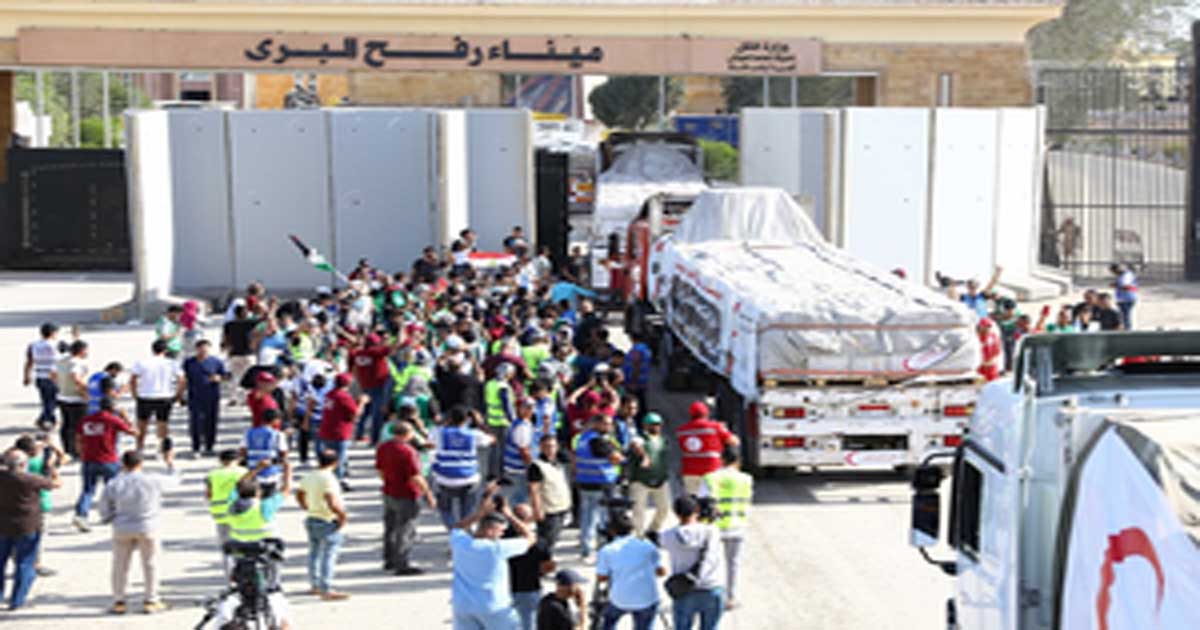
United Nations, Oct 23: UN humanitarians have said that delivering vital support to northern Gaza remains challenging, even though the ceasefire took effect more than 10 days ago.
The UN Office for the Coordination of Humanitarian Affairs (OCHA) said on Wednesday that since the ceasefire took effect on October 10, the world body and its partners have made progress in scaling up response efforts, especially in central and southern areas of the Gaza Strip.
However, the continued closure of the Zikim and Erez border crossings, which provide direct access to the north, makes it extremely challenging for humanitarian aid to reach the area, OCHA added.
At the same time, UN partners monitoring population flows across Gaza have reported more than 425,000 movements from southern to northern parts of the strip since October 10, Xinhua news agency reported.
UN Population Fund Deputy Executive Director Andrew Saberton, who just returned from Gaza, told reporters that the agency was able to bring in some assistance last week through the Kerem Shalom/Karem Abu Salem crossing.
“We have been distributing medical supplies and equipment, including incubators, delivery beds and fetal monitoring machines, that were prepositioned inside Gaza, to hospitals,” he said.
“But the trickle of aid being allowed to enter Gaza after the ceasefire is nowhere near enough.”
Inside Gaza on Tuesday, out of 10 humanitarian missions coordinated with the Israeli authorities, six were facilitated, including the collection of water tanks, hygiene kits and fuel from the crossings into Gaza, OCHA said.
Abeer Etefa, senior regional communications officer and spokesperson for the World Food Programme (WFP), said that since the ceasefire began on October 11, the agency has delivered more than 6,700 metric tonnes of food, enough for nearly half a million people for two weeks.
“Daily deliveries continue and now average around 750 tonnes,” she said, noting this remains well below WFP’s target of 2,000 tonnes a day.
“Unless all border crossing points are used, reaching this target is almost impossible.”
Currently, only the Kerem Shalom and Kissufim crossings in the south are open. Severe destruction continues to block access to northern Gaza, where famine was declared in August. “We need Erez, we need Zikkim, we need these border crossing points to open,” Etefa stressed.
Reaching northern Gaza with large-scale convoys is a priority.
“We’ve cleared roads at scale into the north,” she said, “but we need these crossings open to connect to Gaza City, where conditions are especially dire.”
WFP is restoring its food distribution network, aiming for 145 distribution points across the Strip, of which 26 have reopened. “People are showing up in large numbers, grateful for the efficiency and the dignified way they can collect their rations,” Etefa said.
The aid is especially crucial for “the most vulnerable,” the women, female-headed households, and the elderly, she added.
While many are hopeful, “there is cautious optimism” about how long current conditions will last.
Many families save part of their rations because they are not confident the ceasefire will hold.
“It is a fragile peace,” she said.
Food prices remain prohibitive, and supplies are still insufficient. “People can find food in the market, but it’s out of reach because it’s extremely expensive,” Etefa warned.
WFP is also helping the most food-insecure households through digital payments, enabling about 140,000 people to buy food locally, with plans to double that number soon. But Etefa stressed that humanitarian aid alone cannot solve the crisis, and commercial supplies must enter to complement relief efforts.
Only a fully implemented and sustained ceasefire can allow WFP to operate at the scale needed, Etefa said.


International News
EAM Jaishankar and US counterpart Rubio discuss advancing ties, regional developments

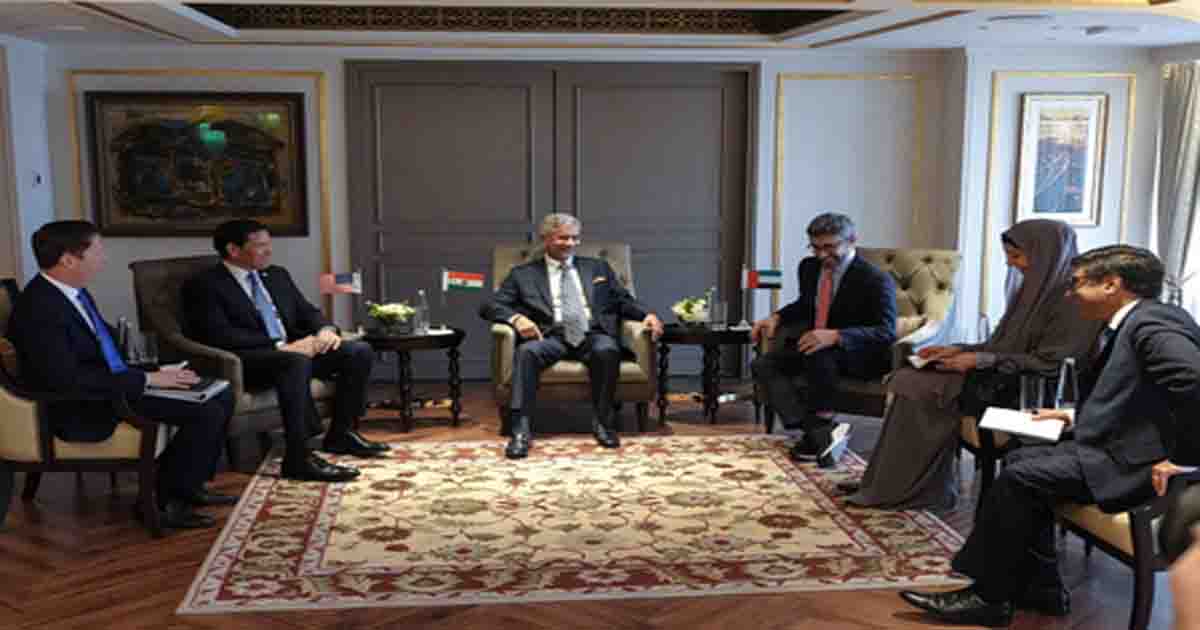
External Affairs Minister (EAM) S Jaishankar held a meeting with US Secretary of State Marco Rubio in Mumbai on Tuesday, with discussions focusing on further advancing bilateral ties.
During the meeting, the two ministers exchanged views on regional developments. Foreign Secretary Vikram Misri, US Ambassador to India Sergio Gor and other officials were also present at the meeting.
“Pleased to meet US Marco Rubio in Mumbai today. We shared views on further advancement of our ties, focusing on trade, energy, technology, defence and people-to-people ties. Also exchanged views on regional developments,” EAM Jaishankar stated on X after the meting.
Rubio said that he and EAM Jaishankar discussed energy security and defence cooperation.
“In Mumbai, Indian External Affairs Minister S Jaishankar and I discussed energy security and defense cooperation while reaffirming the importance of advancing the U.S.-India strategic partnership,” the US Secretary of State posted on X.
Earlier, EAM Jaishankar, Marco Rubio and UAE Foreign Minister Sheikh Abdullah bin Zayed Al Nahyan held a meeting in Mumbai, with discussions held on regional energy security and advancing shared economic priorities.
“It was great to meet with Indian External Affairs Minister S Jaishankar and UAE Foreign Minister Sheikh Abdullah bin Zayed Al Nahyan to discuss regional energy security and advance our shared economic priorities,” Rubio stated on X after the meeting.
Following the meeting, Ambassador Gor also took to X and wrote: “The US, India, and UAE have real opportunities to advance cooperation on energy, trade, technology, and regional connectivity. Marco Rubio, S Jaishankar, and UAE Foreign Minister Sheikh Abdullah bin Zayed Al Nahyan in Mumbai for a discussion on turning our close ties into concrete results!”
Earlier in the day, Marco Rubio arrived in Mumbai for an official visit to India. For his visit to Mumbai, Rubio is accompanied by his wife, Jeanette Rubio and US Ambassador to India Sergio Gor.
The Ministry of External Affairs (MEA) extended a warm welcome to Rubio as he arrived in Mumbai for his second visit to India, noting that it provides an opportunity to further advance cooperation across various pillars of the India-US Comprehensive Global Strategic Partnership.
“Welcome to Mumbai, US Secretary of State Marco Rubio, on your second visit to India! He was received by Shri Ashish Shelar, Minister of Culture, Electronics, IT and AI, Government of Maharashtra at the airport. The visit provides an opportunity to further advance cooperation across the various pillars of the India-US Comprehensive Global Strategic Partnership,” the MEA posted on X.
After concluding his engagements in Mumbai, Rubio will travel to Gujarat’s Jamnagar for talks that will include “enhanced energy cooperation”, the US State Department said.

The United States has effectively blocked Iranian oil exports through the Strait of Hormuz while allowing millions of barrels of crude from other countries to reach global markets, Secretary of State Marco Rubio has said, describing the strategy as part of Washington’s efforts to weaken Tehran’s economy without disrupting international energy supplies.
Rubio said between 13 million and 14 million barrels of oil were passing through the strategic waterway daily, with American military forces escorting and protecting commercial vessels against Iranian attacks.
The remarks, made during an interview with Breitbart News on October 15 and released by the State Department on October 19, offered an account of Washington’s military and economic strategy in the Gulf.
“Today, on average over the last 10 days and certainly over the last 30, about 13 to 14 million barrels of oil are going through the Straits of Hormuz out to the global market, and some days it’s actually equivalent to what it was pre-conflict,” Rubio said.
The figures represent the administration’s assessment and were not independently verified in the interview.
The Strait of Hormuz is one of the world’s most important energy corridors, connecting oil-producing Gulf countries with international markets, including India and other major Asian economies.
Rubio said American forces were helping maintain shipping movements despite continuing Iranian attacks.
“And the U.S. military is involved in escorting and defending these ships from these strikes,” he said.
The Secretary of State claimed that Iran had lost control of the waterway following American military operations and that Washington was now using sanctions and a blockade to restrict Tehran’s oil revenues.
“The only country in the world that cannot get a single barrel of oil through the Straits of Hormuz is Iran,” Rubio said.
The assertion was not accompanied by independent shipping data or figures showing the volume of Iranian exports affected by the restrictions.
Rubio said the administration’s objective was to prevent Iran from using energy supplies and maritime security as instruments of pressure against other countries.
He argued that American military operations had significantly weakened Iran’s conventional capabilities, including its naval forces, air defences and facilities producing missiles and drones.
According to Rubio, the administration had sought to prevent Tehran from developing a nuclear weapon while relying on conventional military capabilities to deter international intervention.
He said Iran continued to threaten shipping even after losing much of its ability to control the strait.
Rubio also defended the administration’s economic measures against Tehran, saying they were designed to reduce the resources available to Iran’s military and allied armed groups.
“Every dollar you deny them in sanctions is a dollar they don’t have for Hizballah, a dollar they don’t have for Hamas, a dollar they don’t have for the terrorist militias inside of Iraq, and a dollar they don’t have for their own military or their own nuclear ambitions,” he said.
The Secretary of State acknowledged public frustration over the continuing confrontation with Iran but maintained that Washington had achieved important military objectives.
He described the current American military role in the Strait of Hormuz primarily as defensive, involving the protection of shipping while economic pressure continued.
The claims about Iran’s military losses, oil exports and the effectiveness of the blockade could not be independently established from the interview alone.
The Strait of Hormuz connects the Persian Gulf with the Gulf of Oman and the Arabian Sea. It is a major transit route for crude oil and liquefied natural gas shipped from Gulf producers to international customers, making disruptions particularly significant for energy-importing Asian economies.
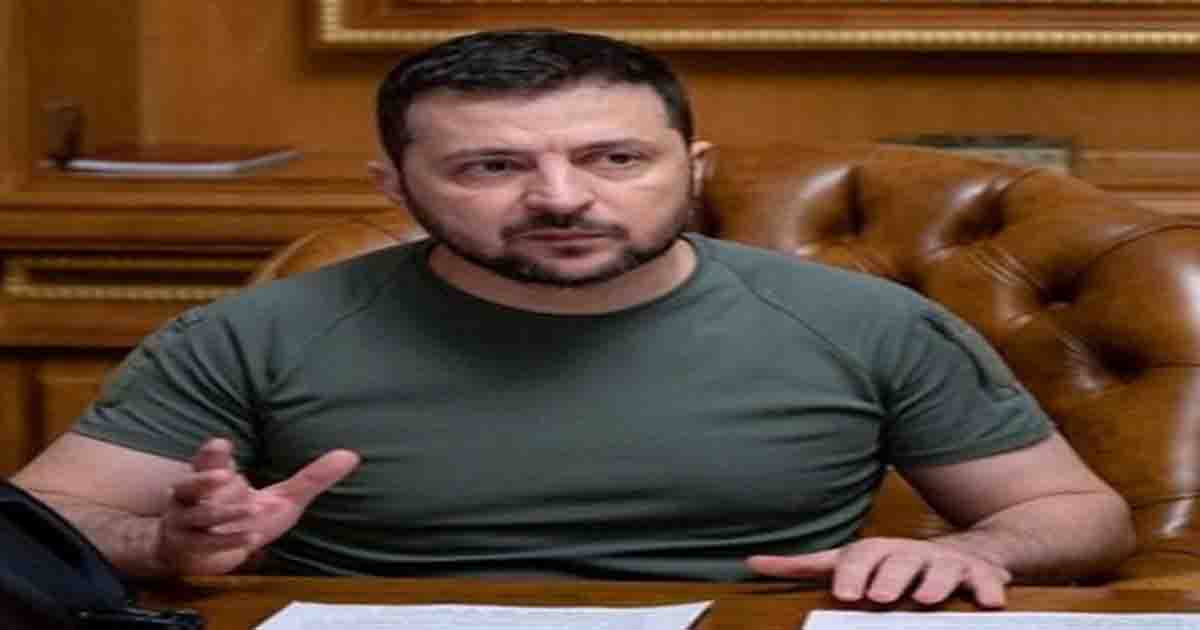
Ukrainian President Volodymyr Zelensky said that the United States temporarily suspended crucial intelligence sharing with Ukraine for three days, leaving its forces without American warnings of Russian ballistic missile attacks during that period.
In an interview with NBC’s Meet the Press, Zelensky also said restrictions on satellite communications used by Ukrainian forces had not been fully lifted, raising fresh questions about Washington’s military and intelligence support for Kyiv.
The Ukrainian leader said the intelligence interruption affected information that only the United States could provide, particularly advance warnings of ballistic missile strikes.
“We didn’t see attacks of Russia using ballistic missiles,” Zelensky said.
He said Ukraine continued receiving intelligence from European governments and other international partners, but their capabilities could not fully replace American systems.
“We have dozens of countries who help. But only United States has this unique intelligence to say, to tell us, to tell our side when Russia uses ballistic missiles,” he said.
“And we didn’t get it during ballistic attacks during three days.”
Zelensky said the intelligence-sharing arrangement had since been restored.
“It was blocked for some period of time. And then it was deblocked by American side. We are very thankful for this. Now it works,” he said.
The disclosure came amid growing tensions between Washington and Kyiv over President Donald Trump’s handling of the war with Russia.
Zelensky also raised concerns about restrictions affecting Starlink, the satellite internet network operated by Elon Musk’s SpaceX, and its military-related services.
Asked whether the interruption had been deliberate, Zelensky said Ukrainian military officials believed the restrictions originated with the American government.
“Of course the message came from government. I don’t know from whom, what cabinet, and etc,” he said.
He added that Ukrainian officials believed SpaceX had technically implemented the restrictions following instructions from Washington.
Zelensky acknowledged that he did not know which American official might have authorised the move.
Asked whether satellite services had been fully restored, he replied: “No, not of course. We have limitation.”
The Ukrainian President’s account was challenged by Treasury Secretary Scott Bessent, who appeared separately on the same programme.
Bessent said Trump and Secretary of State Marco Rubio had denied that anyone in the administration ordered restrictions on Starlink.
“President Trump and Secretary Rubio have categorically said that no one in the Trump administration did that,” Bessent said.
He called Zelensky’s allegation reckless and said he had no information about the reported intelligence interruption.
“Again, I don’t know anything about that, but we’ve been very clear,” Bessent said.
The conflicting accounts left unresolved who was responsible for the communications disruption and why American intelligence sharing had been temporarily interrupted.
Zelensky said Ukraine remained dependent on American military assistance despite its growing network of European partners.
“If it’s without United States’ support, it’s very difficult,” he said.
Russia launched its full-scale invasion of Ukraine in February 2022. Since then, American intelligence, weapons and satellite communications have played an important role in Ukraine’s defence against Russian military operations, including missile and drone attacks.

Manipur burns while Delhi barricades: Shiv Sena(UBT) in ‘Samaana’

Delhi HC agrees to urgent hearing on plea seeking release of CJP leaders Saurav Das, Ashutosh Ranka

Truck driver dies after being hit by vehicle with DSP sticker in Bihar West Champaran

‘Free and fair polls part of basic structure’: SC directs Andhra SEC to decide on nomination extension, ensure security for candidates

Sensex, Nifty surge up to 1 pc in early deals; IT shares lead gains

Rahul, Cong ecosystem want to force regime change: BJP after Neha Bora praises B’desh Gen-Z protest

BJP pays tribute to ex-President Abdul Kalam, recalls his enduring influence on generations of India’s youth

Attack on democratic rights: INDIA Bloc leaders on detentions of anti-ECI protestors

INDIA bloc begins protest march against ECI

Maha Congress stages agitation against Gyanesh Kumar
-

 Crime4 years ago
Class 10 student jumps to death in Jaipur
-

 Maharashtra2 years ago
Mumbai Local Train Update: Central Railway’s New Timetable Comes Into Effect; Check Full List Of Revised Timings & Stations
-

 Maharashtra2 years ago
Mumbai To Go Toll-Free Tonight! Maharashtra Govt Announces Complete Toll Waiver For Light Motor Vehicles At All 5 Entry Points Of City
-

 Maharashtra2 years ago
False photo of Imtiaz Jaleel’s rally, exposing the fooling conspiracy
-

 National News2 years ago
Ministry of Railways rolls out Special Drive 4.0 with focus on digitisation, cleanliness, inclusiveness and grievance redressal
-

 Maharashtra2 years ago
Maharashtra Elections 2024: Mumbai Metro & BEST Services Extended Till Midnight On Voting Day
-

 National News2 years ago
J&K: 4 Jawans Killed, 28 Injured After Bus Carrying BSF Personnel For Poll Duty Falls Into Gorge In Budgam; Terrifying Visuals Surface
-

 Crime2 years ago
Baba Siddique Murder: Mumbai Police Unable To Get Lawrence Bishnoi Custody Due To Home Ministry Order, Says Report