
International News
‘Turkey won’t approve Sweden’s NATO bid as long as Quran-burning protests continue’


Turkey will not approve Sweden’s bid to join NATO as long as it continues to allow Quran-burning protests, President Recep Tayyip Erdogan said, adding that his country looks positively on Finland’s application for membership of the military alliance.
“Sweden! Don’t even bother to try. We cannot say ‘yes’ to your joining NATO as long as you continue to allow burning and tearing of my sacred book, the Quran,” Erdogan said in an address to Parliament on Wednesday.
“Our view on Finland is positive, but not for Sweden,” he added.
Ankara’s backlash against Stockholm’s NATO bid comes after the latter’s permission for recent protests involving Quran burning in the Nordic country, as well as the issue of extradition of people affiliated with anti-Turkey groups.
The Swedish police allowed a protest in which a far-right politician burned a copy of the Quran outside the Turkish Embassy in Stockholm in January.
Sweden and Finland submitted their formal requests to join NATO in May 2022, which were initially opposed by Turkey, an alliance member, citing their support for anti-Ankara Kurdish organisations and political dissidents.
A month later, Turkey, Sweden and Finland reached a memorandum of understanding (MoU) ahead of the NATO summit held in Madrid.
Under the MoU, Turkey agreed to lift its veto on the NATO bids by Finland and Sweden, which in return pledged to support Ankara’s fight against terrorism and address its “pending deportation or extradition requests of terror suspects expeditiously and thoroughly”.
The Turkish parliament has not ratified the Nordic countries’ NATO bids so far, citing that they have yet to meet Ankara’s requests.


Iran’s Islamic Revolutionary Guard Corps (IRGC) said on Sunday that its aerospace force had targeted a US air defence radar station in Bahrain in a drone attack in the preceding hours.
The attack, carried out with six drones against the radar system at the Al-Riffa helicopter base, marked the second phase of the “decisive and crushing” retaliatory response to the US Army’s “flagrant aggression” against Iran, the IRGC said in a statement posted on its official news outlet Sepah News.
It added that the United States, “which has faced complete failure in its plan to smuggle oil in the Strait of Hormuz under the guise of escorting ships,” is now attempting to divert global public attention through “small and misguided” actions from the reality that the strait is closed.
“Any aggression by the US enemy will be met with a harsher and more crushing response,” the IRGC added.
Also on Sunday, the IRGC Navy said that two “violating” oil tankers attempting to cross the Strait of Hormuz through an “unauthorised” route had exploded and caught fire after hitting naval mines, Xinhua News Agency reported.
The oil tankers had turned off their navigation and automatic identification systems and attempted to transit the waterway “stealthily,” the navy said in a statement.
Two other tankers that intended to cross the strait “surreptitiously” changed course and returned to the Persian Gulf waters after receiving warnings from the IRGC Navy’s maritime traffic control in the Strait of Hormuz.
Earlier, the navy of Iran’s IRGC said that two “violating” oil tankers exploded and caught fire within the preceding hour after hitting naval mines while attempting to cross the Strait of Hormuz through an “unauthorised” route.
In a statement on the IRGC’s official news outlet Sepah News Friday night (local time), the navy identified one vessel as a supertanker and said both had turned off their radar and navigation systems.
It warned shipowners and shipping companies that the same fate awaits those vessels trying to pass through the strait without coordination with its traffic-control centre and in disregard of Iranian regulations.
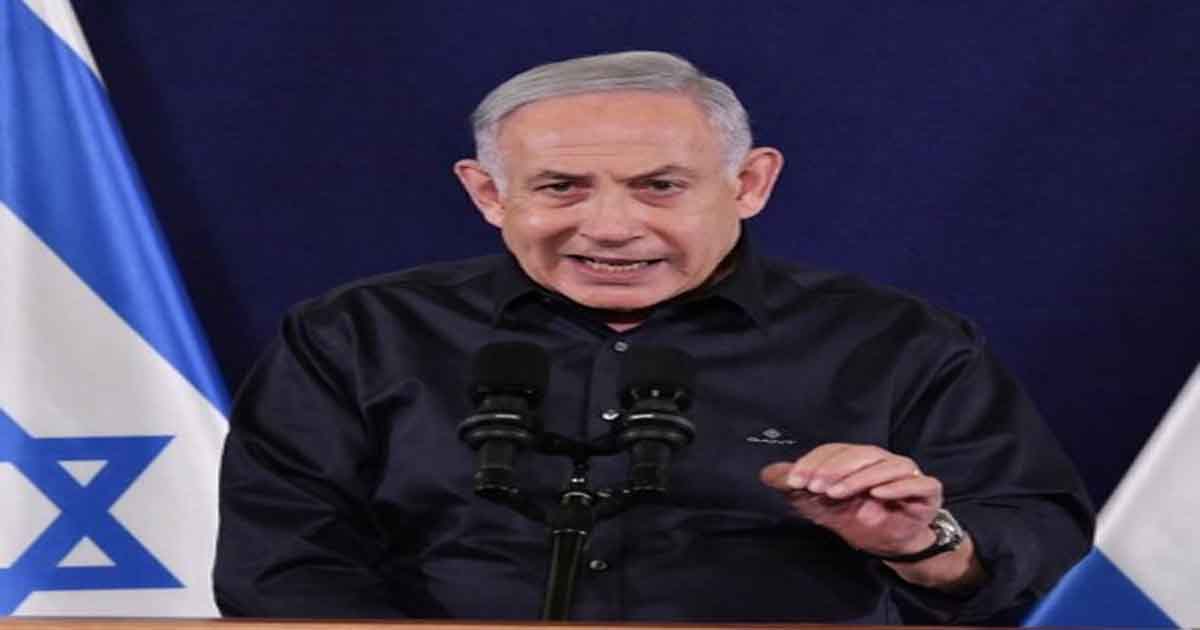
Israel’s Caretaker Prime Minister Benjamin Netanyahu has renewed his call for a national unity government, warning that Iran was rebuilding its nuclear program and that only a broad coalition could eliminate the threat to Israel.
In a prerecorded address on Saturday (local time), Netanyahu urged his political rival Gadi Eisenkot, who has been tasked with forming Israel’s next government, to enter coalition negotiations without preconditions.
“The Iranian regime, which seeks Israel’s destruction, is once again working to revive its nuclear program,” Netanyahu said. “We must remove this existential threat once and for all.”
Netanyahu said a national unity government could guarantee Israel’s security for years to come and expand regional peace agreements.
The remarks followed a security briefing Netanyahu held with Eisenkot on Thursday.
Netanyahu’s right-wing coalition lost its parliamentary majority in the October election. Eisenkot, a former military chief, was given 28 days by President Isaac Herzog to form a government, with a possible 14-day extension. Netanyahu will remain caretaker prime minister until a new government takes office.
Earlier this week, Netanyahu called for the formation of a national unity government, asserting that the country must remain united in the face of what he described as a growing threat from Iran.
Speaking after the first session of Israel’s newly elected parliament, Netanyahu warned that the country could soon come under intense international pressure to accept a nuclear-armed Iran and the continuation of its current regime, which he accused of posing an existential threat to Israel.
“In the very near future, we’re going to be confronted by international pressure to accept a nuclear-armed Iran and the preservation of this terror regime that seeks to annihilate us,” Netanyahu said.
However, his remarks drew an immediate and strong reaction from former Israel Defence Forces (IDF) Chief Gadi Eisenkot, who accused the caretaker Prime Minister of using an important state occasion to further his political interests. Describing Netanyahu’s speech as “shameful”, Eisenkot questioned his suitability to continue holding office.
International News
Sheikh Hasina says India-Bangladesh ties too important to be held hostage to political differences

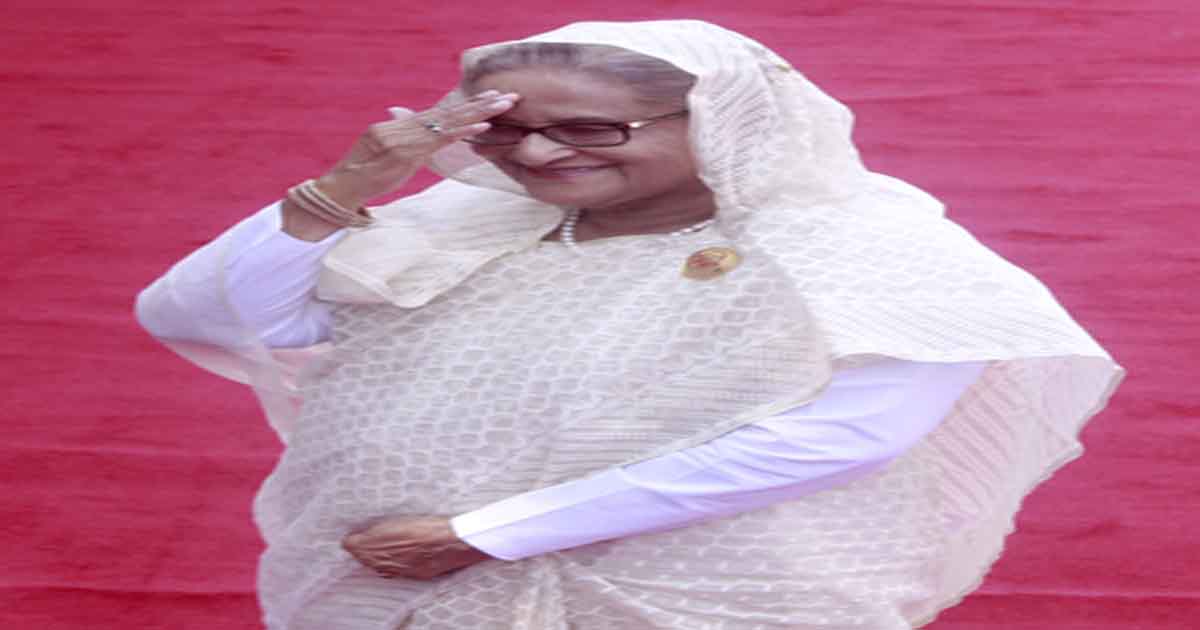
Former Bangladesh Prime Minister Sheikh Hasina expressed hope that her personal circumstances would not come in the way of bilateral relations between India and Bangladesh, highlighting the longstanding historical ties and shared strategic interests between the two countries.
Speaking exclusively to media, Hasina said that ties between the two countries should not be held hostage to political differences surrounding any individual.
“I do not think it would be appropriate for me to comment on the decisions of the Indian government. India is a sovereign country. It has its own laws and procedures, and its government will decide accordingly. But I certainly hope my personal situation will not become an obstacle to relations between Bangladesh and India. Our relations go back to the Liberation War of 1971. We share a long border, a common history, and important interests in trade, energy, connectivity and security. These relations are far too important to be held hostage to political disagreements involving any individual,” the former PM stated.
Hasina said that both the former Muhammad Yunus-led interim government and the ruling BNP administration had repeatedly called for her return to Bangladesh.
She further questioned why her decision to return voluntarily should now invite objections.
“Both the Yunus administration and the present government have repeatedly demanded my return to Bangladesh. Now, I have decided to return myself. So, why should there be any objection?” the former PM told media in a rare audio interview.
When asked about preserving India-Bangladesh ties amid Dhaka’s attempts to link bilateral relations to her extradition, Hasina said she did not think it would be appropriate for her to comment on India’s diplomatic policy or suggest what Prime Minister Narendra Modi should do.
“I do not think it would be appropriate for me to comment on India’s diplomatic policy or suggest what Prime Minister Modi should do. The Awami League has always believed in maintaining good relations with our neighbours while protecting Bangladesh’s sovereignty and national interests. During our time, we strengthened relations with India while also working closely with China, Japan, the United States and other countries,” she mentioned.
Hasina emphasised that lasting bilateral cooperation between New Delhi and Dhaka required a representative government in Bangladesh with democratic legitimacy and broad public support, rather than one that excluded significant sections of the population from the political process.
“I also believe that lasting relations between Bangladesh and India require democratic legitimacy and public confidence. A genuinely representative government provides a stronger foundation for cooperation than one that excludes a large section of its own people from political life,” she noted.
Emphasising that a peaceful, democratic and stable Bangladesh was in India’s interest, just as a friendly and cooperative India benefited Bangladesh, Hasina said that the two countries should preserve the relationship built during her tenure.
“That is the relationship we worked to build, and I believe it should be preserved. Neighbouring countries may have disagreements, and Bangladesh may have differences with India. But those differences should be resolved through dialogue and mutual respect, not through hostility for political advantage,” she told media.
Referring to issues such as the land boundary, Ganges water-sharing and maritime boundaries, Hasina said that her government had demonstrated during its tenure that differences could be resolved through dialogue.
“Our foreign policy has always been based on friendship towards all and malice towards none. This was the principle articulated by the Father of the Nation, Bangabandhu Sheikh Mujibur Rahman, and we have followed it,” the former PM stated.

Congress, SP leaders to fight together in UP polls, BJP says alliance will not yield results

Two killed after car collides with auto-rickshaw in Telangana Vikarabad

FairPoint: Sonia’s memoir opens Gandhi family closed doors, but leaves much hidden

India to get preferential access in US market under trade pact: Piyush Goyal

Iran’s IRGC says drones hit US air defence radar station in Bahrain

Attack on democratic rights: INDIA Bloc leaders on detentions of anti-ECI protestors

Congress trying to protect 3 crore Bangladeshi infiltrators in voter list: HM Shah

Online betting: ED conducts searches at 20 premises in Mumbai, Pune, Hyderabad

Red Fort car blast probe exposes blueprint for spread of terror modules across India

Tiger Shroff attack: Bihar family denies accused is their son
-

 Crime4 years ago
Class 10 student jumps to death in Jaipur
-

 Maharashtra2 years ago
Mumbai Local Train Update: Central Railway’s New Timetable Comes Into Effect; Check Full List Of Revised Timings & Stations
-

 Maharashtra2 years ago
Mumbai To Go Toll-Free Tonight! Maharashtra Govt Announces Complete Toll Waiver For Light Motor Vehicles At All 5 Entry Points Of City
-

 Maharashtra2 years ago
False photo of Imtiaz Jaleel’s rally, exposing the fooling conspiracy
-

 National News2 years ago
Ministry of Railways rolls out Special Drive 4.0 with focus on digitisation, cleanliness, inclusiveness and grievance redressal
-

 Maharashtra2 years ago
Maharashtra Elections 2024: Mumbai Metro & BEST Services Extended Till Midnight On Voting Day
-

 National News2 years ago
J&K: 4 Jawans Killed, 28 Injured After Bus Carrying BSF Personnel For Poll Duty Falls Into Gorge In Budgam; Terrifying Visuals Surface
-

 Crime2 years ago
Baba Siddique Murder: Mumbai Police Unable To Get Lawrence Bishnoi Custody Due To Home Ministry Order, Says Report