
International News
Sheikh Hasina says India-Bangladesh ties too important to be held hostage to political differences

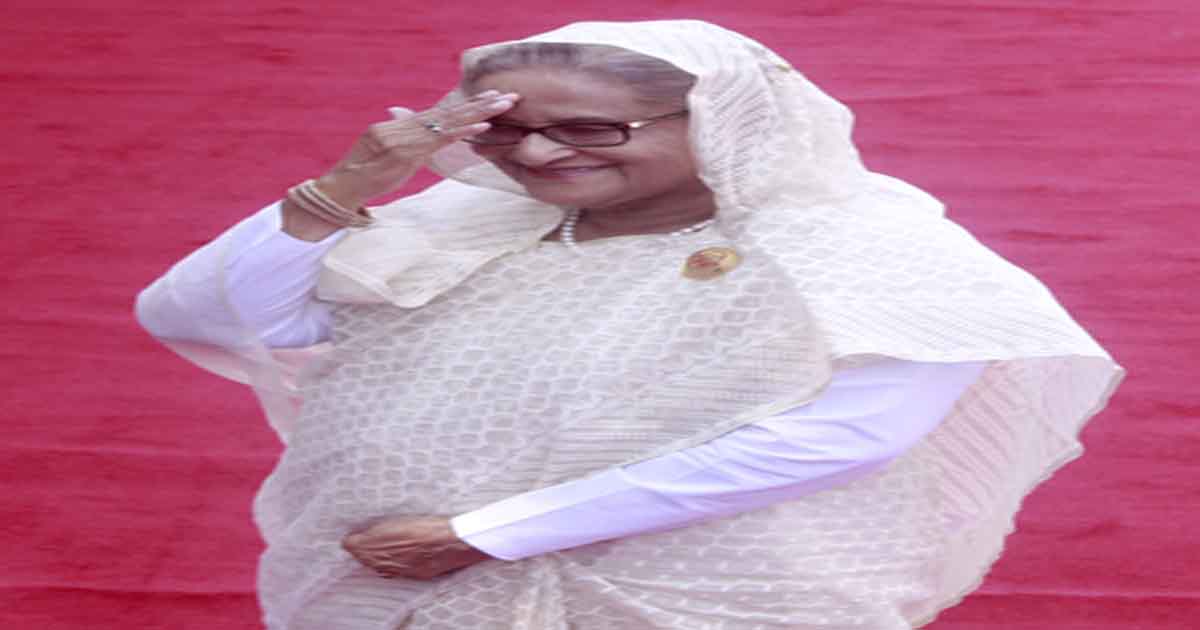
Former Bangladesh Prime Minister Sheikh Hasina expressed hope that her personal circumstances would not come in the way of bilateral relations between India and Bangladesh, highlighting the longstanding historical ties and shared strategic interests between the two countries.
Speaking exclusively to media, Hasina said that ties between the two countries should not be held hostage to political differences surrounding any individual.
“I do not think it would be appropriate for me to comment on the decisions of the Indian government. India is a sovereign country. It has its own laws and procedures, and its government will decide accordingly. But I certainly hope my personal situation will not become an obstacle to relations between Bangladesh and India. Our relations go back to the Liberation War of 1971. We share a long border, a common history, and important interests in trade, energy, connectivity and security. These relations are far too important to be held hostage to political disagreements involving any individual,” the former PM stated.
Hasina said that both the former Muhammad Yunus-led interim government and the ruling BNP administration had repeatedly called for her return to Bangladesh.
She further questioned why her decision to return voluntarily should now invite objections.
“Both the Yunus administration and the present government have repeatedly demanded my return to Bangladesh. Now, I have decided to return myself. So, why should there be any objection?” the former PM told media in a rare audio interview.
When asked about preserving India-Bangladesh ties amid Dhaka’s attempts to link bilateral relations to her extradition, Hasina said she did not think it would be appropriate for her to comment on India’s diplomatic policy or suggest what Prime Minister Narendra Modi should do.
“I do not think it would be appropriate for me to comment on India’s diplomatic policy or suggest what Prime Minister Modi should do. The Awami League has always believed in maintaining good relations with our neighbours while protecting Bangladesh’s sovereignty and national interests. During our time, we strengthened relations with India while also working closely with China, Japan, the United States and other countries,” she mentioned.
Hasina emphasised that lasting bilateral cooperation between New Delhi and Dhaka required a representative government in Bangladesh with democratic legitimacy and broad public support, rather than one that excluded significant sections of the population from the political process.
“I also believe that lasting relations between Bangladesh and India require democratic legitimacy and public confidence. A genuinely representative government provides a stronger foundation for cooperation than one that excludes a large section of its own people from political life,” she noted.
Emphasising that a peaceful, democratic and stable Bangladesh was in India’s interest, just as a friendly and cooperative India benefited Bangladesh, Hasina said that the two countries should preserve the relationship built during her tenure.
“That is the relationship we worked to build, and I believe it should be preserved. Neighbouring countries may have disagreements, and Bangladesh may have differences with India. But those differences should be resolved through dialogue and mutual respect, not through hostility for political advantage,” she told media.
Referring to issues such as the land boundary, Ganges water-sharing and maritime boundaries, Hasina said that her government had demonstrated during its tenure that differences could be resolved through dialogue.
“Our foreign policy has always been based on friendship towards all and malice towards none. This was the principle articulated by the Father of the Nation, Bangabandhu Sheikh Mujibur Rahman, and we have followed it,” the former PM stated.

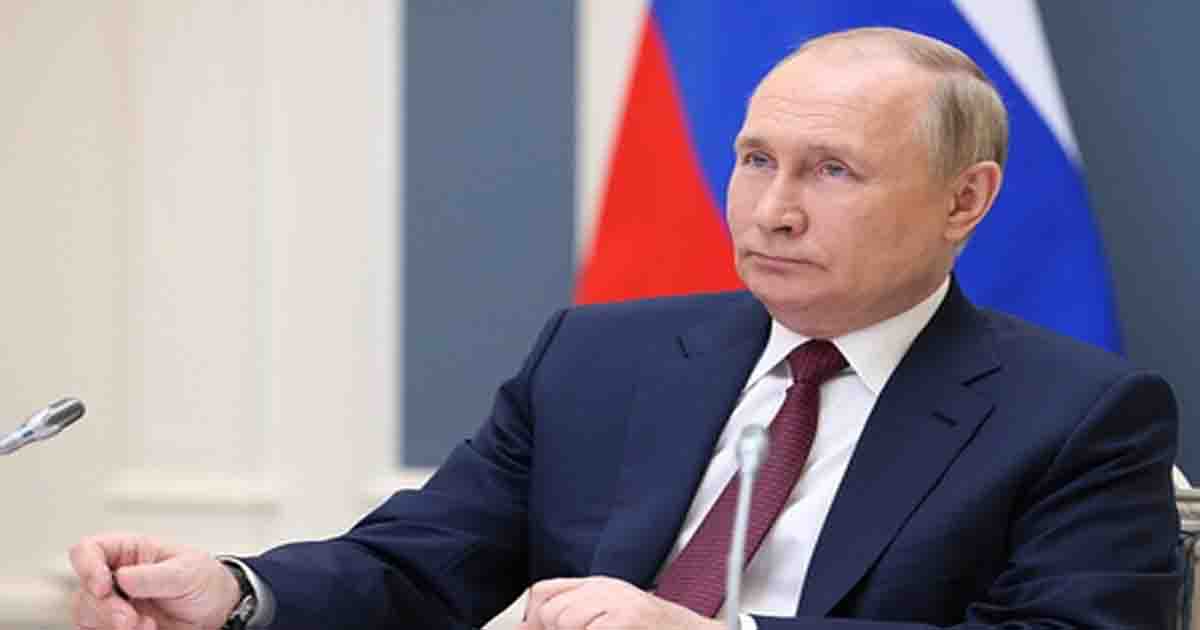
Russian President Vladimir Putin said that the new nuclear-powered submarine Perm will join Russia’s Pacific Fleet and undertake combat duty.
Putin made the remarks on Friday while attending a ceremony to raise the Russian naval flag on the Perm at the Sevmash shipyard in Severodvinsk, a major shipbuilding center in northwestern Russia, the Kremlin said in an official statement.
The Perm was the fifth Yasen-M-class nuclear-powered submarine delivered to the Russian Navy over the past six years, Putin said, adding that Russia is one of the few countries in the world capable of building such advanced nuclear-powered submarines, which are weapons systems of global strategic significance, Xinhua new agency reported.
According to the Kremlin, the Perm is a fourth-generation, multipurpose nuclear-powered submarine, and also the first Russian Navy submarine equipped with Zircon hypersonic cruise missiles as standard armament.
Submarines of the Yasen-M class are designed to operate in different parts of the world’s oceans while remaining undetected. In the near future, the Perm will join Russia’s Pacific Fleet to protect Russia’s maritime borders, Putin said.
Russia plans to continue expanding and modernizing its Navy, particularly its submarine fleet, according to Putin. He said that the Sevmash shipyard is continuing construction of several types of nuclear-powered submarines, with five missile-carrying submarines scheduled for delivery to the Navy by 2030, including three of the Yasen-M class.
Putin said measures to expand serial ship production and modernize weapons systems would help ensure stable operations in the shipbuilding and defense industries, promote advanced technologies and strengthen Russia’s defense capabilities and technological sovereignty.
International News
India says attacks on maritime shipping and seafarers unacceptable, calls for global response

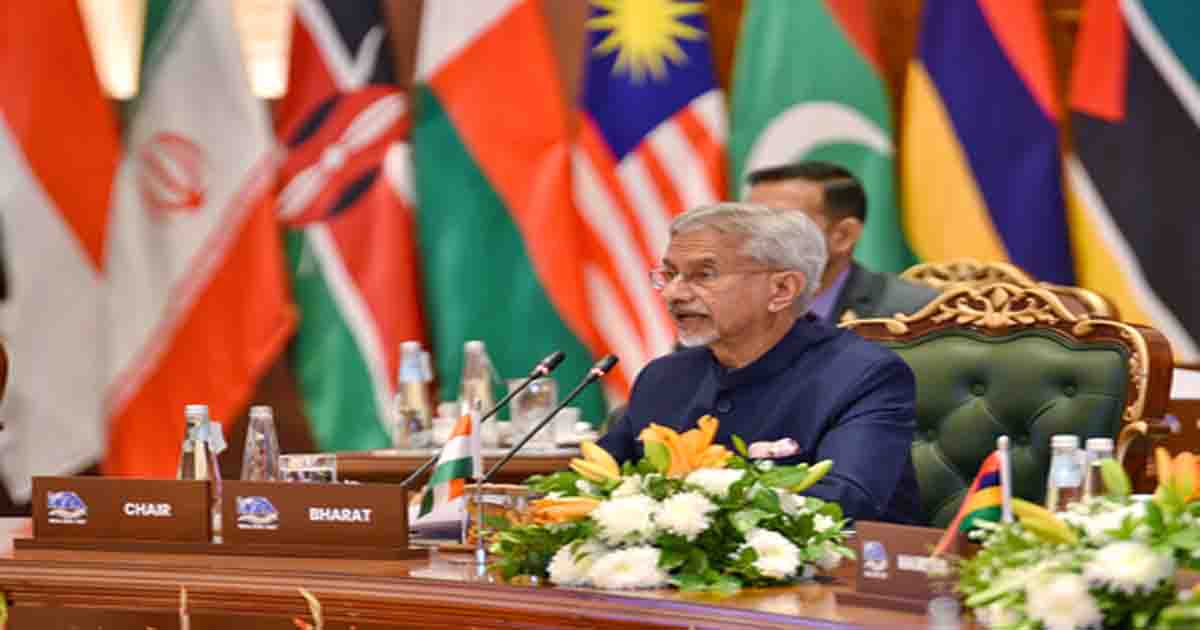
Calling for a global response, External Affairs Minister (EAM) S Jaishankar on Friday termed attacks on maritime shipping and seafarers as “unacceptable”.
In his remarks at the Indian Ocean Rim Association’s (IORA) General Debate on ‘A Stronger Regional Voice: Positioning IORA in a Changing Global Order’ in New Delhi on Friday, EAM Jaishankar highlighted the volatile aspects of a transforming global order, particularly conflicts, frictions and disruptions.
“We are understandably focused on the volatile aspects of a transforming global order, especially conflicts, frictions and disruptions. It is equally imperative to appreciate the promising aspects: deep interdependence, strong globalisation and the benefits of international cooperation,” EAM Jaishankar said.
He emphasised that the Indian Ocean is particularly poised to address its challenges. Recognising the criticality of maritime trade to global growth, EAM Jaishankar called on nations to deliver on safety and security of the Indian Ocean and stated that international law, especially the United Nations Convention on the Law of the Sea (UNCLOS), must be respected.
“Whether it is to counter terrorism, narcotics trade or illegal, unreported, and unregulated fishing, or indeed response to climate events and disaster situations, we have to become more self-reliant as well as more enthusiastic about cooperating with partners,” EAM Jaishankar said.
The meeting is being held under India’s IORA 2025-2027 chairship with the theme of ‘Innovation, Openness, Resilience and Adaptability in the Indian Ocean Region’.
The 23-member states of IORA are India, Australia, Bangladesh, Indonesia, Iran, Kenya, Madagascar, Comoros, France, Malaysia, Maldives, Mauritius, Mozambique, Oman, Seychelles, Singapore, Somalia, South Africa, Sri Lanka, Tanzania, Thailand, the United Arab Emirates, and Yemen.
The 12 dialogue partners are China, Egypt, the European Union, Germany, Italy, Japan, South Korea, Russia, Saudi Arabia, Turkey, the United Kingdom, and the United States.
The Council of Ministers is the Association’s highest decision-making body and comprises the Ministers of Foreign Affairs of IORA Member States. It provides the overall policy and strategic direction of the organisation. Its key responsibilities include formulating policies, reviewing progress in cooperation among member states, and identifying and deciding on new areas of collaboration to further advance the objectives of the Association.
International News
Iran has no involvement in Kuwait drone attack, ready for joint investigation: Iranian FM
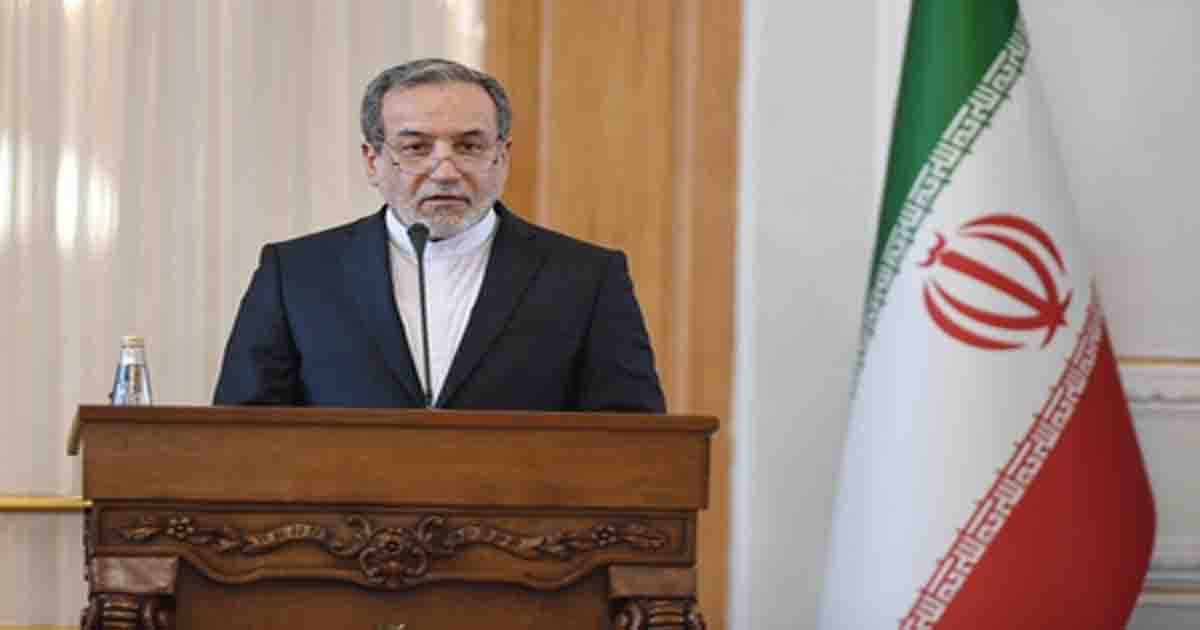
Iranian Foreign Minister Seyed Abbas Araghchi said the country has no involvement in a drone attack that killed two Italians in Kuwait earlier on Thursday, saying Tehran is ready to cooperate with Kuwait and Italy to investigate.
Araghchi made the remarks in separate phone calls with Kuwait’s Foreign Minister Sheikh Jarrah Jaber Al-Ahmad Al-Sabah and Italy’s Foreign Minister Antonio Tajani.
In the calls, the Iranian foreign minister emphasized that Iran “had no role or involvement whatsoever in the occurrence of this event,” saying Iran is prepared to conduct a joint investigation with Kuwait and Italy to examine the details of the incident and identify its origin and the parties involved, Xinhua news agency reported.
Araghchi expressed regret to his Kuwaiti counterpart over the casualties and damage caused by the attack.
In his phone call with Tajani, the Iranian minister expressed regret over the deaths of two Italians, extending condolences and sympathy to the Italian government and people.
Tajani said Araghchi told him the drone “was absolutely not launched by Iranian armed forces, nor did it originate from Iran,” according to Italian news agency ANSA.
Kuwaiti military spokesperson Saud Abdulaziz Al-Atwan said earlier in a statement on social media platform X that the Kuwaiti forces had detected and engaged several “hostile drones” within the country’s airspace and attributed them to Iran.
Al-Atwan said falling debris from the attacked facility killed two Italians, injured one Kuwaiti and one Pakistani, and caused material damage.
Earlier on Thursday, senior spokesman for Iran’s armed forces Abolfazl Shekarchi also rejected Kuwait’s claim about Iran’s involvement in the attack, according to the semi-official Fars news agency, saying the Iranian Armed Forces had conducted no military or offensive operations in the region.

Akshay Kumar’s son Aarav Bhatia latest pic reminds fans of Rajesh Khanna, say ‘handsome just like his grand father’

Delhi Police arrest criminal with illegal knife, stolen phones, scooter in Shahdara

Delimitation Bill 2026 includes provision for EC to redraw PoK constituencies

Accused in Ghazipur mother-daughter double murder shot in both legs in encounter, arrested

Delhi CM Rekha Gupta urges residents to save 181, 112 emergency helpline numbers on phones

Congress trying to protect 3 crore Bangladeshi infiltrators in voter list: HM Shah

Red Fort car blast probe exposes blueprint for spread of terror modules across India

Trump flags Iran targets as talks continue

‘Conspiracy, not accident’: NCP on Ajit Pawar death

BJP, Shiv Sena slam Mallikarjun Kharge for terming Diwali ‘Khushiyon ka Eid’
-

 Crime4 years ago
Class 10 student jumps to death in Jaipur
-

 Maharashtra2 years ago
Mumbai Local Train Update: Central Railway’s New Timetable Comes Into Effect; Check Full List Of Revised Timings & Stations
-

 Maharashtra2 years ago
Mumbai To Go Toll-Free Tonight! Maharashtra Govt Announces Complete Toll Waiver For Light Motor Vehicles At All 5 Entry Points Of City
-

 Maharashtra2 years ago
False photo of Imtiaz Jaleel’s rally, exposing the fooling conspiracy
-

 National News2 years ago
Ministry of Railways rolls out Special Drive 4.0 with focus on digitisation, cleanliness, inclusiveness and grievance redressal
-

 Maharashtra2 years ago
Maharashtra Elections 2024: Mumbai Metro & BEST Services Extended Till Midnight On Voting Day
-

 National News2 years ago
J&K: 4 Jawans Killed, 28 Injured After Bus Carrying BSF Personnel For Poll Duty Falls Into Gorge In Budgam; Terrifying Visuals Surface
-

 Crime2 years ago
Baba Siddique Murder: Mumbai Police Unable To Get Lawrence Bishnoi Custody Due To Home Ministry Order, Says Report