
International News
Turkey hikes up passage fees through its straits almost fivefold

Turkey has introduced a nearly fivefold hike in fees for passage through its straits, which connect the Mediterranean and the Black Sea, local media reported.
Citing officials from the Ministry of Transport and Infrastructure, the Sabah daily said on Monday that the new passage toll will be effective from October 7, reports Xinhua news agency.
The passage fee increased from around $0.8 dollars to $4 per tonne, it added, noting that annual revenues are expected to rise to $200 million, compared to the current 40 million generated from some 40,000 passages per year.
Following the rights provided by the Montreux Convention, Turkey has the right to charge ships passing through its straits, the Bosphorus and the Dardanelles, for service costs, including lighthouses, emergency preparations, and medical services.
Straits of Turkey present a shorter cargo route for big volumes of goods transferred through the regions.
Crossing through Turkey’s largest city Istanbul, the Bosphorus Strait represents a challenging voyage as an almost 30 kilometres long route with a width of about 700 meters at its choke points.
Another strait, the Dardanelles in the Canakkale province is twice the length.
The passage fee hike came shortly after the straits of Turkey became the epicentre of global attention as ships carrying tonnes of Ukrainian grain sailed through them.


International News
Operation Sindoor: Pakistan’s fake victory spectacle couldn’t hide crisis within terror groups

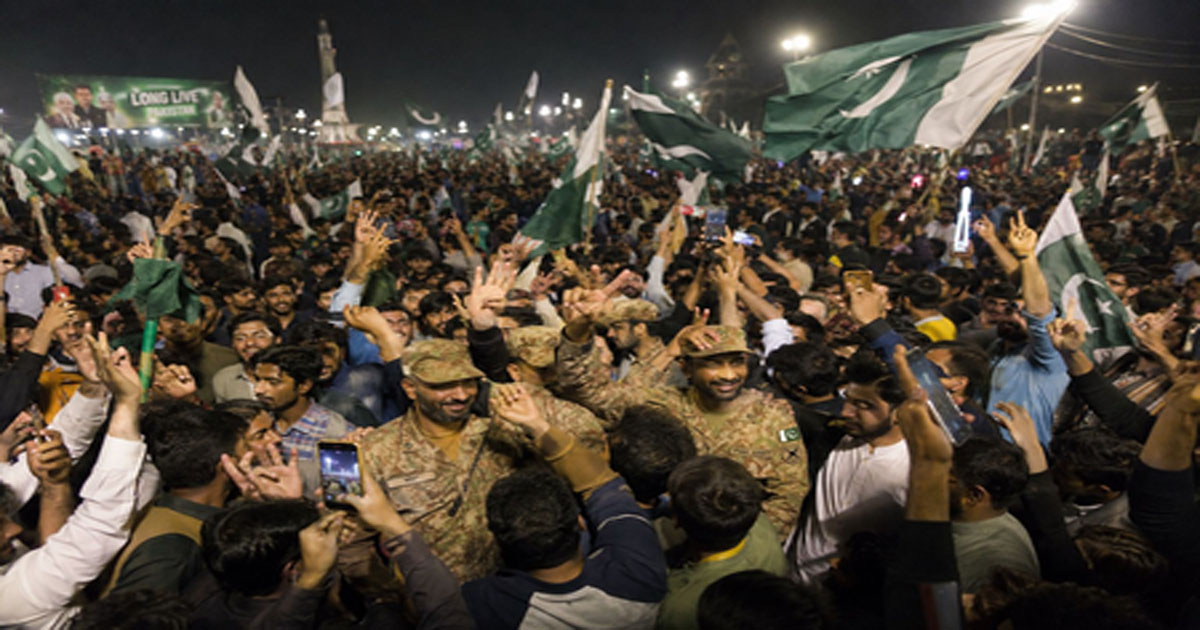
New Delhi, May 8: For Pakistan, ‘Operation Sindoor’ resulted in a loss of face. After terror infrastructure was hit hard by the Indian armed forces who were avenging the Pahalgam terror attack, Pakistan set out a fake narrative of emerging victorious.
Rallies and processions were taken out to create an impression that the Pakistan Army had hit back and won the battle. While the perception was created, the reality was something different.
An official said that events were strategically planned across Pakistan to commemorate fake victory. On the other hand, social media handles run by Pakistanis worked overtime to put out false narratives.
Following the conclusion of ‘Operation Sindoor’, Pakistan’s Army chief instructed the Shehbaz Sharif government to release Rs 500 crore. This money was then distributed evenly to federal governments, business and religious groups. All were asked to organise massive rallies across Pakistan. The programme mandate by the Pakistan Army was titled ‘Ashra-e-Tashakur Fateh-E-Muneeb,’ which means ten days of gratitude for a decisive victory.
To cement the fake claim further, Asim Munir even pressured the Sharif government to make him Field Marshal.
An Intelligence Bureau official said that while these rallies took place on a grand scale for ten days, something more serious was brewing within. Some of the rallies even focussed on thanking the Jaish-e-Mohammad and Lashkar-e-Tayiba for the so-called victory.
However, within the ranks of these two terror groups something serious was simmering. Both Hafiz Saeed and Masood Azhar had started to question the Pakistan Army and the ISI. They wanted to know what happened to the guarantees and protection that they had been assured. These groups have been operating with ease only due to the funds and protection that the Army and the ISI offer them.
During ‘Operation Sindoor’, the Jaish-e-Mohammad lost its Bahawalpur headquarters. Its chief Masood Azhar even lost most of his family members and several other cadres. The Muridke camp, which is the Lashkar-e-Tayiba’s primary training facility was blown to pieces during the Indian operation.
Both these terror groups, which have wrecked havoc in India, had not witnessed such a huge hit. There have been encounters and terrorists have been killed on Indian soil. However never have they been struck so hard and that, too, deep inside Pakistan.
Another official said that the impression that the Pakistan establishment sought to create in the aftermath of the operation worked among a few people, but clearly their proxies were not impressed. They knew what they had lost and the fact that the Army could not even defend them is what left them completely disgruntled. The official also said that many cadres, too, had started questioning their own leadership.
Officials say that all these factors led to rifts within these two terror groups and this explains why they are taking so long to rebuild.
During the numerous processions, the Army insisted that the cadres of the Lashkar-e-Tayiba and Jaish-e-Mohammad should take part. Many of them did, but in their minds, they knew what the reality was. In this desperation to show that Pakistan was victorious, the Army ended up showcasing to the world that globally banned terror groups such as the Jaish-e-Mohammad and Lashkar-e-Tayiba are welcome within the ecosystem of the establishment, the official added.
Pakistan watchers point out that it was nothing but desperation on part of the Army. It had to indulge in this circus and claim a false victory. In reality, the Pakistan Army and its chief were the hardest hit thanks to ‘Operation Sindoor’, the experts also point out.
International News
Tehran ready to pursue diplomacy to end war if rights safeguarded: Iran’s president
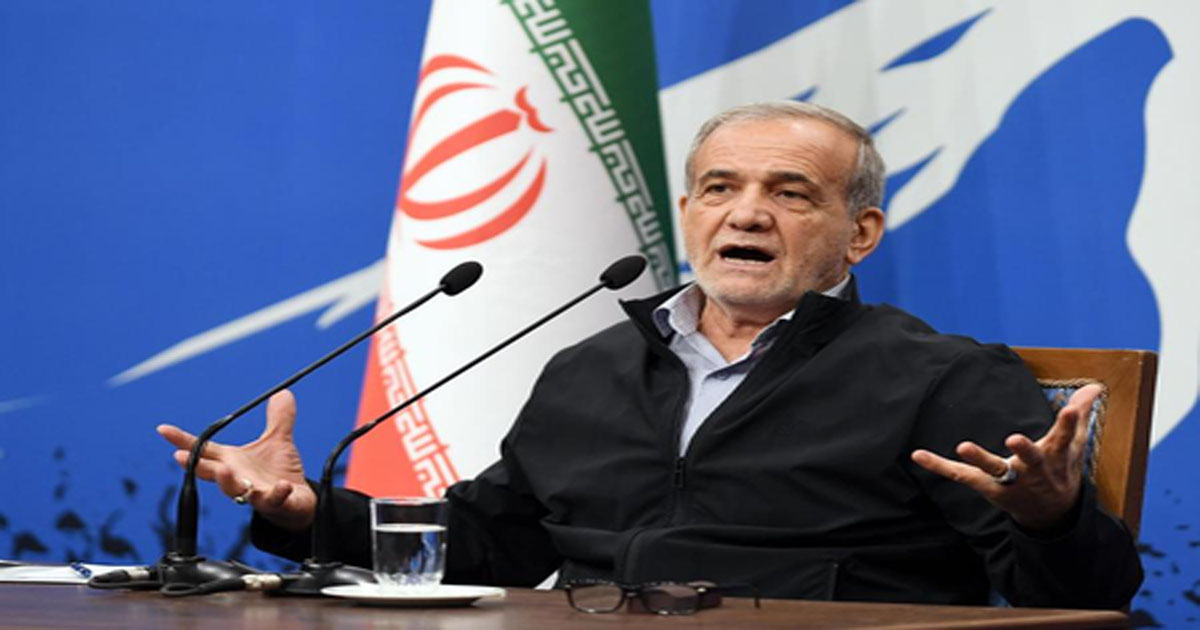
Tehran, May 7: Iran’s President Masoud Pezeshkian has said the country is ready to pursue diplomatic paths to end the war with the United States and Israel, while insisting on safeguarding the Iranian nation’s rights.
In a call with French President Emmanuel Macron on Wednesday (local time), Pezeshkian expressed deep distrust of the United States, citing recent hostile actions, including two attacks on Iran during bilateral talks, which he described as “stabbing Iran in the back,” according to a statement published on the website of his office.
The phone conversation came as Axios reported earlier in the day that the United States and Iran are closing in on a one-page memo to end their war, reports Xinhua news agency.
It said a potential deal would involve Iran committing to a moratorium on nuclear enrichment, and the United States agreeing to lift sanctions, with both sides lifting restrictions on transit through the Strait of Hormuz.
Iran, the United States and Israel reached the ceasefire on April 8 after 40 days of fighting that started with the US and Israeli attacks on Feb. 28.
Following the truce, Iran and the United States held one round of peace talks in Pakistan’s capital, Islamabad, on April 11 and 12, which failed to lead to an agreement.
Over the past weeks, the two sides have exchanged a number of proposed plans to end the war, with the latest one currently being reviewed by Iran.
Additionally, Iran has said it has not exchanged any new written messages with the United States, pushing back against reports that the two sides are close to a one-page agreement to end hostilities.
The semi-official Fars news agency called recent media reports “fabricated,” saying they were designed to influence global markets and drive down oil prices rather than reflect the situation on the ground.
Fars, citing two unnamed sources, said Iran has not yet responded to the latest US message, which was delivered through Pakistan. Iranian Foreign Ministry spokesman Esmaeil Baghaei said Tehran is still reviewing the US proposal and will respond after completing its assessment, according to the Iranian Students’ News Agency.
International News
Iran’s president says Tehran ready for dialogue within international law framework
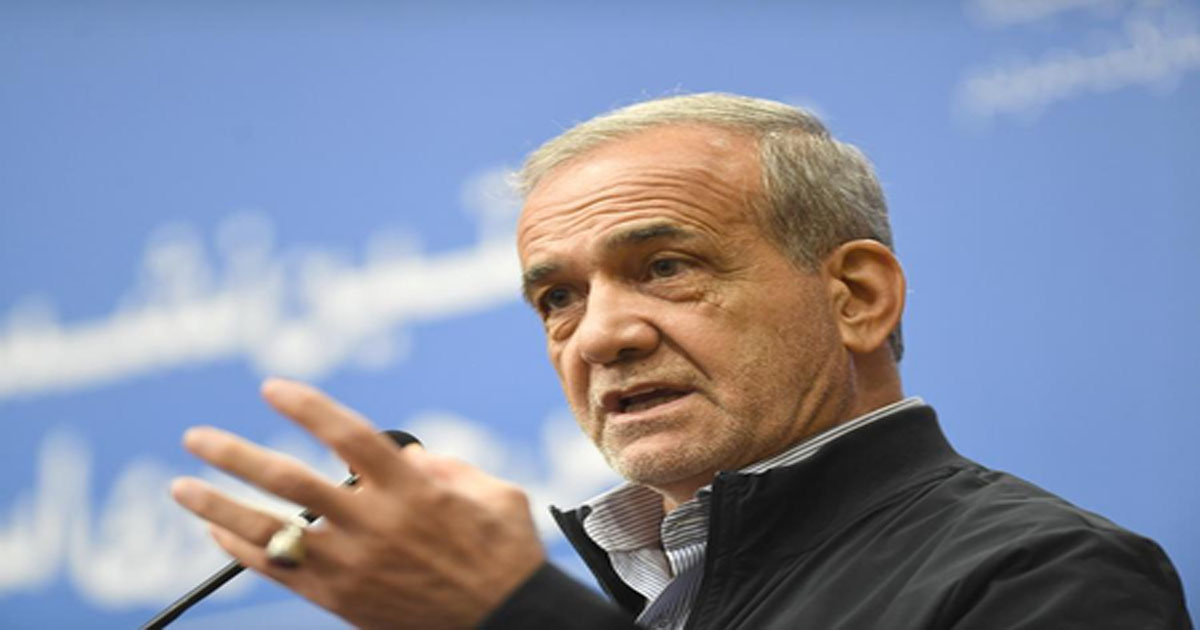
Tehran, May 6: Iranian President Masoud Pezeshkian held a phone call with Iraqi Prime Minister-Designate Ali al-Zaidi, during which Pezeshkian said Iran is ready for dialogue within the framework of international law, but will not acquiesce to force.
Pezeshkian said that “our problem is that on the one hand, the United States is pursuing a policy of maximum pressure against our country, and on the other hand, it expects Iran to come to the negotiating table and ultimately surrender to its unilateral demands … such an equation is impossible,” read a statement published by Pezeshkian’s office on Tuesday (Local time).
He noted that Iran fundamentally does not consider war and insecurity to be favourable options, reports Xinhua news agency.
Pezeshkian stressed that Iran must not deprive itself of nuclear technology, saying the United States speaks in a way as if Iran must not have a nuclear industry, and imposes extra pressure on the country by putting forward excessive demands.
He added that in all previous negotiations, Iran was fully ready to provide, within the framework of international regulations and global monitoring, whatever was deemed necessary under international norms to ensure the peaceful nature of its nuclear activities.
Al-Zaidi, for his part, voiced Iraq’s readiness to mediate between Iran and the United States to contain regional crises, read a statement from Al-Zaidi’s media office.
According to the Iraqi statement, the two sides also agreed to exchange official visits in the coming period to strengthen bilateral ties.
On February 28, Israel and the United States launched joint attacks on Tehran and other Iranian cities, killing Iran’s then Supreme Leader Ali Khamenei, senior commanders and civilians. Iran responded with waves of missile and drone strikes targeting Israel and U.S. bases and assets in the Middle East.
A ceasefire was reached between the warring sides on April 8, followed by peace talks in Pakistan’s Islamabad on April 11 and 12, which ended without an agreement.

Funds will be available immediately through the SAP system as soon as the budget for the year 2026-27 is approved in the Municipal Corporation meeting.

Navi Mumbai Crime: Panvel Police Solve ₹1.5 Crore Tata Projects Theft Case Within 6 Hours, 3 Arrested

MBVV Police Bust Major Drug Syndicate, Seize MD Worth ₹13.61 Crore In Mira Bhayandar Crackdown

TCS Nashik Case: Priyanka Chaturvedi Seeks Strict Action Against AIMIM’s Mateen Patel, Demands Removal From Post In Nida Khan Shelter Row

Traffic On Mumbai Lalbaug Flyover Disrupted After Tempo Overturns

‘Son Falsely Implicated, We Are Well-Educated’: Father Of Accused Tausif Attar Defends Son After Skullcap, Namaz Coercion Allegations Rock TCS Nashik

Asha Bhosle’s son says last respects to be paid at residence in Lower Parel, followed by last rites at Shivaji Park

Mumbai: 15th arrest in Rohit Shetty shooting case, shooter identified, arrested, more arrests possible

‘Scary & Traumatic’: Commuter Alleges Mobbing By Auto Drivers Over Uber Bike Booking In Navi Mumbai

Maharashtra Shock: 22-Year-Old Arrested For Exploiting & Blackmailing Multiple Women In Kolhapur; Love Jihad Angle Suspected
-

 Crime4 years ago
Class 10 student jumps to death in Jaipur
-

 Maharashtra2 years ago
Mumbai Local Train Update: Central Railway’s New Timetable Comes Into Effect; Check Full List Of Revised Timings & Stations
-

 Maharashtra2 years ago
Mumbai To Go Toll-Free Tonight! Maharashtra Govt Announces Complete Toll Waiver For Light Motor Vehicles At All 5 Entry Points Of City
-

 Maharashtra2 years ago
False photo of Imtiaz Jaleel’s rally, exposing the fooling conspiracy
-

 National News2 years ago
Ministry of Railways rolls out Special Drive 4.0 with focus on digitisation, cleanliness, inclusiveness and grievance redressal
-

 Maharashtra1 year ago
Maharashtra Elections 2024: Mumbai Metro & BEST Services Extended Till Midnight On Voting Day
-

 National News2 years ago
J&K: 4 Jawans Killed, 28 Injured After Bus Carrying BSF Personnel For Poll Duty Falls Into Gorge In Budgam; Terrifying Visuals Surface
-

 Crime2 years ago
Baba Siddique Murder: Mumbai Police Unable To Get Lawrence Bishnoi Custody Due To Home Ministry Order, Says Report