
National News
Tribal bodies in Manipur urge PM Modi to implement NRC

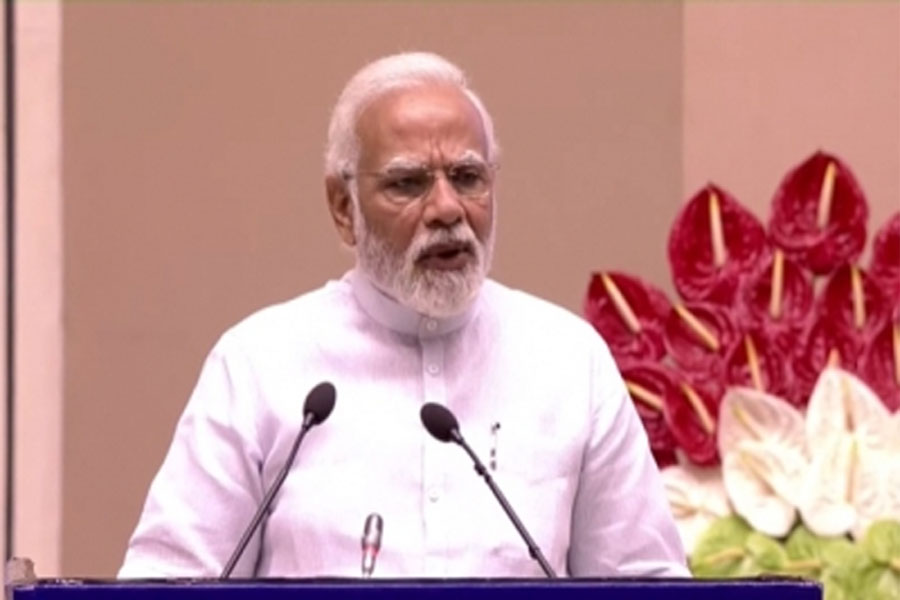
A total of 19 influential tribal organisations in Manipur have stepped up the demand to implement the National Register of Citizens in the state to protect the indigenous people and to deal with the issue of illegal foreigners.
The indigenous 19 tribal federations and tribes submitted a memorandum to Prime Minister Narendra Modi on Wednesday strongly demanding the NRC for filtering the foreigners out, putting them in detention centres and deporting them.
The organisations said that Union Home Minister Amit Shah in his speech in the Rajya Sabha on November 19, 2019 said that NRC would be implemented across the country. “In the light of this perception, we call for the implementation of NRC in Manipur to safeguard the genuine citizens,” the tribal organisations submitted.
“It is the request to our responsible central government to open centres for detection and deportation of foreigners with immediate footsteps.”
The tribal bodies said that in 1980 and 1994, the All Manipur Students Union and All Manipur Coordinating Committee had undergone an agreement twice with the Manipur government and the then governor V.K. Nair regarding the detection and deportation of foreign nationals from Manipur with the cut off base of 1951 for identifying the foreign nationals from genuine Indian citizens.
Nevertheless, the past as well present government in Manipur has not taken up any steps towards the agreement, they pointed out.
The copies of the memorandum of the tribal organisations, which included, Mao Council, Tangkhul Naga Headman’s Association, Thangal Union, Zeme Naga Council, Tarao Tribe Union, have also submitted to Home Minister Amit Shah, Manipur Governor La Ganeshan and Chief Minister N. Biren Singh.
They said that though the Central government extended the Inner Line Permit System to the state of Manipur in December 2019, most importantly, the fixation of indigenous people has yet not been defined.
As Manipur is a border state, the intrusion of immigrants from Bangladesh, Myanmar and Nepal by far and autonomously had settled at large since the abolition of the Pass Permit and Permit System on November 18, 1950 by the then Chief Commissioner Himmat Singh, the organisations said.
They said that on this issue, no discerning step had been taken up so far for the last 75 years under the Foreigners Act 1946.
“Because of this continuous overflow of influxes, which subsisted within us, has now taken possession of the socio economic and political rights of the indigenous people. Bangladeshi and Myanmar Muslims have occupied the constituency of Jiribam and a large number of them scattered on average in valley areas.
“Myanmar kuki and nearby Lushai kuki have settled at an unsystematic population of some lakhs in number. They have now counteracted ownership against the occupant indigenous people in hill areas. Likewise, Nepali population has risen in tremendous numbers,” the tribal organisations pointed out.
Besides, the NRC with 1951 as the base year for recognising domicile, various Manipur students’ bodies also demanded the establishment of a State Population Commission to “check and balance the population growth”.
They said the indigenous communities are being “swamped and marginalised” in their own state by the “ever-increasing population” of outsiders.


International News
‘Saw People Facing Shortage, Felt Deeply Concerned’, Says Consulate General of Iran In Mumbai Amid LPG Crisis; Calls India ‘Friend & Partner’

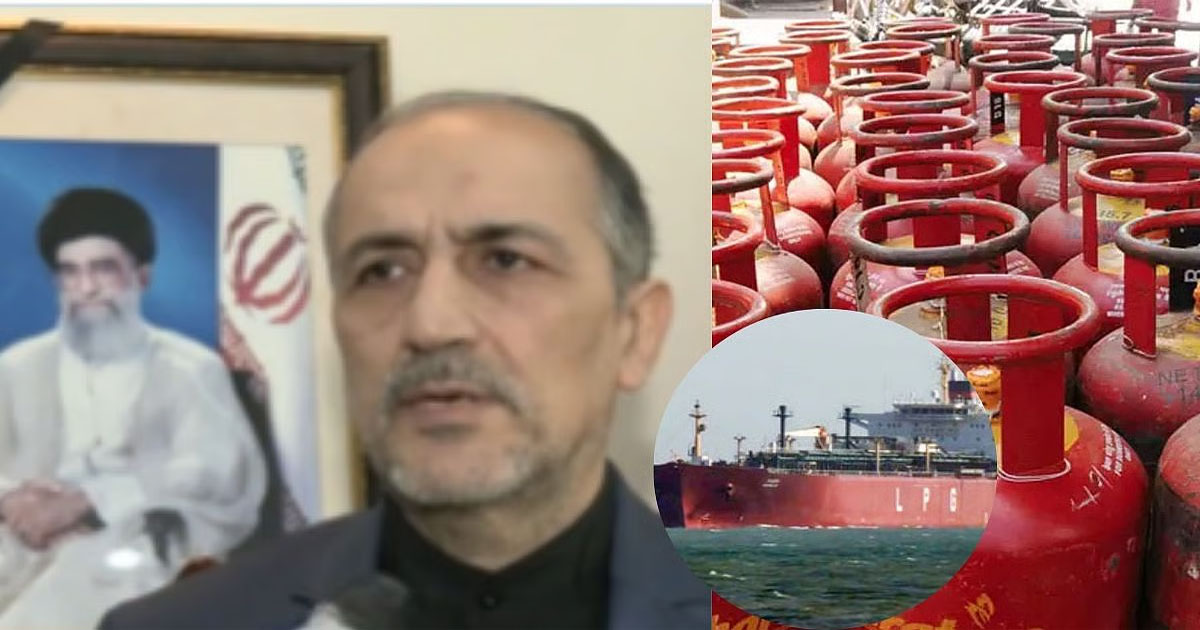
Mumbai: Consulate General of Iran, Saeid Reza Mosayeb Motlagh, on Friday said that Tehran is deeply concerned about India’s LPG crisis. Calling India a “friend and partner,” he added that despite risks in a conflict-like situation, Tehran ensured safe passage for gas carriers to India.
While speaking to media, he said, “The Islamic Republic of Iran has, from the very beginning, shown that it is a friend and partner of India. Personally, as the Consul General of the Islamic Republic of Iran in Mumbai, when I saw people facing a shortage of gas, I felt deeply concerned.”
“As you know, the situation is effectively a war zone, and gas carriers face their own risks; even the smallest impact can lead to serious consequences. However, by the grace of God, Iran was able to provide a safe passage so that these vessels could cross securely. This demonstrates our friendship with India,” he added as quoted by media.
Meanwhile, the Indian-flagged crude oil tanker, Jag Laadki, carrying approximately 80,886 metric tonnes (MT) of crude oil, arrived in Gujarat. Before that, LPG tanker Shivalik, which crossed the war-hit Strait of Hormuz, arrived at Gujarat’s Mundra Port. It roughly carried 40,000 metric tonnes of cooking gas from Qatar. These critical deliveries come at a time when the West Asia conflict caused LPG shortages across India.
India, the world’s third-largest crude importer, sources 88 per cent of its oil needs from abroad. It consumes 5.8 million barrels per day, of which 2.5-2.7 million barrels come from West Asian countries like Saudi Arabia, Iraq, and the UAE via the Strait of Hormuz. The choke point also carries 55 per cent of India’s cooking gas (LPG) and 30 per cent of liquefied natural gas (LNG), used for power, fertilisers, CNG, and household cooking.
Business
LPG Crisis: How A Simple Digital DAC OTP System Is Plugging A Massive Black-Market Loophole
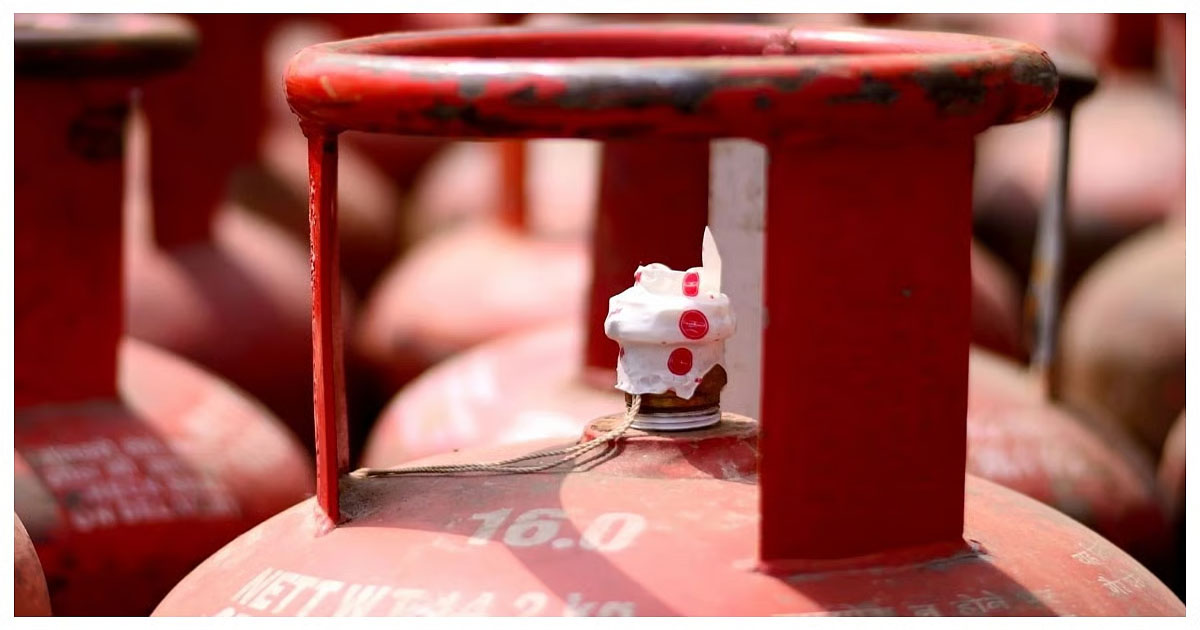
India’s cooking gas distribution network has long been plagued by a quiet crisis – subsidised LPG cylinders meant for households routinely ended up in the black market, diverted by unscrupulous delivery personnel and agents. With the LPG crisis now deepening due to the US-Iran war, the government’s answer to this is deceptively simple – an OTP.
The Delivery Authentication Code (DAC) is a one-time-use code used to verify the legitimacy of home LPG cylinder delivery, ensuring the cylinder reaches the rightful customer. When a booking is made, the customer receives the code on their registered mobile number, which must be shown to the delivery person before the cylinder changes hands.
Ever since the crisis began, the government has significantly scaled up this system, with DAC coverage now reaching nearly 72 percent of deliveries, up from 53 percent earlier. The Ministry of Petroleum and Natural Gas has directed oil companies to ensure the DAC system is used in at least 80 percent of LPG deliveries, making OTP verification mandatory for the majority of cylinders.
Oil Marketing Companies (OMCs) have introduced the DAC system – sent via SMS and shared with delivery personnel – to ensure verified delivery, with IVRS/SMS refill booking also implemented nationwide, providing alerts at key stages including booking, cash memo generation, and delivery.
If distributors fail to meet the DAC requirement, the system flags cylinders as still in the agency’s inventory even though they have been delivered -creating a digital paper trail that exposes irregularities and improves transparency across the supply chain.
Consumers can ensure they receive DAC codes by taking these steps:
– Link your mobile number to your LPG consumer ID via your distributor or the Indane/HP/Bharat Gas app.
– Book via IVRS by calling your provider’s helpline – the DAC is sent automatically via SMS upon booking.
– Update details online at iocl.com or your respective oil company’s portal.
– Visit your distributor with photo ID and consumer ID if SMS is not being received.
– If the OTP does not arrive, customers can show their Aadhaar card as an alternate identity verification to receive the cylinder.
With the government pushing toward an 80 percent DAC compliance target, the system represents a low-cost, high-impact fix to a problem that has cost the exchequer significantly. For millions of households, it also means the subsidised cylinder they paid for will actually reach their doorstep.
New Delhi, March 19: India’s thermal power plants have adequate coal stocks of around 53.41 million tonnes which are adequate for nearly 23 days at the present rate of consumption, and further stocks are also being built up at the pitheads of coal mining companies as a proactive measure to meet any exigency amid the disruption in oil and gas supplies due to the Iran war, the Ministry of Coal said on Thursday.
The pithead coal stock at the mines of Coal India Limited (CIL), which was 106.78 million tonnes (MT) as on April 1, 2025, has grown to about 125.54 MT as on March, 18, 2026. Further, there is around 5.75 MT of coal at the mines of Singareni Collieries Company Limited (SCCL) and another 15.75 MT coal at the mines of captive/commercial mines and about 12 MT in transit and about 5.49 MT in ports and good-shed sidings, according to a statement issued by the ministry.
Coal is continuing to ensure reliable baseload power to support core industries such as steel and cement that underpin the economic growth of the country. The coal production in the country continues at a pace matching the prevailing demands of the consumer and building adequate stocks at the mine-end for maintaining adequate supplies to the consumers as per their requirements, with the continued support of Railways, the statement said.
Coal India Limited is taking adequate measures to ensure the supply of coal to all consumers, including small, medium, and other consumers. As a proactive step, CIL has planned 29 e-auctions in the month of March, offering about 23.56 MT of coal. Out of these 29 auctions, 5 auctions have already been conducted since March 12, wherein 73.1 lakh ton of coal was offered, and 31.96 lakh ton of coal has been booked, indicating adequacy of coal offered in the e-auctions, the statement said.
In addition to this, CIL has also taken necessary action to ensure coal availability to the small, medium and other consumers through the State Nominated Agencies (SNAs) route and requested the state governments to provide the additional coal requirement, which can be met in full to avoid any energy shortages. The coal offtake of the states through the SNAs is being constantly monitored by CIL to ensure that uninterrupted supplies are ensured, the statement said.
The Ministry of Coal is ensuring a performance-driven ecosystem through sustained policy facilitation, robust monitoring mechanisms, and proactive stakeholder engagement. These concerted efforts are aimed at providing reliable coal availability, enabling uninterrupted operations across critical sectors, and effectively meeting the nation’s growing energy demands, the statement added.

Mumbai: SIM card used in cyber fraud, case registered against SIM card agents from Nagpara and Andheri

Large-Scale Land Record Irregularities in Maharashtra Spark Statewide Audit

‘Dhurandhar 2 Is A Pakistani Film, Why Show It To People Of Hindustan?’ Samajwadi Party MLA Abu Azmi Slams Ranveer Singh Starrer Movie

‘Saw People Facing Shortage, Felt Deeply Concerned’, Says Consulate General of Iran In Mumbai Amid LPG Crisis; Calls India ‘Friend & Partner’

Maharashtra Infra Update: JNPT Linked Expressway Connecting Mumbai-Pune -Goa Routes Moves Ahead, Bids Open April 16

Married Mumbai Woman Mocked In Andheri Society Over ‘Lift Kissing’ CCTV Video, Files Police Complaint

Mumbai: JBCN International School In Borivali Gets Bomb Threat, Search Reveals Hoax, Students Safe

Former Arsenal Star Mesut Ozil’s Convoy Gets Involved In Road Accident During Bangladesh Visit

Mumbai Local Train Update: Mega, Jumbo Blocks Announced On Central, Harbour & Western Lines On February 22; Check Time & Route Here

Mahayoti’s big gift to the people of Mumbai… Now there is no tax for houses up to 500 square feet, the Municipal Corporation has increased this limit to 700 square feet.
-

 Crime4 years ago
Class 10 student jumps to death in Jaipur
-

 Maharashtra1 year ago
Mumbai Local Train Update: Central Railway’s New Timetable Comes Into Effect; Check Full List Of Revised Timings & Stations
-

 Maharashtra1 year ago
Mumbai To Go Toll-Free Tonight! Maharashtra Govt Announces Complete Toll Waiver For Light Motor Vehicles At All 5 Entry Points Of City
-

 Maharashtra1 year ago
False photo of Imtiaz Jaleel’s rally, exposing the fooling conspiracy
-

 National News1 year ago
Ministry of Railways rolls out Special Drive 4.0 with focus on digitisation, cleanliness, inclusiveness and grievance redressal
-

 Maharashtra1 year ago
Maharashtra Elections 2024: Mumbai Metro & BEST Services Extended Till Midnight On Voting Day
-

 National News1 year ago
J&K: 4 Jawans Killed, 28 Injured After Bus Carrying BSF Personnel For Poll Duty Falls Into Gorge In Budgam; Terrifying Visuals Surface
-

 Crime1 year ago
Baba Siddique Murder: Mumbai Police Unable To Get Lawrence Bishnoi Custody Due To Home Ministry Order, Says Report