
Business
Tata Motors Unveils Limited-Edition Safari STEALTH to Mark 27 Years of Legacy


Tata Motors is celebrating 27 years of the Safari with the launch of the exclusive STEALTH Edition, a limited-run variant designed for those who seek style and performance. Available in both the Harrier and Safari models, only 2,700 units of this edition will be produced. The Harrier STEALTH is priced at Rs 25.09 lakh (ex-showroom, Delhi), while the Safari STEALTH starts at Rs 25.74 lakh (ex-showroom, Delhi) and is offered in both 6- and 7-seater configurations. With a striking design, premium features, and advanced technology, the STEALTH Edition adds a new level of exclusivity to Tata’s SUV lineup.
The Tata STEALTH Edition brings a bold, monotone design that reflects the growing demand for exclusive and distinctive vehicles. With limited units available, this special edition is set to attract enthusiasts looking for a unique SUV. Bookings for the STEALTH Edition opened on February 21, both online and at Tata dealerships across India, giving customers the chance to own a rare and stylish addition to Tata’s lineup.
The Harrier and Safari STEALTH Edition stand out with their bold design and advanced features, built on the sturdy OMEGARC platform derived from Land Rover’s D8 architecture. The exclusive Matte Black finish, R19 Black Alloy Wheels, and a distinctive STEALTH mascot give these SUVs a powerful road presence. Inside, the cabin is designed for comfort with ventilated first- and second-row seats (Safari only for the second row), a Carbon-Noir interior theme, and a voice-assisted dual-zone climate control system.
Technology is a highlight, featuring a 31.24 cm Harman touchscreen, Arcade App Store, Alexa Home 2 Car, Map My India navigation, and a 10-speaker JBL audio system with Harman AudioworX. Power comes from a 2.0L KRYOTEC BS6 Phase 2 turbocharged engine producing 170PS, paired with a 6-speed automatic transmission. Safety is a priority, with Level 2+ ADAS offering 21 functions, including a segment-first Intelligent Speed Assist, along with 7 airbags and ESP with 17 safety features.
Unveiling this exciting new version of the Harrier and Safari, Vivek Srivatsa, Chief Commercial Officer, Tata Passenger Electric Mobility Ltd., stated, “Tata Motors has been a leader in the Indian SUV segment, with innovation at its core. The Tata Safari, which introduced the concept of a lifestyle SUV to India, reflects this legacy of pioneering excellence. Over 27 remarkable years, the Safari has constantly evolved, and the launch of the STEALTH Edition is a tribute to this journey. This special edition is an exclusive offering, with only 2,700 units available in the striking STEALTH Matte Black finish. More than just an SUV, the STEALTH Edition is a symbol of prestige, adventure, and capability, making it a highly desirable collector’s item for enthusiasts and connoisseurs. Owning a STEALTH Edition isn’t just about having an extraordinary vehicle—it’s about claiming a piece of automotive history that many will aspire to have in their collection.”


New Delhi, June 20: Recent wallet inactivity notifications from PhonePe have led to increased consumer interest in digital wallets and how they function. One of the key observations from these discussions is that many users continue to assume that their PhonePe account, UPI account, and PhonePe Wallet are the same. In reality, these are different payment instruments that operate independently and serve different purposes.
As digital payments become increasingly common in everyday life, understanding how wallets work and how they differ from UPI can help consumers make informed decisions and better understand the products they use.
Understanding the difference between UPI and wallets
When you make a payment through UPI on PhonePe, the money is debited directly from your linked bank account. A PhonePe Wallet, on the other hand, is a prepaid payment instrument (PPI) where money is stored separately from your bank account.
This distinction is important because the inactivity fee applies only to the PhonePe Wallet and not to UPI-linked bank accounts.
Understanding how wallet inactivity charges work
One of the concerns raised by users is whether PhonePe can deduct the inactivity fee from their bank account if their wallet has no balance. The answer is no.
If a user’s PhonePe Wallet has a zero balance and has remained inactive for an extended period, the inactivity fee will not be recovered from the user’s linked bank account or through UPI. Similarly, the wallet balance will not become negative.
In other words:
- No deduction will be made from a linked bank account.
- No deduction will be made via UPI.
- A wallet with insufficient balance will not show a negative balance.
Why some active PhonePe users may still receive notifications
Some users have reported receiving inactivity notifications despite using PhonePe regularly for QR-code payments, bill payments, or money transfers. This happens because wallet activity and UPI activity are tracked separately.
A customer may actively use PhonePe every day through UPI while their PhonePe Wallet remains unused for months or years. In such cases, the wallet can still be classified as inactive even though the user continues to use the PhonePe app.
Advance Notification and User Choices
According to PhonePe, affected users are notified 15 days in advance before any inactivity fee is deducted from the wallet balance.
During this period, users have the opportunity to:
- Activate their wallet.
- Add money to the wallet if they wish to continue using it.
- Withdraw eligible balances.
- Review whether they want to continue maintaining the wallet.
Addressing common questions around KYC
Some users believe they must complete Full KYC before they can reactivate their wallet. However, reactivating a wallet does not necessarily require converting a Minimum KYC wallet into a Full KYC wallet.
Users can activate their wallet by completing OTP verification and making a transaction using the wallet. Upgrading to Full KYC is not a prerequisite for activation.
Understanding wallet balances and cashback credits
Another area of confusion involves cashback rewards. Many users assume that cashback balances are stored inside their PhonePe Wallet. In reality, cashback rewards are typically credited to a separate Gift Card Balance, which is distinct from the PhonePe Wallet.
As a result, receiving cashback does not automatically mean that a wallet is active, nor does it mean the cashback balance is subject to wallet inactivity deductions.
Wallet closure and customer support
Some users have reported difficulties while attempting to close their wallet through the app, including error messages or requests for additional verification.
In such situations, users are advised to contact PhonePe customer support for assistance with account closure or wallet-related issues.
Why inactivity charges exist
Wallets are regulated as prepaid payment instruments and require maintenance, compliance, and operational support even when they are not actively used.
As a result, some wallet providers levy inactivity or maintenance fees on dormant wallets. The practice is not unique to a single company and has been observed among multiple wallet providers in the prepaid payments ecosystem.
The key takeaway in this case is that the inactivity fee applies only to the PhonePe Wallet, which is a separate prepaid payment instrument. It does not apply to UPI transactions, does not affect linked bank accounts, and does not result in negative wallet balances.
For users who have received a notification, the most important step is to determine whether they have an active PhonePe Wallet and decide whether they want to continue using it, reactivate it, or close it.
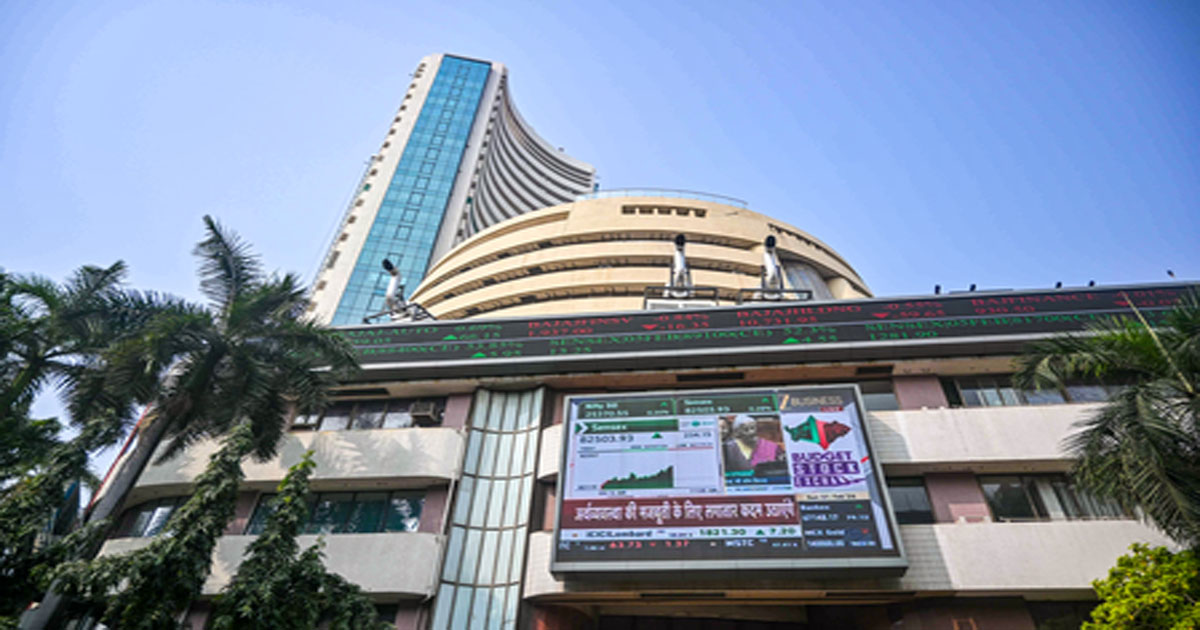
Mumbai, June 20: The Indian equity benchmarks posted second consecutive week of strong gains, over investor optimism about improved geopolitical situation following the US-Iran peace agreement, and decline in Brent crude prices.
Nifty added 1.65 per cent during the week and lost 0.64 per cent on the last trading day to reach 24,013. At close, Sensex was down 607 points or 0.78 per cent at 76,802. It added 1.69 per cent during the week.
Domestic markets witnessed consolidation on the last trading day of the week largely dragged by a sharp sell-off in IT stocks after recent three sessions of benchmark gains.
Brent crude, which dipped below the $80 per barrel level on hopes of a potential US-Iran peace agreement, saw a sudden halt in price decline after abrupt cancellations of peace talks and profit booking toward the close of the week.
The rupee strengthened by roughly 79 paise during the week to around 94.35 per dollar. The improved geopolitical backdrop is expected to lend support to market sentiment next week, analysts said.
A 14-point US-Iran MoU signed during the week included the reopening of the Strait of Hormuz, removal of the naval blockade and restoration of commercial shipping.
On the sectoral front, consumer durables, real estate, pharma and defence were notable gainers. Defence sector rallied 6.6 per cent over the past week, supported by strong underlying fundamentals, market participants said.
IT emerged as the biggest laggard, with the Nifty IT index plunging 6.5 per cent after Accenture lowered its FY26 constant-currency revenue growth guidance and issued a weaker-than-expected outlook.
On the monetary policy front, the US Fed maintained a cautious, data-dependent stance with limited forward guidance, reinforcing a higher-for-longer rate disposition.
With the RBI maintaining a cautious stance, declining crude prices and progress in trade deals with the UK and US could support a gradual improvement in the outlook, though clearer policy direction may take one or two more reviews, said analysts.
Broad market indices outperformed gains of benchmark indices, as Nifty Midcap100 gained 2.62 per cent, while Nifty Smallcap100 surged 3.23 per cent during the week.
Investors remain keen on India’s monsoon rainfall, with cumulative June rainfall so far tracking 38 per cent below normal amid ongoing El Nino conditions.
Any further delay in monsoon progression could heighten concerns over kharif sowing, food inflation and rural demand, market participants said.
Incoming India PMI and credit growth data, alongside US PCE and GDP prints, are other key data for market direction in near term.
New Delhi, June 19: The Department of Social Justice & Empowerment has removed the requirement for a domicile certificate for students applying under Pre‑Matric and Post‑Matric scholarship schemes for Scheduled Caste and Other Backward Classes, an official statement said on Friday.
This step is expected to reduce the compliance burden on students and simplify the application process for scholarships, enabling easier access to benefits.
Thousands of eligible applicants across the country who study in institutions other than their domicile states will be benefitted, the statement from Ministry of Social Justice & Empowerment said.
Under the Pre-Matric and Post-Matric Scholarship Schemes for SCs and OBCs, nearly 1.2 crore students receive scholarship benefits annually. The removal of domicile certificate requirements will make the application process more student-friendly by reducing documentation requirements and lowering compliance costs.
Further strengthening digital governance, the Department has launched SETU (Scholarship for Educational Transformation and Upliftment) on the UMANG platform as a comprehensive solution for scholarship-related services.
The platform provides a single interface to the eligible applicants, Institutional Nodal Officers, District Nodal Officers and State officials for application registration, tracking, and validation of other services, improving transparency and efficiency.
“These initiatives are aligned with the government’s broader objective of promoting inclusion, reducing procedural barriers, and ensuring effective delivery of welfare schemes,” the statement noted.
The Department remains committed to leveraging technology-driven reforms to enhance outreach and provide timely support to students, it added.
A total of Rs 7,981.47 crore has been disbursed to over 75 lakh scheduled caste (SC) beneficiaries in FY26, an official statement said in April.
The funds were disbursed as part of schemes run by the Department of Social Justice and Empowerment focused on the educational empowerment of marginalised students belonging to Scheduled Castes.
Across key scholarship programs, expenditure rose year‑on‑year, with a 21 per cent increase under the Pre Matric Scholarship Scheme for SCs and Others, an 11.23 per cent increase under the Post Matric Scholarship Scheme for SCs, a rise of 13.5 per cent under Central Sector Scholarship of Top Class Education for SC students.

Operation Clean triggers documentation row over 250-year-old shrine in Jaisalmer border district

Mumbai BEST strike continues… Additional buses to be provided for NEET exam centers, passengers inconvenienced due to strike

NEET exams: Noida administration heightens surveillance via CCTV, police on alert

Parbhani : Maharashtra ATS cracks down on Youth Islamic Federation, Popular Front of India Raids conducted at 15 locations

PhonePe’s wallet inactivity notifications: What users need to know

G7 Summit: PM Modi, Prez Trump discussed West Asia, India-US trade deal & bilateral cooperation across sectors: MEA

Trump, Netanyahu hold phone talks after Iranian missile fire: Israeli state media

Indian equity markets trade higher as Iran-Israel tensions ease

Rubio says Hamas disarmament key to Gaza rebuild

Israel captures strategic Beaufort Castle in southern Lebanon
-

 Crime4 years ago
Class 10 student jumps to death in Jaipur
-

 Maharashtra2 years ago
Mumbai Local Train Update: Central Railway’s New Timetable Comes Into Effect; Check Full List Of Revised Timings & Stations
-

 Maharashtra2 years ago
Mumbai To Go Toll-Free Tonight! Maharashtra Govt Announces Complete Toll Waiver For Light Motor Vehicles At All 5 Entry Points Of City
-

 Maharashtra2 years ago
False photo of Imtiaz Jaleel’s rally, exposing the fooling conspiracy
-

 National News2 years ago
Ministry of Railways rolls out Special Drive 4.0 with focus on digitisation, cleanliness, inclusiveness and grievance redressal
-

 Maharashtra2 years ago
Maharashtra Elections 2024: Mumbai Metro & BEST Services Extended Till Midnight On Voting Day
-

 National News2 years ago
J&K: 4 Jawans Killed, 28 Injured After Bus Carrying BSF Personnel For Poll Duty Falls Into Gorge In Budgam; Terrifying Visuals Surface
-

 Crime2 years ago
Baba Siddique Murder: Mumbai Police Unable To Get Lawrence Bishnoi Custody Due To Home Ministry Order, Says Report