
General
Tale of Mumbai’s rising trend of air pollution

Every winter, smog-filled days and nights across entire north India are a common thing and by contrast, the western region looks much cleaner.
However, a new analysis of regional air pollution levels by the Centre for Science and Environment (CSE) has shown that proximity to the sea has not helped in containing the increasing air pollution in the financial capital, Mumbai.
Even though winter pollution levels in the western region are not as high as that seen in the Indo-Gangetic Plains due to its proximity to the sea and improved ventilation, the levels have been seen to be increasing despite the geographical advantages and favourable meteorology, the CSE analysis said.
In other words, increasing air pollution is not restricted to winters but is now an yearlong problem in Mumbai too.
“The number of bad-air days in Mumbai have doubled between 2019 and 2021, while good days are down by 20 per cent. This underscores the urgency of scaling up action across all sectors to prevent further worsening and to arrest the trend in this region,” executive director, research and advocacy, CSE, Anumita Roychowdhury said.
This new analysis, released on Wednesday, of real time pollution data is part of CSE’s air quality tracker initiative and also has an assessment of annual and seasonal trends in PM2.5 concentration for the period January 1, 2019, to January 9, 2022.
This analysis is based on the real time data available from the current working air quality monitoring stations. Review of data availability from the automated monitoring stations in the region under the continuous ambient air quality monitoring stations (CAAQMS) programme of Central Pollution Control Board (CPCB) shows major data gaps. When it comes to data availability calculated as number of days with adequate PM2.5 data for computation of a valid 24-hour average, among Mumbai stations, Kurla in east-central Mumbai had only 55 per cent data while Malady (West) in north Mumbai came up with 68 per cent.
“It is not clear why these stations have such poor data availability despite minimal problems of electricity and internet connectivity in the region,” said CSE’s programme manager, Urban Data Analytics Lab, Avikal Somvanshi.
Like other cities in Maharashtra and Gujarat, studied as part of the same analysis by CSE, Mumbai too has indicated a rising trend in annual PM2.5 levels after an initial drop during 2020 (when there were lockdowns) with a rebound and a rising trend visible in 2021.
The CSE analysis to indicate that the number of bad-air quality days are increasing in Mumbai is supported with Air Quality Index (AQI) data. Daily AQI analysis based on 10 oldest stations shows a 20 per cent drop in the number of good AQI days in the city between 2019 and 2021 — while days with poor or very poor AQI have doubled.
South Mumbai has the worst air within the city during winter: In December 2021, the stations in south Mumbai reported significantly higher PM2.5 levels compared to the rest of the city.
Mazgaon with a monthly average of 134 micrograms per cubic metres was the most polluted neighborhood of the city, followed by Navy Nagar, Colaba (124 micrograms per metre cube), Kurla (101 micrograms per metre cube), Vile Parle-West (101 micrograms per metre cube) and Worli (97 micrograms per metre cube).
Khindipada, in north Mumbai, which is at the edge of Sanjay Gandhi National Park in the suburbs with a monthly average of 54 micrograms per metre cube was the least polluted neighborhood. Bandra and Malad (West) reported low numbers, but the values are not considered valid due to a significantly large amount of missing data from these two stations, the CSE analysis showed.

Maharashtra
Eknath Shinde Calls Rahul Gandhi’s Supreme Court March a Black Day in India’s History, Alleges INDIA Bloc Is Part of a Foreign Conspiracy.

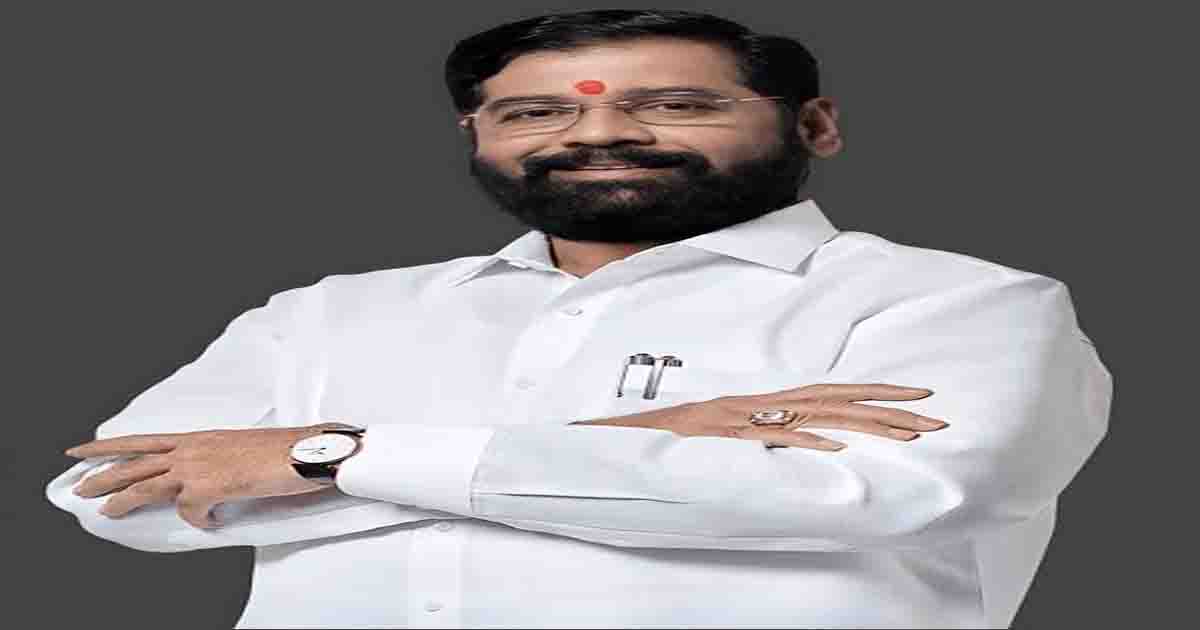
The ‘INDIA’ alliance organized a march to the Supreme Court in Delhi, attended by Rahul Gandhi, Priyanka Gandhi, and Members of Parliament from the alliance. Following this protest, it appears that the ‘INDIA’ alliance has adopted an aggressive stance. Commenting on the protest, Eknath Shinde remarked that yesterday was a ‘black day’ in the country’s history. He observed that the Constitution and the constitutional institutions established by Babasaheb were trampled upon. An unprecedented event occurred where a march to the Supreme Court was undertaken to exert pressure. Condemning the actions of Rahul Gandhi and the ‘INDIA’ alliance, he stated that no amount of condemnation would be enough. While acknowledging their right to protest in a democracy, he questioned the method of leading a march merely to file a petition. He emphasized that they should apologize for attacking India’s judicial system. Claiming that they are actively working to destroy the Constitution and strangle democracy, he added that the current situation poses a danger to the country. He expressed suspicion regarding the involvement of foreign forces, suggesting it could be part of an international conspiracy. Eknath Shinde said, “It is extremely unfortunate that they are pushing the country towards chaos; this is dangerous for the nation.” He added that since they cannot win elections or defeat the Prime Minister, they are resorting to such tactics. Shinde also leveled serious allegations, stating that the opposition is undermining the country’s freedom. Attempts are being made by foreign powers to destabilize the country. He emphasized the need to consistently speak out against their anti-national mindset. They operate under the conviction that they will not come to power at the Centre; this very thought drives their daily actions. It was the opposition itself that once attempted to destroy the Constitution. Referring to the Emergency, Shinde asked: if an Emergency were in place today, would protests even reach the Supreme Court? Nowadays, everyone is free to express their views. Is the current situation an Emergency, or was that the Emergency? Back then, everything was shut down. Is it right to march towards the judiciary and insult it? They talk about ‘breaking India’ and protest while threatening to leave the country. They know their demands are flawed; they are aware they will not get justice because their demands are baseless. They had protested against the increase in voter turnout. Now, if names are removed from the voter list, they protest—even though ‘Form 6’ exists to ensure no injustice occurs. It was merely a drama staged by ‘immature’ (shortsighted) people, all for the sake of gaining power. This is an insult to Lord Shiva; they lack wisdom. If the ‘third eye’ were to open, the ‘INDIA’ alliance would be wiped out. When people gather, they simply step out of their homes; they do not have to travel far—they find a ready-made platform and join in. They simply want to speak out against Modi. They claim that Modi has rendered them unemployed, so what other option do they have but to protest?
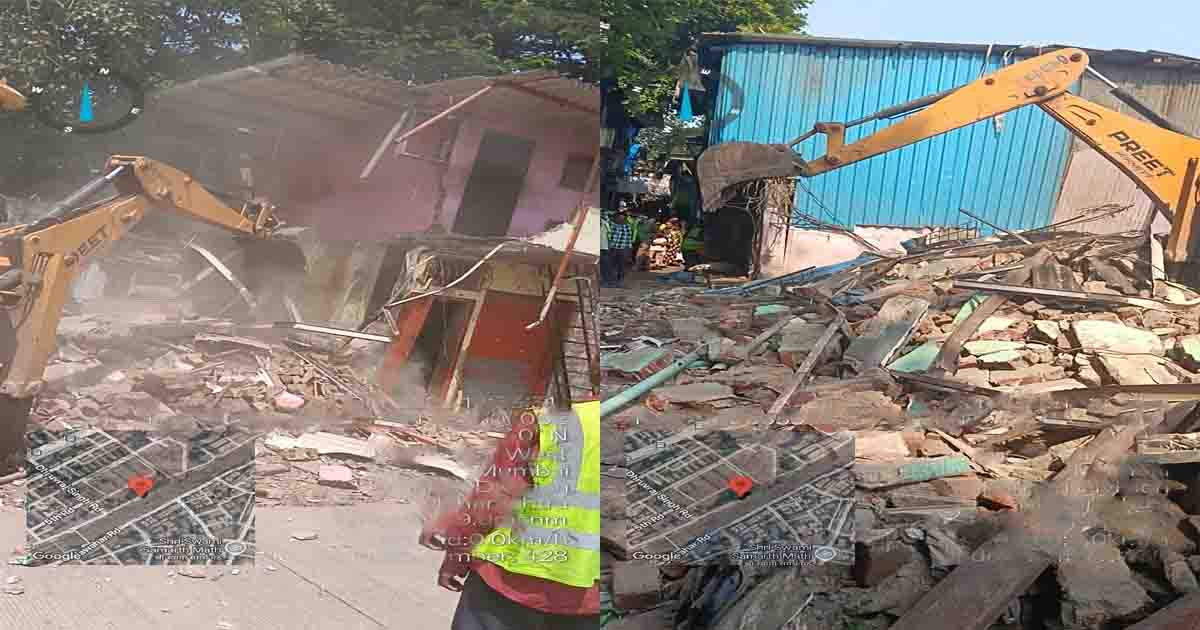
Mumbai: Yesterday (October 7, 2026), the ‘N’ Ward office of the Mumbai Municipal Corporation carried out a demolition drive targeting 28 structures in Ghatkopar (West) that were affected by the road-widening project between Jhunjhunwala College and the Andheri-Ghatkopar Link Road.
This demolition campaign was conducted under the supervision of Assistant Commissioner (‘N’ Ward) Jaydeep More.
Adequate police security was deployed alongside municipal officers and staff during the operation.
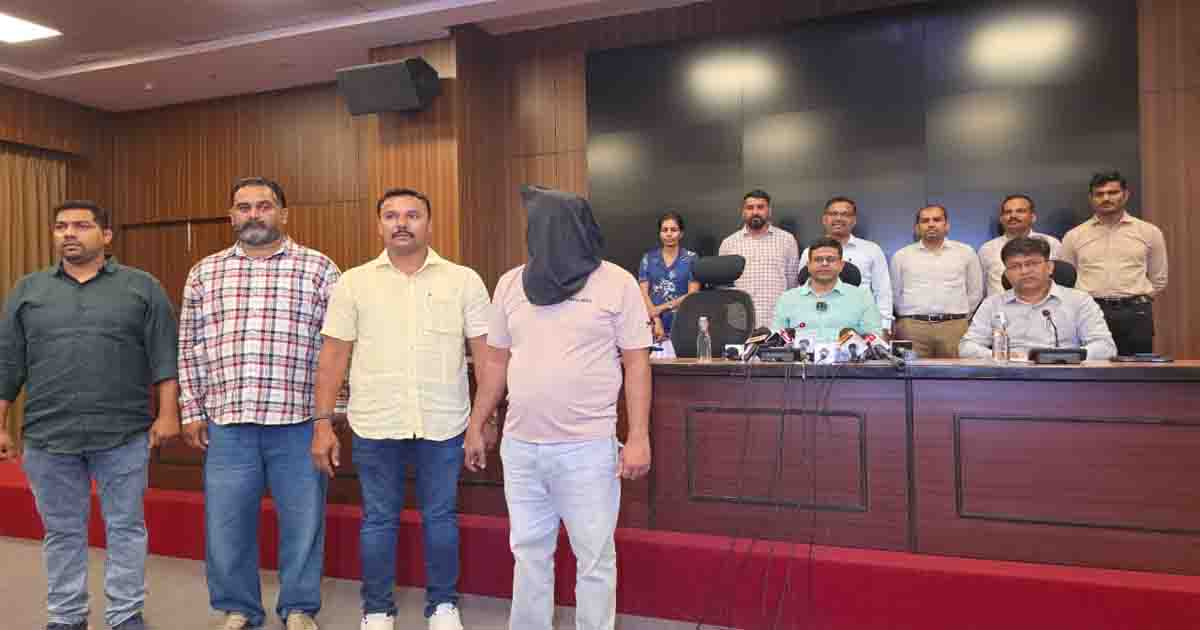
In a case involving the defrauding of a 72-year-old senior citizen in Mumbai on August 13, an unidentified caller—posing as Dinesh Kumar, a Senior Manager at Bank of India—gained the victim’s trust by promising to facilitate the issuance of a Senior Citizen Card. The caller sent an APK file named “Senior Citizen Card http://Verification.apk” to the complainant’s WhatsApp and coerced them into entering personal and bank debit card details, resulting in the misappropriation of ₹5,62,000. Initially, the Byculla Police Station registered a case (No. 497/26) under Sections 318(4) and 319(2) of the BNS and Sections 66(C) and (D) of the Information Technology Act, 2000. While the Property Cell of the Mumbai Crime Branch was conducting a parallel investigation, senior officials ordered the transfer of the case to the Crime Branch; it was subsequently re-registered as Case No. 927/2026 for further investigation.
A thorough technical analysis of the aforementioned APK file was conducted, leading to the identification and arrest of the accused—a 36-year-old male software developer and resident of Madhya Pradesh—who was responsible for developing the fraudulent APK file. During a raid on the accused’s office in Madhya Pradesh, authorities recovered a pen drive, a CPU, three hard disks, a Wi-Fi router, and three mobile phones. Preliminary technical analysis revealed that the accused was utilizing servers from various service provider companies. Investigation confirmed that the accused had created and sold a total of 2,805 malicious APK files to other cybercriminal gangs. These files were used to defraud 9,673 people across India. Complaints regarding these incidents have been registered on the cyber helpline number 1930—specifically 1,074 nationwide, 143 in Maharashtra, and 36 in Mumbai—revealing a total fraud amount of ₹15.75 crore. Cases have been cracked involving 88 incidents across India, 8 in Maharashtra, and 5 in Mumbai.
This successful operation was executed by a team comprising Police Commissioner Devin, Joint Police Commissioner Anil Kumbhare, Additional Commissioner Krishna Kant Upadhyay, DCP (Crime) Raj Tilak Roshan, and the Crime Branch. DCP Raj Tilak Roshan stated that this action was taken in response to fraud targeting the elderly under the guise of issuing senior citizen cards; the police also regularly conduct awareness campaigns among the elderly regarding this issue.

Delhi Police arrest 11 cyber criminals for digital arrests linked to Cambodia

Eknath Shinde Calls Rahul Gandhi’s Supreme Court March a Black Day in India’s History, Alleges INDIA Bloc Is Part of a Foreign Conspiracy.

Maha leads in creating an investment ecosystem for industries: CM Fadnavis

Indians in Saudi Arabia advised to stay indoors during aerial attacks; Embassy opens 24×7 control room

Adani Enterprises, Jabil plan to build mega AI, data centre infra platform in India

INDIA bloc begins protest march against ECI

Maha Congress stages agitation against Gyanesh Kumar

Complaint against Netflix & Mukesh Chhabra for inappropriate language on ‘India’s Got Latent 2’

Delhi court grants three-week interim bail to influencer Swatantra Bhardwaj

Bombay HC warns Vijay Mallya against posting court documents on social media
-

 Crime4 years ago
Class 10 student jumps to death in Jaipur
-

 Maharashtra2 years ago
Mumbai Local Train Update: Central Railway’s New Timetable Comes Into Effect; Check Full List Of Revised Timings & Stations
-

 Maharashtra2 years ago
Mumbai To Go Toll-Free Tonight! Maharashtra Govt Announces Complete Toll Waiver For Light Motor Vehicles At All 5 Entry Points Of City
-

 Maharashtra2 years ago
False photo of Imtiaz Jaleel’s rally, exposing the fooling conspiracy
-

 National News2 years ago
Ministry of Railways rolls out Special Drive 4.0 with focus on digitisation, cleanliness, inclusiveness and grievance redressal
-

 Maharashtra2 years ago
Maharashtra Elections 2024: Mumbai Metro & BEST Services Extended Till Midnight On Voting Day
-

 National News2 years ago
J&K: 4 Jawans Killed, 28 Injured After Bus Carrying BSF Personnel For Poll Duty Falls Into Gorge In Budgam; Terrifying Visuals Surface
-

 Crime2 years ago
Baba Siddique Murder: Mumbai Police Unable To Get Lawrence Bishnoi Custody Due To Home Ministry Order, Says Report