
Business
Supreme Court Upholds SEBI Probe In Adani-Hindenburg Case; Rejects Transfer To SIT

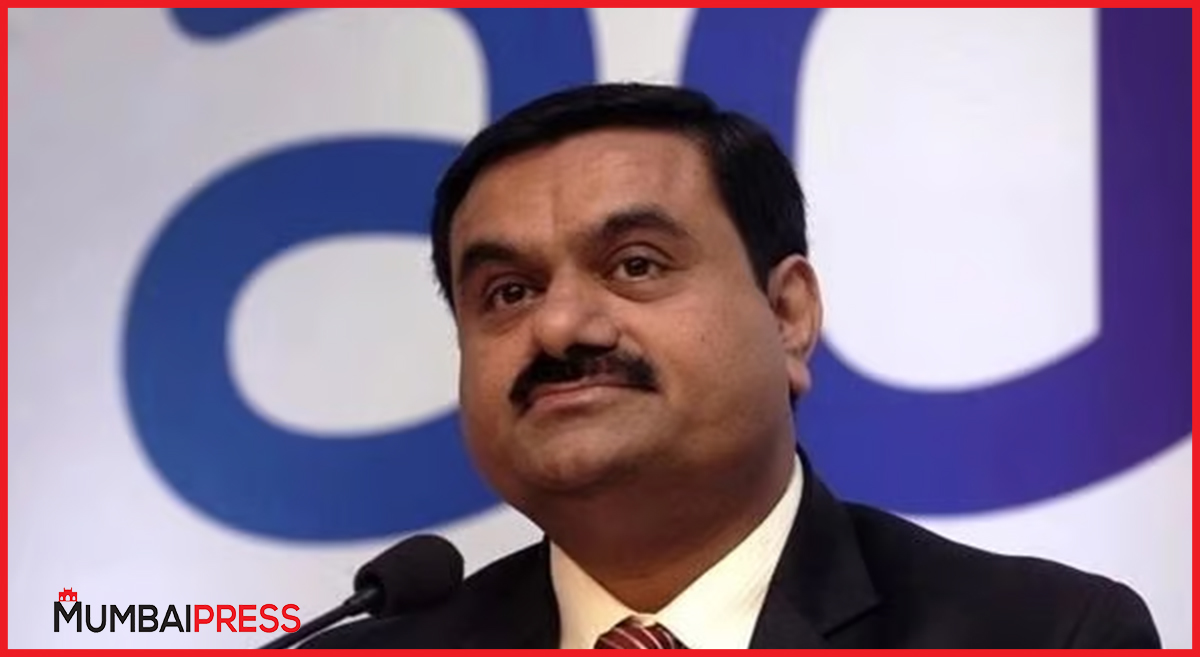
The Supreme Court on Wednesday delivered its verdict on the Adani-Hindenburg case. The apex court held that there was ‘no ground to transfer the investigation from the Securities and Exchange Board of India to SIT (Special Investigation Team)’.
The apex court announced its ruling, stating that no valid grounds were presented to challenge the amendment to the Foreign Portfolio Investment (FPI) and Listing Obligations and Disclosure Requirements (LODR) recommendations.
Additionally, the court directed the Securities and Exchange Board of India (SEBI) to finalize the remaining two investigations within a three-month timeframe.
A bench consisting of Chief Justice D Y Chandrachud and justices J B Pardiwala and Manoj Misra issued the verdict. The petitions contended that the Adani Group, perceived to have close ties with the Modi government, inflated its share prices. Following the report from the short seller Hindenburg Research, the stock value of multiple group entities experienced a significant decline.
About the Adani-Hindenburg Controversy
The Adani-Hindenburg controversy emerged in January 2023 when Hindenburg Research published a report accusing the Adani Group of accounting fraud, stock price manipulation, and improper use of tax havens. This report triggered a significant stock market decline, wiping out nearly $150 billion in market value at its lowest point.
The Supreme Court of India had reserved judgment on a series of Public Interest Litigations (PILs) seeking a court-monitored investigation into these allegations. The court clarified that it cannot automatically accept Hindenburg’s claims as the “ipso facto true state of affairs” and directed the Securities and Exchange Board of India (Sebi) to conduct an inquiry. The court mandated Sebi to conclude its investigation into all 24 cases and take appropriate legal action based on the recommendations of an expert committee.
Adani Group Companies shares
The shares of Adani Group companies on Wednesday saw a significant surge ahead of the Supreme Court verdict of the Adani Hindenburg controversy.
The shares of Adani Enterprises, surged 7.24 percent, reaching Rs 3,144.80 each around 10 am. Similarly, Adani Ports and Special Economic Zone shares registered an uptick of 5.62 percent, trading at Rs 1,139 per share, positioning them as the top gainers on the Nifty50 index.
The shares of Adani Transmission jumped 15.77 percent, reaching Rs 1,230, nearing their 52-week high. Meanwhile, Adani Total Gas shares also climbed by 10 percent to Rs 1,100.95, and Adani Green Energy shares witnessed an 8.23 percent increase, trading at Rs 1,735.60. Adani Power shares recorded a percent increase, reaching Rs 544.50 per share, while Adani Wilmar gained 7.31 percent, trading at Rs 393.40.
Additionally, other companies under the Adani conglomerate, including NDTV, ACC, and Ambuja Cement, experienced positive movements, with NDTV rising by 10.21 percent to Rs 300, ACC shares showing a 2.64 percent increase, and Ambuja Cement gaining 3.13 percent.



Mumbai, Gold and silver prices traded on a flat note on Monday amid a rise in crude oil prices and reports of a fresh proposal by Iran to end the conflict with the US, raising hopes of de-escalation in the Middle East.
On the Multi Commodity Exchange (MCX), gold futures (June 5 contract) were trading at Rs 1,52,410 per 10 grams, down 0.19 per cent or Rs 290 from the previous close of Rs 1,52,699.
By 11:00 A.M., the yellow metal touched an intraday high of Rs 1,53,008, up 0.20 per cent or Rs 309.
Meanwhile, silver futures (May 5 contract) were trading at Rs 2,43,200, down Rs 1,436 or 0.6 per cent.
The white metal touched an intraday high of Rs 2,45,473, up 0.34 per cent or Rs 837 from the previous close, and a low of Rs 2,43,009, down 0.66 per cent or Rs 1,627.
According to a commodity market expert, precious metals are trading with a cautious bias, with prices largely driven by key technical levels amid ongoing geopolitical uncertainty.
On COMEX, gold is holding above the $4,700–$4,680 support zone, with further downside possible below $4,650, while a sustained move above $4,750–$4,800 could revive momentum towards $4,900, the expert said.
On MCX, gold is hovering near Rs 1,52,500, with resistance seen around Rs 1,54,000 and support at Rs 1,50,000, the expert added.
The analyst also said that silver is also showing a cautious undertone, noting that volatility remains elevated due to geopolitical tensions, keeping the overall outlook range-bound in the near term.
In the international market, both metals were largely flat. On COMEX, gold was trading marginally higher by 0.02 per cent at $4,742 per ounce, while silver was down 0.05 per cent at $76 per ounce.
However, tensions in the Middle East remain elevated, although Iran has reportedly proposed a fresh peace initiative to the US aimed at reopening the Strait of Hormuz and ending the conflict.
Amid global uncertainty, gold and silver have delivered strong returns to investors over the past year. Gold has gained over 40 per cent in dollar terms over the past year and more than 18 per cent in six months.
Meanwhile, silver has more than doubled investors’ money over the past year and gained over 60 per cent in the last six months.
Additionally, Brent crude jumped over 2 per cent to $107.77, while US West Texas Intermediate (WTI) advanced to $96.68, an increase of 2.41 per cent.
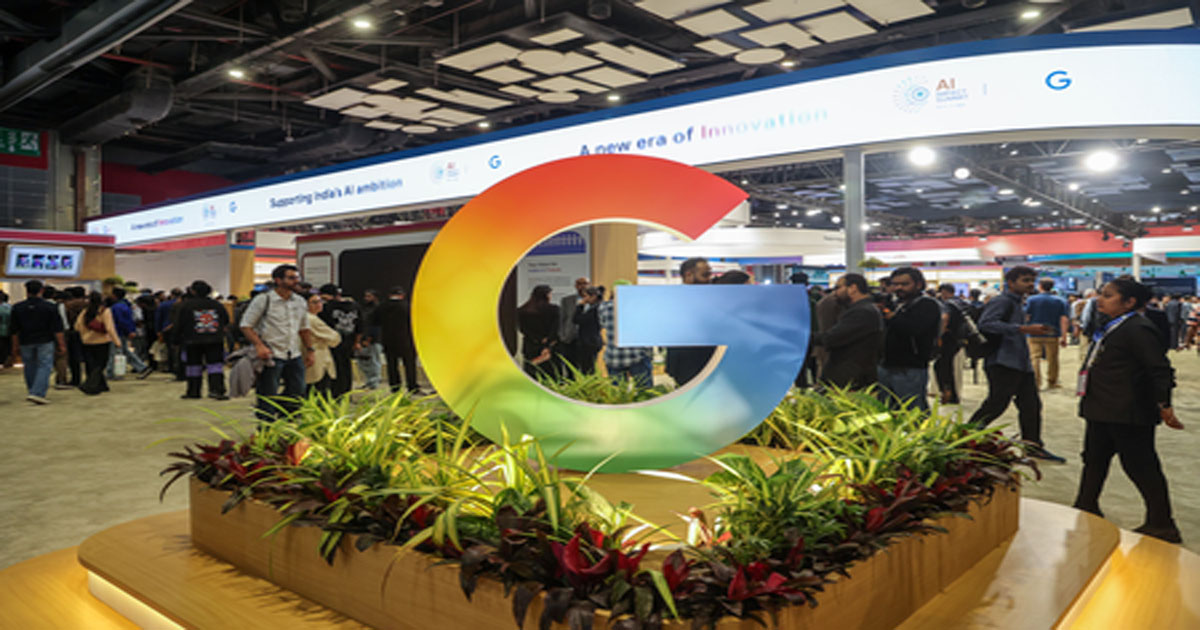
New Delhi, April 25: US tech giant Google plans to invest up to $40 billion in the artificial intelligence (AI) firm Anthropic, as global technology giants accelerate their push into advanced AI models and infrastructure.
The proposed investment includes an initial $10 billion infusion at Anthropic’s latest valuation of $380 billion, with the remaining $30 billion tied to performance-based milestones, the companies confirmed, according to multiple reports.
The move has built on a multi-year partnership between the two firms, under which Google provides cloud infrastructure and access to Anthropic’s AI models, including its Claude suite.
Moreover, Anthropic also leverages Google’s custom tensor processing units (TPUs) as an alternative to widely used graphics processing units.
The latest agreement between the tech firms came amid surging demand for generative AI tools across enterprises, developers and consumers, which has placed increasing pressure on computing infrastructure.
Notably, Anthropic recently secured 5 gigawatts of compute capacity through collaborations involving Google and Broadcom, with additional expansion planned.
However, despite their collaboration, the companies remain competitors in the AI space, with Google’s Gemini models vying against Anthropic’s offerings in the rapidly evolving market.
Additionally, Google has been steadily increasing its stake in Anthropic since 2023, when it first invested $300 million for roughly a 10 per cent holding. Subsequent funding rounds pushed its total investment beyond $3 billion, with reports suggesting a stake of about 14 per cent prior to the latest deal.
The investment has underscored intensifying competition among major technology firms, which are committing tens of billions of dollars to leading AI labs such as Anthropic and rivals, including OpenAI.
Anthropic was founded in 2021 by former OpenAI researchers and has seen rapid growth in adoption of its AI products, particularly its Claude models, with annualised revenue crossing $30 billion.
The deal has followed a similar arrangement with Amazon, which recently invested $5 billion in Anthropic and committed up to $20 billion more, linked to specific commercial milestones.
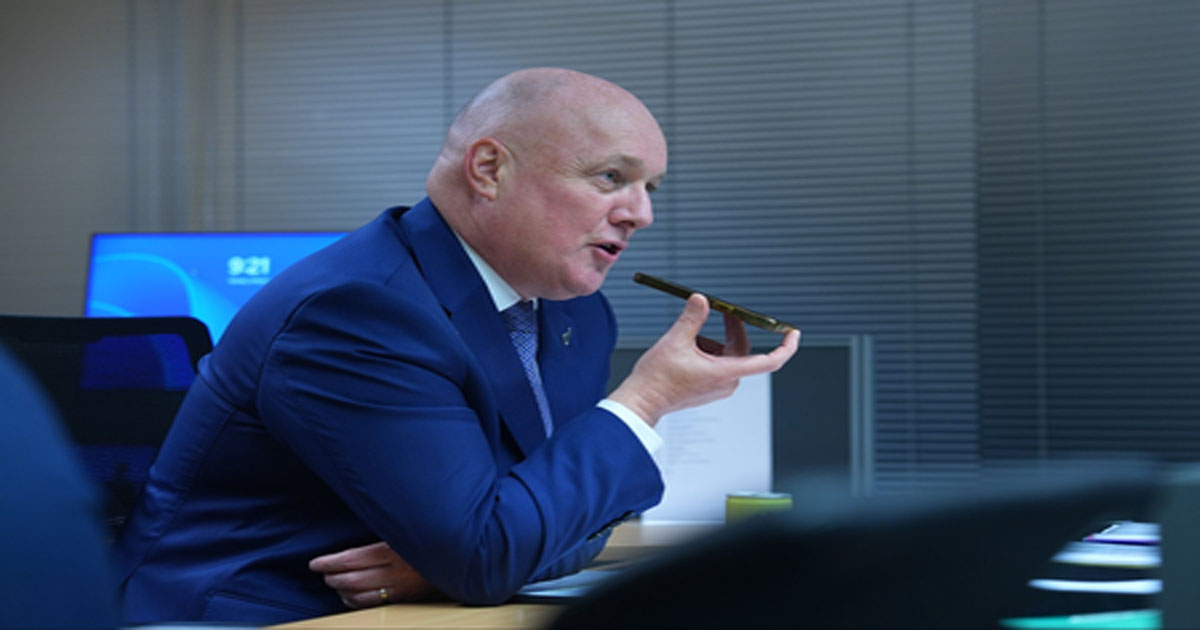
New Delhi, April 24: As India and New Zealand prepare to sign a Free Trade Agreement (FTA) on Monday, both sides are expected to benefit from expanded trade ties and improved market access, New Zealand Prime Minister Christopher Luxon has said.
Taking to the social media platform X, Luxon said, “We will sign a Free Trade Agreement with India on Monday.”
In a video message, Luxon said the agreement would improve market access for New Zealand exporters, particularly manufacturers of marine jet systems used in boats and exported to over 70 countries.
He added that the deal would help reduce trade barriers and strengthen commercial engagement between the two countries.
He also noted that certain exporters currently face tariffs while accessing the Indian market, and said the agreement would gradually ease such duties, improving competitiveness and supporting higher trade flows.
Luxon said the FTA would support increased business activity, employment opportunities and economic growth in New Zealand, while also strengthening bilateral trade linkages with India.
He added that the agreement would bring ‘more jobs, higher wages and more opportunities,’ highlighting the broader economic impact of the deal.
Once signed, the FTA is expected to expand trade and investment ties between the two countries and enhance export opportunities on both sides in a large and growing global market environment.
Earlier this month, legal verification of the New Zealand-India FTA was completed, with both countries agreeing to sign the pact on April 27 in the presence of a large contingent of business representatives, New Zealand Trade and Investment Minister Todd McClay said.
In a statement, McClay described the agreement as a “once-in-a-generation opportunity,” saying it would strengthen bilateral trade relations and provide improved access to each other’s markets.
He said that amid global economic and geopolitical uncertainty, strengthening trade partnerships remains important for long-term economic stability.
McClay added that signing the FTA would allow New Zealand to formally initiate parliamentary treaty examination, enabling public scrutiny of the agreement.

Byculla Police Register Cheating Case Against Jalgaon Trader For Allegedly Defrauding Mumbai Businessman Of ₹1.30 Crore In Fake Banana Export Deal

Iran presents new proposal to US for reopening Hormuz, ending war: Report

Mumbai Accident: 3 Killed In Early Morning Crash At Marine Drive After Bike Hits Elderly Pedestrian

Gold, silver see muted trade amid Iran-US de-escalation hopes

Mumbai MGL Scam: APK File Download Tricks Over 100 Users, Including Teachers, Govt Employees; ₹2.7 Crore Lost In A Month: Report

Bharti Airtel Receives ₹1,74,000 Penalty Notice From DoT For Subscriber Verification Lapses

Dhurandhar 2 Box Office Collection Day 9: Ranveer Singh Starrer Earns ₹41.55 Crore On Its Second Friday; Enters ₹700 Crore Club

Mumbai Local Train Tragedy: Fatal Accident Reported At Bhayandar Station’s Platform No 1 – Disturbing Video Surfaces

Iran-Israel Conflict Hits India’s Real Estate: Supply Disruptions & Rising Costs Delay Project Possessions

Ashok Kharat Sexual Exploitation Case: 2 More Cases Filed Against Self-Styled Astrologer & Godman; Total Complaints Rise To 10 In Nashik
-

 Crime4 years ago
Class 10 student jumps to death in Jaipur
-

 Maharashtra2 years ago
Mumbai Local Train Update: Central Railway’s New Timetable Comes Into Effect; Check Full List Of Revised Timings & Stations
-

 Maharashtra2 years ago
Mumbai To Go Toll-Free Tonight! Maharashtra Govt Announces Complete Toll Waiver For Light Motor Vehicles At All 5 Entry Points Of City
-

 Maharashtra2 years ago
False photo of Imtiaz Jaleel’s rally, exposing the fooling conspiracy
-

 National News2 years ago
Ministry of Railways rolls out Special Drive 4.0 with focus on digitisation, cleanliness, inclusiveness and grievance redressal
-

 Maharashtra1 year ago
Maharashtra Elections 2024: Mumbai Metro & BEST Services Extended Till Midnight On Voting Day
-

 National News2 years ago
J&K: 4 Jawans Killed, 28 Injured After Bus Carrying BSF Personnel For Poll Duty Falls Into Gorge In Budgam; Terrifying Visuals Surface
-

 Crime2 years ago
Baba Siddique Murder: Mumbai Police Unable To Get Lawrence Bishnoi Custody Due To Home Ministry Order, Says Report