
National News
‘Stringent, higher standard’: SC upholds validity of PMLA provision on arrest

The Supreme Court on Wednesday upheld the validity of Section 19 of the Prevention of Money Laundering Act (PMLA), which postulates the manner of arrest of a person involved in money laundering, saying that safeguards are provided in the Act and the preconditions to be fulfilled by the authorised officer before effecting arrest, are equally stringent and of higher standard.
A bench, headed by Justice A.M. Khanwilkar and comprising Justices Dinesh Maheshwari and C.T. Ravikumar said: “We have no hesitation in upholding the validity of Section 19 of the 2002 Act. We reject the grounds pressed into service to declare Section 19 of the 2002 Act as unconstitutional.”
The bench added that such a provision has reasonable nexus with the purposes and objects sought to be achieved by the Act of prevention of money laundering and confiscation of proceeds of crime involved in money laundering, including to prosecute persons involved in the process or activity connected with the proceeds of crime.
The PMLA is a comprehensive legislation, not limited to provide for prosecution of persons involved in the offence of money laundering, but mainly intended to prevent money laundering activity and confiscate the proceeds of crime involved in money laundering, it said.
The bench added that this legislation is an amalgam of different facets including setting up of agencies and mechanisms for coordinating measures for combating money laundering.
“It is not as if after every inquiry, prosecution is launched against all persons found to be involved in the commission of offence of money laundering. It is also not unusual to provide for the arrest of a person during such inquiry before filing of a complaint for indulging in alleged criminal activity,” it noted.
The top court said it is, thus, obliging the person to be obedient to law. “The safeguards provided in the 2002 Act and the preconditions to be fulfilled by the authorised officer before effecting arrest, as contained in Section 19 of the 2002 Act, are equally stringent and of higher standard,” added the bench, in its 545-page judgment.
The top court said safeguards ensure that the authorised officers do not act arbitrarily, but make them accountable for their judgment about the necessity to arrest any person as being involved in the commission of offence of money laundering even before filing of the complaint before the special court under Section 44(1)(b) of the 2002 Act.
“Suffice it to observe that this power has been given to the high-ranking officials with further conditions to ensure that there is objectivity and their own accountability in resorting to arrest of a person even before a formal complaint is filed under Section 44(1)(b) of the 2002 Act.
“Investing of power in the high-ranking officials in this regard has stood the test of reasonableness.”
The top court clarified that the authorities under the 2002 Act are not police officers.
“Ex-consequenti, the statements recorded by authorities under the 2002 Act, of persons involved in the commission of the offence of money laundering or the witnesses for the purposes of inquiry/investigation, cannot be hit by the vice of Article 20(3) of the Constitution or for that matter, Article 21 being procedure established by law,” it added.
The bench noted that in a given case, whether the protection given to the accused who is being prosecuted for the offence of money laundering, of Section 25 of the Evidence Act is available or not, may have to be considered on a case-to-case basis being the rule of evidence.
The petitioners had argued that the procedure being followed under the PMLA is draconian as it violates the basic tenets of the criminal justice system and the rights enshrined in Part III of the Constitution, in particular Articles 14, 20 and 21.


National News
Mumbai Weather Update March 24, 2026: IMD Issues ‘Heatwave Alert’ For City As Temperatures Touch 36°C; Overall AQI Remains In ‘Poor’ Category

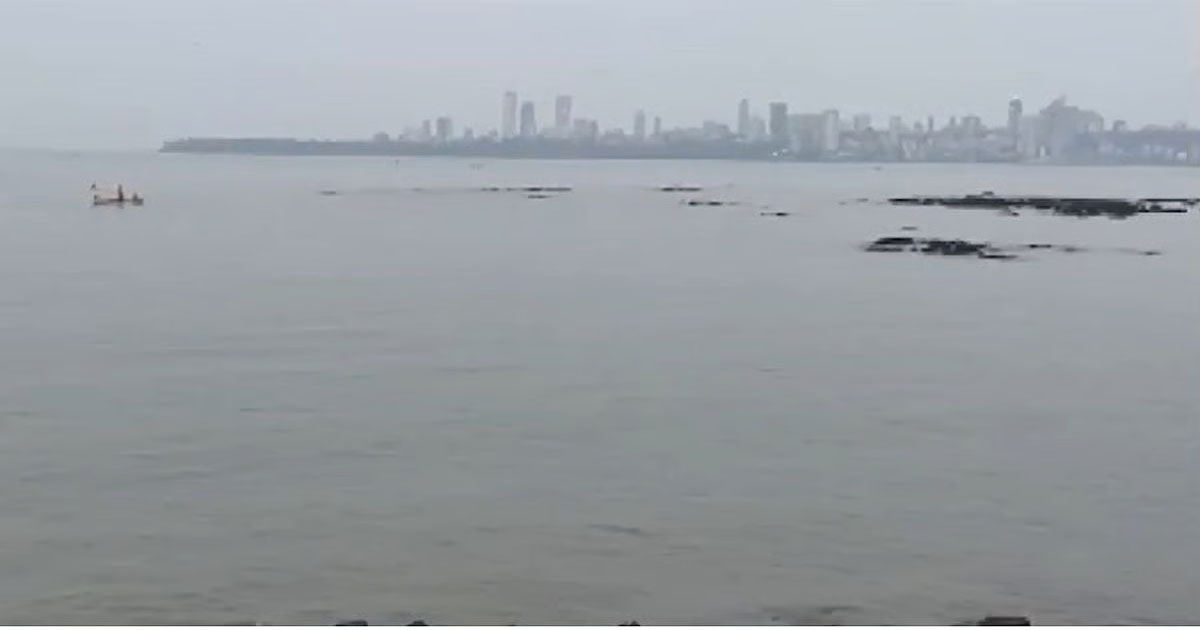
Mumbai: The city woke up to clear, sunny skies and rising temperatures on Tuesday, March 24, with the India Meteorological Department (IMD) issuing a ‘heatwave’ alert. As daytime temperatures are set to rise sharply, residents are urged to take necessary precautions to protect themselves from the heat. Meanwhile, Mumbai’s air quality has fluctuated over the past 24 hours but has continued to remain in the ‘poor’ category.
According to the IMD, Mumbai is likely to witness temperatures ranging between 22°C and 36°C, indicating a noticeable spike in heat levels. Citizens have been advised to avoid prolonged exposure to direct sunlight, stay well hydrated, and opt for light meals to cope with the increasing heat and humidity.
Morning observations from key weather stations suggested a rise in temperatures compared to the previous day. Colaba recorded 28.6°C, while Santacruz registered 30°C, both reflecting warmer conditions. Neighbouring regions reported even higher temperatures, with Thane touching 38°C and Navi Mumbai recording 36°C.
On the air quality front, Mumbai’s Air Quality Index (AQI) remained largely unchanged over the past 24 hours. As per AQI.in data, the city recorded an overall AQI of 112, placing it in the ‘poor’ category.
Throughout the day yesterday, the AQI levels fluctuated between ‘moderate’ and ‘poor’. The lowest AQI reading of 67 was recorded at 5.30 am this morning, before gradually rising to a high of 124 at 8.00 am.
At a local level, several areas continued to report significantly poor air quality. Subhash Nagar recorded the highest AQI at 263, falling under the ‘unhealthy’ category. This was followed by Govandi West (253), Kannamwar Nagar (250), Rajiv Gandhi Nagar (243), and Savitribai Phule Nagar (233), falling into the ‘Unhealthy’ category.
In contrast, some parts of the city reported relatively better air quality with Gamdevi Station 1 recording the lowest AQI at 25 (Good). Green Hills recorded an AQI of 47, also falling into the ‘good’ category. Other areas such as Mulgoan (58), Worli (72), and Malad (73) remained ‘moderate’ range.
As per standard air quality classifications, AQI values between 0 and 50 are considered ‘good’, 51 to 100 ‘moderate’, 101 to 200 ‘poor’, 201 to 300 ‘unhealthy’ and levels above 300 are classified as ‘severe’ or ‘hazardous’.
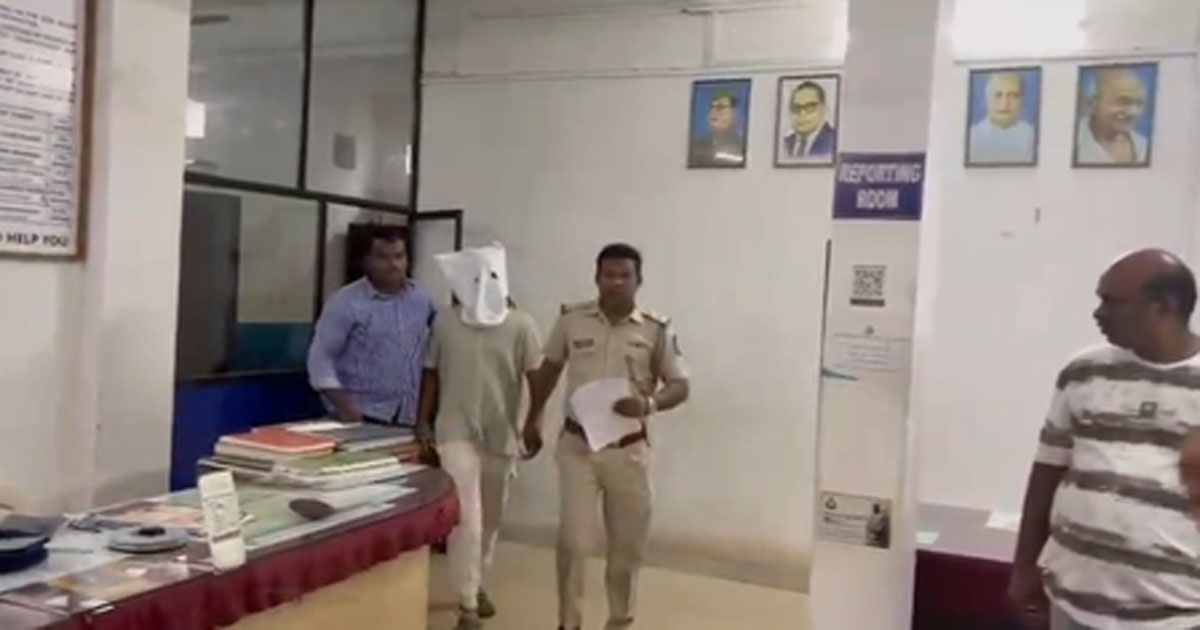
Panaji, March 23: The South Goa Police arrested 20-year-old Soham Sushant Naik in the wee hours of Monday following an intense public outcry over an alleged sex scandal involving 25 to 30 minor girls. Naik, a resident of Madegal-Cacora and the son of a BJP Curchorem Municipal councillor, was taken into custody after a mob of concerned citizens and local leaders picketed the police station.
The investigation suggests a disturbing pattern of abuse spanning the last three years. According to preliminary reports, the BJP corporator’s son allegedly engaged in sexual relations with numerous minors, filming the encounters and subsequently using the footage to threaten the victims into silence.
The scandal came to light last week after Soham Sushant Naik allegedly boasted about his actions during a social gathering, showing explicit videos of the victims to his associates. As rumours of the sexual abuse recordings spread through South Goa, local tension reached a boiling point.
However, before this, the case was being discussed in South Goa for the last few days. Local citizens gathered at the Kudchade police station on Sunday night seeking action as the case was linked to a local BJP corporator. Finally, the police took the corporator’s son Soham Naik into custody.
The action came after the accused showed some videos to his friends at a drinking party last week. This led to the revelation of the years of alleged sexual abuse of minors by the BJP leader’s son.
On Sunday, Curchorem residents had marched to the police station demanding a fair probe into the alleged sex-racket videos involving minors.
The protestors had warned of a bandh if police failed to act immediately and arrest the accused within 48 hours. The residents had also demanded that the police register a suo motu FIR in the case rather than wait for victims to come forward.
State Congress president Amit Patkar demanded that the government step in, take suo motu cognisance, and order a prompt, impartial, and time-bound enquiry into the horrific case.
The South Goa Police are currently investigating the digital evidence and determining the full scale of the exploitation of the minor girls by Soham Sushant Naik.
Soham Sushant Naik remains in custody as forensic teams work to recover the alleged videos used for blackmailing the minor girls.
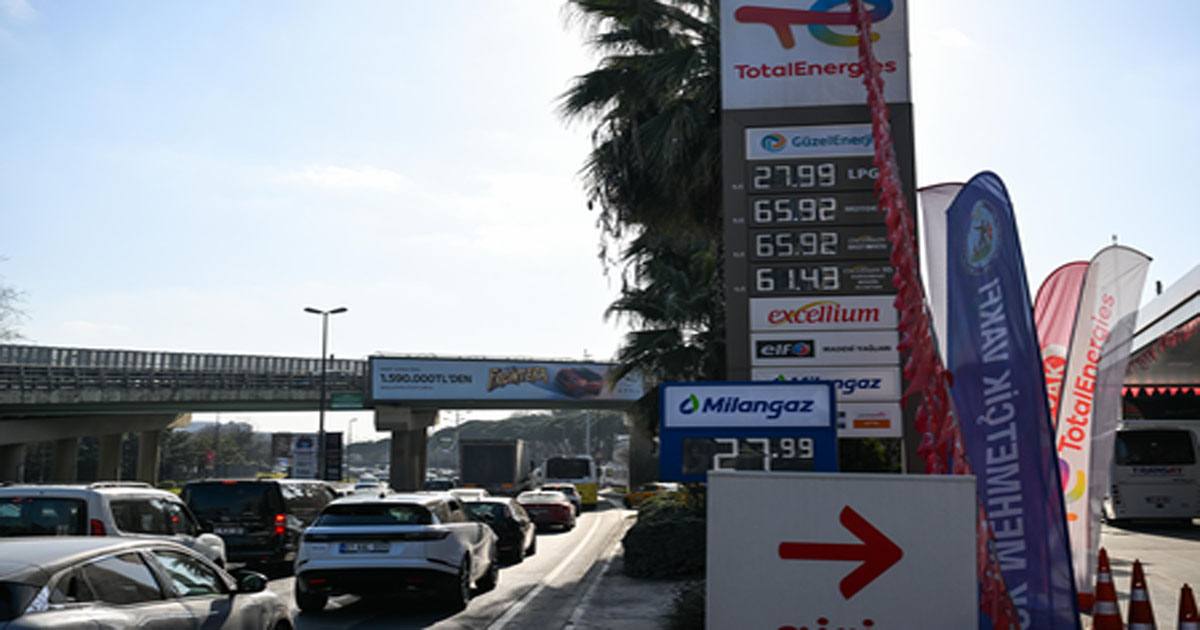
New Delhi, March 23: Over 40 energy assets across nine countries in West Asia have been “severely or very severely” damaged due to the Iran war and no country would be immune to the fallout of the disruption in oil and gas supplies, International Energy Agency (IEA) Executive Director Fatih Birol said in Canberra on Monday.
“The effect of the current disruptions in West Asia is equivalent to the two major oil crises in the 1970s and the 2022 natural gas crisis after Russia invaded Ukraine all put together,” Birol remarked.
Addressing journalists at the Australia’s National Press Club, he said that while the oil crises of the 1970s led to a combined loss of around 10 million barrels per day, the present situation has already resulted in a loss of approximately 11 million barrels per day.
“Not only oil and gas, but some of the vital arteries of the global economy — such as petrochemicals, fertilisers, sulphur and helium — their trade is all interrupted, which will have serious consequences for the global economy,” Birol explained.
The IEA announced in early March that it would release a record 400 million barrels from its emergency oil reserves of its member countries to help ease supply shocks and bring down soaring prices in the aftermath of the war in West Asia.
“The IEA is currently in discussions with governments across Asia and Europe regarding the possible release of additional oil if necessary,” media reports cited Birol as saying.
However, with shipping across the Strait of Hormuz close to a complete standstill due to the war, the only true solution to fuel supply disruptions is the reopening of the major trade route, he pointed out.
He further warned that the global economy faces a ’major threat’ if the crisis continues to escalate.

Chilling Highway SCAM In Maharashtra! Mumbai Man Cornered By Fake Recovery Agents Claiming ₹10 Lakh Dues Near Lonavala

Criminal Case Filed Against Doctors 12 Years After Young Actor’s Death

Mumbai Shivaji Nagar: Land should be allocated for funeral rites, MLA Abu Asim Azmi demands allotment of land before Muharram in Mumbai Assembly

Gold and silver prices tumble over 4 pc as West Asia tensions ease

Backchannel talks shape US-Iran pause: Report

Married Mumbai Woman Mocked In Andheri Society Over ‘Lift Kissing’ CCTV Video, Files Police Complaint

Mumbai: JBCN International School In Borivali Gets Bomb Threat, Search Reveals Hoax, Students Safe

Mahayoti’s big gift to the people of Mumbai… Now there is no tax for houses up to 500 square feet, the Municipal Corporation has increased this limit to 700 square feet.

Rashmika Mandanna-Vijay Deverakonda Wedding: Virosh Turn Modern Day Prince & Princess For Their Dreamy Sangeet Ceremony

LPG Crisis In Maharashtra: Cyber Crime On Rise Amid Shortage, 2 Women Lose ₹4 Lakh In ‘Gas Update’ Online Scam In Kalyan-Dombivli
-

 Crime4 years ago
Class 10 student jumps to death in Jaipur
-

 Maharashtra1 year ago
Mumbai Local Train Update: Central Railway’s New Timetable Comes Into Effect; Check Full List Of Revised Timings & Stations
-

 Maharashtra1 year ago
Mumbai To Go Toll-Free Tonight! Maharashtra Govt Announces Complete Toll Waiver For Light Motor Vehicles At All 5 Entry Points Of City
-

 Maharashtra1 year ago
False photo of Imtiaz Jaleel’s rally, exposing the fooling conspiracy
-

 National News1 year ago
Ministry of Railways rolls out Special Drive 4.0 with focus on digitisation, cleanliness, inclusiveness and grievance redressal
-

 Maharashtra1 year ago
Maharashtra Elections 2024: Mumbai Metro & BEST Services Extended Till Midnight On Voting Day
-

 National News2 years ago
J&K: 4 Jawans Killed, 28 Injured After Bus Carrying BSF Personnel For Poll Duty Falls Into Gorge In Budgam; Terrifying Visuals Surface
-

 Crime1 year ago
Baba Siddique Murder: Mumbai Police Unable To Get Lawrence Bishnoi Custody Due To Home Ministry Order, Says Report