
National News
J&K Police & CRPF carry out searches in Srinagar’s Lal Chowk

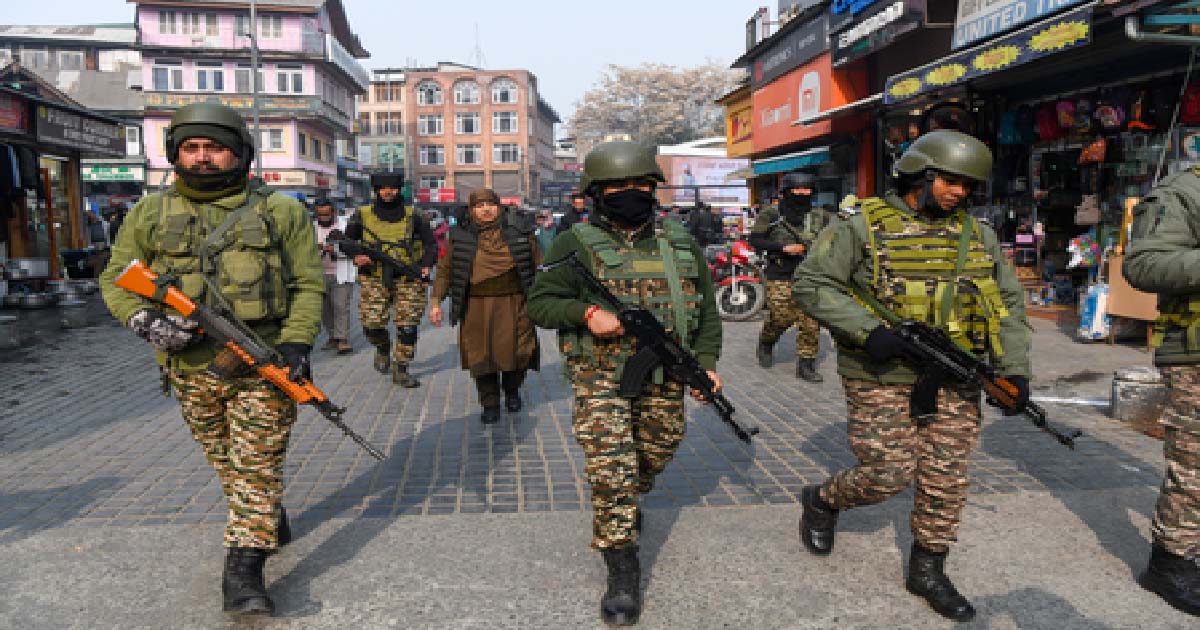
Srinagar, Nov 28: J&K Police and the Central Reserve Police Force (CRPF) carried out a cordon and search operation (CASO) in Srinagar’s Lal Chowk on Friday.
“The search operation was carried out as part of heightened security measures in the busy commercial centre,” an official said.
“Multiple teams conducted surprise inspections in several hotels and guest houses to verify records of visitors and ensure overall security compliance,” the official said, adding: “The operation continued for several hours; however, no suspicious activity was reported.”
J&K Police and other security forces have been carrying out aggressive anti-terrorist operations across the UT. These operations are focused on terrorists, their overground workers (OGWs), sympathisers, drug smugglers, and those involved in hawala money rackets and other unlawful financial activities.
This is part of the revised strategy by the security forces to dismantle the support system of terror rather than just focusing on the gun-wielding terrorists.
J&K has a 740-km-long line of control (LoC) and a 240-km-long international border (IB).
The army guards the LoC situated in Baramulla, Kupwara and Bandipora districts of the Kashmir Valley and Poonch, Rajouri, and parts of the Jammu district of the Jammu division.
The Border Security Force (BSF) guards the IB situated in Jammu, Samba, and Kathua districts of Jammu division.
The army and the BSF guard against infiltration, cross-border smuggling, and terrorist drone activity on the LoC and the IB, while the J&K Police and other security forces carry out anti-terrorist operations in the hinterland.
In the recent security review meeting, which was attended by senior officers of the army, paramilitary forces, J&K police, intelligence and senior civil administration officers, Lt Governore Manoj Sinha gave clear instructions to the security forces to target the support system of terrorism in the UT.


A tragic accident in Madhya Pradesh Chhatarpur district claimed the lives of a farmer and his 10-year-old son after the tractor they were riding plunged into a deep well while ploughing a field.
The incident occurred on Sunday in Hatna village under the Orchha Road police station area, leaving the entire village in mourning.
According to police and local residents, 35-year-old Santosh Yadav was working in his field along with his son, Durgesh Yadav, when the accident took place. The father and son were using a tractor for ploughing when the vehicle suddenly went out of control and fell into a nearly 70-foot-deep well located inside the agricultural field.
The tragedy unfolded within moments, giving them no opportunity to escape, police officials said.
Local legislator Lalita Yadav reached the spot and met family members. She assured them that she would extend all possible cooperation and support from the government.
The incident, according to the legislator, took place before their daughter, who was also in the field but busy in mobile phone. Villagers who witnessed the incident rushed to the spot and immediately began efforts to rescue the victims. However, the depth of the well and the water accumulated inside it made the operation extremely difficult.
Local residents then informed the police and administrative authorities, following which a rescue operation was launched. A team from the Orchha Road police station, along with rescue personnel, reached the site and deployed a crane and other equipment to retrieve the tractor and its occupants.
After several hours of strenuous efforts, the bodies of the farmer and his son were recovered from the well. The damaged tractor was also pulled out. The bodies were later sent for post-mortem examination, and an investigation has been initiated to determine the exact cause of the accident.
The incident has left the Yadav family devastated. Durgesh, a Class III student, was the only son in the family and is survived by his two sisters.
Relatives and villagers described him as a cheerful child whose untimely death has deeply affected the community. The loss of both father and son in a single accident has plunged the family into profound grief.
Residents of Hatna village said the accident has shocked the entire area and highlighted the dangers faced by farmers while working in fields equipped with deep, unprotected wells.
Police officials said that further inquiries are underway and that all circumstances leading to the incident are being examined.
National News
Delhi AQI at 236, remains in ‘poor’ category; CAQM sets 15-20 pc pollution reduction target for 2027

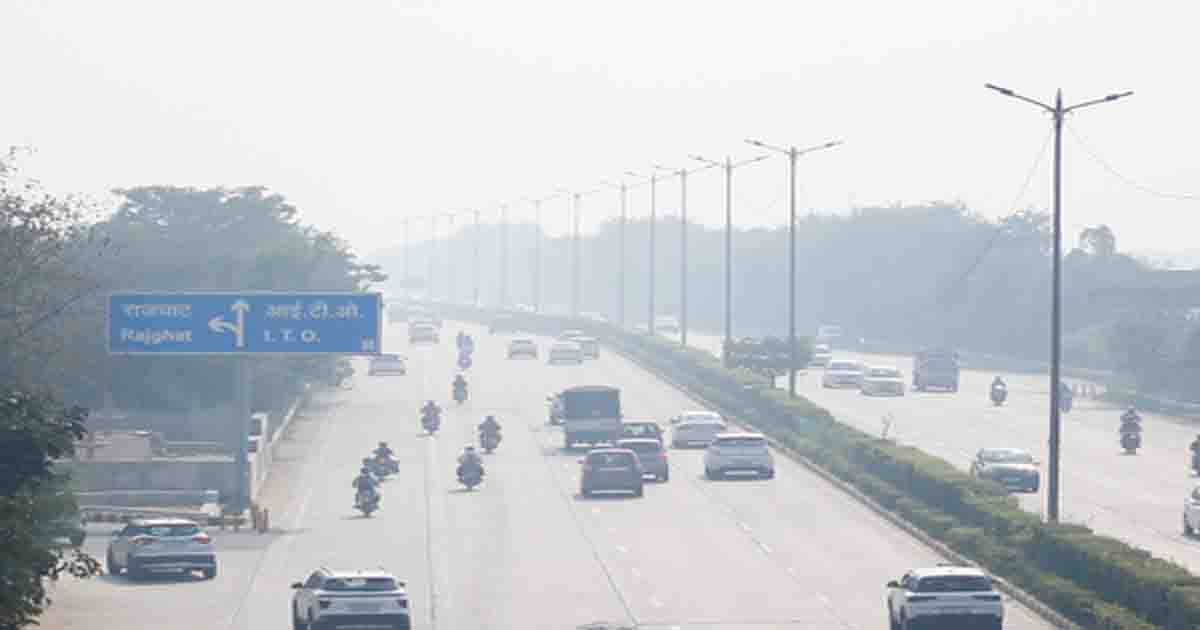
Delhi’s air quality remained in the ‘poor’ category on Monday, with the city recording an Air Quality Index (AQI) of 236 at 8 a.m., according to real-time data from the Central Pollution Control Board (CPCB). PM2.5 continued to be the prominent pollutant.
Several monitoring stations across the national Capital recorded AQI levels in the ‘poor’ category, while some locations reported ‘very poor’ air quality.
The AQI readings at various monitoring stations were Burari (239), Karala (245), Nangloi (229), Maidan Garhi (237), Ghummanhera (253), Chhawla (272), Uttam Nagar (276), NIH Narela (256), Talkatora Garden (317), Aya Nagar (296), CRRI Mathura Road (296), Punjabi Bagh (283), Shadipur (288), Pusa (196), Sirifort (333), Commonwealth Sports Complex (293), JNU (288), Burari Crossing (295), North Campus (281), R.K. Puram (254), ITO (301), Anand Vihar (236), DTU (271), Mundka (279), Sri Aurobindo Marg (244), Jahangirpuri (272), Rohini (253), Bawana (275) and Narela (240).
The development comes as the Commission for Air Quality Management (CAQM) has unveiled a stricter accountability framework aimed at reducing pollution levels across the National Capital Region (NCR) by 15 to 20 per cent in 2027.
Despite the ‘poor’ air quality readings, Delhi Chief Minister Rekha Gupta has alleged that the national Capital’s overall air quality has shown considerable improvement compared to the situation a decade ago.
According to the latest available forecast from the Air Quality Warning and Integrated Decision Support System for Emissions – Delhi (AIRWISE-Delhi), the city’s air quality is likely to remain in the ‘poor’ category from Monday to Wednesday. There is also a possibility of AQI levels fluctuating between the ‘poor’ and ‘very poor’ categories over the subsequent six days.
Meanwhile, Stage II of the Graded Response Action Plan (GRAP) remains in force across Delhi-NCR. The measures under this stage include mechanised road sweeping, dust suppression, water sprinkling and stricter enforcement of dust-control norms at construction sites. Restrictions on the use of personal vehicles are also part of the measures aimed at curbing pollution.
In a significant move towards addressing the issue in the long term, the CAQM has directed the governments of Delhi and neighbouring NCR states to prepare comprehensive and outcome-oriented State Action Plans for 2027.
The Commission has outlined four key requirements for these plans. For the first time, states have been asked to prepare dedicated district-level action plans as an integral part of their broader pollution-control strategies.
The framework also introduces measurable pollution-reduction targets instead of merely listing activities. States will be required to ensure a minimum 15 per cent reduction in the overall pollution load, with an ambitious target of achieving up to 20 per cent.
To ensure accountability, the plans will identify officers by their names and ranks, assigning them direct responsibility for implementing the measures and achieving the stipulated targets.
Additionally, the CAQM will prescribe supplementary interventions based on previous enforcement data and emerging environmental challenges. State governments will be required to incorporate these measures into their final action plans.
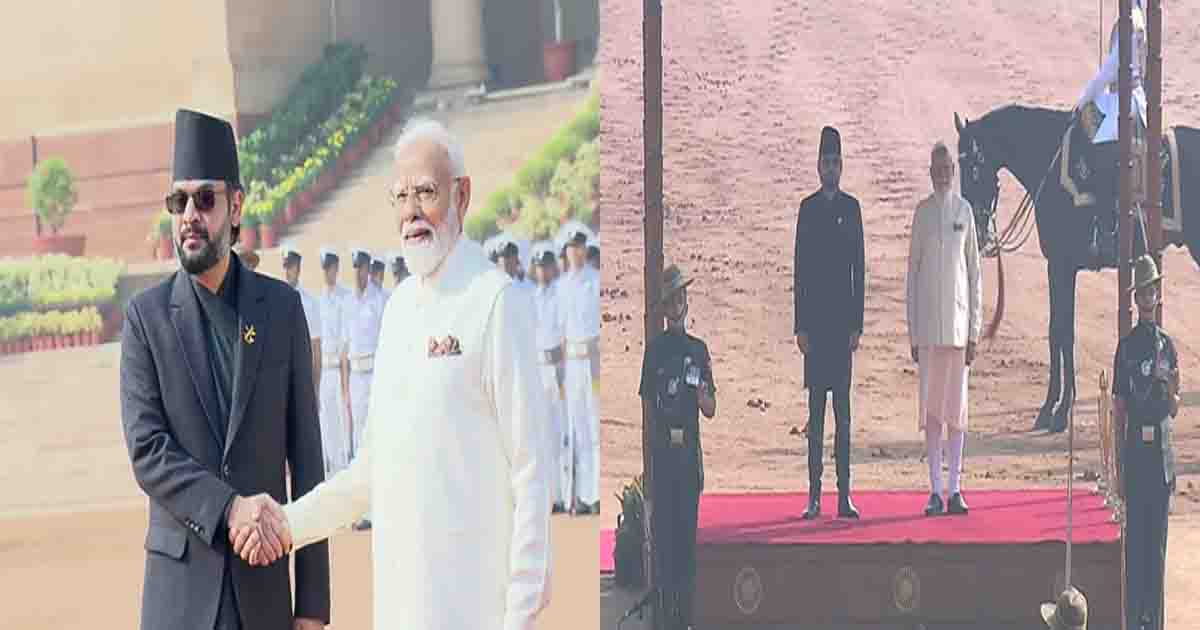
Nepalese Prime Minister Balendra Shah was accorded a ceremonial welcome at the forecourt of Rashtrapati Bhavan on Monday.
Prime Minister Narendra Modi warmly welcomed Shah upon his arrival at the Rashtrapati Bhavan.
Shah arrived in New Delhi on Sunday for a two-day State visit to India at the invitation of Prime Minister Modi. Union Minister of State for Commerce and Industry Jitin Prasada welcomed him at the airport.
He is scheduled to hold delegation-level talks with Prime Minister Narendra Modi later in the day, during which the two leaders will review the full range of India-Nepal relations and exchange views on regional and international issues of mutual interest.
Additionally, both leaders will virtually flag off the Saryu-Kamala Express from New Delhi.
Following the bilateral talks, the two leaders will jointly address a press conference. Prime Minister Modi will also host an official luncheon in honour of the Nepali Prime Minister and his delegation on the same day.
Shah will additionally call on President Droupadi Murmu.
The Nepali Prime Minister is accompanied by Finance Minister Swarnim Wagle, Foreign Minister Shishir Khanal, Chief Advisor to the Prime Minister Kumar Byanjankar and other senior government officials, forming a 35-member government delegation.
A separate 52-member delegation comprising business representatives will also participate in the visit at their own expense.
The bilateral discussions are expected to cover post-flood reconstruction assistance, energy, trade, connectivity and broader cooperation between the two neighbouring countries.
The two sides are also expected to unveil a Joint Vision Document titled “Samriddha Nepal, Samunnat Bharat” (Prosperous Nepal, Developed India), which will set long-term bilateral goals and concrete targets for cooperation.
During the visit, the two countries are also expected to inaugurate several completed projects related to connectivity and energy cooperation and lay the foundation stones for new projects.
According to Nepal’s Foreign Ministry, discussions will focus on strengthening economic cooperation in areas including trade, transportation, investment, energy, connectivity networks and infrastructure development.
The two sides will also exchange memorandums of understanding (MoUs) covering cooperation in education, health, agriculture, sports, disaster management and human resource development.

Father-son killed as tractor carrying them plunges in deep well in MP Chhatarpur

Iran’s IRGC says two ‘violating’ supertankers exploded after hitting mines in Hormuz Strait

Salman Khan assures Arishfa Khan of fulfilling her dream of working with him, offers Qazi Touqeer a song

IDF warns Netanyahu strike on Iran could trigger wider regional war: Report

Delhi AQI at 236, remains in ‘poor’ category; CAQM sets 15-20 pc pollution reduction target for 2027

Congress trying to protect 3 crore Bangladeshi infiltrators in voter list: HM Shah

Red Fort car blast probe exposes blueprint for spread of terror modules across India

Trump flags Iran targets as talks continue

‘Conspiracy, not accident’: NCP on Ajit Pawar death

BJP, Shiv Sena slam Mallikarjun Kharge for terming Diwali ‘Khushiyon ka Eid’
-

 Crime4 years ago
Class 10 student jumps to death in Jaipur
-

 Maharashtra2 years ago
Mumbai Local Train Update: Central Railway’s New Timetable Comes Into Effect; Check Full List Of Revised Timings & Stations
-

 Maharashtra2 years ago
Mumbai To Go Toll-Free Tonight! Maharashtra Govt Announces Complete Toll Waiver For Light Motor Vehicles At All 5 Entry Points Of City
-

 Maharashtra2 years ago
False photo of Imtiaz Jaleel’s rally, exposing the fooling conspiracy
-

 National News2 years ago
Ministry of Railways rolls out Special Drive 4.0 with focus on digitisation, cleanliness, inclusiveness and grievance redressal
-

 Maharashtra2 years ago
Maharashtra Elections 2024: Mumbai Metro & BEST Services Extended Till Midnight On Voting Day
-

 National News2 years ago
J&K: 4 Jawans Killed, 28 Injured After Bus Carrying BSF Personnel For Poll Duty Falls Into Gorge In Budgam; Terrifying Visuals Surface
-

 Crime2 years ago
Baba Siddique Murder: Mumbai Police Unable To Get Lawrence Bishnoi Custody Due To Home Ministry Order, Says Report