
National News
Startups are turning point of India’s growth story: PM in Mann Ki Baat

Prime Minister Narendra Modi in his monthly episode of Mann ki Baat on Sunday emphasised the importance of startups and said the youth who were once job seekers, have now become job givers as “startups have become turning point of India’s growth story.”
He said that the country is leading in the startup sector as 70 companies have achieved “unicorn” status in India. “This is the turning point of India’s growth story, where people are now not only dreaming of becoming job seekers but also becoming job creators. This will further strengthen India’s stature on the global stage.”
He said till the year 2015, there used to be hardly nine or ten Unicorns in the country but now India is flying high even in the world of Unicorns.
“It is true, this is the era of startups, and it is also true that in the world of startups, India is leading today. Startups are getting record investment year after year. This sector is progressing very fast,” he said, adding that three aspects matter a lot — Ideas and Innovation, Spirit of taking risks and Can Do Spirit. When these three things come together, phenomenal results are produced, miracles happen.
The Prime Minister also spoke to beneficiaries of Ayushman Bharat and wondered at how things are changing at fast pace as the government makes plans, spends the budget, completes the projects on time, people feel that it is working.
Amidst the many schemes of development, things related to human sensitivities always give a different kind of joy.
When one of the beneficiary Rajesh Prajapati said, he wants Modi to remain in power, he said that “please don’t pray for power, I want to be in service of the nation as Sevak”.
PM Modi also emphasised on clean climate and referred to a picture of the north east. “I have been watching on social media the picture of a flying boat in Meghalaya that is going viral. This picture catches our attention at the very first sight itself. Most of you must have certainly seen it online. Friends, nature poses a threat to us only when we disturb her balance or destroy her sanctity. Nature nurtures us like a mother and fills our world with vivid colours too.”
He said, “There is a city in Western Australia – Perth, where there is an art gallery called Sacred India Gallery. This has been set up in the beautiful region of Swan Valley and it is the result of the efforts of a resident of Australia, Jagat Tarini Dasi ji who has made a Vrindavan there.”


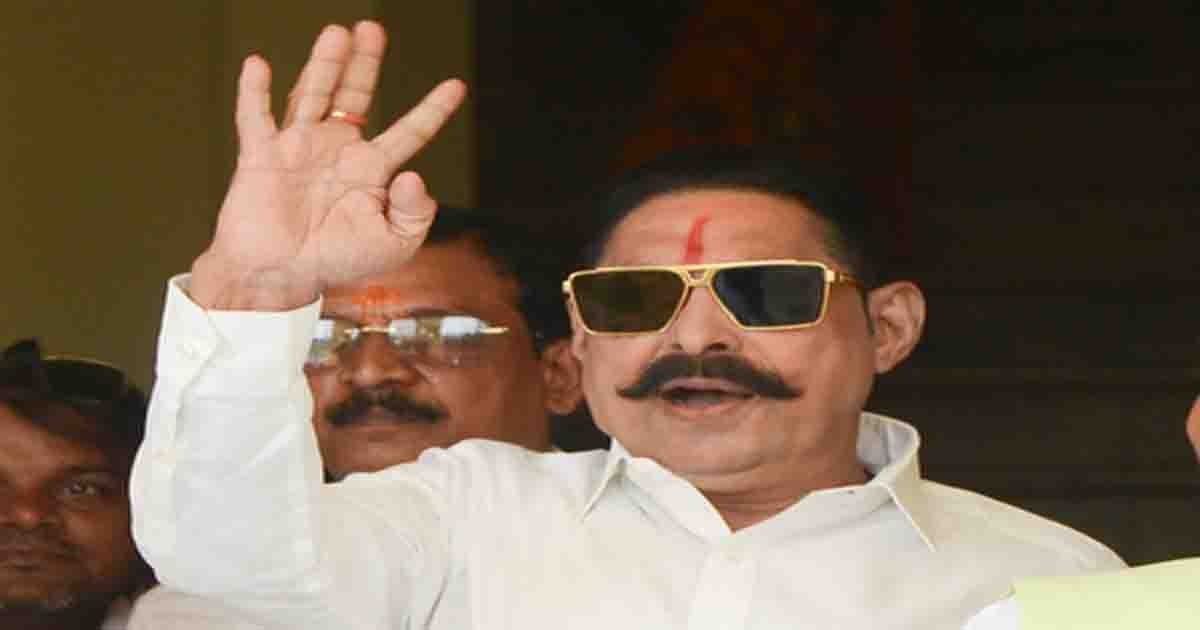
The Janata Dal (United) has expelled Mokama MLA Anant Singh and his wife, former MLA Neelam Devi, from the party for six years over alleged anti-party activities during the recent Bihar Legislative Council elections.
JD(U) state president Umesh Kushwaha announced the action on Saturday, citing repeated violations of party directives, alleged derogatory remarks against the party’s senior leadership, and Anant Singh’s decision to oppose the party’s candidate in the Patna Graduates’ constituency election and campaign in support of a candidate associated with Jan Suraaj.
In a letter announcing the action, Kushwaha said Anant Singh’s primary membership had been terminated for six years.
The party has also written to the Speaker of the Bihar Legislative Assembly, seeking action against his membership under the Tenth Schedule of the Constitution, which deals with disqualification on grounds of defection.
Any decision on disqualification rests with the competent constitutional authority.
The party has separately revoked the primary membership of Anant Singh’s wife, Neelam Devi, and expelled her for six years over her alleged involvement in anti-party activities.
The action follows a public dispute between Anant Singh and JD(U) candidate Neeraj Kumar during the election for the Patna Graduates’ constituency of the Bihar Legislative Council.
Anant Singh openly opposed Neeraj Kumar and extended support to Anuj Singh, who contested on a Jan Suraaj ticket.
Party leaders made several attempts to resolve the dispute. Union Minister Rajiv Ranjan Singh alias Lalan Singh, a senior JD(U) leader and close aide of Nitish Kumar, was reportedly sent to persuade Anant Singh to reconsider his position.
However, the efforts did not produce a resolution.
Chief Minister Samrat Choudhary, Health Minister Nishant Kumar and JD(U) National Working President Sanjay Jha were also involved in efforts to address the differences.
The dispute drew further attention on October 23, the polling day, when Anant Singh said he did not recognise Lalan Singh, remarking that there were “a hundred Lalan Singhs in Bihar” and that he did not know him.
Anant Singh’s opposition to the official candidate placed him at odds with the party leadership during a key election.
The expulsion now marks a formal escalation of the conflict, while the request to the Assembly Speaker opens a separate constitutional process concerning his legislative membership.
The episode has brought party discipline and internal differences within the JD(U) into focus following the Legislative Council elections.
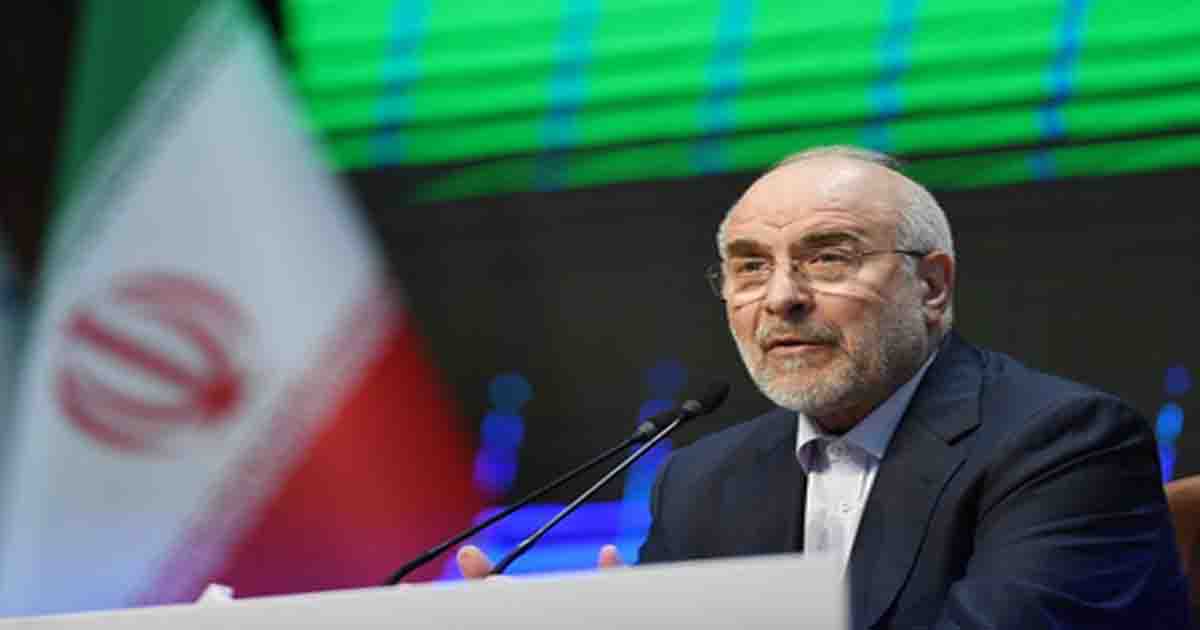
Iranian Parliament Speaker Mohammad Baqer Qalibaf will be unable to attend the Meeting of Speakers of the Parliaments of BRICS Member Countries in New Delhi next week due to “certain unforeseen circumstances”, the Embassy of Iran in New Delhi stated on Saturday.
The Parliament of India will host the 12th BRICS Parliamentary Forum on October 26-27 in the Central Hall of Samvidhan Sadan.
“The Embassy of the Islamic Republic of Iran in New Delhi wishes to inform that, due to certain unforeseen circumstances, H.E. Dr. Mohammad-Baqer Qalibaf, Speaker of the Islamic Consultative Assembly of Iran, will be unable to attend the Meeting of Speakers of the Parliaments of BRICS Member Countries in New Delhi,” read a statement issued by the Iranian Embassy on Saturday.
“It is also emphasised that the parliamentary delegation of the Islamic Republic of Iran will participate in the meeting. As one of the members of BRICS, Iran reaffirms its commitment to active and effective participation at the highest levels in the summits and meetings of this grouping,” it added.
According to the Iranian Foreign Ministry, the country’s delegation will continue its dialogue and consultations with delegations from BRICS member countries in New Delhi, with a view to expanding and deepening bilateral and multilateral cooperation, particularly in the field of parliamentary relations and cooperation.
“The Embassy of the Islamic Republic of Iran also expresses its sincere appreciation to the Government of the Republic of India for its gracious hospitality and the arrangements made to host this meeting. It wishes the Meeting of Speakers of the Parliaments of BRICS Member Countries every success and hopes that it will yield constructive outcomes towards strengthening cooperation and engagement among member countries,” the statement added.
Several global parliamentary leaders will assemble in New Delhi for the conference being hosted under India’s chairship on the theme of people-centric development.
Earlier this week, Lok Sabha Speaker Om Birla mentioned that the conference marks a new chapter in the history of India’s parliamentary diplomacy. It will bring together Presiding Officers and parliamentary leaders from BRICS member and partner countries, Union Ministers, Deputy Chairman of the Rajya Sabha Harivansh, Presiding Officers of State Legislatures, Members of Parliament and other dignitaries.
The Lok Sabha Speaker stated that Prime Minister Narendra Modi would grace the event and meet the leaders of the visiting delegations.
He further stated that the conference would feature bilateral and multilateral interactions with the leaders of visiting delegations and parliamentary friendship groups. A meeting of the Secretaries of the delegations will be held on Monday to finalise the Joint Statement of the 12th BRICS Parliamentary Forum.
Highlighting the central theme of the programme, he said that the forum would deliberate on the overarching theme of ‘Strengthening Parliaments for People-Centric Development’.
He added that, building on the legacy of the BRICS Parliamentary Forum, the 12th BRICS Parliamentary Forum would facilitate consensus-based dialogue through four high-level sessions, titled Resilience: The critical role of parliaments in strengthening institutions to ensure a better future; Innovation: Promoting human-centred innovation in artificial intelligence and digital technologies through parliaments; Cooperation: Ensuring a more representative system of global governance through parliamentary cooperation; and, Sustainability: The role of parliaments in ensuring a sustainable and inclusive future for our countries.
Members of the delegations will visit the Parliament of India and also enjoy cultural visits in Delhi.
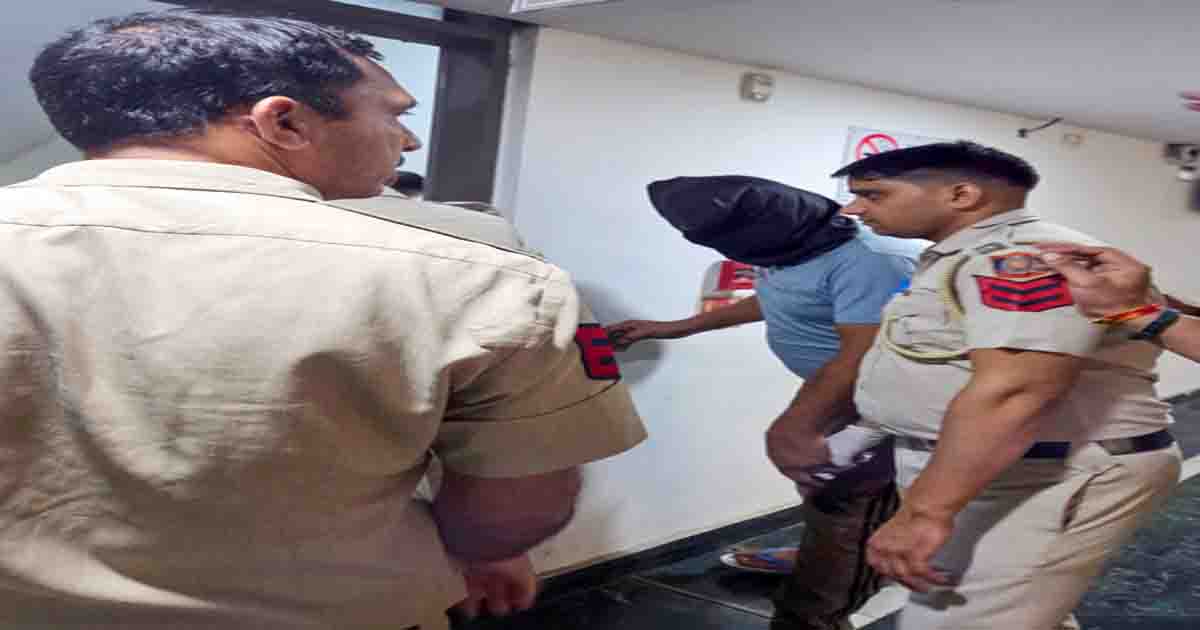
Necessary safety and security measures have been implemented at the DDA-maintained Aastha Kunj Park, Kalkaji, including deployment of the allotted security personnel, installation of 105 additional lights and CCTV surveillance, an official said on Saturday.
Further strengthening of lighting arrangements is under process, with due consideration to the ecological sensitivity of the Morphological Ridge, said the official on a day when Union Home Minister Amit Shah reviewed the city’s security during a visit to the Delhi Police headquarters.
The new security framework for the park comes against the backdrop of the alleged gang rape of a 17-year-old girl at Aastha Kunj Park on September 21. Three accused were arrested for the crime.
The incident exposed that Aastha Kunj Park — a 142-acre DDA park with 29 multi-access points — continues to suffer from poor lighting, broken perimeter walls, unmanned or missing gates, and a lack of CCTV coverage inside the premises.
According to a status report on the beefed-up security at the DDA park, all security guards, as per the presently allotted strength, have been deployed in the park. Considering its extensive area of 142.41 acres and 29 gates, regular patrolling is undertaken to ensure security coverage across the park.
Two siren-equipped motorcycles, along with torches and essential safety equipment, are deployed for night patrolling. Surprise night inspections are also conducted by the site in-charge, security supervisor and departmental staff to verify security arrangements and guard deployment, said the status report.
For addressing dark spots in the green zone, all 340 existing lights in the park are presently functional. Further, 105 additional lights have been installed in accordance with the recommendations of the Safety Audit Report, it said.
A joint inspection has been conducted with officials of the electrical department, and the proposal for installation of high-mast lights at suitable identified locations is under process, said the status report.
The official pointed out that augmentation of security facilities is being done while bearing ecological considerations in mind.
“Approximately 99 per cent of the park area falls within the Morphological Ridge. Accordingly, additional illumination in densely vegetated areas is being planned judiciously to avoid disturbance to the natural flora and fauna while ensuring adequate lighting along pathways and visitor-use areas,” said the official.
Other steps taken by the agencies include installation of four CCTV cameras, closure of gates at 9 p.m. and biometric attendance for all security guards, said the official.

Bihar: JD (U) expels Anant Singh, wife Neelam Devi from party for six years

Iranian Speaker Qalibaf unable to attend BRICS Parliamentary Forum in New Delhi

‘Searching for Rs 500 crores too’: Shrikant Shinde reacts to audio clip row

Naseeruddin Shah backs SRFTI students’ protest: BJP trying to frighten future filmmakers

Delhi Aastha Kunj Park: CCTV, 105 new lights in place after last month’s gang rape

Rahul, Cong ecosystem want to force regime change: BJP after Neha Bora praises B’desh Gen-Z protest

BJP pays tribute to ex-President Abdul Kalam, recalls his enduring influence on generations of India’s youth

Attack on democratic rights: INDIA Bloc leaders on detentions of anti-ECI protestors

INDIA bloc begins protest march against ECI

Maha Congress stages agitation against Gyanesh Kumar
-

 Crime4 years ago
Class 10 student jumps to death in Jaipur
-

 Maharashtra2 years ago
Mumbai Local Train Update: Central Railway’s New Timetable Comes Into Effect; Check Full List Of Revised Timings & Stations
-

 Maharashtra2 years ago
Mumbai To Go Toll-Free Tonight! Maharashtra Govt Announces Complete Toll Waiver For Light Motor Vehicles At All 5 Entry Points Of City
-

 Maharashtra2 years ago
False photo of Imtiaz Jaleel’s rally, exposing the fooling conspiracy
-

 National News2 years ago
Ministry of Railways rolls out Special Drive 4.0 with focus on digitisation, cleanliness, inclusiveness and grievance redressal
-

 Maharashtra2 years ago
Maharashtra Elections 2024: Mumbai Metro & BEST Services Extended Till Midnight On Voting Day
-

 National News2 years ago
J&K: 4 Jawans Killed, 28 Injured After Bus Carrying BSF Personnel For Poll Duty Falls Into Gorge In Budgam; Terrifying Visuals Surface
-

 Crime2 years ago
Baba Siddique Murder: Mumbai Police Unable To Get Lawrence Bishnoi Custody Due To Home Ministry Order, Says Report