
National News
SC: Can access to free education, drinking water, electricity be termed freebies?

The Supreme Court on Wednesday orally observed that issues raised during the hearing of petition against freebies promised by political parties during polls is getting “increasingly complicated”, and whether access to free education, drinking water, electricity can be termed freebies?
A bench headed by Chief Justice N.V. Ramana orally observed that the court cannot prevent political parties from making promises. However, it added that the question is what constitutes right promises?
The bench, also comprising Justices J.K. Maheshwari and Hima Kohli, further queried, “can we describe the promise of free education as a freebie? Can free drinking water, units of powers, etc., be described as freebies?”
The bench said whether free electronics can be described as welfare? The concern right now is what is the right way of spending public money. “Some say money is wasted; some say it is welfare. The issue is getting increasingly complicated,” said the bench, asking the parties involved in the matter to give their opinions, and after debate and discussion on the matter, the court may take a decision. The bench also cited the example of schemes such as MNREGA.
Senior advocate P. Wilson, representing the DMK party, said the party has filed an application to implead itself in the case. The DMK said that the scope of a ‘freebie’ is very wide and there are a lot of aspects which are to be considered and a welfare scheme introduced by a state government cannot be judged to be classified as a freebie. The party said the PIL, against freebies, will frustrate the objectives of the Directive Principles of State Policy, and objected to the court’s proposal to constitute an expert committee to examine the issue of freebies.
Solicitor General Tushar Mehta, representing the Centre, submitted, “If our understanding of social welfare is to distribute everything for free, then I am sorry to say…it is an immature understanding”.
Senior advocate Vikas Singh, appearing for the petitioner, complained that DMK’s impleadment application was not served on the petitioner, instead it was given to the media. The bench said this should not be used for publicity and it should be ensured that parties are supplied with copies of applications. The top court asked all the parties to give their suggestions by Saturday evening and scheduled the matter for further hearing next week.
In the previous hearing, the top court had suggested constituting an expert panel comprising representatives from the central and state governments, opposition political parties, Election Commission of India, Finance Commission, Reserve Bank of India, NITI Aayog, etc.,
The Aam Aadmi Party has told the Supreme Court that regulating electoral speech will amount to nothing more than a wild-goose chase, as it opposed a proposal to set up an expert body to examine the issues associated with “freebies” promised by the political parties to induce voters.
The top court is hearing a plea by advocate Ashwini Upadhyay seeking directions to the Centre and the Election Commission to take steps to regulate poll manifestos of political parties and also against irrational freebies promised by political parties to induce voters during polls.


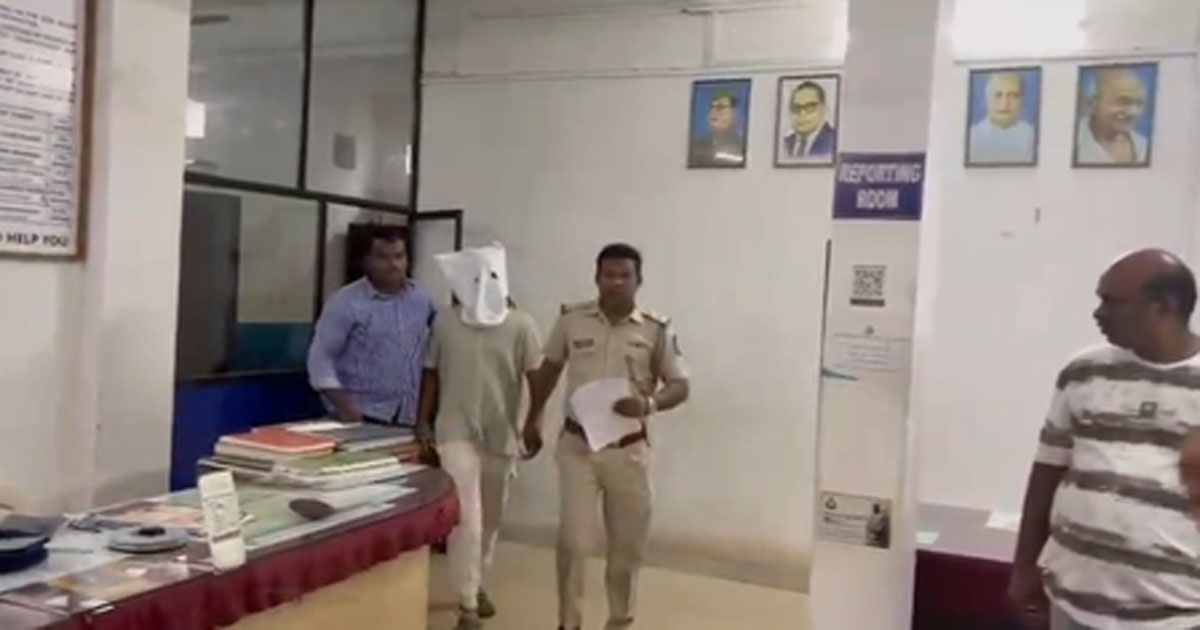
Panaji, March 23: The South Goa Police arrested 20-year-old Soham Sushant Naik in the wee hours of Monday following an intense public outcry over an alleged sex scandal involving 25 to 30 minor girls. Naik, a resident of Madegal-Cacora and the son of a BJP Curchorem Municipal councillor, was taken into custody after a mob of concerned citizens and local leaders picketed the police station.
The investigation suggests a disturbing pattern of abuse spanning the last three years. According to preliminary reports, the BJP corporator’s son allegedly engaged in sexual relations with numerous minors, filming the encounters and subsequently using the footage to threaten the victims into silence.
The scandal came to light last week after Soham Sushant Naik allegedly boasted about his actions during a social gathering, showing explicit videos of the victims to his associates. As rumours of the sexual abuse recordings spread through South Goa, local tension reached a boiling point.
However, before this, the case was being discussed in South Goa for the last few days. Local citizens gathered at the Kudchade police station on Sunday night seeking action as the case was linked to a local BJP corporator. Finally, the police took the corporator’s son Soham Naik into custody.
The action came after the accused showed some videos to his friends at a drinking party last week. This led to the revelation of the years of alleged sexual abuse of minors by the BJP leader’s son.
On Sunday, Curchorem residents had marched to the police station demanding a fair probe into the alleged sex-racket videos involving minors.
The protestors had warned of a bandh if police failed to act immediately and arrest the accused within 48 hours. The residents had also demanded that the police register a suo motu FIR in the case rather than wait for victims to come forward.
State Congress president Amit Patkar demanded that the government step in, take suo motu cognisance, and order a prompt, impartial, and time-bound enquiry into the horrific case.
The South Goa Police are currently investigating the digital evidence and determining the full scale of the exploitation of the minor girls by Soham Sushant Naik.
Soham Sushant Naik remains in custody as forensic teams work to recover the alleged videos used for blackmailing the minor girls.
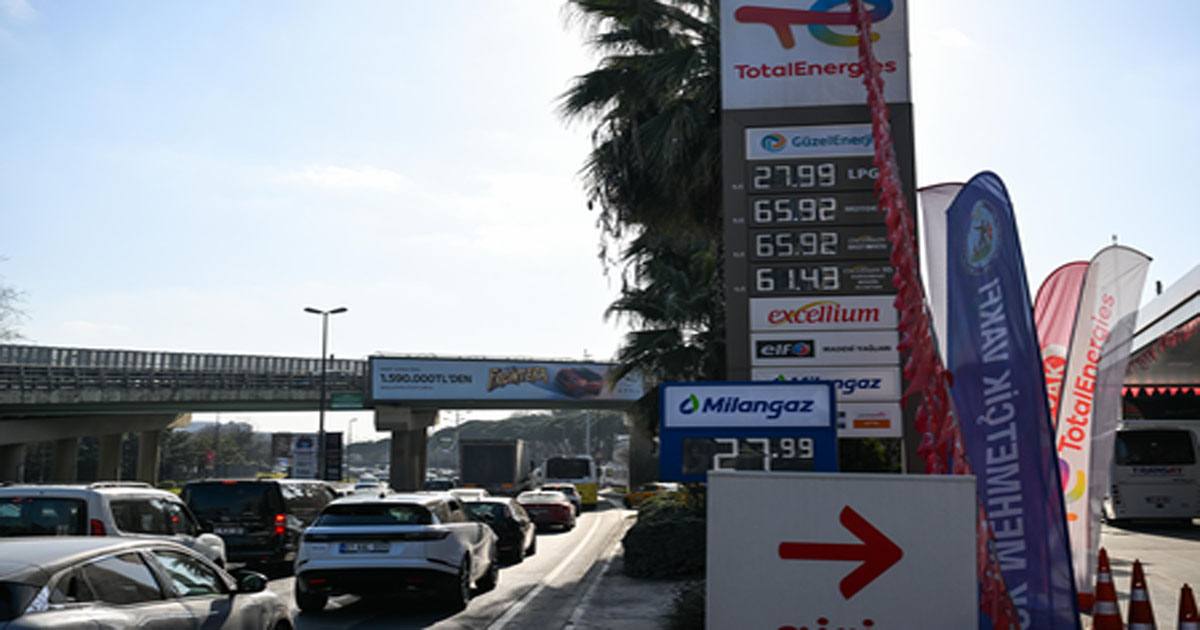
New Delhi, March 23: Over 40 energy assets across nine countries in West Asia have been “severely or very severely” damaged due to the Iran war and no country would be immune to the fallout of the disruption in oil and gas supplies, International Energy Agency (IEA) Executive Director Fatih Birol said in Canberra on Monday.
“The effect of the current disruptions in West Asia is equivalent to the two major oil crises in the 1970s and the 2022 natural gas crisis after Russia invaded Ukraine all put together,” Birol remarked.
Addressing journalists at the Australia’s National Press Club, he said that while the oil crises of the 1970s led to a combined loss of around 10 million barrels per day, the present situation has already resulted in a loss of approximately 11 million barrels per day.
“Not only oil and gas, but some of the vital arteries of the global economy — such as petrochemicals, fertilisers, sulphur and helium — their trade is all interrupted, which will have serious consequences for the global economy,” Birol explained.
The IEA announced in early March that it would release a record 400 million barrels from its emergency oil reserves of its member countries to help ease supply shocks and bring down soaring prices in the aftermath of the war in West Asia.
“The IEA is currently in discussions with governments across Asia and Europe regarding the possible release of additional oil if necessary,” media reports cited Birol as saying.
However, with shipping across the Strait of Hormuz close to a complete standstill due to the war, the only true solution to fuel supply disruptions is the reopening of the major trade route, he pointed out.
He further warned that the global economy faces a ’major threat’ if the crisis continues to escalate.
National News
True companion of BJP: Cong as Owaisi declares alliance with Humayun Kabir for West Bengal polls

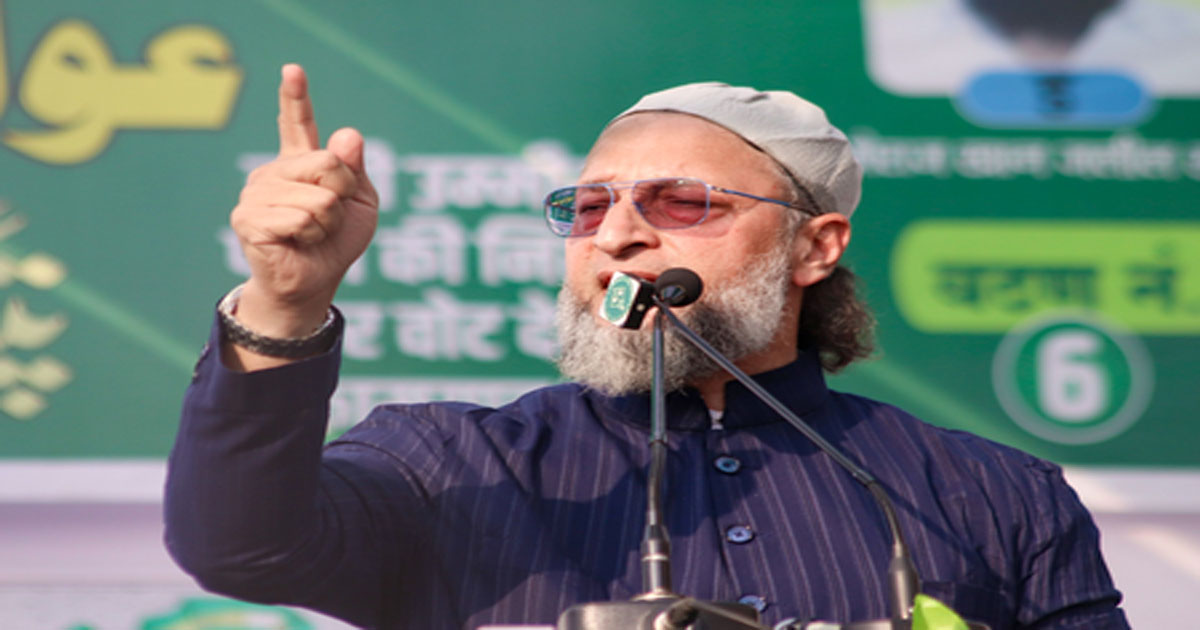
New Delhi, March 23: As AIMIM chief Asaduddin Owaisi declared that his party will contest the upcoming Assembly elections in West Bengal in alliance with former Trinamool Congress leader Humayun Kabir’s newly-formed Aam Janata Unnayan Party (AJUP), the Congress on Monday launched a sharp attack and said that “thank you, Asaduddin Owaisi. You have removed your mask — the mask of secularism — and shown the world your true communal face”. It called the AIMIM leader the “true companion” of the BJP.
The party further alleged that Owaisi has exposed himself as the “B-team” of the BJP but has also proven to be its “true companion.”
Speaking to media, Congress spokesperson Surendra Rajput criticised the AIMIM-AJUP alliance, reiterating, “Thank you, Asaduddin Owaisi. You have removed your mask — the mask of secularism — and shown the world your true communal face.”
“You have not only shown that you are the B-team of the BJP, but also that you are a true companion of the BJP. People are accusing Humayun Kabir of taking money to form a party. So, are you getting funds from Delhi? The people are very clear that they will show your position in West Bengal as well as in Hyderabad elections,” he told media.
Congress MP Sukhdeo Bhagat also weighed in on the development, stating, “Where there is a division of secular votes, it invariably benefits the Bharatiya Janata Party. Owaisi is known for this, and allegations are often made against him. He certainly employs such tactics to ensure votes are divided. That is why we say he works as the B-team of the BJP.”
JMM spokesperson Manoj Pandey echoed similar sentiments and said, “I feel that now Owaisi has achieved some success in one or two states. He has strengthened the BJP and worked to weaken secular parties and forces, which has boosted their morale. However, I believe he will not fit in anywhere in the context of Bengal’s political situation.”
JD(U) National Spokesperson, Rajeev Ranjan, also took a dig at the political developments, saying, “Whether it’s Humayun Kabir or Owaisi, the truth is that the poison sown by Mamata Banerjee in West Bengal’s politics has created many such characters who emerge to cultivate that poison. But when there is a natural alternative, such elements will have no significance, and their existence will not matter in these elections.”
Meanwhile, Bihar Minister Ram Kripal Yadav offered a more neutral perspective, saying, “It is Owaisi’s party, and if he is preparing to contest elections, the decision is independent. The party aims to expand its organisation and has a presence in many places. Owaisi has decided to contest, and as it is a democratic party, its leaders carry out their work accordingly.”
Polling for the 294-member West Bengal Assembly will be held in two phases — the first on April 23 and the second on April 29. The counting of votes is scheduled for May 4.
The alliance between AIMIM and AJUP is expected to influence the vote share in Muslim-dominated seats in the forthcoming elections, which are widely seen as a primarily two-sided contest between the ruling Trinamool Congress and the Opposition BJP.

Mumbai: Anti-Narcotics Cell takes strict action against drug peddlers, action taken against 6 smugglers so far, several cases registered

Govt working to ensure uninterrupted energy supply; PM Modi says imports rose from 27 to 41 nations

Police misbehave with Shiv Sena leader and minister Shambhuraj Desai in Sitara district, Shiv Sena-BJP face to face in the House

‘Where is Maharashtra headed?’ Raj Thackeray slams political-occult nexus in Ashok Kharat scandal

Goa: Son of BJP councillor arrested in sexual abuse case involving 25-30 minor girls

Married Mumbai Woman Mocked In Andheri Society Over ‘Lift Kissing’ CCTV Video, Files Police Complaint

Mumbai: JBCN International School In Borivali Gets Bomb Threat, Search Reveals Hoax, Students Safe

Mahayoti’s big gift to the people of Mumbai… Now there is no tax for houses up to 500 square feet, the Municipal Corporation has increased this limit to 700 square feet.

Rashmika Mandanna-Vijay Deverakonda Wedding: Virosh Turn Modern Day Prince & Princess For Their Dreamy Sangeet Ceremony

LPG Crisis In Maharashtra: Cyber Crime On Rise Amid Shortage, 2 Women Lose ₹4 Lakh In ‘Gas Update’ Online Scam In Kalyan-Dombivli
-

 Crime4 years ago
Class 10 student jumps to death in Jaipur
-

 Maharashtra1 year ago
Mumbai Local Train Update: Central Railway’s New Timetable Comes Into Effect; Check Full List Of Revised Timings & Stations
-

 Maharashtra1 year ago
Mumbai To Go Toll-Free Tonight! Maharashtra Govt Announces Complete Toll Waiver For Light Motor Vehicles At All 5 Entry Points Of City
-

 Maharashtra1 year ago
False photo of Imtiaz Jaleel’s rally, exposing the fooling conspiracy
-

 National News1 year ago
Ministry of Railways rolls out Special Drive 4.0 with focus on digitisation, cleanliness, inclusiveness and grievance redressal
-

 Maharashtra1 year ago
Maharashtra Elections 2024: Mumbai Metro & BEST Services Extended Till Midnight On Voting Day
-

 National News2 years ago
J&K: 4 Jawans Killed, 28 Injured After Bus Carrying BSF Personnel For Poll Duty Falls Into Gorge In Budgam; Terrifying Visuals Surface
-

 Crime1 year ago
Baba Siddique Murder: Mumbai Police Unable To Get Lawrence Bishnoi Custody Due To Home Ministry Order, Says Report