
Business
Sensex, Nifty end lower as India-US trade tension spook investors


Mumbai, Jan 8: Indian equity markets witnessed their sharpest fall in a month on Thursday as benchmark indices extended losses for the fourth straight session, weighed down by rising concerns over India–US trade tensions.
Investor sentiment turned cautious after reports suggested that the administration of US President Donald Trump could consider imposing steep tariffs of up to 500 per cent on Indian goods.
The possibility of such harsh trade measures triggered widespread selling across sectors, leading to broad-based risk aversion in the market.
By the end of the session, the Sensex closed at 84,180.96, slipping 780.18 points or 0.92 per cent.
The Nifty also ended lower at 25,876.85, down 263.9 points or 1.01 per cent.
“A sustained close below 25,900 increases the probability of further downside toward the 25,800–25,700 zone, while a recovery above 26,000 is essential to stabilise near-term sentiment,” an analyst said.
“Despite the current correction, the broader weekly and monthly trend structure remains positive, although short-term corrective pressure may persist if key supports fail to hold,” as per the expert.
On Sensex 30-packs, TCS, TechM, L&T, Reliance Industries and Tata Steel were among the top losers.
On the other hand, Eternal, ICICI Bank, Bajaj Finance, and BEL were the only gainers.
The selling pressure was even more pronounced in the broader market. Mid- and small-cap stocks saw sharp declines, with the Nifty Midcap 100 and Nifty Smallcap 100 indices falling nearly 2 per cent each.
Sector-wise, losses were widespread, with all indices ending in the red. Metal stocks bore the brunt of the sell-off as the Nifty Metal index dropped over 3 per cent.
Oil and gas stocks also remained under pressure, with the Nifty Oil and Gas index falling around 2.8 per cent.
PSU banking and IT stocks were among the other major laggards, declining about 2 per cent each.
Analysts said that the market mood remained cautious as investors grappled with global trade uncertainties and the potential impact of rising tariffs on India’s export-driven sectors.


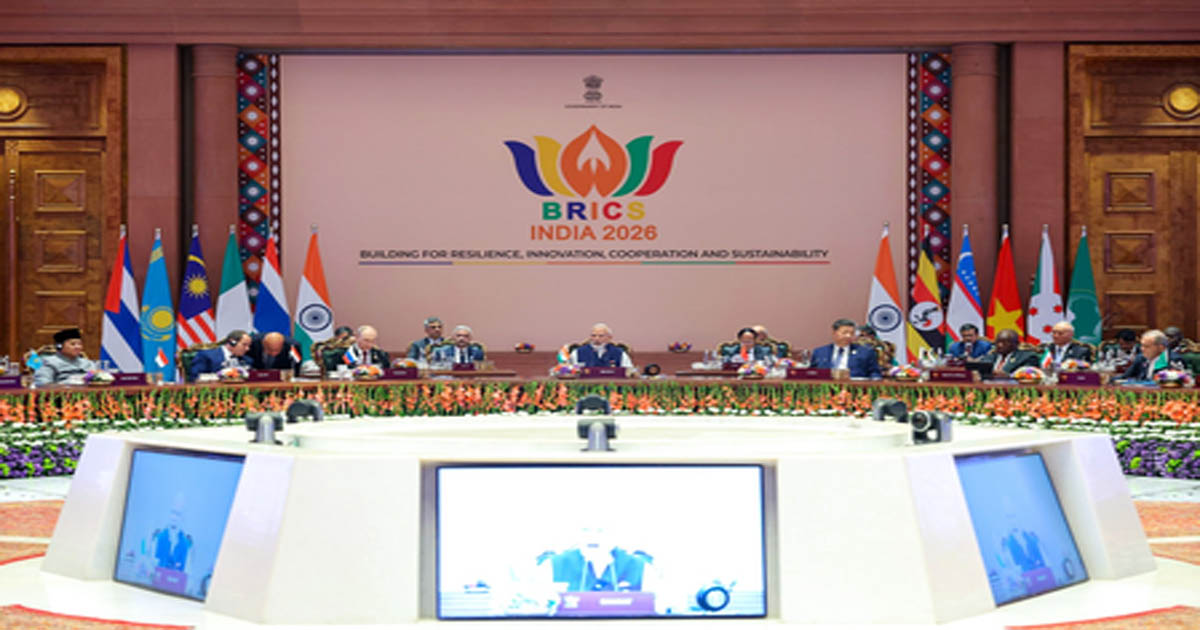
New Delhi, Sep 14: The United Arab Emirates (UAE) and India are broadening a strategic and economic partnership that serves as “an effective model of cooperation within BRICS,” a new report has said.
The partnership is built on a foundation of historic ties, shared interests and major projects that promote trade, investment and logistics connectivity between markets, the report from Gulf Today said.
“The growing UAE-India partnership, reflected in expanding trade, increasingly integrated logistics corridors and cooperation in investment and innovation, provides a practical model of the UAE’s role within BRICS,” the report said.
Further, the partnership also proves UAE’s commitment to exchanging expertise and perspectives and building more integrated and sustainable economic partnerships.
Bilateral trade reached $101.25 billion in FY26, marking the second consecutive year in which trade between the two countries exceeded $100 billion. The UAE and India have set a target to raise bilateral trade to $200 billion by 2032.
The partnership is being advanced through initiatives such as Bharat Mart, the Virtual Trade Corridor and cooperation under the India‑Middle East‑Europe Economic Corridor (IMEC).
“These initiatives are helping strengthen supply chain integration and create new routes for trade and investment flows between the two countries and global markets,” the report noted.
The UAE-India Comprehensive Economic Partnership Agreement (CEPA), operational since 2022 was hailed as the first agreement of its kind concluded by the UAE. The agreement has bolstered the flow of goods, services and investment and expanded opportunities for the private sector in both countries.
United Arab Emirates and China were the largest destinations within BRICS, together accounting for 88.50 per cent of India’s electronics exports to the grouping.
The number of Indian companies registered as active members of Dubai Chamber reached 85,841 by the end of June 2026 after 7,579 new Indian firms joined in the first half of the year, marking a year‑on‑year increase of 15 per cent, another report said.
Mumbai, Sep 14: The Nifty could climb to 26,200 by December 2026, implying an upside of around 12 per cent from current levels, as Bank of America (BofA) Securities has turned constructive on Indian equities after maintaining a cautious stance for nearly two years.
In its latest strategy report, BofA said it had remained cautious on Indian stocks since August 2024 and had identified eight key risks that could keep the market volatile. However, five of those risks have either already played out or have been largely priced into the market, prompting the brokerage to adopt a more positive stance.
BofA said the three remaining risks could create around 7 per cent downside for the Nifty 50 in its bear-case scenario. In its base case, however, the brokerage sees the index reaching 26,200 by December 2026.
According to BofA, the remaining risks are expected to peak by October 2026, potentially creating room for a sustained market recovery from November.
One of the key risks identified earlier was a sharp rise in crude oil prices above $100 a barrel, compared with BofA’s fourth-quarter 2026 estimate of $81 a barrel. The brokerage noted that crude prices have reversed from the $100-a-barrel level seven times over the past seven months.
The rupee was another concern, although BofA said recent inflows of around $136 billion should provide support to the currency and maintained an appreciation bias.
Weak monsoon conditions were also among the risks, with the current rainfall deficit at 13 per cent, close to the 15 per cent worst-case scenario previously projected by the brokerage.
BofA also expects limited further acceleration in aluminium and copper prices. On monetary policy, its economist expects the Reserve Bank of India to raise the policy rate by 25 basis points by December 2026, compared with around 45 basis points currently priced by swap markets.
The three remaining risks include a possible surge in primary market issuances, with around $30 billion expected between September and December and issuance activity likely to peak in October. Another risk is the possibility of 75 basis points of Federal Reserve rate hikes, compared with around 35 basis points currently priced by markets. Over the longer term, BofA also flagged the potential impact of artificial intelligence-led disruption on employment in India.
New Delhi, Sep 14: India has approved a proposal to supply power to Nepal for 18 hours a day till December 31 this year, following the extensive damage caused to the Himalayan country’s hydropower projects in the devastating flash floods, an official statement said on Monday.
“The Ministry of Power has accorded approval for the export of power, for 18 hours a day to Nepal Electricity Authority till December 31, 2026,” according to the statement.
Approval has been given for up to 600MW of export through Muzaffarpur-Dhalkebar 400 kV D/c line and up to 54 MW through Tanakpur-Mahendranagar 132 kV S/c line. The quantum of power to be exported from January 2027 will be reviewed in December, 2026, the statement said.
The recent floods have caused significant damage to hydropower infrastructure in Nepal, reducing its domestic power generation capacity and creating an additional requirement for electricity.
The approval will help Nepal meet its power requirements during this difficult period and further strengthen the close and longstanding energy cooperation between India and Nepal, the statement explained.
“India remains committed to supporting Nepal and strengthening bilateral cooperation in the energy sector,” the statement added.
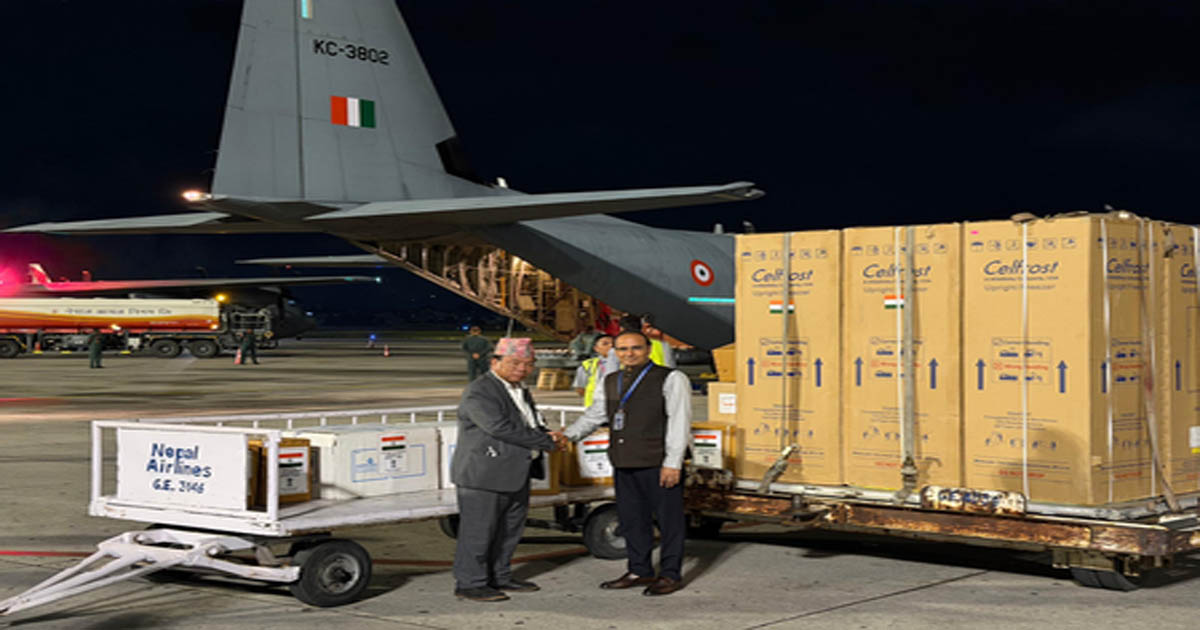
India also intensified its humanitarian assistance to Nepal in the wake of the floods, delivering relief material and deploying personnel to support search, rescue, and forensic operations. Indian Air Force aircraft were used to carry relief and rescue supplies to Kathmandu.
The country also dispatched specialised technical gear, including mud rescue suits, gas detectors, breathing apparatus, inflatable walkways, portable generators, lighting towers, and dewatering pumps. India has provided DNA kits, reagents, and equipment for DNA profiling to aid in victim identification.
Meanwhile, the death toll from flash floods has risen to 1,386, with more bodies recovered from eight affected districts.
The floods, triggered by an ice-rock avalanche near the Nepal-Tibet border on August 26, devastated towns and villages in northern and central Nepal.
According to the National Disaster Risk Reduction and Management Authority, 104 of the recovered bodies have so far been identified and handed over to families. Around 5,130 people are still reported missing.
Security forces continue search and rescue operations. More than 13,700 people have been rescued so far, while 339 people are undergoing treatment in hospitals.

Yemen Houthis claim major missile, drone attack on Saudi air base

PM Modi speaking Hindi globally fills us with pride: CM Fadnavis

Iran says Oman meeting postponed at Saudi Arabia’s request

Meeting between Iran, Gulf states scheduled in Oman postponed

India‑UAE ties grow into a model for BRICS collaboration: Report

Four more Indian nationals rescued in Nepal, 120 cross safely from China: MEA

Nepal floods: First batch of 106 stranded Maharashtra tourists reaches India; 84 more expected today (Ld)

Gift to President Putin part of PM Modi bid to globally display India’s heritage

India, Brazil sign ICT MoU to deepen digital, telecom cooperation

Maharashtra: 17-year-old boy dies by suicide on Raksha Bandhan after emotional social media posts
-

 Crime4 years ago
Class 10 student jumps to death in Jaipur
-

 Maharashtra2 years ago
Mumbai Local Train Update: Central Railway’s New Timetable Comes Into Effect; Check Full List Of Revised Timings & Stations
-

 Maharashtra2 years ago
Mumbai To Go Toll-Free Tonight! Maharashtra Govt Announces Complete Toll Waiver For Light Motor Vehicles At All 5 Entry Points Of City
-

 Maharashtra2 years ago
False photo of Imtiaz Jaleel’s rally, exposing the fooling conspiracy
-

 National News2 years ago
Ministry of Railways rolls out Special Drive 4.0 with focus on digitisation, cleanliness, inclusiveness and grievance redressal
-

 Maharashtra2 years ago
Maharashtra Elections 2024: Mumbai Metro & BEST Services Extended Till Midnight On Voting Day
-

 National News2 years ago
J&K: 4 Jawans Killed, 28 Injured After Bus Carrying BSF Personnel For Poll Duty Falls Into Gorge In Budgam; Terrifying Visuals Surface
-

 Crime2 years ago
Baba Siddique Murder: Mumbai Police Unable To Get Lawrence Bishnoi Custody Due To Home Ministry Order, Says Report